




Topics
General medicine
Primary care in disasters: opportunity to address a hidden burden of health care
General practitioners provide a flexible response to the changed needs of the disasteraffected population
Penelope L Burns · Kirsty A Douglas · Wendy Hu

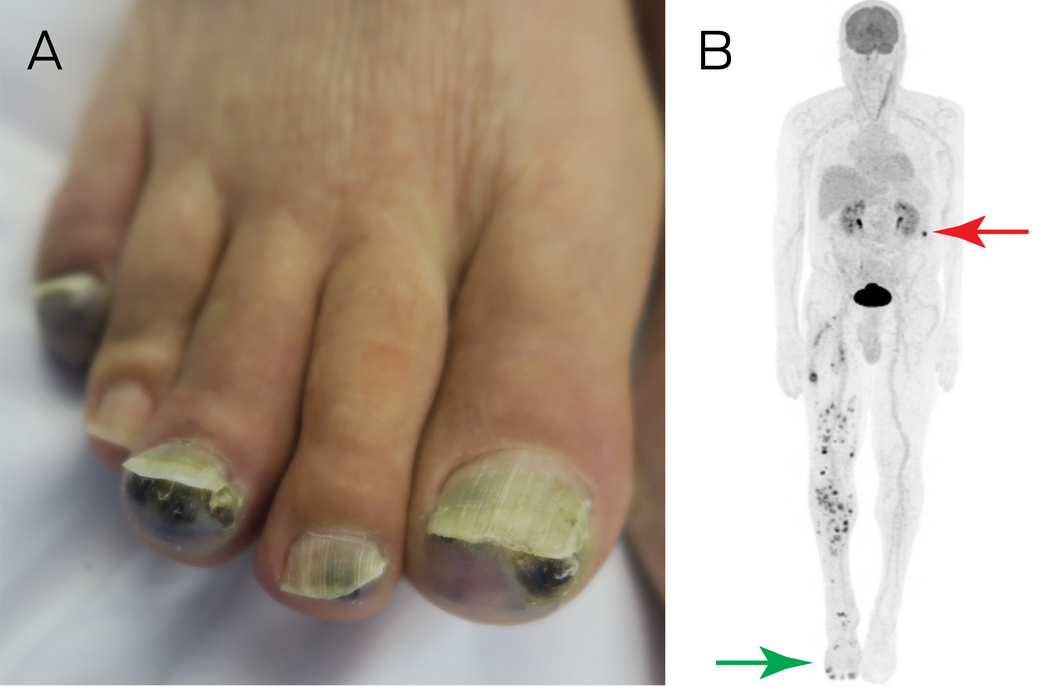
Diagnosis of Mycobacterium ulcerans disease: be alert to the possibility of negative initial PCR results
Correct swabbing technique and caution when interpreting negative results are needed
Daniel P O'Brien · Maria Globan · Janet M Fyfe · Caroline J Lavender · Adrian Murrie · Damian Flanagan · Peter Meggyesy · Jonathan T Priestley · David Leslie

The impact of rapid molecular diagnostic testing for respiratory viruses on outcomes for emergency department patients
Rapid PCR testing may have several benefits for patients and for the health care system
Nasir Wabe · Ling Li · Robert Lindeman · Ruth Yimsung · Maria R Dahm · Kate Clezy · Susan McLennan · Johanna Westbrook · Andrew Georgiou

Coexisting chronic obstructive pulmonary disease and cardiovascular disease in clinical practice: a diagnostic and therapeutic challenge
A low threshold for investigation and treatment of CVD in COPD and COPD in CVD is essential
Paul Leong · Martin I Macdonald · Brian S Ko · Phil G Bardin

Improving cultural respect in primary care
A mind that is stretched by a new experience can never go back to its old dimensions (Oliver Wendell Holmes)
Sandra C Thompson · Rosalie D Thackrah

A new evidence‐based guideline for assessment and management of polycystic ovary syndrome
In reply
Helena J Teede · Robert J Norman · Rhonda M Garad
Gathering data for decisions: best practice use of primary care electronic records for research
Despite most Australians having most of their health‐related interactions in the primary care sector, primary care‐based research is disproportionately low. Access to quality EMR data, lack of resources to remunerate GPs, and a lack of understanding among some GPs of the value and importance of secondary use of EMR data are barriers to data sharing. Data extraction tools that enable ethical, secure and privacy‐protected access to routinely collected datasets nationally have been developed. The task now is to build trustworthy primary care data repositories for research that will provide researchers with timely access to quality‐assured general practice data. Linkage with other datasets could enable significant scale‐up of primary care‐based research in Australia, contributing new knowledge in public health, health promotion, economics and evidence‐based clinical care. Technologies that allow consumers to have greater control over how their data are used can provide better options to policy makers, hence investment in this area is essential. Educating clinicians and the public about the need for, and existence of, research based on de‐identified patient medical records has the potential to generate greater social licence and acceptance of this emerging area of study. This has the potential to generate significant gains in terms of service delivery, economics and patient health. We can “do the right thing” now, but we must never become complacent.
Rachel Canaway · Douglas IR Boyle · Jo‐Anne E Manski‐Nankervis · Jessica Bell · Jane S Hocking · Ken Clarke · Malcolm Clark · Jane M Gunn · Jon D Emery
Consumer‐directed technologies to improve medication management and safety
Widespread adoption of digital health tools requires comprehensive evidence of their effectiveness and value
Andre Q Andrade · Elizabeth E Roughead
Telehealth a game changer: closing the gap in remote Aboriginal communities
“A picture says a thousand words … especially when it's the patient's third language”
Marianne St Clair · David P Murtagh · John Kelly · Jeff Cook
Artificial intelligence and the clinical world: a view from the front line
Decision support tools driven by artificial intelligence are a new clinical method that clinicians need to embrace
Christopher Pearce · Adam McLeod · Natalie Rinehart · Robin Whyte · Elizabeth Deveny · Marianne Shearer
Cultural respect in general practice: a cluster randomised controlled trial
The known: The gap in life expectancy between Indigenous and non‐Indigenous Australians remains large. Urban Indigenous Australian‐controlled health services are under‐resourced, and mainstream primary care services are often not culturally sensitive.
Siaw‐Teng Liaw · Vicki Wade · John S Furler · Iqbal Hasan · Phyllis Lau · Margaret Kelaher · Wei Xuan · Mark F Harris

Evaluating the benefits of a rapid access chest pain clinic in Australia
The known: Rapid access chest pain clinics (RACPCs), common in the United Kingdom, could improve the management of patients with chest pain in Australia.
James Andrew Black · Kevin Cheng · Jo‐Anne Flood · Garry Hamilton · Serena Parker · Anees Enayati · Faisal S Khan · Tom Marwick

Health care in a globalised world: is there more than one type of patient?
Clinical care guidelines for collecting and using information on the cultural heritage of patients are needed
Pupalan Iyngkaran · Michael Jelinek

Identifying the cultural heritage of patients during clinical handover and in hospital medical records
The known The format, content and conduct of medical handovers by hospital doctors are receiving increasing attention from health care policymakers.
David JR Morgan · Tania Harris · Ron Gidgup · Martin Whitely

Emeritus Professor Beverley Raphael AM, MB BS, MD, FRANZCP, FRCPsych, Hon MD, FASSA
Emeritus Professor Beverley Raphael was an academic, psychiatrist, general practitioner and leader in the mental health field for over 50 years
Penelope L Burns · Patricia Delaney AM

Developing cardiovascular risk prediction models for Australia
Risk stratification is the best strategy for deciding who needs medication for primary prevention of cardiovascular events
Mark R Nelson · Mark Woodward

Engaging GPs and primary care patients in research: implications of the ASPREE trial for future studies
A clinical research network would facilitate routinely including primary care patients in large clinical trials
James P Sheppard · Chris Butler

Deprescribing cholinesterase inhibitors and memantine in dementia: guideline summary
New guidelines recommend shared decision making to reduce adverse drug reactions and medication burden, leading to improved quality of life in people with dementia
Emily Reeve · Barbara Farrell · Wade Thompson · Nathan Herrmann · Ingrid Sketris · Parker J Magin · Lynn Chenoweth · Mary Gorman · Lyntara Quirke · Graeme Bethune · Sarah N Hilmer

My patients prepared me well
When doctors become patients, they shouldn't be surprised that the experience is frightening, undignified and disempowering
Meagan E Brennan

Let's talk about cytotoxic chemotherapy dosing: unravelling adjustments and off‐protocol prescribing
Individualised dosing is important in cancer treatment in real‐world settings and may require departure from trial‐based protocols
Angelina Tjokrowidjaja · Elizabeth Hovey · Craig R Lewis

Medical assistance in dying: a disruption of therapeutic relationships
To the Editor: The Perspectives article by William1 states that medical assistance in dying may disrupt therapeutic relationships and will challenge beliefs. Concern is expressed about countertransference of feelings and attitude between doctors and patients. However, such concern must surely exist with or without the availability of assisted dying laws. What guides our practice is not just codes of medical ethics, professionalism and law, important as those are. It is also a natural and nurtured feeling of compassion and oneness with our patients. Doing no intentional harm (non‐maleficence) does not rule out, or cast doubt on, the application of voluntary assisted dying. Cutting short intolerable pain, suffering and indignity, as specifically requested by the patient, is not maleficence. The suggestion that people requesting medical assistance in dying challenge our beliefs about the meaning and value of who we are and what we do is not something that applies to all of us. Some physicians would feel that assisting a patient's firmly held wish to hasten death is among the most compassionate of acts that can be undertaken, and would experience it as such, along with the patient and family members. Changing the law to something that is better than currently exists does not present a dilemma. It does not contravene medical ethics. It has nothing to do with non‐maleficence or justice (except to introduce an element of justice to those individuals seeking such change). As for education, skills and insights, these can all be honed to a new and better balance in the future. With regards to death anxiety, it may be true that much can be achieved through human engagement, but it is also true that providing the means of assisted dying can itself significantly reduce anxiety and allow any remaining time to be better enjoyed.2 Finally, the suggestion that medical assistance in dying will have a negative influence on the development of teamwork is overly pessimistic. It fails to recognise the positive and complementary potential of assisted dying laws. Alleviation of suffering is surely a noble aim, attainable in a high proportion of cases.
Peter G Beahan

Medical assistance in dying: a disruption of therapeutic relationships
To the Editor: We commend William1 for his perceptive review of the complex issues involved in euthanasia and assisted suicide (EAS).1 In contrast to the euphemisms in the popular media, he confronts us with some uncomfortable realities: EAS is the intentional taking of a person's life (E) or facilitating suicide (AS); doctors considering EAS may be (unconsciously) demonstrating “countertransference of their helplessness onto the patient;” and relief of all suffering is a fantasy beyond the ability of doctors, politicians and lawyers. Similar concerns are expressed by seven Canadian physicians in a critique entitled “Euthanasia in Canada: a cautionary tale”.2 Contrary to the rosy predictions of its proponents, within 2 years, the Canadian experiment with EAS has left physicians aghast. “The introduction of euthanasia in Canada has caused doubt, conflict and crisis.”2 The passing of the Voluntary Assisted Dying Bill 2017 by the Victorian Parliament marked a seismic shift in medical practice, overturning 2500 years of medical ethics: the Hippocratic prohibition on killing patients. We note the increasing pressures, internal and external, on medical associations to declare neutrality on this issue. We believe that such a stance is a mistake. Equally, it is a lost opportunity to educate the public. As stated in a 2018 review, “doctors are not agents of the state and organized medicine cannot afford to be ‘neutral’ on a topic that touches medicine at its very core”.3 Furthermore, the Australian and New Zealand Society for Palliative Medicine4 and the Australian and New Zealand Society for Geriatric Medicine all have position statements that oppose EAS.5 As the peak physician organisation in Australasia, we urge the Royal Australasian College of Physicians to make an unambiguous statement to the general public, the medical profession and politicians that: EAS is not part of health care; EAS should not require involvement of doctors; and EAS creates irreconcilable conflicts with our responsibilities to our patients. If a medical association declares neutrality on this important issue, it squanders the precious role such associations have in providing guidance to the public and political sphere. That squandering comes at precisely the time this debate would be immeasurably enhanced by the expertise and wisdom of those members of the community most involved in the care of patients with serious illnesses.
Douglas T Bridge · Sinead M Donnelly · Frank P Brennan

Adding kindness at handover to improve our collegiality: the K-ISBAR tool
Handing over with kindness will help us create a culture of respect and trust in the workplace
David J Brewster · Bruce P Waxman


Reducing cardiovascular risk in people with diabetes and kidney disease
We need to move beyond managing end organ complications to reducing cardio-renal risk across the spectrum of kidney function
Brendon L Neuen · Vlado Perkovic
