




Volume 210 - Issue 9
Coexisting chronic obstructive pulmonary disease and cardiovascular disease in clinical practice: a diagnostic and therapeutic challenge
Authors: Paul Leong, Martin I Macdonald, Brian S Ko and Phil G Bardin
Med J Aust 2019; 210 (9): 417-423. || doi: 10.5694/mja2.50120
Published online: 8 April 2019
Published online: 8 April 2019
A low threshold for investigation and treatment of CVD in COPD and COPD in CVD is essential
Summary
- Chronic obstructive pulmonary disease (COPD) and cardiovascular disease (CVD) frequently coexist but combined disease is often not recognised. Since symptoms overlap significantly, it is common for patients’ presentations to be attributed to one disease alone, and for the other to be overlooked.
- The effect of COPD and CVD goes beyond the shared risk factors of smoking and advancing age. The presence of COPD adversely affects cardiac disease and vice versa. In comparison to individuals with one disease alone, those with both conditions have a higher mortality rate, experience more frequent exacerbations with more hospitalisations and have worse quality of life.
- More patients with mild and moderate COPD die from CVD than from COPD, and there is a higher rate of arrhythmias, particularly atrial fibrillation. Accurate and timely diagnosis is therefore crucial.
- Retrospective evidence indicates that individuals with COPD and CVD may have better outcomes with appropriate CVD pharmacotherapy, yet robust prospective evidence is lacking. Inhaled medications for patients with stable COPD improve quality of life and reduce exacerbations, but there is limited evidence that they reduce mortality.
- A low threshold for investigation and treatment of CVD in COPD and COPD in CVD is essential.
Chronic obstructive pulmonary disease (COPD) is the cardinal smoking‐related respiratory illness.1,2 Diagnosis requires exposure to noxious inhalants, respiratory symptoms, and spirometry demonstrating airflow obstruction, defined by a post‐bronchodilator forced expiratory volume in one second (FEV1) divided by forced vital capacity ratio < 0.70.1,2
COPD is the fifth leading cause of disability‐adjusted life‐years worldwide, affecting about 14% of Australians above the age of 40 years.2 COPD has a profound impact on the Australian hospital system. In 2015–16, it was the most common cause of potentially preventable hospitalisations related to chronic conditions in Australia; it was followed by heart failure.3 In Australian general practice, both respiratory presentations and cardiovascular issues are common, so co‐occurrence is frequent.4
Cardiovascular disease (CVD) has compelling links to COPD. Individuals with COPD have a nearly 2.5‐fold risk of CVD in comparison with controls.5 Moreover, patients with comorbid COPD and CVD report more breathlessness and worse quality of life, are more frequently hospitalised and have higher mortality than those with COPD alone.6 More than a quarter of patients with COPD will die from a cardiovascular event, and 40% of patients with COPD and a cardiovascular history will die following a cardiovascular event.6
Despite this, under‐diagnosis of CVD in patients with COPD is frequent. For example, in patients with COPD and electrocardiographic evidence of myocardial infarction, less than one‐third had been diagnosed with CVD.7
COPD and CVD share risk factors and symptoms with significant overlap in clinical presentations. Determining the presence and contributions of the individual diseases can help clinicians prognosticate and manage this complex population.
We searched PubMed for COPD and cardiovascular terms. We examined clinically relevant aspects of their relationship, diagnostic challenges and current and future therapeutic strategies.
COPD and CVD: shared pathophysiology
Disease processes in COPD and CVD overlap, and salient clinical aspects are outlined below.
Shared risk factors
Patients with COPD generally have multiple major risk factors for CVD. They have almost invariably smoked, and tend to be older, male and less physically active (Box 1). Hypertension is highly prevalent and present in up to 77% of some COPD cohorts.1,5 However, these are insufficient to explain the excess CVD prevalence seen in COPD.6
Both CVD and COPD share a potent pro‐inflammatory state characterised by oxidative stress and accelerated ageing.8 The precise mechanisms and interrelationships are currently poorly understood, but smoking is an obvious and modifiable shared causative factor.
Atherosclerosis and vascular disease
Patients with COPD demonstrate accelerated lung and vascular aging, pathology that may be the result of oxidative stress and reductions in anti‐ageing molecules.9 A key prognostically important implication is exaggerated atherosclerosis.10 Coronary artery calcification, a computed tomography (CT) imaging marker of atherosclerosis, may predict death more reliably than airflow limitation.11,12 COPD clearly increases the risk of acute myocardial infarction; however, smoking is a major risk confounder.13,14 Following acute myocardial infarction, COPD remains a strong predictor of inpatient and 1‐year mortality, irrespective of percutaneous intervention and adjustment for comorbidities.15,16,17
Atherosclerosis in COPD is not limited to cardiac disease. Cerebral microvascular damage, which can result in both mild cognitive impairment and dementia, is prominent in COPD and cognitive impairment is correlated with COPD severity.18 The association with stroke is inconsistent.5,6 Peripheral arterial disease is present in about 9% of patients with COPD, and patients with both report reduced functional capacity and health status.19 Importantly, COPD cohort studies suggest that dyslipidaemia may be under‐recognised.20,21
Atrial fibrillation and cardiac arrhythmias
Patients with COPD are at greater risk of developing arrhythmias than non‐COPD controls, particularly during exacerbations. COPD increases the risk of developing atrial fibrillation (AF), with a prevalence of up to 14% in some cohorts.22 AF has prognostic importance; patients with COPD presenting to emergency departments with AF have reduced survival, a finding replicated in hospitalised patients, where AF is an independent predictor of inpatient COPD mortality.22 The risk of developing AF increases with declining lung function.22
Theophylline increases the risk of arrhythmias, although it is rarely used in Australia and New Zealand for COPD.2 Finally, ventricular tachycardia is more frequent in COPD than in non‐COPD controls.23
Heart failure and pulmonary hypertension
Individuals with COPD are at significantly increased risk of heart failure. In a Saskatchewan study, after adjustment, heart failure was 3.8 times more common in patients with COPD than in control participants.24 COPD is an independent predictor of death in patients with heart failure.25
Underdiagnosis of heart failure is common in COPD. When systematically investigated with transthoracic echocardiography in an outpatient hospital clinic, heart failure was found in 17% of patients and was clinically unsuspected in most.26 Patients with COPD are also at greater risk of heart failure with preserved ejection fraction, in part because of a high prevalence of hypertension and diabetes mellitus.13,27 Frequent COPD exacerbators appear to have a higher frequency of diastolic dysfunction,28 and COPD is an independent risk factor for mortality in diastolic dysfunction.29
Pulmonary hypertension, even if mild or moderate, is associated with an increased risk of exacerbation and decreased survival.30 In COPD, pulmonary hypertension usually reflects pulmonary vascular remodelling but clinically often occurs in the context of other potential causes such as left heart disease or chronic thromboembolic disease.31 To date, there are no compelling data to suggest that patients with COPD enjoy a treatment benefit from the specific treatments employed in pulmonary arterial hypertension.32
Acute exacerbations
Cardiac dysfunction is common during acute exacerbations of COPD.33 Acute exacerbations of COPD may mimic an “unscheduled cardiac stress test” with multiple challenges including hypoxia, hypercapnia, a surge of pro‐inflammatory cytokines and increased arterial stiffness.33 This stress test can provide crucial information about CVD (Box 2).
Cardiac stress detected by cardiac biomarker elevation during COPD exacerbations can predict prognosis. Troponin is elevated in up to three‐quarters of exacerbations and about 10% of patients meet the definition of acute myocardial infarction while hospitalised.33 If B‐type natriuretic peptide (BNP) is also elevated, the risk of mortality is again increased34 (Box 3).
In a German study, hospitalised patients with COPD and elevated troponin during exacerbation underwent coronary angiography; two‐thirds were diagnosed with ischaemic heart disease, the vast majority of which was clinically unsuspected.35 COPD guidelines1,2 do not recommend routine coronary angiography in this population, nor do they provide recommendations for the optimal management of patients with cardiac biomarker elevation during COPD exacerbation. To date, no prospective data exist to support any recommendations.
Diagnosis of COPD and CVD: the clinical challenge
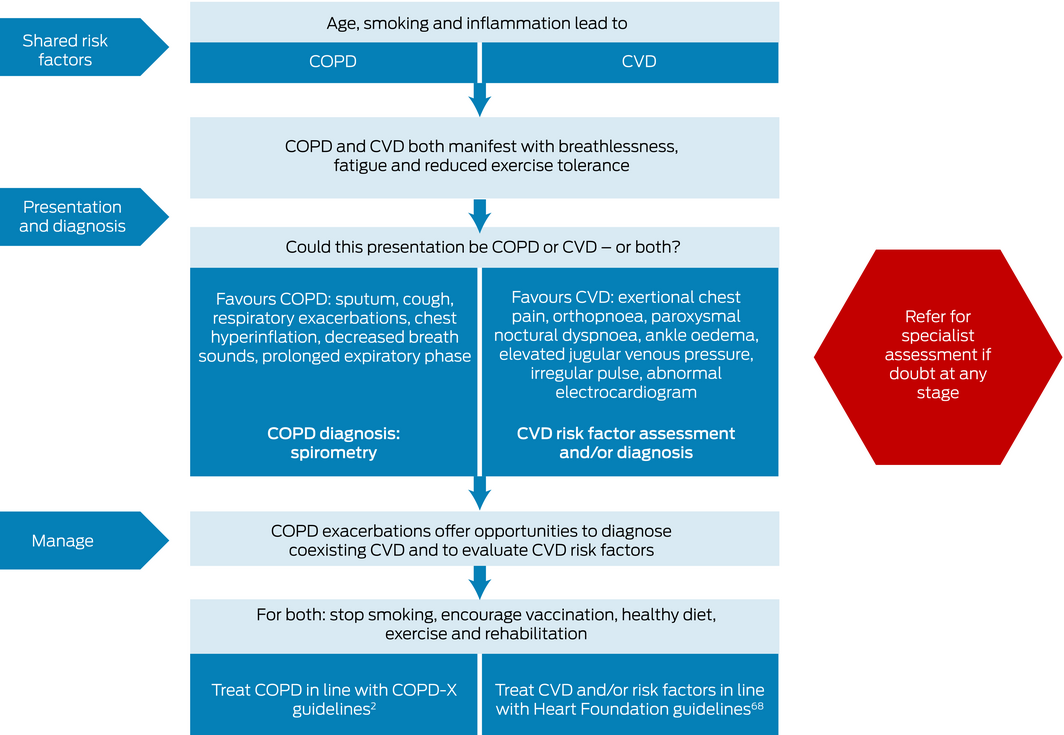
A fundamental step in diagnosis of COPD and CVD (or both) is to have a high index of suspicion. This approach is essential because clinical presentations of both diseases share common demographic characteristics (smoking, older age, multiple comorbidities) and both present with non‐specific findings of breathlessness, fatigue and exercise intolerance (Box 1).
Careful clinical evaluation can provide clues. For example, sputum production and cough with hyperinflation on examination favour COPD. Four readily available features are predictive of heart failure in COPD: a history of ischaemic heart disease; an elevated body mass index; a laterally displaced apex beat; and a raised heart rate.36 Additionally, orthopnoea, ankle swelling and paroxysmal nocturnal dyspnoea favour heart failure.9
We discuss three common diagnostic challenges below.
COPD diagnosis
Spirometry can diagnose COPD, facilitate early intervention, and may help avoid over‐ and under‐treatment. In Australian general practice, 37% of patients treated for COPD did not meet spirometric criteria for this diagnosis, while subsequent case‐finding and spirometry identified 17% of patients with previously unknown COPD.37 Once a diagnosis of COPD is made, management should proceed along the Australian COPD‐X guidelines.2
Airflow obstruction, defined by FEV1, is an important prognostic indicator and is embedded in virtually all COPD prognostic models.1,2 Airflow limitation has effects beyond that of smoking alone, as lower FEV1 predicts mortality independently of smoking.1 For ischaemic heart disease mortality, FEV1 is as strong a predictor as cholesterol,38 and reduced FEV1 is associated with cardiac dysfunction as well as the development of new heart failure.39
The value of chest x‐ray is limited by pulmonary vascular/parenchymal and cardiac silhouette changes, and findings are often not sensitive or specific. Chest CT provides excellent anatomical detail but is not routinely indicated for the diagnosis of COPD unless other conditions are suspected (eg, lung cancer).
Diagnosis of ischaemic heart disease in COPD
A diagnosis of ischaemic heart disease indicates that breathlessness may be due to cardiac causes. Unfortunately, COPD blunts the diagnostic performance of conventionally used diagnostic tests.
Stress echocardiography often performs poorly in advanced lung disease owing to poor ultrasound windows. An alternative is myocardial perfusion scanning, which requires the patient to exercise, or undergo infusion of a vasodilator such as adenosine or dipyridamole.40 Achieving adequate exercise can be difficult for patients with COPD, and vasodilators are contraindicated by asthma, which occurs in about 20% of patients with COPD.2 CT coronary angiography is an alternative modality for the diagnosis of coronary disease, but is not uniformly accessible or recommended as a first line investigation.40
We propose that clinicians assess the clinical pre‐test probability of ischaemic disease, taking into account the feasibility of testing in a given individual, and consider diagnostic testing and/or referral in line with this.
Diagnosis of cardiac failure in COPD
Thorough clinical assessment is the mainstay of diagnosing cardiac failure. Particularly in stable outpatients, making a diagnosis of heart failure in COPD can be challenging as clinical features of both diseases substantively overlap.9
Cardiac failure evaluation usually involves transthoracic echocardiography, but important assessments may be limited due to hyperinflated lungs. For example, pulmonary artery pressure can be assessed in < 40% of patients with advanced COPD.33 Right heart catheterisation is the gold standard for pulmonary artery pressure but is invasive and carries risk. Cardiac magnetic resonance imaging is the gold standard for myocardial chamber quantification, but is expensive, time‐consuming and can be limited by hyperinflation.33
BNP is useful in the diagnosis of heart failure,36 and the degree of elevation corresponds with severity. Low levels make heart failure unlikely, and high levels make heart failure very probable, but a “grey zone” remains.41 BNP can also be elevated in other situations including pulmonary hypertension, valvular heart disease and coronary artery disease. Despite New Zealand general practice data demonstrating that the number of tests required to diagnose an additional case of heart failure was only seven,41 the Australian Medicare Benefits Scheme currently only reimburses BNP in hospital emergency departments.
Management
Once a patient has been diagnosed with comorbid COPD and CVD, management can be directed at the individual diseases. Irrespective of the diagnosis, smoking cessation, vaccination and pulmonary rehabilitation are inexpensive and highly efficacious.
Smoking cessation
Smoking cessation is of utmost importance as it can prevent the development of COPD, prevent COPD progression, and reduce CVD risk. Encouraging smoking cessation in individuals with normal spirometry may terminate the development of COPD and enhance cardiovascular health.
Cutting down reduces cardiovascular risk, but smokers who only smoke one cigarette per day still experience 40–50% of the excess risk associated with smoking 20 cigarettes per day.42
Intriguingly, there appears to be a stronger relationship between CVD and COPD in younger patients — for example, in those aged under 65 years13,20 — although this may be attributable to survivor bias. This signal of enhanced risk in younger individuals provides extra rationale that early cardiac and respiratory intervention might lead to improved outcomes.
Vaccination
Vaccination is well established for both COPD and CVD. Influenza vaccination prevents COPD exacerbations without causing immediate vaccine‐related exacerbations, and is also recommended for patients with CVD.43 Pneumococcal vaccination is also beneficial, reducing community acquired pneumonia and exacerbation, and is also recommended for patients with a history of CVD.43
Pulmonary rehabilitation and exercise
Patients with COPD are often troubled by multiple symptoms including breathlessness and impaired quality of life. Pulmonary rehabilitation improves exercise capacity, symptoms and quality of life, reduces health care utilisation, and may even reduce mortality after acute exacerbation of COPD.44 CVD should be stable and optimised before referral.
Pharmacotherapy
Even when CVD is known, patients with COPD receive less guideline‐concordant CVD treatment, including revascularisation, than their non‐COPD counterparts.45 Although at elevated CVD risk, patients with COPD have been excluded from many CVD trials.46 Accordingly, there are little prospective data to inform the optimal pharmacological approach to treatment.
Retrospective studies suggest that cardiovascular medications may be of benefit to patients with COPD. However, many studies are subject to significant biases and, after adjustment, purported benefits may disappear.47 Prospective trials are urgently required to quantify the safety and efficacy of pharmacotherapies and the optimal approach.
Antiplatelet agents. A recent meta‐analysis of observational cohort data indicated that aspirin administration is associated with decreased mortality in COPD.48 Hospitalised patients with acute exacerbations of COPD taking aspirin had lower in‐hospital mortality, a lower risk of invasive mechanical ventilation and shorter length‐of‐stay.49 However, the risk–benefit ratio remains uncertain, and given potential adverse effects, prospective trials are required to guide recommendations.
Statins. Retrospective data from New Zealand indicate that statin usage is associated with a 30% reduction in all‐cause mortality in the first 3–4 years after COPD exacerbation.50 These results contrast with a major prospective randomised trial of simvastatin in moderate to severe COPD, which was negative for the primary endpoint of COPD exacerbation reduction.51 The study was not powered for mortality but did not suggest any survival benefit in the short 1.75‐year follow‐up period. It specifically excluded patients who met criteria for statins, resulting in a cohort of patients with lower cardiovascular risk than clinical COPD groups.
A subsequent meta‐analysis of statins in COPD demonstrated that exercise capacity, lung function and quality of life were significantly improved in comparison to placebo, and patients with CVD were more likely to benefit.52 At present, the evidence does not support prescribing statins for COPD in the absence of standard indications; however, statins remain underprescribed in patients with COPD.
Angiotensin inhibition. As hypertension is a common COPD comorbidity,1,5 angiotensin‐converting enzyme inhibitors may have a dual purpose in COPD and CVD as they appear to protect against declines in lung function, particularly in individuals with CVD.53 Although retrospective studies demonstrate an association between angiotensin blockade and reduced mortality,54,55 large prospective studies are lacking. Current data do not support angiotensin blockade without additional justification, but angiotensin inhibition may be a reasonable choice for patients with COPD and hypertension.
β‐blockers. β‐blockers are key medications in heart failure, atrial fibrillation and acute myocardial infarction but their use remains controversial in COPD. Data are reassuring regarding cardioselective β‐blocker usage in COPD, although only short term prospective safety data exist.56 Even where guideline‐based indications exist, there is significant underprescription of β‐blockers in COPD.57
β‐blockers may have beneficial non‐cardiac effects. Primary care cohort data indicate that β‐blocker usage in COPD is associated with a reduction in all‐cause mortality and pulmonary exacerbations, and benefit is preserved in cardiac failure. In retrospective studies, cardioselective β‐blocker usage is associated with reduced mortality in acute exacerbations of COPD57 and patients with COPD undergoing major vascular surgery.58
There are no prospective trials examining cardiovascular mortality associated with cardioselective β‐blocker therapy in COPD. A large study is underway, examining the role of metoprolol in preventing exacerbations, but is not powered for mortality and will exclude patients with recent cardiovascular events.59
When β‐blockers are indicated in patients with COPD, we exclude asthma and monitor for side effects.
Inhaled medications. Could COPD inhalers reduce cardiovascular events and mortality? Two large randomised controlled trials, including one of patients with COPD enriched for cardiac risk,60,61 failed to find a mortality benefit for inhaled therapy in pre‐specified analyses. However, post hoc analyses of these studies suggested the possibility of cardiovascular event reduction for tiotropium,62,63 and fluticasone proprionate–salmeterol64 versus placebo.
Recently, the IMPACT study65 demonstrated a small reduction in mortality when inhaled glucocorticoid regimens were compared with non‐inhaled glucocorticoid regimens, possibly driven by a reduction in exacerbations. Taken together, these data do not provide compelling evidence to merit escalating inhaled therapy for cardiovascular risk prevention.
In acute exacerbations, emerging data suggest that over‐administration of short‐acting β‐agonists may cause harm including cardiac biomarker elevation and stress cardiomyopathy,66 although they appear safe at the usual doses given in a stable outpatient setting. Concerns have been raised about the cardiovascular safety profile of ipratropium with chronic use,1 and salbutamol remains the preferred short‐acting bronchodilator.
Although short‐ and long‐acting β‐agonists can precipitate arrhythmias, studies have not shown increased mortality in COPD.1 Given that toxicity is dose related, the lowest doses required for clinical effect are used. Long‐acting muscarinic antagonists are considered generally safe from a cardiovascular perspective.1
Oxygen. Supplemental oxygen may extend survival for patients with COPD who have severe resting hypoxaemia with daytime PaO2 levels ≤ 55mmHg, or 56–59 mmHg with hypoxic organ damage.67 However, there are no studies of oxygen therapy on survival or functional status in chronically hypoxaemic patients with CVD and heart failure.67 Future research focused on the benefits of supplemental oxygen in chronically hypoxaemic patients with concomitant heart failure or coronary artery disease will be warranted.
Conclusion
COPD is associated with a greater risk of coexisting CVD, and adverse outcomes are more frequent when patients have both diseases. Although there are little prospective data to inform treatment, multiple retrospective studies indicate that patients with COPD may benefit from cardioprotective medications when indicated.
In clinical practice, the first opportunity for care improvement is detection, as both COPD and CVD are underdiagnosed. COPD often goes undetected and is readily diagnosed by spirometry. For CVD, in the absence of COPD‐specific guidelines, patients with COPD could benefit from standard cardiovascular risk factor screening and management. Where symptoms are suggestive, directed case‐finding for CVD is warranted. Specialist referral may be indicated where diagnostic or management uncertainty exists.
Exacerbations of COPD can serve as a red flag, indicating CVD vulnerability and involvement, particularly if cardiac biomarkers are elevated. Follow‐up can provide an opportunity for cardiorespiratory assessment and intervention.
CVD in COPD is currently undertreated and management according to current guidelines2,68 is recommended. Smoking cessation is essential.
Finally, there is a critical need for robust evidence to inform guideline development and optimal clinical practice.
Box 1 – Suggested integrated approach to chronic obstructive pulmonary disease (COPD) and cardiovascular disease (CVD)
Box 2 – Clinical vignette
A 67‐year‐old man presented to his general practitioner with cough, discoloured sputum and severe dyspnoea, and was referred to hospital by ambulance. He was a current smoker with a 45 pack‐year history, a prior spirometric diagnosis of chronic obstructive pulmonary disease (COPD), and two exacerbations over the previous year. Medications included inhaled tiotropium, as‐required salbutamol, and candesartan for hypertension. At baseline, he claimed a 100–200 m exercise tolerance.
He was clinically diagnosed with an acute exacerbation of COPD. On admission, a brief period of non‐invasive bi‐level ventilation was required to stabilise hypercapnic respiratory failure. Chest x‐ray was hyperinflated and 12‐lead electrocardiogram demonstrated tachycardia. Troponin was modestly elevated (0.45 μg/L; reference interval, < 0.08 μg/L) (see Box 3 showing association of increased biomarkers and mortality) and he was treated with oral antibiotics, prednisolone and inhaled bronchodilators.
Given the increase in cardiac biomarkers, cardiac review was obtained, proceeding to invasive angiography on the third day of hospital admission. This demonstrated a critical stenosis in his left anterior descending artery, which was treated with a drug‐eluting stent. He received secondary prevention with an angiotensin‐converting enzyme inhibitor and a statin, and a β‐blocker was initiated in the outpatient setting. Further cardiovascular risk factors of obesity and impaired fasting glucose were identified and appropriate treatment was initiated.
At 12‐month follow‐up, breathlessness was improved, exercise tolerance increased to 500 m and he had only experienced one further mild COPD exacerbation.
Box 3 – Thirty‐day mortality after exacerbation of chronic obstructive pulmonary disease increases with cardiac biomarker involvement
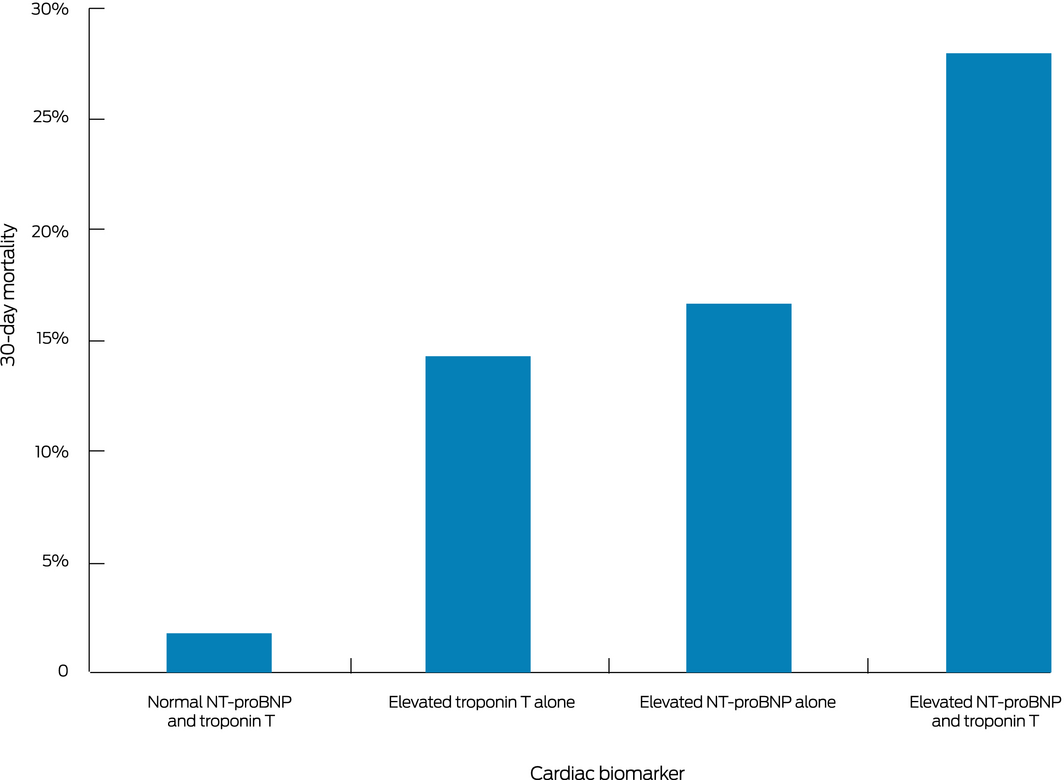
Reproduced with permission from Chang et al.34 NT‐proBNP = N‐terminal pro‐B‐type natriuretic peptide. These data suggest that chronic obstructive pulmonary disease exacerbations act as cardiac stress tests and imply that further cardiovascular risk assessment and management will likely be required after exacerbations. This could be coordinated at the primary care level. ◆
Competing interests
No relevant disclosures.
Acknowledgements
This work was supported by a National Health and Medical Research Council Postgraduate Scholarship.
References
- Global Initiative for Chronic Obstructive Lung Disease. Global strategy for the diagnosis, management, and prevention of chronic obstructive pulmonary disease. GOLD, 2017. https://goldcopd.org/wp-content/uploads/2017/11/GOLD-2018-v6.0-FINAL-revised-20-Nov_WMS.pdf (viewed Dec 2017).
- Yang I, Dabscheck E, George J, et al. The COPD‐X plan: Australian and New Zealand guidelines for the management of chronic obstructive pulmonary disease 2017. Version 2.52 (December 2017). Brisbane: Lung Foundation Australia, 2017. https://copdx.org.au/wp-content/uploads/2018/03/COPDX-V2-52-Dec-2017_2.pdf (viewed Mar 2018).
- Australian Institute of Health and Welfare. Admitted patient care 2015–16: Australian hospital statistics (Health Services Series No. 75; Cat. No. HSE 185). Canberra: AIHW, 2017. https://www.aihw.gov.au/reports/hospitals/ahs-2015-16-admitted-patient-care/contents/table-of-contents (viewed Mar 2018).
- Britt H, Miller GC, Henderson J, et al. General practice activity in Australia 2015–16. Sydney: Sydney University Press, 2016. https://ses.library.usyd.edu.au/bitstream/2123/15514/5/9781743325148_ONLINE.pdf (viewed Mar 2018).
- Chen W, Thomas J, Sadatsafavi M, FitzGerald JM. Risk of cardiovascular comorbidity in patients with chronic obstructive pulmonary disease: a systematic review and meta‐analysis. Lancet Respir Med 2015; 3: 631–639.
- Morgan AD, Zakeri R, Quint JK. Defining the relationship between COPD and CVD: what are the implications for clinical practice? Ther Adv Respir Dis 2018; 12: 175346581775052.
- Brekke PH, Omland T, Smith P, Søyseth V. Underdiagnosis of myocardial infarction in COPD – Cardiac Infarction Injury Score (CIIS) in patients hospitalised for COPD exacerbation. Respir Med 2008; 102: 1243–1247.
- Barnes PJ. Senescence in COPD and Its Comorbidities. Annu Rev Physiol 2017; 79: 517–539.
- Roversi S, Fabbri LM, Sin DD, et al. Chronic obstructive pulmonary disease and cardiac diseases: an urgent need for integrated care. Am J Respir Crit Care Med 2016; 194: 1319–1336.
- Wang L, Zhu Y, Cui J, et al. Subclinical atherosclerosis risk markers in patients with chronic obstructive pulmonary disease: A systematic review and meta‐analysis. Respir Med 2017; 123: 18–27.
- Zagaceta J, Bastarrika G, Zulueta JJ, et al. Prospective comparison of non‐invasive risk markers of major cardiovascular events in COPD patients. Respir Res 2017; 18: 175.
- Gaisl T, Schlatzer C, Schwarz EI, et al. Coronary artery calcification, epicardial fat burden, and cardiovascular events in chronic obstructive pulmonary disease. PLOS One 2015; 10: e0126613.
- Feary JR, Rodrigues LC, Smith CJ, et al. Prevalence of major comorbidities in subjects with COPD and incidence of myocardial infarction and stroke: a comprehensive analysis using data from primary care. Thorax 2010; 65: 956–962.
- Rothnie KJ, Yan R, Smeeth L, Quint JK. Risk of myocardial infarction (MI) and death following MI in people with chronic obstructive pulmonary disease (COPD): a systematic review and meta‐analysis. BMJ Open 2015; 5: e007824.
- Wakabayashi K, Gonzalez MA, Delhaye C, et al. Impact of chronic obstructive pulmonary disease on acute‐phase outcome of myocardial infarction. Am J Cardiol 2010; 106: 305–309.
- Andell P, Koul S, Martinsson A, et al. Impact of chronic obstructive pulmonary disease on morbidity and mortality after myocardial infarction. Open Heart 2014; 1: e000002.
- Jatene T, Biering‐Sørensen T, Nochioka K, et al. Frequency of cardiac death and stent thrombosis in patients with chronic obstructive pulmonary disease undergoing percutaneous coronary intervention (from the BASKET‐PROVE I and II Trials). Am J Cardiol 2017; 119: 14–19.
- Lahousse L, Tiemeier H, Ikram MA, Brusselle GG. Chronic obstructive pulmonary disease and cerebrovascular disease: a comprehensive review. Respir Med 2015; 109: 1371–1380.
- Houben‐Wilke S, Jörres RA, Bals R, et al. peripheral artery disease and its clinical relevance in patients with chronic obstructive pulmonary disease in the COPD and Systemic Consequences‐Comorbidities Network Study. Am J Respir Crit Care Med 2017; 195: 189–197.
- Sidney S, Sorel M, Quesenberry CP, et al. COPD and incident cardiovascular disease hospitalizations and mortality: Kaiser Permanente Medical Care Program. Chest 2005; 128: 2068–2075.
- Huiart L, Ernst P, Suissa S. Cardiovascular Morbidity and Mortality in COPD. Chest 2005; 128: 2640–2646.
- Goudis CA. Chronic obstructive pulmonary disease and atrial fibrillation: an unknown relationship. J Cardiol 2017; 69: 699–705.
- Konecny T, Somers KR, Park JY, et al. Chronic obstructive pulmonary disease as a risk factor for ventricular arrhythmias independent of left ventricular function. Heart Rhythm 2018; 15: 832–838.
- Curkendall SM, deLuise C, Jones JK, et al. Cardiovascular disease in patients with chronic obstructive pulmonary disease, Saskatchewan Canada. Ann Epidemiol 2006; 16: 63–70.
- De Blois J, Simard S, Atar D, Agewall S. COPD predicts mortality in HF: the Norwegian Heart Failure Registry. J Card Fail 2010; 16: 225–229.
- Macchia A, Rodriguez Moncalvo JJ, Kleinert M, et al. Unrecognised ventricular dysfunction in COPD. Eur Respir J 2012; 39: 51–58.
- Mannino DM, Thorn D, Swensen A, Holguin F. Prevalence and outcomes of diabetes, hypertension and cardiovascular disease in COPD. Eur Respir J 2008; 32: 962–969.
- Terzano C, Romani S, Conti V, et al. Atrial fibrillation in the acute, hypercapnic exacerbations of COPD. Eur Rev Med Pharmacol Sci 2014; 18: 2908–2917.
- Tribouilloy C, Rusinaru D, Mahjoub H, et al. Prognosis of heart failure with preserved ejection fraction: a 5 year prospective population‐based study. Eur Heart J 2008; 29: 339–347.
- Chaouat A, Naeije R, Weitzenblum E. Pulmonary hypertension in COPD. Eur Respir J 2008; 32: 1371–1385.
- Hoeper MM, Humbert M, Souza R, et al. A global view of pulmonary hypertension. Lancet Respir Med 2016; 4: 306–322.
- Hoeper MM, McLaughlin VV, Dalaan AMA, et al. Treatment of pulmonary hypertension. Lancet Respir Med 2016; 4: 323–336.
- MacDonald MI, Shafuddin E, King PT, et al. Cardiac dysfunction during exacerbations of chronic obstructive pulmonary disease. Lancet Respir Med 2016; 4: 138–148.
- Chang CL, Robinson SC, Mills GD, et al. Biochemical markers of cardiac dysfunction predict mortality in acute exacerbations of COPD. Thorax 2011; 66: 764–768.
- Pizarro C, Herweg‐Steffens N, Buchenroth M, et al. Invasive coronary angiography in patients with acute exacerbated COPD and elevated plasma troponin. Int J Chron Obstruct Pulmon Dis 2016; 11: 2081–2089.
- Rutten FH, Moons KGM, Cramer M‐JM, et al. Recognising heart failure in elderly patients with stable chronic obstructive pulmonary disease in primary care: cross sectional diagnostic study. BMJ 2005; 331: 1379.
- Liang J, Abramson MJ, Zwar NA, et al. Diagnosing COPD and supporting smoking cessation in general practice: evidence‐practice gaps. Med J Aust 2018; 208: 29–34. https://www.mja.com.au/journal/2018/208/1/diagnosing-copd-and-supporting-smoking-cessation-general-practice-evidence
- Hole DJ, Watt GCM, Davey‐Smith G, et al. Impaired lung function and mortality risk in men and women: findings from the Renfrew and Paisley prospective population study. BMJ 1996; 313: 711–715.
- Wannamethee SG, Shaper AG, Papacosta O, et al. Lung function and airway obstruction: associations with circulating markers of cardiac function and incident heart failure in older men—the British Regional Heart Study. Thorax 2016; 71: 526–534.
- Storey P. Imaging for cardiac disease: a practical guide for general practitioners. Aust Fam Physician 2014; 43: 260–263.
- Wright SP, Doughty RN, Pearl A, et al. Plasma amino‐terminal pro‐brain natriuretic peptide and accuracy of heart‐failure diagnosis in primary care. J Am Coll Cardiol 2003; 42: 1793–1800.
- Hackshaw A, Morris JK, Boniface S, et al. Low cigarette consumption and risk of coronary heart disease and stroke: meta‐analysis of 141 cohort studies in 55 study reports. BMJ 2018; 360: j5855.
- Australian Technical Advisory Group on Immunisation. The Australian Immunisation Handbook. Canberra: Australian Government Department of Health, 2018. https://immunisationhandbook.health.gov.au/ (viewed Mar 2019).
- Puhan MA, Scharplatz M, Troosters T, Steurer J. Respiratory rehabilitation after acute exacerbation of COPD may reduce risk for readmission and mortality — a systematic review. Respir Res 2005; 6: 54.
- Rothnie KJ, Smeeth L, Herrett E, et al. Closing the mortality gap after a myocardial infarction in people with and without chronic obstructive pulmonary disease. Heart 2015; 101: 1103–1110.
- Lahousse L, Verhamme KM, Stricker BH, Brusselle GG. Cardiac effects of current treatments of chronic obstructive pulmonary disease. Lancet Respir Med 2016; 4: 149–164.
- Suissa S. Co‐morbidity in COPD: the effects of cardiovascular drug therapies. Respiration 2010; 80: 3–7.
- Pavasini R, Biscaglia S, d'Ascenzo F, et al. Antiplatelet treatment reduces all‐cause mortality in COPD patients: a systematic review and meta‐analysis. J Chronic Obstr Pulm Dis 2016; 13: 509–514.
- Goto T, Faridi MK, Camargo CA, Hasegawa K. The association of aspirin use with severity of acute exacerbation of chronic obstructive pulmonary disease: a retrospective cohort study. npj Prim Care Respir Med 2018; 28: 7.
- Lawes CM, Thornley S, Young R, et al. Statin use in COPD patients is associated with a reduction in mortality: a national cohort study. Prim Care Respir J 2012; 21: 35–40.
- Criner GJ, Connett JE, Aaron SD, et al. Simvastatin for the prevention of exacerbations in moderate‐to‐severe COPD. N Engl J Med 2014; 370: 2201–2210.
- Zhang W, Zhang Y, Li C‐W, et al. Effect of Statins on COPD. Chest 2017; 152: 1159–1168.
- Parikh MA, Aaron CP, Hoffman EA, et al. Angiotensin‐converting inhibitors and angiotensin II receptor blockers and longitudinal change in percent emphysema on computed tomography. the Multi‐Ethnic Study of Atherosclerosis Lung Study. Ann Am Thorac Soc 2017; 14: 649–658.
- Mortensen EM, Copeland LA, Pugh MJV, et al. Impact of statins and ACE inhibitors on mortality after COPD exacerbations. Respir Res 2009; 10: 45.
- Mancini GBJ, Etminan M, Zhang B, et al. Reduction of morbidity and mortality by statins, angiotensin‐converting enzyme inhibitors, and angiotensin receptor blockers in patients with chronic obstructive pulmonary disease. J Am Coll Cardiol 2006; 47: 2554–2560.
- Salpeter SR, Ormiston TM, Salpeter EE. Cardioselective beta‐blockers for chronic obstructive pulmonary disease. Cochrane Database Syst Rev 2005; (4): CD003566.
- Lipworth B, Wedzicha J, Devereux G, et al. Beta‐blockers in COPD: time for reappraisal. Eur Respir J 2016; 48: 880–888.
- van Gestel YRBM, Hoeks SE, Sin DD, Welten GMJM, et al. Impact of cardioselective β‐blockers on mortality in patients with chronic obstructive pulmonary disease and atherosclerosis. Am J Respir Crit Care Med 2008; 178: 695–700.
- Bhatt SP, Connett JE, Voelker H, et al. β‐Blockers for the prevention of acute exacerbations of chronic obstructive pulmonary disease (βLOCK COPD): a randomised controlled study protocol. BMJ Open 2016; 6: e012292.
- Vestbo J, Anderson JA, Brook RD, et al. Fluticasone furoate and vilanterol and survival in chronic obstructive pulmonary disease with heightened cardiovascular risk (SUMMIT): a double‐blind randomised controlled trial. Lancet 2016; 387: 1817–1826.
- Calverley PMA, Anderson JA, Celli B, et al. Salmeterol and fluticasone propionate and survival in chronic obstructive pulmonary disease. N Engl J Med 2007; 356: 775–789.
- Celli B, Decramer M, Kesten S, et al. Mortality in the 4‐year trial of tiotropium (UPLIFT) in patients with chronic obstructive pulmonary disease. Am J Respir Crit Care Med 2009; 180: 948–955.
- Celli B, Decramer M, Leimer I, et al. Cardiovascular safety of tiotropium in patients with COPD. Chest 2010; 137: 20–30.
- Calverley PMA, Anderson JA, Celli B, et al. Cardiovascular events in patients with COPD: TORCH Study results. Thorax 2010; 65: 719–725.
- Lipson DA, Barnhart F, Brealey N, et al. Once‐daily single‐inhaler triple versus dual therapy in patients with COPD. N Engl J Med 2018; 378: 1671–1680.
- Rajwani A, Adam Z, Hall JA. Bronchogenic stress cardiomyopathy: a case series. Cardiology 2015; 130: 106–111.
- McDonald CF, Whyte K, Jenkins S, et al. Clinical practice guideline on adult domiciliary oxygen therapy: executive summary from the Thoracic Society of Australia and New Zealand. Respirology 2016; 21: 76–78.
- Heart Foundation. Clinical information. Resources for health professionals. https://www.heartfoundation.org.au/for-professionals/clinical-information (viewed Oct 2018).
Provenance: Not commissioned; externally peer reviewed.
Barriers and Facilitators to Timely Detection and Optimal Management of Chronic Wet Cough in Aboriginal Children Across Australia From the Perspectives of Carers of Aboriginal Children: A Qualitative Study
Gloria T. Y. Lau, Pam Laird, Robyn Aitken, Melanie Barwick, Liam Bedford, Emily R. Bowden, Jamie Everingham, Angela Fuery, Reece Griffin, Neha Jain, Mina Kinghorn, Renae Knapp, Gabrielle B. McCallum, Peter Morris, Richard Norman, Peter C. Richmond, Aarti Saiganesh, Slade Sibosado, Cameron Taylor, Maree Toombs, Roz Walker, Joan Wilson, Anne B. Chang, André Schultz
Barriers and Facilitators to Timely Detection and Optimal Management of Chronic Wet Cough in Aboriginal Children Across Australia From the Perspective of Health Care Providers: A Qualitative Study
Gloria T. Y. Lau, Pamela Laird, Robyn Aitken, Melanie Barwick, Liam Bedford, Emily R. Bowden, Corey Dalton, Jamie Everingham, Angela Fuery, Reece Griffin, Neha Jain, Mina Kinghorn, Renae Knapp, Gabrielle B. McCallum, Peter Morris, Richard Norman, Peter C. Richmond, Aarti Saiganesh, Slade Sibosado, Maree Toombs, Roz Walker, Joan Wilson, Anne B. Chang, André Schultz
Respiratory Syncytial Virus Disease Burden and Evidence Gaps in Australia Before Immunisation Introduction: A Retrospective Population-Based Study Using 2016–2019 Hospitalisation and 2023 Laboratory Surveillance Data
Chisato Imai-Boulter, Jean Li-Kim-Moy, Clayton Chiu, Sanjay Jayasinghe, Kristine Macartney
Not Gone but Often Forgotten: Action Needed to Address Tuberculosis in Aboriginal and Torres Strait Islander Communities
Nikkita Joshua, Emma L. Smith, Eunice (Cheeky) Love, Christopher P. Lowbridge, Nicole Tukana, Amy Bowden, Megan A. Campbell, Dawn Casey, James Ward
Uneven Ground: Survival Differences Among Victorian Lung Cancer Patients by Location of Residence (2011–2023): A Retrospective Cohort Study
Evangeline Samuel, Eldho Paul, Mike Lloyd, Sanuki Tissera, Craig Underhill, Sagun Parakh, Phillip Parente, Inger Olesen, Javier Torres, Katharine See, Gavin M. Wright, David Langton, Thomas John, Matthew Conron, James Bartlett, Nicola Atkin, Nikolajs Zeps, Susan V. Harden, Wasek Faisal, John R. Zalcberg, Rob G. Stirling
Treatment and Survival Outcomes for Indigenous and Non-Indigenous Australians Within the Victorian Lung Cancer Registry: A Retrospective Cross-Sectional Cohort Study
Melanie Wong, Mike Lloyd, Jessie Zeng, Sanuki Tissera, Kalinda E. Griffiths, Justine Clark, Jonathan Gillies, Lisa Briggs, Jacqueline Lesage, Tom Wood, Craig Underhill, Sagun Parakh, Louis B. Irving, Wasek Faisal, Rob Blum, Gary E. Richardson, Phillip Parente, Michelle Caldecott, Inger Olesen, Javier Torres, Evangeline Samuel, Christopher Lyne, Katharine See, David Langton, Thomas John, Gavin Wright, Matthew Conron, James Bartlett, Golsa Adabi, Maggie Moore, Susan Harden, Zoe K. McQuilten, John R. Zalcberg, Rob Stirling