




Instructions for authors and reviewers, and current calls for papers
The Medical Journal of Australia (MJA) is Australia’s leading general medical journal.
We publish high quality research and commentary to inform health policy and influence medical practice in Australia.
The MJA expert Editorial team is led by Adjunct Professor Ginny Barbour. We aim to provide authors with a constructive, collaborative process during peer review and publication.
Instructions for authors
Please read these instructions before submitting your paper.
Our approach to publishing at the MJA is that it should be a collaboration between the editorial and the author community. The MJA receives more than 1700 manuscripts per year and only publishes around 10–20% of these. We therefore cannot publish or peer review everything that is submitted to us, but we aim to give every manuscript a respectful process.
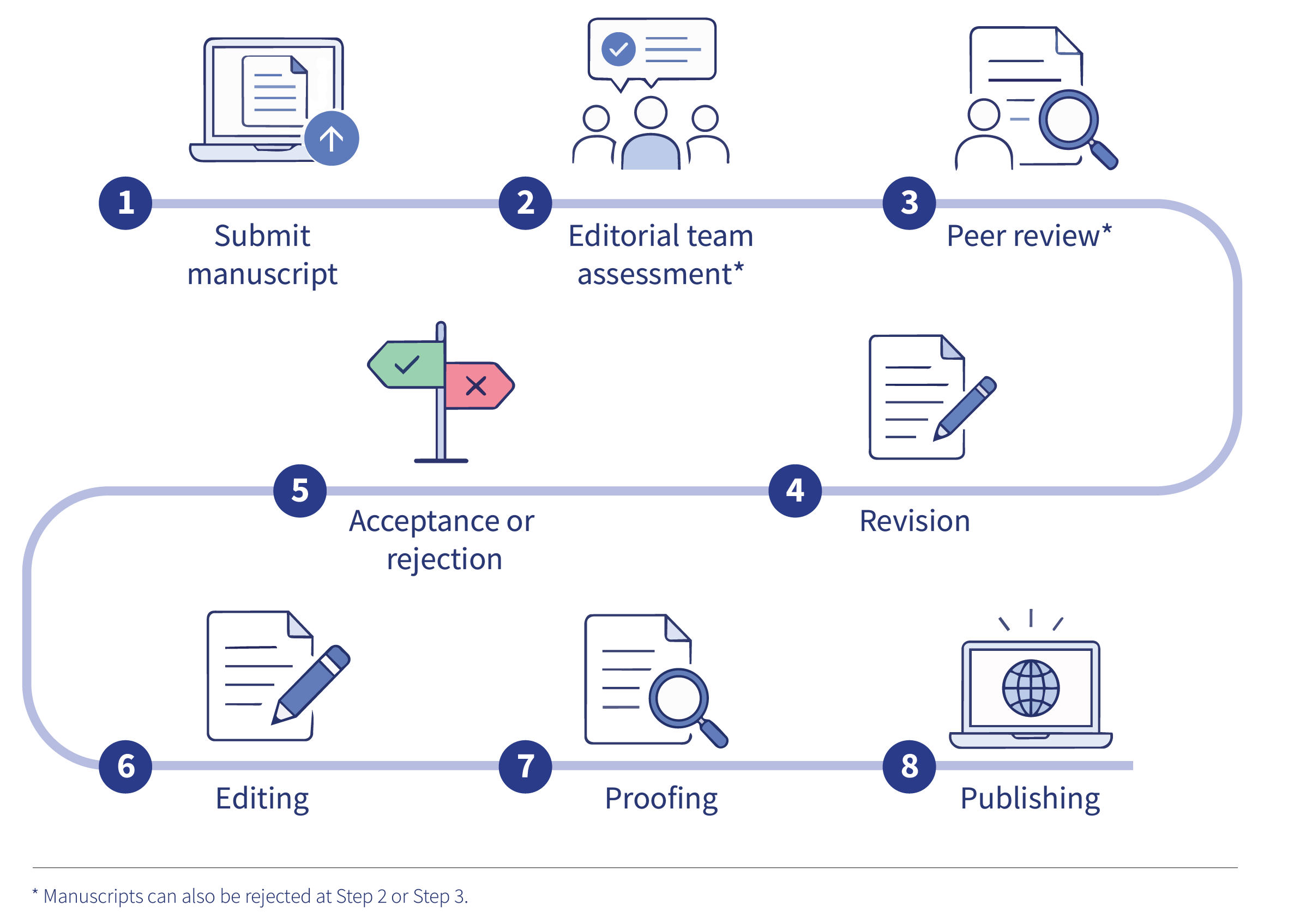
The MJA uses the ScholarOne manuscript tracking system.
New and revised submissions should be submitted to www.mja.com.au/submissions
We do not have a standard process for pre-submission enquiries. Please do not sent routine enquiries by email, e.g. about scope for individual papers, that can be answered by reading our journal guidelines. Submitting via ScholarOne ensures a consistent, carefully monitored process for submissions. Email enquiries add an extra step and time to the assessment of routine submissions.
First-time users should select "Create an Account" from the login box on the ScholarOne web page and enter the requested information. Once successfully registered, you will be sent an email containing your username and password. You need these to log in.
Registered users can log in on the home page of ScholarOne by providing their username and password. Once logged in, please select “Author” tab. This will enable you to submit your manuscript and track its progress through the system.
For further information on the ScholarOne system, review the help section of ScholarOne: http://mchelp.manuscriptcentral.com/gethelpnow/training/author/.
Authors who have difficulty using the ScholarOne system should contact mja@mja.com.au.
Before you begin submission, please have the following ready:
Information about all your co-authors. Once an author has been registered and/or added to a manuscript, they will receive an email when the manuscript has been formally submitted, asking them to update their registration. We strongly encourage all authors to add their ORCID ID at this stage.
Your cover letter: This should be submitted online with your manuscript. It can contain author-identifying information as it will not be shown to peer reviewers. It should include a brief outline of the context of your work, including what your manuscript adds to current knowledge on the topic, to assist MJA editors in their initial assessment of your manuscript. State why the manuscript should be published in the MJA and confirmation that the manuscript content (in part or in full) has not been concurrently submitted or previously published elsewhere. Please include information about any related manuscripts.
Your title page: Please include a title page with your submission (separate Word document) with title, all author names (first name, initials, surname), affiliations (institution, city, state, country), with the corresponding author noted and their email address provided. In the affiliations, note that we do not include schools, departments, units, disciplines, colleges or faculties within institutions; we only include primary institutions. Please also include any funding information, conflicts of interest, acknowledgements, the author contribution statement and the data sharing statement (if applicable). This page will not be sent to peer reviewers.
Your manuscript and any related files: The manuscript should be a de-identified Microsoft Word document. Please include any supplemental files associated with your manuscript, such as images, tables etc. The MJA uses "double anonymous " peer review, in which reviewers are not told the identity of the authors, nor are the authors told the identity of the reviewers. To preserve anonymity, the manuscript should not contain author-identifying information. You must ensure that competing interest and other required statements are entered into the appropriate place on the ScholarOne submission system.
MJA patient consent for publication of personal material: All manuscript submissions in which living or deceased patients are described, if any patients are potentially identifiable in the text or images, are required to obtain a signed patient permission form. Verbal consent is not permitted. Authors must keep this form with the patient records and will be required to declare on the submission system that consent has been obtained. The paper must include a statement that consent has been obtained. Do not submit the signed form to the journal, unless the MJA specifically requests it. We reserve the right to request this form at any time before or after publication. Failure to produce a form on request will lead to the retraction of the paper. Please note we do not accept patient consent forms from institutions or other medical journals. Download the MJA patient consent form here.
Manuscripts submitted to the MJA are acknowledged by email. If manuscripts are submitted without all required items, they will be returned to authors and not processed until all items are received.
All manuscripts are initially reviewed by the MJA team, which includes the Editor-in-Chief, the Deputy Editors and Associate Editors.
Manuscripts considered potentially suitable for the MJA by the editorial team are sent, anonymised, to two or more experts for their opinion on scientific validity, clinical impact and overall appropriateness for publication. Peer review at the MJA is a double-anonymous process — neither authors nor reviewers are made aware of each other’s identities. Manuscripts are then reassessed at an editorial team meeting, taking the reviewers’ opinions and the requirements of the Journal into account. At this stage, a decision will be made to accept, reject, or offer the opportunity to revise the manuscript. The editorial team's decision about whether a manuscript is appropriate for publication in the MJA takes precedence over any recommendations made by the reviewers. Reviewers are currently given two weeks to complete a full research manuscript review, but the overall process may take longer if difficulties are encountered in locating suitable reviewers, or if conflicting opinions necessitate soliciting an extra review. Corresponding authors can check the status of their submission at any time and should communicate this to their co-authors. Decisions are communicated by email to all authors registered on a submission. See also the MJA’s guidelines for reviewers.
An invitation to revise a manuscript does not mean that the manuscript has been accepted for publication, but is an opportunity for authors to revise in order to allow the editorial team to make a decision about suitability for publication. Authors are generally given three weeks to return the revised manuscript to the Journal, though extensions can be offered on request. Revisions must be prepared with the use of highlighting or tracked changes to enable the editors to easily see where changes have been made, and should be resubmitted together with a letter outlining the responses to the reviewers' comments and a clean version of the manuscript. Authors are not obliged to make revisions for all reviewer suggestions in the manuscript, but must respond to all reviewer and editorial comments in their covering letter.
Revisions must be resubmitted under the original manuscript number. Access to the submission can be found via the submitting authors registration. If the submission deadline has passed and the submission is closed, please contact the MJA at mja@mja.com.au.
Articles deemed suitable for acceptance will usually be provisionally accepted prior to final acceptance, pending any outstanding minor alterations, or additional material requested by the editorial team. Articles will not be formally accepted or proceed any further towards publication until all required documents have been received.
The final decision about publication is made by the editorial team.
The MJA considers appeals against decisions to reject a manuscript only if the authors can indicate that an error or misunderstanding has been made by the reviewers or editors. If this is the case, authors should submit a detailed rebuttal letter in the first instance, not a revised manuscript. All appeals are considered carefully, and some manuscripts may be sent for further review. An offer may be made to submit a revised article for reassessment, but this does not guarantee acceptance, and the revised manuscript may have to enter, or re-enter, the peer review process. Authors are given 21 days to appeal after the date of rejection.
All accepted articles are edited for brevity and clarity and to conform with MJA style by our experienced team of scientific and structural editors. For some articles, editing can be extensive. Authors generally receive the edited version of their manuscript for checking of accuracy and to respond to queries that arise during the editing process; your comments and corrections will be saved as tracked changes. Galley proofs may not be sent for smaller items, such as Letters to the Editor, if no substantial changes have been made.
Please log into ScholarOne, access the Author Centre, and click on “Manuscripts Accepted for First Look” under “My Manuscripts” to return the commented version of your edited manuscript. The scientific and structural editors will adjust your manuscript accordingly before sending it to publication. More complex manuscripts may require two or more rounds of editing, but your manuscript will not be sent for publication before you approve the final version.
The MJA publishes articles reporting original research of direct significance for clinical medicine and of interest to a broad medical audience. These include:
- studies that deliver new information about medical conditions in humans and their treatment;
- studies of health services and systems that evaluate outcomes;
- studies of other topics relevant to medical practice and policy, including the medical workforce, medical education, the wellbeing of medical practitioners, and the practice of medical research;
- analyses of published data from two or more sources that yield new information relevant to the above topics.
Studies using any method appropriate to the research question will be considered, including quantitative, qualitative, and modelling study designs. However, randomised controlled trials are strongly preferred for evaluations of medical treatments and other interventions.
Priority is given to publishing research studies that:
- advance knowledge or practice with respect to medical problems of significance for Australia and neighbouring countries;
- investigate clinical outcomes;
- include samples representative of the population being studied;
- employ robust designs (randomised controlled trials of interventions, prospective observational studies);
- conform fully with established guidelines pertaining to the study design employed and the research question.
Lower priority is given to:
- studies unlikely to contribute to improvements in clinical practice, health care policy, medical education, or further research;
- small sample studies undertaken in single institutions;
- studies of health service processes without meaningful clinical outcomes;
- studies that confirm earlier findings without substantially advancing knowledge further;
- studies reporting data of dubious currency or generalisability;
- studies of limited relevance to general readers, or with a narrow focus within a single specialty;
- poorly reported studies.
The MJA does not publish:
- research conducted in animal or laboratory models, or basic scientific, statistical, or social sciences research without direct application to clinical practice or health care delivery;
- research or analysis that has no relevance to Australian health care or practice.
Quick formatting guidelines
- Approximately 3000 words (main text);
- 40 references;
- 300-word structured abstract;
- up to ten figures or tables, some of which may be in an appendix.
Plain Language Summary box using the following headings/content: “The known” [the starting point for your investigation], “The new” [your major novel finding] and “The implications” [the consequences of your finding] (maximum 100 words).
For all study types, we require the use of the relevant reporting guidelines. You must submit the relevant checklist with your paper; if the manuscript is accepted it will be published as supplementary information. A comprehensive selection is provided on the Enhancing the QUAlity and Transparency Of health Research (EQUATOR Network) website, including:
- randomised trials: CONSORT (and extensions);
- observational studies (including cohort, case-control, and cross-sectional studies): STROBE (and extensions);
- diagnostic/prognostic studies: STARD, TRIPOD;
- case reports: CARE (and extensions);
- qualitative research: SRQR, COREQ;
- quality improvement studies: SQUIRE;
- online surveys: CHERRIES.
Detailed instructions for manuscripts are provided here.
It will help the timely assessment of your paper if you adhere to these formats, as it ensures that all the information needed for peer review are present, including being reported according to relevant reporting guidelines as listed at EQUATOR. If you believe your research paper is of interest to the MJA but does not fit into our standard format, please either outline the reason why in your cover letter or contact the Journal at mja@mja.com.au.
Randomised trials
Trials must be reported according to CONSORT (Consolidated Standards of Reporting Trials) guidelines. Please include a CONSORT flowchart for the trial, as a completed CONSORT checklist.
Trials must be registered prior to commencement in a public trials registry (see Clinical trials under editorial policies), and the Abstract and Methods section should include the trial registration date.
The original trial protocol or a reference to an available online version should be provided, together with a brief explanation of any deviations by the study from the protocol. A link to these will be made available from the published article.
Reports should include complete reporting of all pre-planned analyses.
Survey research
In addition to the general requirements for Research articles, the following quality criteria are the minimal requirements for survey-based research published by the MJA as Research articles:
- a clearly defined probabilistic population sample;
- copies of the invitation to participate and a copy of the survey text.
As for all Research articles, the design of the survey should be reported in the Methods, including clear and justified definitions of the research question and all key terms, development of the survey instrument (and its piloting and validation), its administration, and a complete statistical analysis plan.
The data underlying all reported analyses (ie, summary of raw responses) should be included in the Supporting Information file.
Research letters provide novel research observations in concise form (approximately 750 words). Apart from not including Plain Language Summary boxes or section headings, they are structured in the same manner as Research articles with Introduction, Methods, Results, Discussion including limitations, and associated end matter statements, as shown here.
A systematic review collates evidence from individual clinical studies and systematically minimises selection bias by applying strict criteria for study inclusion and exclusion, to develop a critically appraised review of evidence regarding a specific research question. A meta-analysis article synthesises the results of multiple studies, integrating the findings. Systematic reviews should be prospectively registered with PROSPERO, the international register for protocols of systematic reviews in health and social care.
Perspectives discuss current questions that affect health care practice and policy, including the impact of technological, social, cultural, political, environmental, and other factors. Discussions of the implications of published research findings and health-related data are welcome. Articles should be scholarly in tone and be supported by referenced evidence.
Quick formatting guidelines
Approximately
- 750–1500 words (main text only);
- 25 references;
- 100-word unstructured abstract.
Detailed instructions for manuscripts are provided here.
This article type is either a full publication or a concise summary for the general medical reader of updates or changes in clinical management or policy as recommended by relevant national or international specialty societies or other recognised bodies.
For summaries, the article must include a reference to the full guidelines, preferably that are free or open access. The summary should not contain unpublished information or information not included in the full guideline.
Quick formatting guidelines
Approximately
- no more than 3000 words (main text);
- two figures, tables or boxes;
- up to 50 references;
- 300-word abstract with the headings "Introduction", "Main recommendations", "Changes in clinical management as a result of the guideline/statement";
- main text to include the headings: "Background", "Methods", "Recommendations";
- a summarising infographic/flowchart that illustrates the framework of recommendations or guidelines, if possible.
Detailed instructions for manuscripts are provided here.
Lessons from practice
This article type includes descriptions of conditions that are often missed, or that have serious consequences if missed. The lessons should be important for diagnosis or management. We do not publish cases that have been mismanaged.
Quick formatting guidelines
Approximately
- 750 words (main text only);
- ten references;
- 100-word unstructured abstract;
- use “Clinical record” and “Discussion” headings;
- a separate box containing up to four brief bullet points highlighting the main lessons.
In addition
- Please provide high resolution clinical images.
- MJA patient consent form completed by the patient/s (or their next-of-kin or legal guardian) must be signed, submitted and dated within 18 months of time of submission. Authors must keep this form with the patient records and will be required to declare on the submission system that consent has been obtained. The paper must include a statement that consent has been obtained. Do not submit the signed form to the Journal, unless the MJA specifically requests it. We reserve the right to request this form at any time before or after publication. Failure to produce a form on request will lead to the retraction of the paper. Please note we do not accept patient consent forms from institutions or other medical journals.
- The senior clinician responsible for the patient's overall management should be included among the authors as well as appropriate representation if a multidisciplinary team was involved.
Detailed instructions for manuscripts are provided here.
Snapshots
These article types include interesting or unusual instructive clinical images accompanied by a very brief explanation.
Quick formatting guidelines
Approximately
- 100 words (main text only);
- one clinical image;
- five references;
- two authors;
- 50-word unstructured abstract.
In addition
- MJA Patient consent form completed by the patient/s (or their next-of-kin or legal guardian) must be signed and dated within 18 months of time of submission. Authors must keep this form with the patient records and will be required to declare on the submission system that consent has been obtained. The paper must include a statement that consent has been obtained. Do not submit the signed form to the journal, unless the MJA specifically requests it. We reserve the right to request this form at any time before or after publication. Failure to produce a form on request will lead to the retraction of the paper. Please note we do not accept patient consent forms from institutions or other medical journals.
- The senior clinician responsible for the patient's overall management should be included among the authors as well as appropriate representation if a multidisciplinary team was involved.
Detailed instructions for manuscripts are provided here.
Key research skills
Manuscripts in the Key research skills series explain core skills in study design, research development, and statistical analysis. Discussion of statistical concepts should be aimed at the MJA general medical readership. These articles are commissioned only.
Quick formatting guidelines
Approximately
- 1500 words (main text only);
- 25 references;
- at least one of any of the following: tables, figures or boxes;
- 100-word unstructured abstract.
Detailed instructions for manuscripts are provided here.
These articles discuss ethical or legal issues related to patient care. They should have a clinical focus and case scenarios should be considered to help illustrate important points.
Quick formatting guidelines
Approximately
- 1500 words (main text only);
- 15 references;
- 100-word unstructured abstract.
In addition
- If a case scenario describes an actual patient, the MJA Patient consent form completed by the patient/s (or their next-of-kin or legal guardian) must be signed and dated within 18 months of time of submission. Authors must keep this form with the patient records and will be required to declare on the submission system that consent has been obtained. The paper must include a statement that consent has been obtained. Do not submit the signed form to the Journal, unless the MJA specifically requests it. We reserve the right to request this form at any time before or after publication. Failure to produce a form on request will lead to the retraction of the paper. Please note we do not accept patient consent forms from institutions or other medical journals. Download the MJA patient consent form here.
Detailed instructions for manuscripts are provided here.
The Reflections section contains articles about personal experiences related to medicine.
Quick formatting guidelines
Approximately
- 1500 words (main text only);
- five references;
- two authors;
- 50-word unstructured abstract.
Detailed instructions for manuscripts are provided here.
History articles are scholarly essays on interesting aspects of the history of medicine. An Australian perspective is preferred but not essential.
Quick formatting guidelines
Approximately
- 1500 words (main text only);
- ten references;
- 100-word unstructured abstract that will be used in correspondence with reviewers.
Detailed instructions for manuscripts are provided here.
A narrative review is an evidence-based discussion of a particular topic in clinical medicine, population health, or health policy. Through critical engagement with relevant evidence and drawing on experience, authors should provide an appraisal of current knowledge on a topic, identify important gaps, and can make recommendations for future research, clinical, and policy priorities.
Quick formatting guidelines
A concise description of the sources and selection criteria (search strategy) used for your literature review must be included in the main text, immediately after the Introduction.
Approximately
- 3000 words (main text only);
- 75 references;
- 250-word unstructured abstract covering the key points.
Detailed instructions for manuscripts are provided here.
Editorials are commissioned authoritative commentaries generally linked to research articles published in the same issue of the Journal.
Quick formatting guidelines
Approximately
- 750 to 1000 words (main text);
- ten to 15 references;
- one figure or table (optional);
- 100-word unstructured abstract.
Detailed instructions for manuscripts are provided here.
Letters on new topics
Letters to the Editor are brief comments on issues of relevance to medical practice or health policy, which may include controversial issues. Assertions must be supported by appropriate evidence that is referenced.
Quick formatting guidelines
Approximately
- 350 words (main text only);
- five references;
- one small text box, table or figure (optional).
In addition
- 50-word abstract that will be used in correspondence with reviewers.
Detailed instructions for manuscripts are provided here.
Comments on published MJA articles
These should be succinct, make a new point worth publishing and both these letters and any replies should be professional and constructive in tone. They should not contain substantive amounts of original research.
Quick formatting guidelines
Approximately:
- 350 words (main text only);
- five references;
- please include the published article you are commenting on as the first reference;
- for indexing purposes, please use the same title as the article on which you are commenting.
Detailed instructions for manuscripts are provided here.
Comments about MJA articles should be submitted within two months of first publication of the article online. Note: a decision may not be made until after this time has elapsed and the authors have been given the option to submit a formal reply.
Letters by authors of published MJA articles in reply to comments
These are commissioned only.
Quick formatting guidelines
Approximately:
- 350 words (main text only);
- five references.
Letters should reference the original article and the letter or letters commenting on the original published article. These letters are commissioned.
Letters should be appropriately referenced in the same style and format as other MJA articles.
Detailed instructions for manuscripts are provided here.
Authors' competing interests
To maintain public trust in what we publish, the MJA requires all authors to declare all relevant financial and non-financial relationships and activities that might represent competing interests (sometimes called conflicts of interest). Potential competing interests exist when “professional judgment concerning a primary interest (such as patients' welfare or the validity of research) may be influenced by a secondary interest (such as financial gain). Perceptions of competing interests are as important as actual competing interest[s]” (ICMJE).
Declaring relationships and activities that could be competing interests is not an expression of wrongdoing. Indeed, they are often unavoidable, but we need to know about them as part of the MJA’s decision-making process. There will be instances when we decide not to commission or publish a paper if there is a high risk that competing interests may be too substantial.
The disclosure of interest statement should advise readers of any personal financial or non-financial relationships and activities on the part of each author that might be perceived to influence, or potentially influence, the article. These include:
- relevant competing interests for your submitted article,
- relevant financial activities outside the submitted article in the 36 months before submission;
- intellectual property, including patents and copyrights; and
- other relevant relationships not covered above.
If there are no competing interests, please write "Competing interests: No relevant disclosures".
Examples of disclosure statements are:
- John Brown receives consultancy fees from Pharma Company AB and honoraria for giving lectures organised by Pharma Company CD; he has undertaken clinical trials funded by Pharma Company EF.
- Jane Lee is on the advisory board of Pharma Company GH and is a member of the Rights for Advocacy Group IJ.
- Tony Citizen holds shares in Device Company KL.
Reviewers’ competing interests
Reviewers must recuse themselves from handling any paper where they have a potential or actual competing interest.
Editors’ competing interests
The Journal editors will recuse themselves from handling any paper where they have a potential or actual competing interest.
While the MJA employs a rigorous peer review process to ensure that we publish only high quality articles, we are occasionally required to investigate a published article because of an identified error or scientific misconduct.
If readers identify an error, they should contact the journal at mja@mja.com.au.
Retractions will be considered when there is evidence of:
- unreliable data or findings: including fabrication, deceptive reporting, and omission of data or other information that contradict the reported data;
- plagiarism: including unacknowledged copying of the published or unpublished ideas, thoughts, or other intellectual property of third parties;
- misrepresentation of authorship: including the exclusion of contributors who met our authorship criteria, inclusion as authors of persons who did not meet our authorship criteria, and submission of multi-authored manuscripts without the knowledge and approval of all authors;
- intentional failure to declare competing interests or funding relevant to the article;
- articles describing research that breaches Australian standards of ethical research, clinical practice, and professional behaviour; or
- any other reason that causes the MJA editorial staff to have doubts about the veracity, completeness, or ethical acceptability of the article or its origin.
If misconduct is alleged or other concerns are raised about the integrity of a published article, the MJA Editor-in-Chief will initiate its assessment. The MJA acknowledges that each case of error or misconduct may also need to be separately investigated by other relevant stakeholders. During the investigation, the MJA has the right to publish an “expression of concern” notice.
If the investigation cannot be resolved by discussion with the article authors and the appropriate stakeholders, the MJA will consider referring the matter to the MJA Editorial Advisory Group. If the investigation still cannot be sufficiently resolved, the MJA reserves the right to retract the published article.
Unintentional errors can arise that require correction. We encourage authors to contact us as soon as possible should they discover an error of content or analysis in their article that needs to be corrected. If the article has been published in the Wiley Online Library but not yet in the issue to which it has been allocated, the correction in the article is accompanied by a note recording the change. If the issue including the article has been published, an erratum notice, linked to the article, will be published in the Wiley Online Library, on the MJA site, and in the next MJA issue that appears after the publication of the electronic notices. Should the nature of the error be deemed to significantly affect the credibility of the article or the conclusions drawn, the MJA may instead consider retracting the article. If the error doesn’t affect the intended meaning of the content or indexing of the authors, the MJA reserves the right to not issue a correction.
- All experimental investigations on humans should have received ethics approval, and the name of the ethics committee or institutional review board that gave approval for the study must be stated in the Methods section of the report as well as the approval number.
- All experimental investigations on humans must include a statement in the Methods section that the subjects gave their informed consent.
- Studies involving Aboriginal or Torres Strait Islander people must also state that they have been approved by the relevant local Indigenous representatives.
- Studies conducted for quality assurance purposes, or audits, must have formal ethics approval or an ethics committee waiver for publication; approval to conduct research for quality assurance purposes alone is insufficient for publication.
Particular care needs to be taken for any images of intimate areas of children. These images may be considered as pornographic and we will not publish them.
Unless published open access, authors will be asked to transfer copyright to the Australasian Medical Publishing Company (AMPCo) Ltd before their article is published by the Medical Journal of Australia (MJA). See Wiley information on licensing and author services.
Authors retain the copyright of open access articles; these articles may be reused, subject to the terms of the relevant Creative Commons license. Manuscripts that are not open access may not be published elsewhere, in whole or in part, without written permission from AMPCo. See here.
For further information about the MJA’s policy on copyright and permission to reproduce material from the MJA in other publications, see our Copyright and linking policy.
Please acknowledge any funding sources for the work and outline their role in the planning, writing or publication of the work, or, for a research paper, any role in study design, data collection, analysis or interpretation, reporting or publication.
Please acknowledge anyone who contributed to the article or study (eg, by collecting data or assisting with analysis) but who does not meet the above Authorship criteria 1, 2, 3 and 4. Any person named in your Acknowledgements must indicate that they have approved being acknowledged in your article. The corresponding author should collate and forward such permissions. Emails are acceptable. It is the responsibility of the principal author to obtain permission to acknowledge individuals; if permission is not obtained, the names cannot be published.
- The MJA requires the registration of trials as an important initiative to improve the reporting of clinical studies.
- Clinical trials that began enrolling patients after 1 July 2005 must have been registered in a public trials registry at or before the onset of enrolment to be considered for publication.
- If you are submitting a randomised controlled trial, please add the registration number of the trial and the name of the trial registry in the abstract of your manuscript.
- The Australian and New Zealand Clinical Trials Registry is located at the National Health and Medical Research Council Clinical Trials Centre at the University of Sydney.
- There are other trial registers that currently meet all of the International Committee of Medical Journal Editors (ICMJE) and World Health Organization (WHO) requirements.
- The MJA follows the ICMJE policy on data sharing (see here).
- We expect authors to be aware of the FAIR principles and the CARE principles for Indigenous research data.
- The MJA strongly encourages the open sharing of data and code.
- At a minimum, authors must include a data, code and materials sharing statement in their manuscript.
Examples of appropriate statements are below:
1. Data/code/materials are available in a public, open-access repository.
Please describe which data/code/materials are available and where. Please provide the repository name, URL and any conditions for access (eg, any license or embargo restrictions).
2. Data/code/materials are available upon request.
Please describe which data/code/materials are available, from whom they are available, how they should be contacted, and how data may be reused.
3. All data/code/materials relevant to the study are included in the article or are available as supplementary files.
Please ensure that no patient-identifiable data are available.
4. There are no data or study material available.
If data/code/materials are not available for legal or ethical reasons, this information must be included in the data, code and materials sharing statement.
5. There are no data in this manuscript.
Appropriate statement for editorials, perspectives or other non-research papers.
Authors will need to provide a letter of permission from the copyright holder for the use of material from other publications if the material is not fully open access. If a fee is payable, this is the responsibility of the author.
The Medical Journal of Australia (MJA) does not publish material which has been published elsewhere, including full manuscripts published in conference proceedings or online (other than as a preprint).
The MJA follows the International Committee of Medical Journal Editors (ICMJE) guidelines. Authors should not simultaneously submit the same manuscript, in any language, to any other journal (other than as a preprint), and should not release information from the manuscript into the public domain prior to the publication (or rejection) of any submission (except in the event of a public health emergency). Submissions for publication of a paper that overlaps substantially with an article that has already been published, without clear or visible reference to the previous publication, will not be accepted. Similar provisions apply if there has been prior release in the public domain of information related to the manuscript. Information about acceptable secondary publication and about submitting manuscripts based on the same data can be found on the ICMJE website.
Presentation of a study at a meeting or publication of an abstract does not preclude subsequent publication of the full manuscript in the MJA, provided that copies of the data or the full manuscript are not distributed to attendees or journalists, and no formal news conferences are held or media releases issued. Authors who wish to attend a meeting where such releases could occur should contact the journal before the meeting to discuss whether any proposed activities would jeopardise their chances of publication. If sufficient advance notice is given (minimum, four months), the MJA may be able to coordinate publication of an article with its presentation at a conference. This option must be discussed with the Editor, as fast-tracking of peer review will be required.
When submitting a manuscript that reports work that has already been reported to a significant degree in a published article, or that is included in or closely related to another manuscript that has been submitted or accepted for publication elsewhere, the authors should clearly state the details in the covering letter of their submission and provide copies of the related material.
If authors violate the MJA duplicate publication guidelines and the article is published prior to the Editor becoming aware of the duplication, the Editor has the right to retract the article with or without an explanation or approval from the authors.
Authors may be invited to write a summary or commentary about their article for another publication, including online publications and blogs. This is only permissible if the publication allows the MJA (and InSight+ if applicable) to publish the work first and the author ensures that the MJA is acknowledged as the source of the original material within the text of the new article, preferably with an active link direct to the original article on the MJA website if the new article is online.
These guidelines are taken from Wiley’s Ethics Guidelines.
Artificial intelligence-generated content (AIGC) tools — such as ChatGPT and others based on large language models (LLMs) — cannot be considered capable of initiating an original piece of research without direction by human authors. They also cannot be accountable for a published work or for research design, which is a generally held requirement of authorship (as discussed in the previous section), nor do they have legal standing or the ability to hold or assign copyright. Therefore, in accordance with COPE’s position statement on artificial intelligence tools, these tools cannot fulfill the role of, nor be listed as, an author of an article. If an author has used this kind of tool to develop any portion of a manuscript, its use must be described, transparently and in detail, in the Methods or Acknowledgements section.
The author is fully responsible for the accuracy of any information provided by the tool and for correctly referencing any supporting work on which that information depends. Tools that are used to improve spelling, grammar, and general editing are not included in the scope of these guidelines. The final decision about whether use of an AIGC tool is appropriate or permissible in the circumstances of a submitted manuscript or a published article lies with the MJA editorial team.
The MJA is committed to providing open access to its content. Open access ensures that:
- authors retain copyright and have control over the distribution of their article with a Creative Commons license.
- authors can thus fully comply with funder requirements for open access, including those of the National Health and Medical Research Council, the Medical Research Future Fund and the Australian Research Council.
Repository-based open access
Authors may immediately deposit the final version of an open access article in an online repository or institutional or personal website following publication. For non-open access articles, authors may deposit the author-accepted version after 12 months.
Journal-based open access
This option is made available through the MJA’s publishing partner, Wiley. Articles are made openly available via Wiley Online Library and on the MJA website.
Authors can also immediately post the final, published PDF (version of record) of their article on a website, institutional repository, or other free public server.
Articles will be automatically submitted to PubMed Central and PMC mirror sites, when appropriate.
Responsible corresponding authors currently affiliated with specific institutions can publish open access with no article publication charges (APCs), as part of an agreement negotiated by the Council of Australian University Librarians with Wiley.
See here for the list of institutions.
Authors whose institutions are not participating in the Wiley agreement need to pay an article publication charge (APC) of US$3910 for journal based open access. Costs correct as of April 2026.
Please contact your institution’s library if you have any questions.
All articles related to Indigenous health are, made freely available to all at no cost even if authors are not eligible for open access costs to be covered as above.
Find out here if your institution or funder may cover your open access APCs.
CAUL–Wiley Agreement
Open access funding for CAUL institutions through the agreement with Wiley has been exhausted for 2025 and is currently unavailable. If you intend to publish your article open access and wish to pay for the article’s APC yourself, as an author affiliated with a CAUL institution, you are eligible for a 10% discount. Please contact your institution’s library if you have any questions.
The MJA publishes occasional sponsored supplements or collections. These must be of the same standard as articles published in the Journal, and the same criteria that apply to the Journal are used to determine what is to be published in a supplement or collection.
The MJA Editor-in-Chief may choose to have supplements or collections coordinated in-house by one of the MJA editorial team or appoint one or more guest editors.
To decide whether to proceed with commissioning a supplement or collection, the MJA requires a list of manuscripts planned for the supplement or collection and the names and details of each manuscript author and proposed lead author(s). The lead author(s) may assist in coordinating material. Any competing interests of the lead authors must be fully declared to the MJA.
All supplement or collection manuscripts are processed by the MJA’s team of medical editors following the Journal’s standard procedures.
The MJA is a general medical journal, and all content within the Journal and its supplements or collections are peer-reviewed. This process applies to all manuscripts intended for publication in a supplement or collection. Not all manuscripts submitted for a supplement or collection will necessarily be published.
All MJA supplements and collections are digital-only unless otherwise agreed and are also distributed via the Wiley Online Library.
The MJA Editor-in-Chief has the final right to accept or reject the publication of all supplements and collections and individual manuscripts within each supplement or collection.
The supplement or collection agreement and all financial matters are managed by the AMPCo Head of Finance & Corporate Services.
Advertising
- Names and logos of the sponsoring organisations can be published on an allocated page of the supplement or collection.
- No content-specific advertising can appear within a sponsored supplement or collections.
Further information: Please contact vbarbour@mja.com.au
Please read Types of articles published by the MJA first
The main text of the manuscript should be supplied as a fully editable Word document, in 12pt Times New Roman with 1.5-line spacing and normal margins. Do not use footnotes or endnotes (they will be lost during pre-processing of your manuscript).
Tables, figures and their titles should be included at the end of the manuscript, after the References.
Please ensure that tables meet the following requirements:
- Supply tables as an editable Word text (not images or pdfs).
- Use a maximum width of 19 cm for those included in the main text and of 25 cm for the appendix — authors can determine the width of their table by inserting a temporary row at the top of the table, merging all cells in this row, then reading the width from “Cell size” in the Table Layout section of the Word ribbon.
- Use 8 pt Arial font.
- Do not merge cells below the header rows; all rows must span the table from left to right, all data columns must span the table from below the header rows to the bottom of the table.
- Do not use the space bar or tab key to indent text.
- Do not include numbers (ie, n = ...) in the header rows; they should be moved to separate, labelled data rows.
- In Table layout, select “None” for Text wrapping.
Images (photos, graphs) should also be supplied as image files of at least 2000 x 2000 pixel size. We prefer TIFF files (minimum resolution, 300dpi), but JPG, EPS, and PNG files are acceptable. If arrows or other labels are required on your photograph, please supply two copies: one with labels (to indicate position) and one without. Provide a letter of permission from the copyright holder for the use of images from other publications or photos of people. Figures are usually published as provided by the author. Figures are not routinely redesigned before publishing.
For graphs, please also provide the data from which the graphs were generated as an Excel or Word file.
Flow charts should be supplied as fully editable Word files.
Supporting Information (Appendices) should be prepared as fully editable Word files, and formatted in the same manner as the main manuscript.
Authors are requested to check the layout and style of MJA articles of the type they intend to submit before preparing their submission.
Please be mindful that the MJA has a broad readership, not all of whom will be acquainted with your specialty or topic. Please use humanistic language that recognises people as human beings, not cases or biological subjects.
- The MJA uses British English.
- Abbreviations should be used sparingly, and ALL should be spelled out on first use in the abstract and in the main text.
- Provide reference intervals when reporting laboratory findings.
- Refer to drugs by their generic (not their proprietary) names.
- Provide absolute numbers (with denominators) when citing percentages.
- Report P values to three decimal places if statistically significant (if less than 0.001, use P < 0.001), and to two decimal places if not significant.
References
- The accuracy of references is the responsibility of authors; good referencing is a key component of good scientific practice and a courtesy to your readers.
- References should be inserted in the text as numbers in square brackets, in order of citation.
- EndNote: convert the references to plain text before submitting your manuscript (EndNote/Bibliography/Convert citations and bibliography function in Word).
- References in tables and figures should be numbered according to the position of the first referral to the table/figure in the main text.
- Provide the surnames and initials of all authors; do not abbreviate corporate author names (eg, “World Health Organization”, not “WHO”).
- For journal article references, provide the volume and issue number and the first and last page numbers in full. Do not cite the DOI if volume/page numbers are available.
- Unpublished journal articles may only be cited as full references if a DOI number can be provided.
- Personal communications and unpublished articles cited in the text must name the source and their affiliation; written permission from the cited people cited must be provided to the journal.
- For online references, URLs alone are unacceptable, as are shortened URLs (eg, bit.ly). Please provide full publication details for online articles and web documents, including the viewing month and year.
Examples of major reference styles (Chicago note style)
Journal article
- For articles with 1 to 6 authors, list all authors and use “and” between last 2 authors:
G. Wolf and M. Bagaric, “Addressing a Human Rights Crisis: Health Care for Prisoners in Australia,” Journal of Law and Medicine 31, no. 1 (2024): 42–69.
C. H. You, K. Lee, R. Y. Chey and R. Meng, “Electrogastrographic study of patients with unexplained nausea, bloating, vomiting,” Gastroenterology 79, no. 2 (1980): 311–314.
M. A. Christino, A. P. Matson, S. A. Fischer, S. E. Reinert, C. W. Digiovanni, and P. D. Fadale, “Paperwork Versus Patient Care: A Nationwide Survey of Residents' Perceptions of Clinical Documentation Requirements and Patient Care,” Journal of Graduate Medical Education 5, no. 4 (2013): 600–604.
For articles with 7 or more authors, list 3 authors plus “et al”:
D. Botje, G. Ten Asbroek, T. Plochg, et al., “Are Performance Indicators Used for Hospital Quality Management: A Qualitative Interview Study Among Health Professionals and Quality Managers in The Netherlands,” BMC Health Services Research 16, no. 1 (2016): 574.
T. D. Shanafelt, L. N. Dyrbye, C. Sinsky, et al., “Relationship Between Clerical Burden and Characteristics of the Electronic Environment With Physician Burnout and Professional Satisfaction,” Mayo Clinic Proceedings 91, no. 7 (2016): 836–848.
Journal article (not yet published in journal)
D. Feir and S. Mann, “Temporal Trends in Mental Health in the United States by Gender Identity, 2014–2021,” American Journal of Public Health, ahead of print, February 29, 2024, https://doi.org/10.2105/AJPH.2024.307603.
Preprint
S. J. Chae, S. Shin, S. Lee, and J. K. Kim, “From Homogeneity to Heterogeneity: Refining Stochastic Simulations of Gene Regulation,” preprint, bioRxiv, September 24, 2024, https://doi.org/10.1101/2024.09.24.614828
Online articles
World Health Organization, Status Report on Prison Health in the WHO European Region (WHO, 2023), https://www.who.int/europe/publications/i/item/9789289058674
Australian Medical Association, AMA 2023 Position Statement on Custodial Health (AMA, 2023), https://www.ama.com.au/articles/ama-2023-position-statement-custodial-health (viewed May 2021).
Web document
Australian Government Australian Institute of Health and Welfare, National Data on the Health of Justice-Involved Young People: A Feasibility Study 2016–17 (AIHW, 2018), Available from: https://www.aihw.gov.au/reports/youth-justice/health-justice-involved-young-people-2016-17/summary.
M. Kobari, Changes in Japan's Rice Policies: Looking Back on 15 Years Since the Principle and Outline of Rice Policy Reform in 2002 (Norinchukin Research Institute, 2018), https://www.nochuri.co.jp/english/reports.html.
G. Leng, The Leng Review: An Independent Review Into Physician Associate and Anaesthesia Associate Professions [Internet] (United Kingdom Government Department of Health and Social Care, 2025), https://www.gov.uk/government/publications/independent-review-ofthe-physician-associate-and-anaesthesia-associate-roles-final-report/the-leng-review-an-independent-review-into-physician-associate-andanaesthesia-associate-professions.
Book
M. Pollan, The Omnivore’s Dilemma: A Natural History of Four Meals (Penguin, 2008).
J. Green and N. Thorogood, Qualitative Methods for Health Research, 4th ed. (Sage, 2018).
Book chapter
C. G. Messing, J. K. Reed, and S. W. Ross, “Deep-Water Coral Reefs of the United States,” in Coral Reefs of the USA, ed. B. M. Riegl and R. E. Dodge (Springer, 2008), 767–792.
End matter
For all article types, include the following:
- Author Contributions using one or more of the 14 contributor roles in the CRediT taxonomy.
- Acknowledgements (entered by authors in Scholar One): list all sources of financial, material, and other support for the investigation, including salary support for each of the investigators, and a statement on any role in the study played by the providers of such support. You may also acknowledge any person who contributed to the investigation but did not qualify as an author, including their primary affiliation and contribution to the study (e.g., study design, data collection, analysis or interpretation, manuscript preparation). You must provide written confirmation (e.g., email) from each individual (but not organisations) that they are willing to be acknowledged in the MJA.
- Funding statement declaring any funding sources or use “The authors have nothing to report” if applicable.
- Artificial Intelligence (AI) statement declaring if an AI tool was used in part of this submission.
- Conflicts of Interests (entered by authors in Scholar One): include any associations or interests that might be regarded as potentially influencing the disinterestedness of an investigator with respect to the reported study (e.g., research funding, consultancy fees, advisory board membership). If there are no conflicts of interest, write: Conflicts of interests: No relevant disclosures. These declarations will be included in the published paper.
- Data Sharing statement: describe when and how the raw data for the study will be available for inspection by interested parties, or provide a precise reason for which the data will not be shared. Include a statement that all authors had full access to all of the data (including statistical reports and tables) related to the study. See example statements below:
- The study data are available at this URL.
- The study data can be accessed by contacting the corresponding author.
- The data for this study will not be shared, as we do not have permission from the participants or ethics approval to do so.
- The de-identified data we analysed are not publicly available, but requests to the corresponding author for the data will be considered on a case-by-case basis.
- This article includes no original data.
- A structured abstract (maximum 300 words), including the following headings:
- Objectives: a clear statement of the main aim or aims of the study (ie, not a background statement);
- Design (eg, prospective, randomised, placebo-controlled, case-controlled, crossover studies);
- Setting: where and when the study was undertaken, or the population covered by the analysis;
- Participants (if applicable): how participants were selected for the study;
- Intervention (if applicable): including both control and active/experimental interventions, and duration of intervention;
- Main outcome measures: precise definition of the primary and secondary outcomes;
- Results: include absolute event rates (not just proportions), confidence intervals, number needed to treat/harm etc, as appropriate;
- Conclusions: the interpretation and implications must be directly related to the results reported in the previous section;
- Trial registration (if applicable): registry and registration number for clinical trials.
- A Plain Language Summary box (maximum: 100 words) in plain English that summarises the significance of the article for general readers, with the headings: “The known” [the starting point for your investigation], “The new” [your major novel finding] and “The implications” [the consequences of your finding].
- The main text (1000 to 3000 words, unless otherwise negotiated) should be structured as follows:
- Introduction (maximum: 400 words): provide the background to the investigation, concluding with a clear statement of the aims of the study, ideally matching the Objectives section of the Abstract.
- Methods: include clear descriptions of the study design, the setting for the study (including identification of participating sites), participant recruitment and selection, data collection and storage, primary and secondary objectives, and data analysis and synthesis.
- An Ethics approval statement must be included as the closing subsection of the Methods section, or a statement that a requirement for formal ethics approval was waived by the applicable institutional ethics committee, providing the reason formal ethics approval was not deemed necessary, which much have been in consultation or following processes documented by the author(s) institutional ethics committees. Ethics approval statements should include the formal name of the ethics committee or institutional review board and the reference number of the approval. For studies involving Aboriginal or Torres Strait Islander people, approval by relevant local Indigenous representatives is also required.
- Results: include baseline characteristics for the study participants and results organised according to the primary and secondary objectives defined in the Methods, citing absolute as well as proportional figures (ie, not percentages alone) and providing uncertainty estimates (standard deviations, interquartile ranges, confidence intervals) appropriate for the statistics reported. Depiction of results in graphs is encouraged, with the underlying data tables included in the Supporting Information.
- Discussion: begin with a summary of the major findings of the study (one paragraph), place them in the context of previously published relevant studies and discuss their implications with respect to the research questions defined in the Introduction and recommended future directions. The Discussion should conclude with the two subsections Limitations (one paragraph, acknowledging any factors that should be taken into account when interpreting your findings, such as representativeness of the participants and missing data) and Conclusion (one paragraph, highlighting the main finding and its significance).
- References: maximum of 40 references, formatted in the Chicago note style.
- Images, tables: please place at the end of the main manuscript, together with detailed titles, after the References. All images should also be supplied as separate images files (acceptable formats: EPS, PNG; JPG or TIF: minimum 300dpi resolution). For graphs, please also supply a data table that will allow re-drawing in MJA style if required.
- If required, Supporting Information file should include:
- further information about study methods that would have excessively increased the size of the main article;
- supplementary results, figures and tables referred to in the main text but not essential for interpreting the primary and secondary outcomes of the study;
- non-standard, and/or unpublished questionnaires and other instruments employed in the study, as well as copies of any relevant documents (eg, patient information sheets, brochures);
- a separate reference list for items cited in the Supporting Information file.
- The Supporting Information file should be regarded as an adjunct to the main article and be structured with the reader in mind. It should be formatted to match the main article, its elements arranged according to their order of citation in the main manuscript, and it should not include any material without citation by the main article. Please note that the Scientific Editors do not edit or format the Supporting Information to the same degree as the main text; this is the responsibility of the authors.
- The following items will not be accessible to reviewers or included in the final publication, but should be supplied when applicable:
- Signed consent forms: if any person is potentially identifiable in the text or images Authors must keep this form with the patient records and will be required to declare on the submission system that consent has been obtained. The paper must include a statement that consent has been obtained. Do not submit the signed form to the journal, unless the MJA specifically requests it. We reserve the right to request this form at any time before or after publication. Failure to produce a form on request will lead to the retraction of the paper. Please note we do not accept patient consent forms from institutions or other medical journals.
- All manuscripts describing clinical trials should be accompanied by a complete copy of the original trial protocol, preferably a publicly accessible version, and a list and justification of all variations from this protocol.
- Copies of related published articles, particularly if the methods have been published elsewhere.
- Written permission from the legal copyright holders of any material (eg, images, tables, documents) you wish to reproduce in your article (including in the Supporting Information file), even in adapted form. Please note that not all Creative Commons licences permit use in a commercial publication.
A structured abstract (maximum 300 words), including the following headings:
- Objectives: statement of the focused question assessed by the authors in the review;
- Study design: including publication types included, assessment of evidence quality, and whether meta-analysis was undertaken;
- Data sources: all databases searched, other item sources, including time period covered;
- Data synthesis: summary of major results;
- Conclusions: implications of the review findings;
- Registration: systematic reviews should be prospectively registered with PROSPERO, the international register for protocols of systematic reviews in health and social care
The main text (2000 to 3000 words) must conform with the PRISMA recommendations (for meta-analyses of observational studies: the MOOSE checklist), and should be structured as follows:
- Introduction (maximum: 400 words): provide the background to the review, concluding with a clear statement of the aims of the study, ideally matching the Objectives section of the Abstract.
- Methods: include clear descriptions of the study design, study inclusion criteria and selection, data extraction and management, data synthesis, and quality of evidence assessment (strongly preferred: the GRADE approach for assessing quality of evidence and strength of recommendations).
- Results: include in the main text a PRISMA flowchart for study selection. One or more tables including the following characteristics should be included in the main text if practical, or in the Supporting Information file if it is not: study identifier (name or first author, with numbered reference), participant details, study inclusion criteria, sample sizes, study setting, intervention details (as applicable), measures, quality of evidence, risk of bias. When reporting the results of meta-analyses, the number of trials and participants included in the comparison should be stated, together with their reference numbers. If a meta-analysis, present the summary estimate and its precision (e.g., confidence interval) and measures of statistical heterogeneity.
- Discussion: commencing with a summary of the major findings of the review (one paragraph), place them in the context of previously published relevant studies and discuss their implications with respect to the research question assessed. The Discussion should conclude with the two subsections Limitations (one paragraph, acknowledging any factors that should be taken into account when interpreting your findings) and Conclusion (one paragraph, highlighting the main finding and its significance).
References: maximum of 100 references, formatted in the Chicago note style.
Images, tables: please place at the end of the main manuscript, together with detailed titles, after the References. All images should also be supplied as separate images files (acceptable formats: EPS, PNG; JPG or TIF: minimum 300dpi resolution). For graphs, please also supply a data table that will allow re-drawing in MJA style if required.
The Supporting Information file should include:
- further information about study methods that would have excessively increased the size of the main article, including the search strategy as a table and definitions of quality assessments;
- supplementary results, figures and tables referred to in the main text but not essential for interpreting the primary and secondary outcomes of the study;
- a separate reference list for items cited in the Supporting Information file. NB: In contrast to other article types, the reference numbers in the Supporting Information file should match those in the main manuscript, in order to assist readers cross-reference information in the two documents.
Note: "Guideline" below is used to refer to the following article types: guidelines, guideline summaries, consensus statements and position statements.
Quick formatting guidelines
Approximately
- no more than 3000 words (main text);
- two figures, tables or boxes;
- up to 50 references;
- 300-word abstract with the headings "Introduction", "Main recommendations", "Changes in clinical management as a result of the guideline/statement";
- main text to include the headings: "Background", "Methods", "Recommendations";
- a summarising infographic/flowchart that illustrates the framework of recommendations or guidelines, if possible.
Other essential information:
- Identify the intended guideline audience (eg, specialists, GPs, nurses, administrators etc) and how the guideline may be used by its target audience (eg, to inform clinical decisions, to inform policy, to inform standards of care).
- Clarify whether it is a full guideline or a concise summary of an existing guideline.
- Identify any other existing related guidelines.
- Provide an introduction that outlines the need for the guideline,. including the potential for the guideline to improve patient care. The key clinical questions covered in the guideline should be described clearly as well as changes in clinical management because of the guideline. If the guideline is an update, the reason for the update should be noted in addition to date of previous guideline.
- Describe the search methods including details of the strategy used to search for evidence and include names of electronic databases or evidence sources where the search was performed (eg, MEDLINE, EMBASE, PsycINFO, CINAHL). Include the time periods searched (eg, 1 January 2000 to 31 March, 2026) and precise search terms used (eg, text words, indexing terms, subheadings).
- Include in the methods section Governance and Stakeholder Inclusion (including backgrounds of the guideline development group members) and the guideline development process, including the methods used to reach a consensus/agreement (eg, Delphi/modified Delphi).
- Recommendations should include an assessment of quality and strength of evidence using the GRADE system, or an acceptable alternative system, should GRADE be inappropriate (article 1 and see also guidance by the NHMRC).
- Use an appropriate instrument such as the AGREE (Appraisal of Guidelines for Research and Evaluation) instrument for evaluating the process of practice guideline development and quality of reporting. and the ACCORD checklist for consensus statements. The completed checklist for the relevant instrument must be supplied on initial submission.
- To increase the utility of your article, we strongly recommend including a summarising infographic that illustrates the framework of recommendations or guidelines, if possible (see examples in https://www.mja.com.au/journal/2025/223/5/assessment-metabolic-dysfunction-associated-fatty-liver-disease-primary-care (Box 4); https://www.mja.com.au/journal/2025/223/3/australasian-diabetes-pregnancy-society-adips-2025-consensus-recommendations (Box 1).
- Provide a time interval or explicit criteria to guide decisions about when an update will occur. Identify any pre-existing guidelines on the topic which may have been withdrawn.
- Competing interests need to be declared and if present must include a description of how they were managed. MJA recommends adherence to the Guidelines International Network Principles for disclosure of interests and management of conflicts in guidelines.
- List organisations who have provided endorsement for the guidelines (and upload a copy of letter of support via a formal letter on organisational letterhead).
Provide unstructured abstract (between 50 and 250 words) depending on article type.
Instructions for reviewers
Please read these guidelines if reviewing for the MJA
Peer review is the cornerstone of the Medical Journal of Australia (MJA)’s publication of high quality research and commentary. It plays a crucial role in increasing the quality and impact of our published research and opinion papers. The MJA appreciates the generosity, time, support and commitment of peer reviewers. The MJA receives more than 1300 manuscripts per year and only publishes 10–20% of these. We aim to ensure every manuscript is given appropriate consideration.
A good review will identify inconsistencies or obvious errors in the manuscript, or the underlying research described. Peer review can also help authors improve the analysis and presentation of their work and ensure others understand the value of the research, in context of its limitations, and communicate this value to the Australian and international community.
The review process is managed via ScholarOne. Reviewers are invited via ScholarOne and can accept or decline to review at that stage. In that invitation, reviewers are provided with the manuscript’s abstract and specific comments or requests from the editors. As we aim to select reviewers carefully. If you are not able to review, we really appreciate reviewers letting us know rapidly and giving recommendations for colleagues who might review.
Reviewers should keep their review confidential. After checking with the handling editor, reviewers may consult with colleagues to complete their review. Reviewers should decline to review if they have a conflict of interest in relation to the manuscript. Reviewers will be asked to declare any conflict of interests at the time of submitting their review. This information is not passed onto the authors.
Different article types require different types of reviewer reports. The section below relates primarily to research articles but, where appropriate, information is discussed for other article types.
When writing a review, we recommend writing it in Word or another document outside of ScholarOne, then, once you are ready to submit it, pasting the text into the relevant section. Reviewers can also upload files for both the "Editor" and the "Editor and Authors”.
Methodological reviewers may be asked to use a specific instructions format for reviews, which will be sent to them when they accept the review.
In ScholarOne, reviewers are asked to provide the following:
rating of the manuscript against four criteria;
recommendation of overall decision;
confidential comments to the editor; and
comments to the author.
Only the comments for authors are passed on to the authors. All the other information is to help the editors make the final decision.
Rating of the manuscript against four criteria.
The reviewer has three options for each of these four criteria: strong, medium, and weak
1. Relevance to the MJA’s audience:
The MJA is a general medical journal, with a primarily Australian audience. Please provide your assessment of whether this submission is likely to be of wide general interest and/or to be able to influence policy or practice in Australian health care.
2. Strength or quality of evidence – or research quality:*
For a research manuscript, please rate the overall strength of the research. This rating might include an assessment of how reproducible the study is (e.g., how well reported is it; is there access to underlying data?). For a non-research manuscript, please rate the strength of the statements presented (e.g., how well they are referenced).
3. Contribution to the research literature:
For a research manuscript, please rate how you think the manuscript adds to the evidence base overall, recognising that health and medical research will always builds on past work, including, for example, through reproducing previous studies. For a non-research manuscript, please rate how the ideas presented add to understanding in the relevant area. If similar work has been published, does this manuscript add enough new information to warrant publication in the MJA (e.g., is it specifically relevant to an Australian context?).
4. Presentation:
Please rate the strength of the overall presentation of the manuscript, including writing and presentation of the figures and tables. Is there a simpler way to present the same information? If you have specific points, they can be added to your comments for authors. Note, you do not need to provide detailed copyediting.
Recommendation on overall decision
The reviewer is asked to provide an opinion on the journal’s decision regarding the manuscript. Note that final decisions are made by the Editorial Team at a manuscript meeting. The reviewer has four options: accept, minor revision, major revision, and reject.
Confidential comments to the editor
Separate comments to the editors are not required. If you do provide them, it is important that they are consistent with your comments to the authors. This section can be used to share concerns with the editorial team.
Reviewers may wish to comment on:
Should the MJA publish this manuscript? If you have strong view on whether the manuscript should be accepted or rejected, it is helpful to indicate your reasoning here.
Is there other research in this area that the Journal should review before considering this manuscript?
What is the likely readership interest in the manuscript?
Are there areas of the manuscript you felt unable to assess because they were outside your area of expertise?
Are there competing interests that should be investigated?
Are there any concerns with regard to the study ethics or governance arrangements?
Comments to the authors
We regard this section as the most important section of your review, as it allows reviewers to make recommendations to the authors on how to improve and revise the manuscript. Reviewers should focus on their areas of expertise. Specifically, the MJA aims to ensure manuscripts are reviewed by methodological (e.g., statistical, health economists) experts to ensure analyses are adequate. Reviewers should not make recommendations on whether the manuscript should be accepted or rejected here. Please ensure that your comments to authors are constructive and objective and do not use a negative or critical tone or overly expressive language. The MJA reserves the right to edit or not use reviews if any of the language is likely to be offensive to authors.
Tips on how to structure feedback for authors for a constructive MJA review:
Summarise the study and your understanding of the manuscript.
Identify your primary assessment of the manuscript, including major strengths and weaknesses.
For any major areas you have identified, be specific about what the issue is; for example, is the research question well defined? Are relevant reporting guidelines such as CONSORT used for clinical trials? What is the generalisability of the findings to cohorts and populations not in the study sample? If you can comment on the methodology, are the methods sound, robust, replicable, and supportive of the conclusions made? Is the interpretation of the findings supported by the research conducted? Are any major limitations acknowledged?
List minor issues identified, which may include, for example, recommendations for presentation improvement, formatting, references.
At the MJA we value diversity in opinion and seek to identify reviewers who will contribute to the publication of Australia’s best research. We encourage discussion of themes and questions relevant to advancing effective and equitable health care for all Australians. We also value respectful disagreement and seek to ensure that differing viewpoints are reflected in our Journal. We ask that reviewers engage in scholarly discussion, using constructive criticism, and a collaborative and academic style. The National Health and Medical Research Council (NHMRC) has a number of recommendations for their grant reviews in how to provide constructive feedback to their applicants which we support for the reviews of manuscripts (See page 16 here).
The MJA provides the option of having recognition for a review reported to the Web of Science (formerly Publons).
Additionally, as a valued reviewer for the MJA, you are entitled to 12 months of free access to our online content. After the completion of your review, you will receive a link to register for the free access.
Reviewers must not use artificial intelligence (AI) tools in any part of their review process. This includes sharing the article with any website or mobile phone applications (apps) that use AI tools. We consider this as a breach of confidentiality in the peer review process.
When a manuscript is initially submitted, it will be assessed by one of the MJA staff to ensure that all required parts of a submission are present. Authors may be asked for further information at this stage before the manuscript is passed to the editorial team.
The manuscript is then assessed by one or more members of the in-house editorial team, which includes the Editor-in-Chief and Deputy Medical Editors. This initial screening determines whether the manuscript is appropriate for the MJA. For example, the manuscript addresses a high priority area for the Journal, such as:
it relates to a high burden of disease in Australia;
it is of high public health interest;
it reports on Indigenous research;
it is on a topic that is likely to have an immediate impact on clinical practice and policy.
The editorial team also assesses whether the study design is appropriate for addressing the research question, seeks to identify any major methodological issues, and determines whether the manuscript broadly fits the structure of the relevant manuscript type. However, manuscripts are not necessarily rejected at this stage simply because they do not fit our structure. This initial screening of manuscripts may result in rejection without peer review. Unfortunately, a high proportion of submitted manuscripts are rejected at this stage.
If the manuscript passes initial screening, the editorial team seeks external peer reviewers. This review includes, in most cases, at least two content area experts and one methodological expert (eg, in statistics, health economics). Peer reviewers are invited to review manuscripts aligned with their expertise as recorded in the MJA ScholarOne database, history of publications in the MJA, or their history of high impact academic publications in the content area of the manuscript. Often manuscripts cover a range of content and methodological areas, and the MJA might seek reviewers to assess specific parts of the manuscript that match their expertise. For manuscripts on Indigenous research, the MJA will seek review from Indigenous experts in the relevant area.
The review process at the MJA is double anonymous, which means we attempt to ensure that neither reviewers nor authors know the others’ identities. The MJA review process requires that authors anonymise their manuscript to comply with this requirement.
Once peer review is completed by the reviewers, the editorial team considers the reviewers’ feedback in an editorial meeting and a decision is made on next steps. Although pre-publication peer review cannot assess every aspect of a manuscript, expert reviews are an important part of the review process and often determine whether a manuscript is ultimately accepted or not. If the manuscript is invited for revision, the reviewers may be contacted again for further comment.
The NHMRC lists a number of attributes for their grant reviews that we support for the reviews of manuscripts (see page 16).
eLife has a set of common vocabulary for reviewers to use
Wiley Authors Services has information on peer review.
COPE has Ethical guidelines for peer reviewers.
The BMJ provides reviewer training resources
We are always looking for new content and methodological experts! If you are not already an MJA reviewer and would like to register your interest in contributing to the peer review of our research, please email us, providing a copy of your CV and area of interest, at mja@mja.com.au
Support
contact mail
If you have questions about the process, please contact
Please note that emails about manuscripts will only come from mja.com.au email addresses.
Call for papers
There are no calls for papers.