




Volume 201 - Issue 11
Viennese vibrations: doctors, lungs and opera
Authors: Anna McMichael and Anthony J McMichael
Med J Aust 2014; 201 (11): 685-686. || doi: 10.5694/mja14.00419
Published online: 15 December 2014
Published online: 15 December 2014
Exploring connections between medicine and music in the 18th century
Eighteenth century physician Josef Leopold Auenbrugger, originator of chest percussion, was also part of Vienna's rich musical life
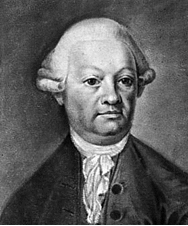
Links between music and medicine typically focus on ailments, known or suspected, of composers — Beethoven's deafness, Chopin's tuberculosis, Schubert's syphilis, Schumann's mental disorder, Mozart's nearly everything, Paganini's suspected Ehlers–Danlos syndrome. But few doctors have actually written an opera libretto. One exception was the Austrian physician Josef Leopold Auenbrugger (1722–1809) (Box 1).
Auenbrugger earned a firm footnote in the history of medicine by inventing diagnostic chest percussion, a technique he had learnt as boy when testing the level of wine casks in his father's hotel cellar.1 He noted that a healthy chest, tapped with a finger and listened to with the ear close to the chest, resonated like a cloth-covered drum, whereas the presence of lung disease, especially tuberculosis, produced a muffled higher-pitched sound. During his years of research as physician-in-chief at the Holy Trinity Hospital in Vienna in the 1750s, Auenbrugger validated his clinical observations on diagnostic percussion, first, by comparing clinical assessments with postmortem findings and, second, by injecting fluid into the pleural cavity of cadavers and showing that percussion could accurately define the physical limits of any fluid present.
Accordingly, he advocated the use of chest percussion in conjunction with auscultation in his Inventum novum ex percussione thoracis humanis, published in 1761. But his words fell on deaf ears until 1808, when the volume was translated into French by Jean-Nicolas Corvisart, Napoleon's physician, and Enlightenment rationality had gained ground in medicine.2
From percussing to penning a libretto: The chimney sweep
As a pioneering percussionist, Auenbrugger presumably had a good sense of pitch, an attribute that doubtless also enhanced his love of and involvement in music. He wrote the libretto to The chimney sweep (Der rauchfangkehrer), a comic opera by Antonio Salieri (1750–1825) (Box 2), first performed in the Burgtheater in Vienna in April 1781. Long neglected but highly popular in its time, the opera was resurrected and performed in Sydney in July 2014 by Pinchgut Opera, a company that focuses particularly on operas from the 17th and 18th centuries (http://www.pinchgutopera.com.au/the-chimney-sweep; Box 3).3 The original popularity of The chimney sweep reflected the growing Viennese enthusiasm, promoted by Emperor Joseph II, for singspiel, opera performed in the German language.
Auenbrugger had other musical connections. In 1773, he and his two musically talented pianist daughters, Franziska and Maria Katharina, visited Vienna where they renewed contact with the Mozarts, father and son; Wolfgang was now 17 years old.4 Auenbrugger's daughters were talented keyboard pupils of Joseph Haydn, who was comfortably established with the family and court of Hungarian nobility in Esterhazy, Austria. Haydn composed his six Auenbrugger keyboard sonatas for the sisters in 1780.
In subsequent years, Auenbrugger also attended Mozart as a physician.5 Indeed, his dual relationship with both Salieri and Mozart is interesting, given persisting assumptions that Salieri and Mozart were serious rivals.
In the memorable, though fictitious, line in the 1984 film Amadeus, Salieri despaired that Mozart was taking dictation from God. The other near-certain fiction, first ventured in a play by Alexander Pushkin published in 1830, is that Salieri maliciously poisoned Mozart, who died bloated and fevered in Vienna in early December 1791, aged 35. However, his death record lists a condition described as hitziges frieselfieber (severe miliary fever), which affected many young Viennese men in late 1791, and it now appears that he may have died from kidney failure following a streptococcal throat infection.6 Salieri subsequently gave music lessons to Mozart's son, Franz Xaver; hardly the gesture of an assassin.
The plight of chimney sweeps
The chimney sweep connects with the realm of medicine, health and disease in other ways as well. The wretched plight of young, penniless and illiterate chimney sweeps in 18th and early 19th century Europe exposed them to many risks, including becoming fatally stuck mid chimney. In the longer term was the prospect, from prolonged exposure to soot, of chronic lung disease and of cancer (squamous cell carcinoma) of the scrotum, which often occurred before early adulthood. Chimney sweeps' cancer was first described in 1775 by Sir Percivall Pott, an English surgeon at St Bartholomew's Hospital in London, and is recognised as the first occupational cancer to have been identified.7
Pott may have seen many such cases, because the use of domestic fireplaces would have intensified during the mid 18th century as Europe shivered in the depths of the Little Ice Age.8 Describing the wretched working conditions of these young boys, he wrote:
The fate of these people seems peculiarly hard: ... they are thrust up narrow and sometimes hot chimnies [sic], where they are bruised, burned, and almost suffocated; and when they get to puberty, become peculiarly liable to a most noisome, painful, and fatal disease.9
Quite probably, Auenbrugger in Vienna percussed and listened to some of those soot-thickened lungs in destitute young chimney sweeps hospitalised with serious, perhaps terminal, respiratory distress. Meanwhile, in England, growing public concern over the plight of chimney sweeps led to the enactment of the Chimney Sweepers Act in 1788, the year of Pott's death.
Chimney sweeps today
The present-day performance of The chimney sweep invites enquiry about the circumstances of today's chimney sweeps, a continuing and necessary part of modern life. At least in Western societies they now work within a context of improved building design, evolving and more efficient modes of fireplace combustion, and much stricter occupational safety codes. Nevertheless, monitoring their health experiences remains a public health responsibility.
A large epidemiological follow-up study of 6320 registered chimney sweeps in Sweden from 1958 to 2006 identified 813 primary cancers compared with 626 cancers expected from the rate for the general population.10 These included excesses for cancers of the pleura, lungs, oesophagus, liver, colon and bladder. Given that the overall rate was highest in those with longest employment (cumulative workplace exposure), the research team concluded that workplace exposure to soot and asbestos was a likely contributory cause of the observed cancer excesses. Although a much smaller study in Germany of opportunistically sampled chimney sweeps found no significant increases in cancer,11 chimneys remain likely sources of health hazards.
Could a chimney sweep with long exposure to inhaled soot sing the role of Salieri's chimney sweep? For that you need strong and unblackened lungs. In Pinchgut Opera's recent staging, the chimney sweep sang his seducer–hero role with a healthy and melodious opera singer's voice. He, his fellow singers and the baroque orchestra with their period instruments were also celebrating the resuscitation of Salieri's musical legacy and Auenbrugger's libretto.
2 Antonio Salieri (1750–1825)
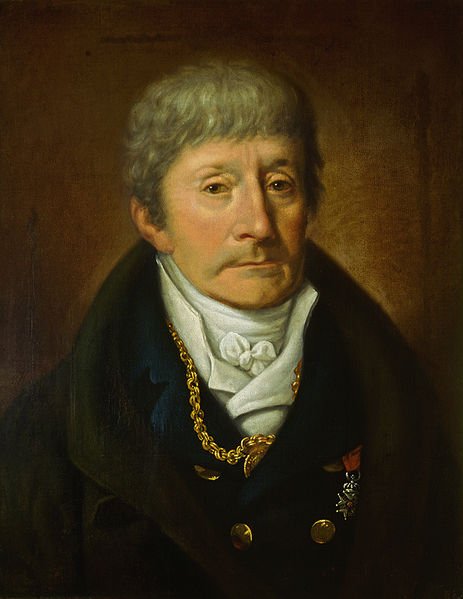
Joseph Wilibrod Mähler, before 1825, oil on canvas. Source: Wikimedia Commons; public domain mark 1.0.
3 The chimney sweep, Pinchgut Opera, City Recital Hall, Sydney, 5–7 July 2014

The confidence trickster chimney sweep, Volpino (seated), laying ambush to the romantic hopes of Mr Bear (left) and Mr Wolf (right), attended by Jakob. Singers, from left to right: David Woloszko, Sabryna Te'o, Stuart Haycock, Christopher Saunders. Photo: Keith Saunders (with kind permission of the Pinchgut Opera).
Competing interests
No relevant disclosures.
References
- Nuland SB. Doctors: the biography of medicine. New York: Knopf, 1988. 1
- Smith JJ. The Inventum Novum of Joseph Leopold Auenbrugger. Bull N Y Acad Med 1962; 38: 691-701. http://www.ncbi.nlm.nih.gov/pmc/articles/PMC1804850/pdf/bullnyacadmed00319-0065.pdf (accessed Jul 2014).
- ["Teiwes J. The chimney sweep<\/em>: Pinchgut Opera [review] http:\/\/www.australianstage.com.au\/201407066894\/reviews\/sydney\/the-chimney-sweep","pinchgut-opera.html<\/a> (accessed Jul 2014)."]
- Jahn O. Life of Mozart. Vol 1. Townsend PD, translator. London: Novello, Ewer & Co, 1882. http://www.gutenberg.org/files/43411/43411-h/43411-h.htm (accessed Jul 2014).
- Persson E. [Mozart's musical physicians] [Swedish]. Lakartidningen 2005; 102: 236-240. 5
- Zegers RH, Weigl A, Steptoe A. The death of Wolfgang Amadeus Mozart: an epidemiologic perspective. Ann Intern Med 2009; 151: 274-278. 6
- Dobson J. Percivall Pott. Ann R Coll Surg Engl 1972; 50: 54-65. 7
- Lamb HH. Climate, history and the modern world. 2nd ed. London: Routledge, 1995. 8
- Pott P. Chirurgical observations relative to the cataract, the polypus of the nose, the cancer of the scrotum, the different kinds of ruptures, and the mortification of the toes and feet. London: L. Hawes, W. Clarke, and R. Collins, 1775. 9
- Hogstedt C, Jansson C, Hugosson M, et al. Cancer incidence in a cohort of Swedish chimney sweeps, 1958-2006. Am J Public Health 2013; 103: 1708-1714. 10
- Letzel S, Weber A, Schaller KH, et al. Investigations on health hazards of chimney sweeps in Germany: results of a follow-up study. Int Arch Occup Environ Health 1992; 64: 43-48. lefthere
Provenance: Not commissioned; not externally peer reviewed.
Prisoner of war pathology in Changi, 1942–1945
Kate Ariotti, Elizabeth Roberts‐Pedersen
Should medical eponyms continue to be used in everyday practice?
Leya Nedumannil, Diana Lewis
100 years on: the first use of insulin in Australia
Sophie Templer
Reflections on the life and career of Professor Dame Valerie Beral AC DBE FRS FRCOG FMedSci (1943–2022)
Karen Canfell, Bette Liu, Emily Banks
The Honourable Dr Donald James Grimes AO
Michael Kirby, Patti Warn
From wipeout to drill out: a history of exostosis management and Australian surfing
Alon Taylor, Hannah North, Narinder P Singh, Paul A Fagan