




Volume 217 - Issue 3
The Honourable Dr Donald James Grimes AO
Authors: Michael Kirby and Patti Warn
Med J Aust 2022; 217 (3): 136-137. || doi: 10.5694/mja2.51644
Published online: 1 August 2022
Published online: 1 August 2022
Born on 4 October 1937, Don Grimes grew up in Albury, New South Wales, his father a fitter and turner with NSW Railways and his mother a nurse
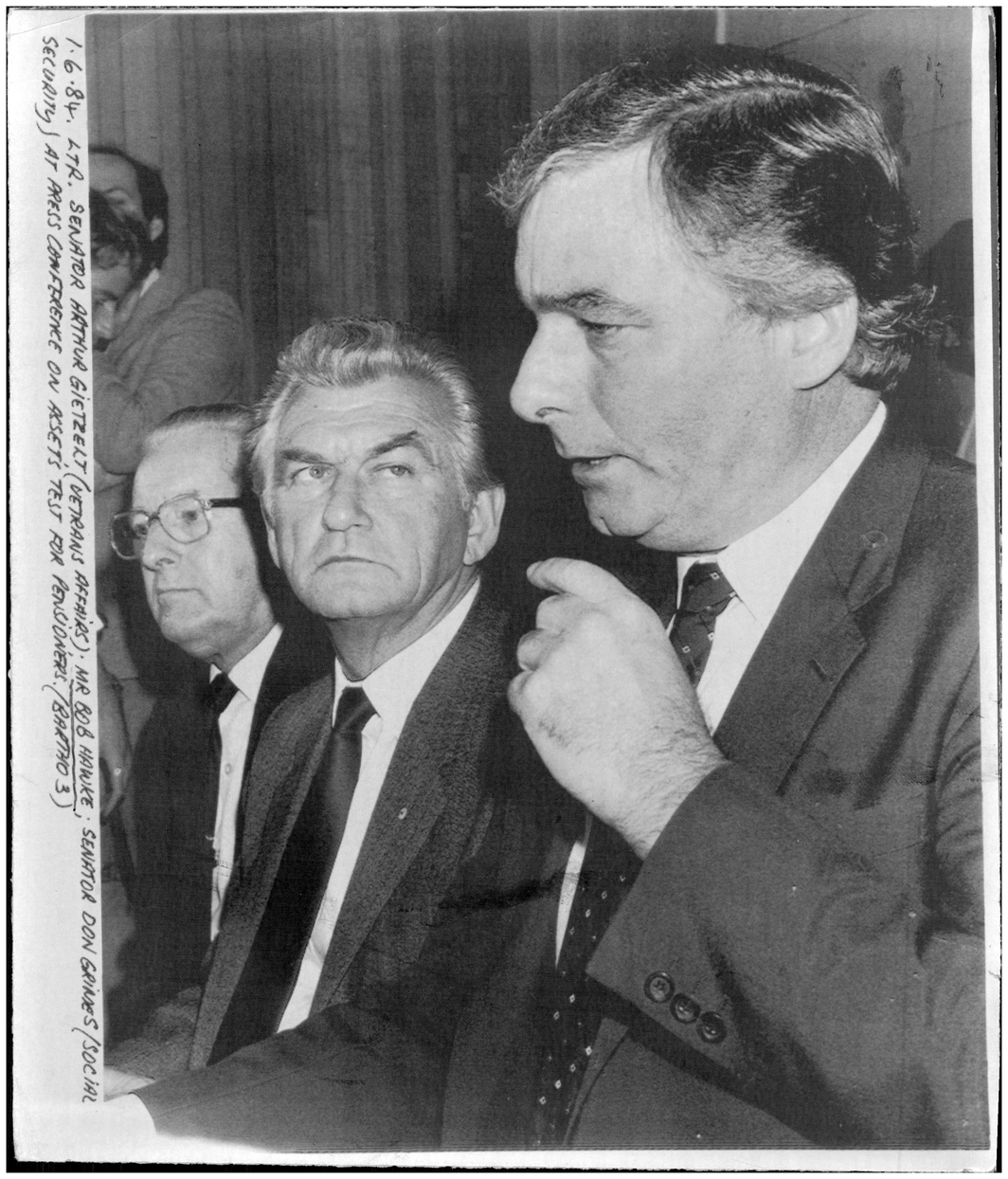
Born on 4 October 1937, Don Grimes grew up in Albury, New South Wales, his father a fitter and turner with NSW Railways and his mother a nurse. He was educated at Albury High School and then at Fort Street Boys’ High School in Sydney. His mother Nancy died from bowel cancer while he was still at school.
Grimes studied medicine at the University of Sydney from 1955, inspired by his mother’s illness and death. Graduating in 1961 after clinical training at the Royal North Shore Hospital, Grimes did his residency at the Royal Hobart Hospital, in Tasmania, and then enjoyed general practice in rural areas.
In 1960, Grimes married Margaret (“Meg”) Schofield, and they had four children. They left Tasmania for London in 1965 when he was appointed in‐house medical practitioner for Beaverbrook Newspapers, later returning to Launceston to a new general practice clinic in Riverside.
Grimes opposed the Vietnam War and supported Bill Hayden’s proposal for Medibank, so he joined the Australian Labor Party. He was elected to the Senate in the 1974 federal election. After the Whitlam government’s defeat in 1975, Grimes joined the shadow cabinet and, when the Australian Labor Party won in 1983, he was made Minister for Social Security in the Hawke government and Deputy Leader of the Government in the Senate. He was appointed to the new portfolio of Minister for Community Services in 1984. In 1985, he underwent coronary bypass surgery, resuming ministerial duties after a few months.
Grimes was respected in the federal Parliament, with friendships extending across party lines, especially with Dr Peter Baume, who had tutored him in medicine. He was the only federal Minister to that time to appoint an all‐female staff.
As a Minister, Grimes pioneered policy on disability in Australia, initiating the Handicapped Programs Review, which led to a new Disabilities Services Act; setting up an Office of Disability; and creating the Disability Advisory Council of Australia. He was greatly admired by the disability community in Australia.
Grimes helped pilot Australia’s strategy to reduce the spread of the human immunodeficiency virus (HIV) and acquired immunodeficiency syndrome (AIDS) in the 1980s, working with Health Minister, Dr Neal Blewett, to build an inclusive and bold response around care, treatment, research and prevention. He encouraged a broad coalition of Members and Senators to support and develop a distinctive Australian approach to HIV. Grimes’ advocacy on HIV/AIDS carried great weight with Prime Minister Hawke and his colleagues, while his clinical expertise was invaluable in working with the medical profession. The Australian and global responses to HIV/AIDS have influenced Australian strategies to address the coronavirus disease 2019 (COVID‐19) pandemic.
When Grimes’ health problems recurred in 1986, he decided not to seek re‐election to the Senate. He was appointed Australian ambassador to the Netherlands in 1987, holding this appointment for 5years. By this time, his first marriage had been dissolved and a second marriage, to Helen Knight in 1985, had also ended in divorce.
Grimes’ third marriage, in January 1991, was to Esther Timmermans. They returned to Australia to live in Sydney. In January 1992 he was appointed an Officer of the Order of Australia and in May 1992 he became chairman of the Australian National Council on AIDS. He chaired the South Eastern Sydney Area Health Service until 2003. He was made a Fellow of the Royal Australian College of Medical Administrators (1998) and a Fellow of the Australasian Faculty of Public Health Medicine (FAFPHM).
Grimes’ most exotic post was as chief health advisor to the Health Minister of Bahrain (2004–2005), who was a Sunni Muslim woman. Grimes established a busy life there with Esther, but sadly, after they returned to Sydney, she was diagnosed with breast cancer, from which she died in 2011, having been cared for devotedly by Don and receiving excellent palliative care at home and at Sacred Heart Hospice.
After Esther’s death, he returned to Launceston to be closer to his adult children. He revived his interest in classical and jazz music, spending time with friends and former staff. In February 2021, with Australia in the midst of the COVID‐19 pandemic, he was admitted to hospital following the first of several strokes, dying on 20 November 2021. He was survived by his four children, Jenny, Roger, Sally and Ben.
His mother’s early death committed Don Grimes to the profession of medicine, while his sense of public engagement took him to the federal Parliament as a Senator, and he relished challenging and new ministerial posts. Appointment as Ambassador and later engagements in health administration in Australia and overseas brought him great satisfaction.
Prisoner of war pathology in Changi, 1942–1945
Kate Ariotti, Elizabeth Roberts‐Pedersen
Should medical eponyms continue to be used in everyday practice?
Leya Nedumannil, Diana Lewis
100 years on: the first use of insulin in Australia
Sophie Templer
Reflections on the life and career of Professor Dame Valerie Beral AC DBE FRS FRCOG FMedSci (1943–2022)
Karen Canfell, Bette Liu, Emily Banks
From wipeout to drill out: a history of exostosis management and Australian surfing
Alon Taylor, Hannah North, Narinder P Singh, Paul A Fagan
Avatars: colleagues in the time of the pandemic
Mark Lavercombe