




Volume 195 - Issue 2
Illness in colonial Australia
Author: Elliot Rubinstein
Med J Aust 2011; 195 (2): 96. || doi: 10.5694/j.1326-5377.2011.tb03220.x
Published online: 18 July 2011
Published online: 18 July 2011
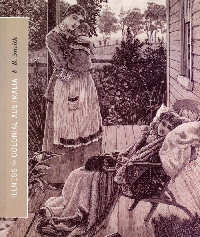
Illness in colonial Australia.
FB Smith. Melbourne: Australian Scholarly Publishing Pty Ltd, 2011 (371 pp, $49.95). ISBN 9781921509193.
Emeritus Professor Francis Barrymore “Barry” Smith, at the Australian National University, Canberra, is one of Australia’s most influential historians. His latest work is both a scholarly review, packed with an immense amount of well supported data, and a collection of largely ill founded opinions from the health professionals of the time, on the origin, causes and management of illness and disease.
Smith also considers the influence of public policy and the conflicts between business and health management as, for example, in the avoidance of quarantine. It is clear that the doctors were concerned about the financial impact of quacks and paramedical providers, especially midwives, undercutting their fees. Nothing new!
The devastation of Aboriginal communities by illness is described in detail. Smith notes the geographical variation in death rates and the greater ease with which squatters acquired land in some areas as a result. It is clear that these were dangerous times for all. Deaths in the white population were also at phenomenal rates in today’s terms. Parents often put children in contact with sick children to “get it over with”, accepting high rates of death.
Unfortunately, the book suffers from poor editing. There are many irritating, long and contorted sentences. In an interesting chapter on tuberculosis, the same quote appears twice within the space of five pages. Chapter Six, “Children”, is not particularly about children, but more to do with the epidemiology of small pox and its management. However, there is an excellent bibliography and a reasonable index.
One reads history for information, for entertainment, for general interest and especially to learn where we are coming from and, perhaps, where we are going. It is unclear who the target audience is for this book. Smith does not tie the book together with any conclusions but leaves us to draw our own.
Despite its literary failings, this book provides a fascinating insight into illness, and life, in colonial times. We have more evidence today but the nature of man has not changed.
Prisoner of war pathology in Changi, 1942–1945
Kate Ariotti, Elizabeth Roberts‐Pedersen
Should medical eponyms continue to be used in everyday practice?
Leya Nedumannil, Diana Lewis
100 years on: the first use of insulin in Australia
Sophie Templer
Reflections on the life and career of Professor Dame Valerie Beral AC DBE FRS FRCOG FMedSci (1943–2022)
Karen Canfell, Bette Liu, Emily Banks
The Honourable Dr Donald James Grimes AO
Michael Kirby, Patti Warn
From wipeout to drill out: a history of exostosis management and Australian surfing
Alon Taylor, Hannah North, Narinder P Singh, Paul A Fagan