




Volume 194 - Issue 5
Controversy, comics and the Van Der Weyden Factor
Authors: Bronwyn Gaut, Ruth M Armstrong, Ann T Gregory and Peter C Arnold
Med J Aust 2011; 194 (5): 220-221. || doi: 10.5694/j.1326-5377.2011.tb02946.x
Published online: 7 March 2011
Published online: 7 March 2011
The MJA bids a fond farewell to its Editor of 16 years
When Martin B Van Der Weyden, 11th Editor of the Medical Journal of Australia, retired a few weeks ago, it was the end of a remarkable chapter in the Journal’s history. Sixteen years earlier, in his first message as Editor to the Journal’s readership,1 Martin had promised to oversee the MJA’s return to relevance for the medical profession and the abolition of its sometime reputation as the “Blue Comic”. He achieved this, and more, taking the Journal to a new level, not just for readers but among its international peers.
Martin rose from humble beginnings, as the third of seven children of postwar Dutch immigrants, to become a prodigious researcher and a leader in his specialty of haematology, before taking on the editorship of the Journal, one of the most influential positions in Australian medicine.

As Editor, Martin raised the profile of the MJA locally and internationally to make it one of the key drivers of change in Australian medical practice. He significantly improved the academic calibre of the MJA’s content; broadened its reach, relevance and readership; and presided over the biggest change in the Journal’s 97-year history with the embrace of electronic publishing.
Martin’s intelligence and diligence took him from a migrant camp at Bathurst when he was 8 years old and a “good Catholic school” in Wollongong, where his family settled (near the steelworks, the employment mecca for migrant workers), to win a bursary at age 12 to attend Holy Cross College in Ryde as a boarder, and then a Commonwealth scholarship to study medicine at the University of Sydney. He graduated MB BS in 1966 and spent his early postgraduate years at Sydney Hospital, supported as a medical registrar by a Penfold family scholarship.
Martin trained in clinical medicine and pathology, obtaining Membership of the Royal Australasian College of Physicians (RACP) in 1969 (and Fellowship of the RACP in 1974), and moved to the Alfred Hospital and Monash University in Melbourne to take up a position as Research Fellow in Clinical Haematology with the late Professor Barry Firkin (a position made possible by a scholarship from the Alfred Hospital Research Fund). In 1972, Martin was awarded a Merck Sharp & Dohme International Fellowship in Clinical Pharmacology to work with Professor Bill Kelley in the Division of Rheumatic and Genetic Diseases at the Duke University Medical Center in Durham, North Carolina. While at Duke, a further scholarship from the United States National Science Foundation allowed him to contribute to major work in the delineation of the effect of adenosine deaminase deficiency in patients with severe combined immunodeficiency. He quickly gained a reputation at Duke for his prodigious output and quirkiness. Many remember him as the “mad” Aussie who wandered into a ward one snowy morning, totally oblivious to the fact that he was on fire! Lost in thought, he had plunged his briar pipe into his overcoat pocket while it was still smouldering. Despite offers of positions at the US National Institutes of Health and at US medical schools, Martin returned to Australia in 1975 on yet another scholarship, as a National Health and Medical Research Fellow at the Alfred Hospital and Monash University.
Having been supported by scholarships for most of his life, Martin finally got his first full-time paid job in 1977, when he became a Senior Lecturer in Medicine at Monash University. He graduated MD from Monash in 1978, and became a Fellow of the Royal College of Pathologists of Australasia in 1980. His clinical and research interests encompassed aspects of haematology, immunology, marrow transplantation, and haematological oncology. In 1981, Martin was awarded the RACP’s prestigious Eric Susman Prize for research into purine and pyrimidine enzyme activities in haematological malignancies. He was appointed Professor of Haematology at Monash University in 1985 and Director of the Department of Haematology at the Alfred Hospital. From 1985 to 1987, Martin served as President of the Haematology Society of Australia and New Zealand, presiding over the International Convention of Haematologists held at the Sydney Opera House. In 1989, he became Chairman of the Division of Investigative Medicine, and then Chief of Investigative Medicine Services to the Alfred group of hospitals in 1993. During this time he squeezed in a voluntary position as Haematology Subeditor for the Australian and New Zealand Journal of Medicine and a short, intensive stint at Harvard Business School in 1994.
Working as an administrator during the time of the frenetic dismantling of the Victorian hospital system, Martin’s priorities were always the preservation of first-rate patient care and the provision of quality academic and clinical medical education. In time, the strictures of economic rationalism on medical services were to prove demoralising for the profession as a whole. When the frustrations of seemingly soulless restructuring became overbearing, Martin looked for a new challenge, and found it in the Journal. Though sad to leave Melbourne, his children were overjoyed that he no longer paced the front garden in the dead of night, shrouded in a smoky haze from his much loved Dutch cigarillos.
Thus, in 1995, Martin, his wife Merle, and their three children moved back to Sydney. Martin’s medical, scientific, research and administration experience, and his familiarity with the research communities in Melbourne and Sydney, placed him well for taking on the mantle of Editor of Australia’s leading peer-reviewed general medical journal. He quickly stamped his mark on the Journal and earned the respect of the medical community, by following the principles of good communication: clarity, brevity, simplicity and humanity. Martin boosted the quality of the Journal’s articles by increasing the number of editorials and encouraging authors to confront controversial topics; introducing a higher academic standard for research articles in particular (and thus significantly increasing the manuscript rejection rate); and expanding the reach of the Journal to cover health policy and reform, workforce issues, medical politics and medical education. Because many Australian researchers choose to submit their best work to higher profile US or British journals, the MJA suffers from “small country syndrome” in terms of international rankings, but Martin made significant inroads to address this. In 1993, before Martin took over, the MJA languished at 30th (out of about 100) in the ranking of general medical journals; in 2008, it reached an all-time high of 18th, with an impact factor of 3.32.
Martin is a clear thinker: decisive, with strong opinions and astute judgement. He is a diligent observer of all things medical, is politically savvy, and is a forthright speaker and writer who abhors “bullshit” and has never toadied to political correctness. At times he would play the classic Editor, making a frenzied string of phone calls to his impressive collection of friends and experts to get to the bottom of a story or current event. But he has never published anything that did not meet his own rigorous academic standards, understanding the value of the MJA’s reputation as an unbiased, accurate source of information. He has a wicked sense of humour and an enduring enthusiasm to challenge people to think outside the square. The same qualities that made Martin an excellent Editor also make him a sought-after speaker and a highly valued guest at meetings and conferences, where he can be relied on to stir up debate, ask the difficult questions and offer insightful and constructive criticism.
A year into the job as Editor, Martin also took on the demanding role of Chief Executive Officer (CEO) of AMPCo (the Australasian Medical Publishing Company, which publishes the Journal and the Medical Directory of Australia and manages Australia’s largest commercial medical database). He continued in the dual positions of Editor and CEO for 14 years. He is also a member of the International Committee of Medical Journal Editors, which sets the standards for biomedical publishing, and has recently served as a Director of the Executive Board of the World Association of Medical Editors.
Under Martin’s leadership, the Journal was an early adopter of electronic publishing, including an innovative trial of interactive, electronic peer review. By 2001, all Journal content was freely available on the web, remaining free until 2009 when, against his better judgement, some articles became accessible to subscribers only. Technical capacity was always a limiting factor but, last year, the Journal finally launched MJA InSight, an online newsletter for doctors.
His own background and self-confessed political left-leaning tendencies made Martin open to some of the more marginalised elements of Australian society, providing those working in prison and refugee health, drugs and alcohol, sexual health, mental health and Indigenous health with a much needed mainstream outlet for their research and commentary (but only if they met the Journal’s high academic standards). Two annual theme issues, one on Indigenous health and another on general practice, were established, and remain of great importance to the target contributors and readers. As Martin matured into the job, he became the heart, soul and, indeed, the face of the Journal. His fortnightly column, “From the Editor’s desk”, was frequently on the MJA’s top 10 website hits list from its inception in 2004 — a tribute to his reputation as an astute observer with a long-range view of Australian health care.
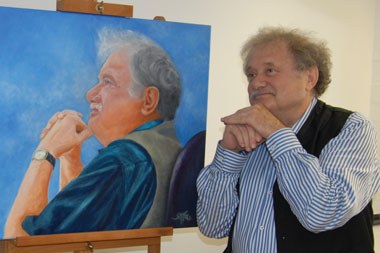
Those of us who worked with Martin understand how he was able to achieve so much. Even in his spare time, his mind was never far from the Journal. He would often turn up on a Monday morning, brandishing a book he had just read on medical history or health policy, or an editorial he had written over the weekend. He had a knack for appearing erratic, distracted or even perverse, and then coming up with the exact solution required for the problem at hand. On an initial meeting, he liked to shock with a blunt statement or seeming non sequitur, before revealing his incisive intellect and, ultimately, a humane and surprisingly soft inner core. When congratulated for his work at the Journal, he maintained that his genius had been in assembling a competent team: there was method in his madness — to get the best out of people.
In his rare spare time, Martin listens to Bach, Beethoven and Haydn, and is a voracious reader of crime fiction and books of medical miscellany with a philosophical bias. His wife Merle remains a huge source of inspiration and moderation, as does his Catholic faith and his involvement in his local parish.
When asked how he would like his tenure at the Journal to be remembered, Martin is typically offbeat. His success may be measured in many ways: the rise of the Journal’s impact factor and standing in the international ranking of journals; an increase in high-quality submissions; a robust presence in the media and in health policy machinations; the respect of medicopolitical, Indigenous and other leaders; and the unswerving loyalty of those who worked for him. Yet, 16 years after he penned that first editorial, he was most proud of one outstanding achievement. Nobody, anywhere, was referring to the MJA as the Blue Comic.
References
- Van Der Weyden M. From the Editor’s desk ... the Journal [editorial]. Med J Aust 1995; 162: 344. 0_CICDDDBA
Prisoner of war pathology in Changi, 1942–1945
Kate Ariotti, Elizabeth Roberts‐Pedersen
Should medical eponyms continue to be used in everyday practice?
Leya Nedumannil, Diana Lewis
100 years on: the first use of insulin in Australia
Sophie Templer
Reflections on the life and career of Professor Dame Valerie Beral AC DBE FRS FRCOG FMedSci (1943–2022)
Karen Canfell, Bette Liu, Emily Banks
The Honourable Dr Donald James Grimes AO
Michael Kirby, Patti Warn
From wipeout to drill out: a history of exostosis management and Australian surfing
Alon Taylor, Hannah North, Narinder P Singh, Paul A Fagan