




Volume 216 - Issue 11
Telehealth transformed practice during the COVID‐19 pandemic
Author: Bodil Rasmussen
Med J Aust 2022; 216 (11): 567-567. || doi: 10.5694/mja2.51557
Published online: 20 June 2022
Published online: 20 June 2022
Healthcare technology in context: lessons for telehealth in the age of COVID-19
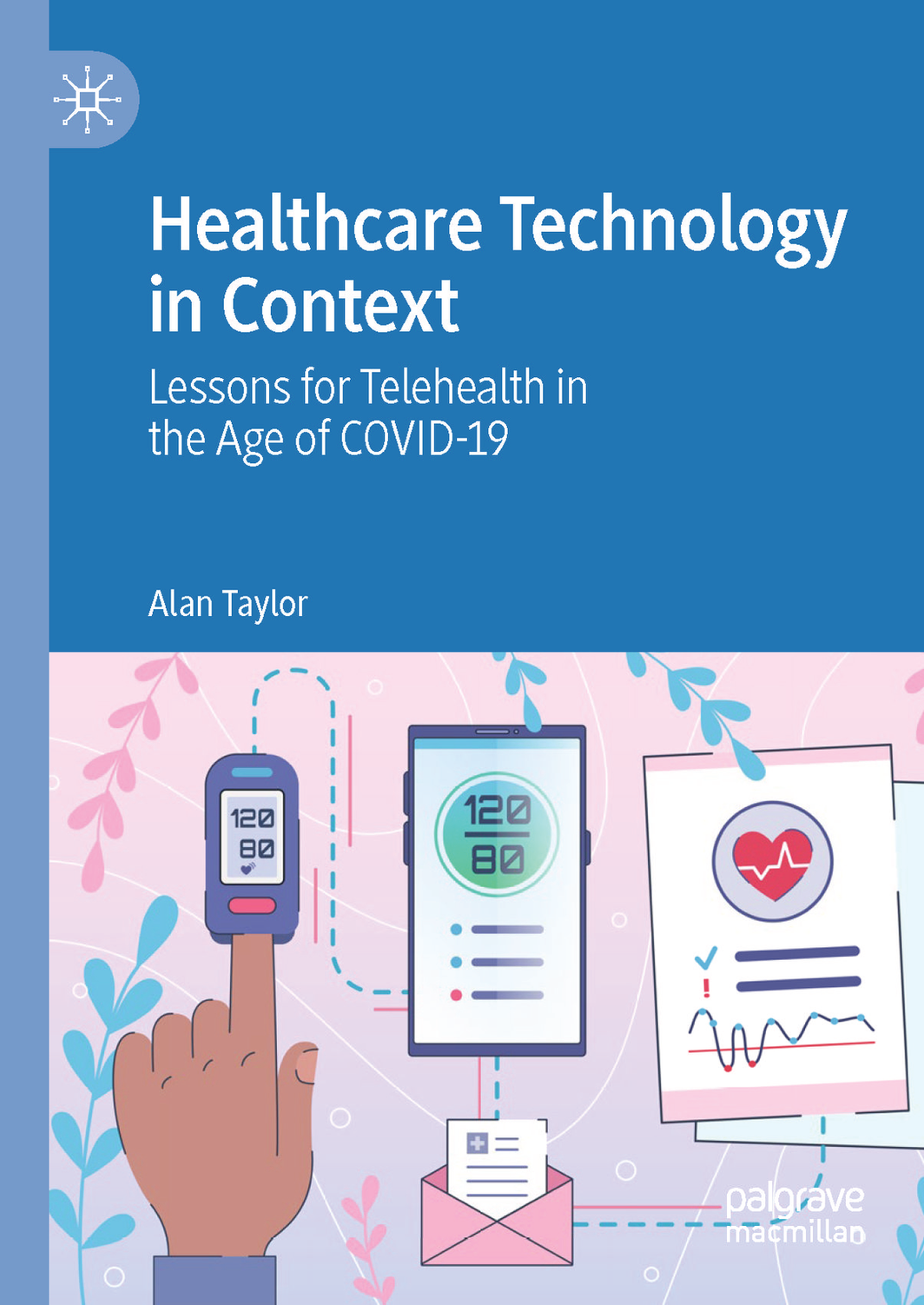
Healthcare technology in context: lessons for telehealth in the age of COVID‐19
Taylor, A
Palgrave MacMillan, 2021
(€129.99; pp 298)
ISBN 9789811640742
Telehealth became integral to health care workers’ practice during the coronavirus disease 2019 (COVID‐19) pandemic in that it transformed practice at the social, organisational, professional, ethical and technological levels. Healthcare technology in context: lessons for telehealth in the age of COVID‐19 provides helpful insight into how these levels interplay from the health care workers’ perspectives and, to a great extent, in the context of acute care.
By posing the key question of whether technologies used in telehealth services shape our health care or whether we, collectively, change and shape the technology and services used in health care, Taylor, who is past Vice President of the Australasian Telehealth Society, asserts that during the COVID‐19 pandemic four mechanisms support optimal use of telehealth. These mechanisms are: legitimising practice, building confidence in using telehealth practice, supporting relationships between health professionals, and supplying resources. Each of these mechanisms are clearly portrayed in the book based on evidence from interviews with employers in health services working in managerial, specialist, medical, nursing, logistical, information technology, governmental or professional bodies.
A thought‐provoking comparison of the Brazilian and Australian health care systems and how they have developed telehealth services provides an understanding of how the evolution of telehealth in Australia shaped the delivery of contemporary telehealth services. Further, a meta‐theoretical model clearly helps the reader understand how the development of telehealth services can be explained as a contextual adaptation underpinned by two major components: organisational and professional contexts and how historical and contemporary processes shape telehealth services.
The book explains how collaboration between health professionals, teamwork, the role of relationships in conflict resolution, and the ability of leaders to develop relationships across organisational boundaries are essential in the “new normal” telehealth service. The challenge ahead is when these contexts change and evolve into a “new normal”. Taylor challenges our thinking in arguing that patients, health care workers, managers, leaders, policymakers and technologists have not only the responsibility but also the power to influence the mechanisms that support the telehealth service in our practice. Each chapter has clearly stated topics and can be read independently. Given the accessible writing style, this is a go‐to book for health care workers in any discipline and health service, leaders and managers, policymakers and researchers at all levels.
Competing interests
No relevant disclosures.
Using generative artificial intelligence in clinical practice: a narrative review and proposed agenda for implementation
Ian A Scott, Sandeep Reddy, Tanya Kelly, Tim Miller, Anton Vegt
The CURE Asthma roadmap
Gary P Anderson, Anthony Flynn, Phil G Bardin, John D Blakey, Shyamali C Dharmage, Paul Foster, Peter G Gibson, Adam Jaffe, Alan James, Christine R Jenkins, Sundram Sivamalai, Peter D Sly, Guy B Marks, Vanessa M McDonald, Judy Wetttenhall
CURE Asthma: a unique opportunity for Australia
Anthony Flynn, Wendy Edmondson, Alan James, Caroline Lodge, Vanessa M McDonald, Christine R Jenkins, John Blakey, Gary P Anderson
Evidence from Australian cohort studies about asthma trajectories and transitions across the life course: a narrative review
Caroline Lodge, Xin Dai, Ingrid A. Laing, Michael P Menden, Anthony Flynn, Gary P Anderson, Sarath Ranganathan, Shyamali C Dharmage
Technological advances in the search for a CURE for asthma
Sara Quon, Timothy M Johanson, Ridhima Wadhwa, Alen Faiz, Anthony Flynn, Gary P Anderson, Amanda J Cox, Nicholas P West, Michael P Menden, Rhys S Allan
Protecting public interest journalism as a public health good
Bronwyn Fredericks, Neha Lalchandani, Melissa A Sweet, Alex Cramb, Carmel Williams