




Reflections
Women in medicine
Volume 203 - Issue 11
Dr Sr Mary Glowrey JMJ, MB BS 1910, MD 1919: Australia’s second saint?
Authors: Jacqueline Healy and Robyn Fahy
Med J Aust 2015; 203 (11): 450-451. || doi: 10.5694/mja15.01028
Published online: 14 December 2015
Published online: 14 December 2015
One of Australia’s pioneer woman doctors may also become its second saint
Mary Glowrey, through her spiritual and medical achievements, was a visionary leader of social change
The editorial staff of the Journal are delighted to introduce an occasional series on Women in Medicine. The first two — Mary Glowrey and, in a forthcoming issue, Priscilla Kincaid-Smith — were great people, by any measure. Readers may wish to suggest other women for inclusion in this series. We hope you will be inspired by their stories.
Charles Guest
Interim Editor
Mary Glowrey (A) in 1910 and (B) in 1919
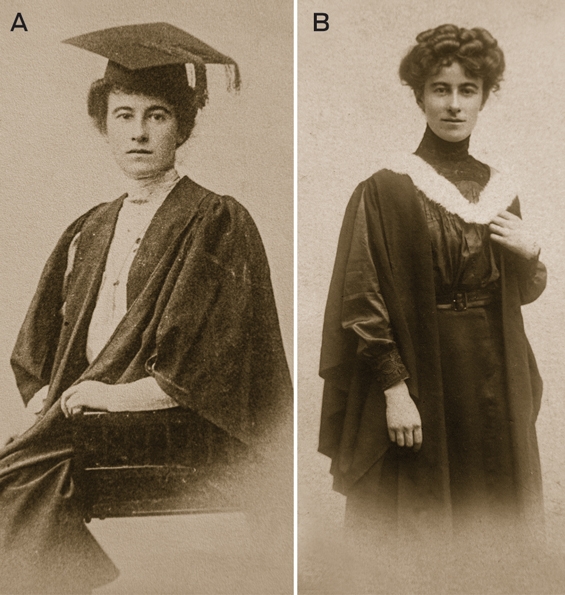
Copyright: Catholic Women’s League of Victoria and Wagga Wagga. Used with kind permission.
Mary Glowrey, 1920
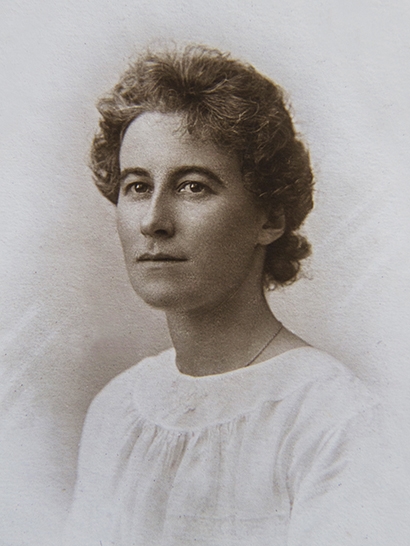
Copyright: Catholic Women’s League of Victoria and Wagga Wagga. Used with kind permission.
Mary Glowrey was born in 1887, the year in which women were first admitted to the Melbourne Medical School — 25 years after the course had been established and 21 years before women gained the vote in Victoria. Early women doctors were often denied professional development by entrenched prejudice, but over the following decades they created their own networks and opportunities through initiatives such as the establishment of the Queen Victoria Hospital, and by seeking experience in remote areas of Australia or overseas.1
While stories of these women doctors have often been overlooked, their personal and professional histories typically embody the extraordinary persistence and sacrifice required to achieve social change. A remarkable example is the story of Dr Sr Mary Glowrey (1887–1957), the second Australian to be placed on the official path to becoming a saint. How is it possible that so few people in Australia are aware of her contribution as a doctor?
Born in 1887 in Birregurra, the third of nine children, Mary’s intellectual capacity was apparent from an early age. She matriculated in 1904, winning a scholarship to Ormond College at the University of Melbourne. Her father later persuaded her to change the focus of her studies from arts to medicine.2
Mary’s demeanour was reserved and she was physically small, so that some people mistakenly “regarded [her] as something of a mouse”.3 Yet it was impossible to deny the force and presence with which her deep faith and her very practical love of others imbued her exceptional personality.
Mary undertook her early clinical training as a medical student at St Vincent’s Hospital in Melbourne.4 At the time of her graduation, residencies for women were not available in Victoria,5 so in 1911 she became the first woman granted a medical residency in New Zealand.
Returning to Australia in 1912, Mary took up a residency at the Eye and Ear Hospital in Melbourne.4 By 1914, she operated a successful private practice in Collins Street, and was also an Honorary Physician to the outpatients department of St Vincent’s Hospital.2 Mary had also gained a higher medical degree in 1919, with a particular focus on obstetrics, gynaecology and ophthalmology.2 Throughout this busy period, Mary was actively involved in social justice issues through her leadership of the Catholic Women’s Social Guild.4
In 1920, Mary’s religious calling inspired her to leave her family, her medical practice and Australia to become a medical missionary with the Congregation of the Society of Jesus, Mary and Joseph in Guntur, India. She was the first medical doctor to become a nun, which required special permission from Pope Benedict XV.6
Mary was a leader of social change. She became the driving force behind a radically new and visionary plan to train local women to be doctors, nurses, pharmacists and midwives.4 A pioneer in so many ways, she also contributed a prophetic paper in 1936 to the Second International Congress of Catholic Doctors in Vienna on the topics of “eugenics, euthanasia, sterilization and medical aid for the missions”. Her article on “ancient oriental medicine”, published in the United States in 1941, illustrated her study of and familiarity with the two ancient systems of medicine in India, Ayurveda and Unani medicine.7
In 1943, Mary established the Catholic Health Association of India (CHAI). This organisation now provides health care to 21 million people each year, and is intensively involved in the teaching and training of health professionals through its medical and nursing colleges, such as St John’s in Bangalore, one of India’s leading medical colleges.8
The preliminary phase of Mary’s path to canonisation began in Bangalore, India, in December 2010, and extensive research has since been undertaken in both Australia and India. Dr Sr Mary Glowrey JMJ was declared a Servant of God in March 2013 by the Bishop of Guntur, the first of four official approvals required on the path to sainthood.9
Mary’s lifelong contributions and her strong link with the University of Melbourne was brought to the attention of the university’s Medical History Museum by the Catholic Women’s League of Victoria and Wagga Wagga (formerly the Catholic Women’s Social Guild). Her life was highlighted as an outstanding alumna of the University in the 2013 publication and exhibition “Strength of Mind: 125 Years of Women in Medicine”, where items from her archive were displayed publicly for the first time.1 Following this successful exhibition, Professor Susan Sawyer commented:10
…everyone, from the most junior of medical students, to the most senior of professors and deans, is inspired by her commitment as a doctor, her faith as a nun, her achievements throughout her life, and her profound humility.
It is time more people knew about this remarkable early Australian woman doctor.
Competing interests
No relevant disclosures.
References
- Wallace S. Mary Glowrey. A religious vocation, MB BS 1910. In: Healy J, editor. Strength of mind: 125 years of women in medicine. Melbourne: Medical History Museum, 2013: 62-63.
- Glowrey M. God’s good for nothing [unpublished autobiography]. 1956. Mary Glowrey papers, held by the Catholic Women’s League of Victoria and Wagga Wagga at Mary Glowrey House, Melbourne.
- Brennan AT. Tributes to a medical missionary pioneer: Dr Mary Glowrey (Sister Mary of the Sacred Heart) — first CWSG President. The Horizon (Melbourne) 1957; 1 Jul: 4.
- Strickland D, Fahy R. Magister adest et vocat te (The Master is here and calls for you). Annals Australasia 2010; 121(3): 28-34.
- Selleck RJW. The shop: the University of Melbourne, 1850-1939. Melbourne: Melbourne University Press, 2003.
- Swamikannu F. A nun revolutionizes. Hyderabad: Good Shepherd Convent Press, 1972.
- Orem A. Out of nothing: the genesis of a great initiative. New Delhi: Catholic Hospital Association of India, 1968.
- Clinton U. Australian medical nun in India, Mary Glowrey, M.D., Sister Mary of the Sacred Heart, Society of Jesus, Mary, Joseph. Melbourne: Advocate Press, 1967.
- Cyrill C. The Saint of Guntur: Mary Glowrey. Indian Link 2013; June: 8-10. http://www.indianlink.com.au/the-saint-of-guntur-mary-glowrey/ (accessed Oct 2015).
- Sawyer S. Reference in support of the nomination of medical alumna Sister Dr Mary Glowrey to the Victorian Women’s Honour Roll, 1 Sep 2014. Mary Glowrey papers, held by the Catholic Women’s League of Victoria and Wagga Wagga at Mary Glowrey House, Melbourne.
Prisoner of war pathology in Changi, 1942–1945
Kate Ariotti, Elizabeth Roberts‐Pedersen
Should medical eponyms continue to be used in everyday practice?
Leya Nedumannil, Diana Lewis
100 years on: the first use of insulin in Australia
Sophie Templer
Reflections on the life and career of Professor Dame Valerie Beral AC DBE FRS FRCOG FMedSci (1943–2022)
Karen Canfell, Bette Liu, Emily Banks
The Honourable Dr Donald James Grimes AO
Michael Kirby, Patti Warn
From wipeout to drill out: a history of exostosis management and Australian surfing
Alon Taylor, Hannah North, Narinder P Singh, Paul A Fagan