




Volume 197 - Issue 11
Beware of Janus-faced riddles*
Author: Rick Mutsaers
Med J Aust 2012; 197 (11): 672. || doi: 10.5694/mja12.11510
Published online: 10 December 2012
Published online: 10 December 2012
To the Editor: Puzzles, like alcohol consumption, are a time-honoured mode of entertainment used by humankind for having a jolly time. Yet, while most people are well versed in the dangers associated with alcohol misuse, the dark side of brainteasers is underappreciated. Indeed, the hazardous nature of this common and seemingly inconspicuous pastime is gravely misjudged.
Allow me to elaborate. Not long ago, when I published ...
To the Editor: Puzzles, like alcohol consumption, are a time-honoured mode of entertainment used by humankind for having a jolly time. Yet, while most people are well versed in the dangers associated with alcohol misuse, the dark side of brainteasers is underappreciated. Indeed, the hazardous nature of this common and seemingly inconspicuous pastime is gravely misjudged.
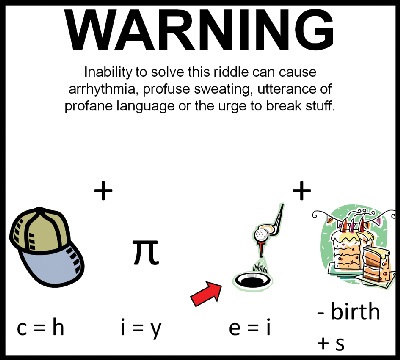
Allow me to elaborate. Not long ago, when I published a short item in the Journal containing an encrypted message,1 I was unprepared for the maelstrom into which I would soon be plunged. Shortly after publication, colleagues tried to hack into my computer in search of the solution. I received emails from distressed readers pleading with me to elucidate the mystery. I was flabbergasted by this response. However, I soon came to the realisation that, during my life, I have also encountered a myriad of seemingly unsolvable puzzles — such as the infamous Rubik’s cube, a vile and fiendish instrument of torture — and my own inability to crack these problems has resulted in frustration, depression-like symptoms and the urge to demolish furniture and ceramic ware. I concluded that outlandish reactions to puzzles and riddles are commonplace, and that brainteasers pose serious risks for users. Moreover, it is only a matter of time before the first case report on puzzle-induced spontaneous human combustion is published. Therefore, I plead that, from this day forward, every riddle should come with a warning, similar to that provided when purchasing tobacco and alcohol (Box). Hopefully, this intervention will reduce the global impact of puzzle-induced disease.
In short, brainteasers are a good way to break the humdrum of a dreary Sunday afternoon, but they should be modestly and moderately enjoyed, as they pose serious health risks!
Competing interests
No relevant disclosures.
References
- Mutsaers HA. Cryptography in modern-day medical science. Med J Aust 2012; 197: 353. 0_BEIDGJJH
Prisoner of war pathology in Changi, 1942–1945
Kate Ariotti, Elizabeth Roberts‐Pedersen
Should medical eponyms continue to be used in everyday practice?
Leya Nedumannil, Diana Lewis
100 years on: the first use of insulin in Australia
Sophie Templer
Reflections on the life and career of Professor Dame Valerie Beral AC DBE FRS FRCOG FMedSci (1943–2022)
Karen Canfell, Bette Liu, Emily Banks
The Honourable Dr Donald James Grimes AO
Michael Kirby, Patti Warn
From wipeout to drill out: a history of exostosis management and Australian surfing
Alon Taylor, Hannah North, Narinder P Singh, Paul A Fagan