




Volume 217 - Issue 1
Pulling the plug on the stem cell hype
Author: Megan Munsie
Med J Aust 2022; 217 (1): 22-22. || doi: 10.5694/mja2.51594
Published online: 4 July 2022
Published online: 4 July 2022
Flesh made new: the unnatural history and broken promise of stem cells
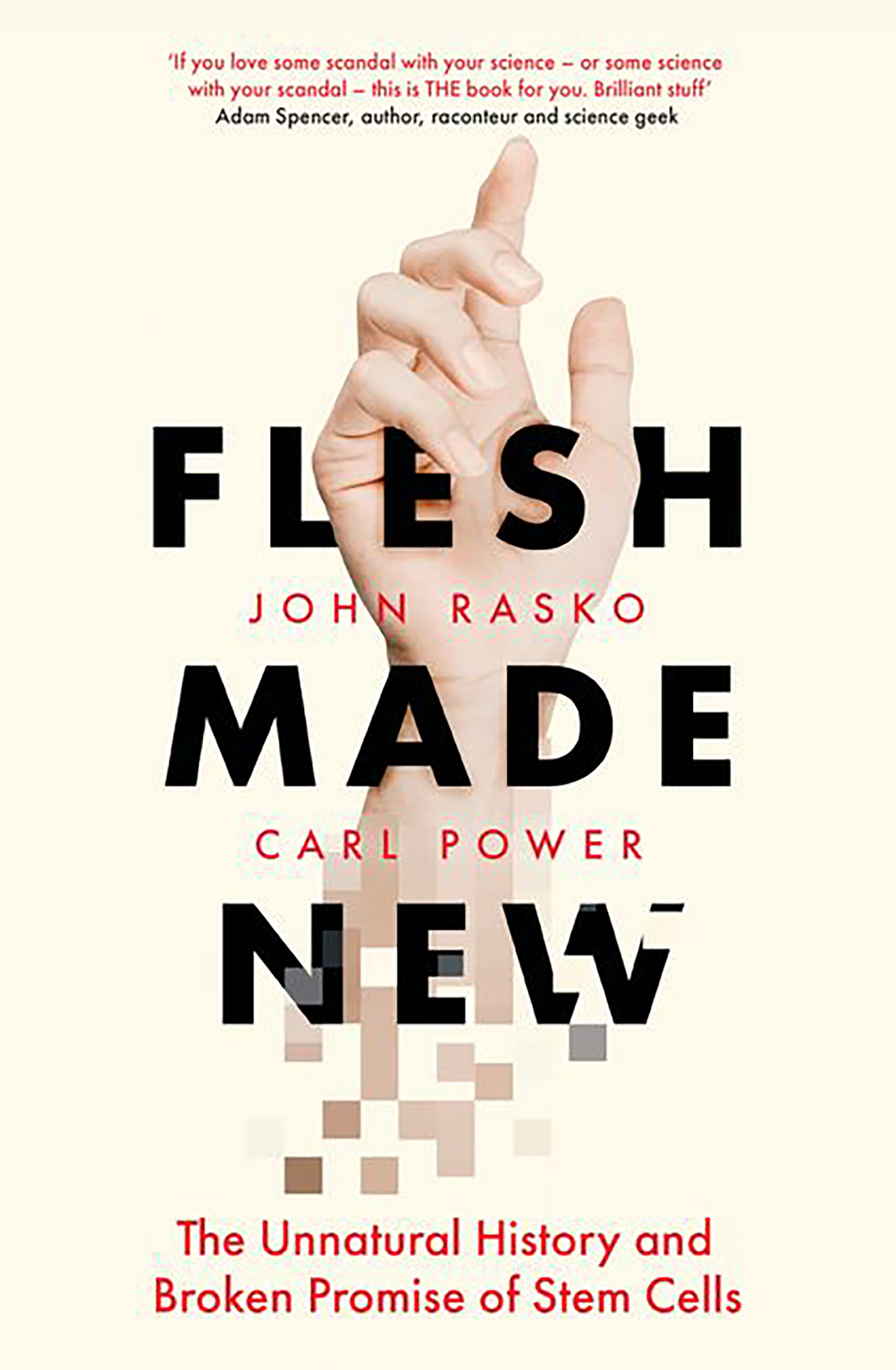
Flesh made new: the unnatural history and broken promise of stem cells
Rasko J, Power C
ABC Books, HarperCollins Australia; 2021
($34.99; 400 pp)
ISBN 9780733340147
There is no doubt that stem cell science has captured our imagination. The idea that researchers could harness the potential of stem cells to restore health following illness or injury has prompted thousands of headlines and ignited the hopes of many patients and their friends and families across the globe. While many will trace their interest and excitement in stem cells back to the discovery of human embryonic stem cells in the late 1990s, the promise of new therapies to restore form and function has a much longer and chequered history.
In this captivating and easily accessible popular science book, haematologist and stem cell expert John Rasko and historian and writer Carl Power take what they describe as a “tough love” approach to chronicle the key events that shaped the field and community perceptions about stem cell science and regenerative medicine over the 20th and 21st centuries. Through focusing on the achievements, motivations and eccentricities of the scientific luminaries, including several Nobel laureates as well as lesser‐known researchers who helped pave the way, Flesh made new: the unnatural history and broken promise of stem cells illustrates the twists and turns and immense dedication that were required to develop the first stem cell therapy: bone marrow transplantation. The authors then delve into more recent history, charting the discovery of embryonic stem cells, their laboratory cousin — induced pluripotent stem cells — and the unbridled publicity that these feats attracted. Despite acknowledging that there has been some progress in advancing on the promise of stem cells in more recent years, they take aim at the near universal hype surrounding regenerative medicine. The authors argue that this has created a fertile ground for bad science and even worse medicine, such as the rampant spread of clinics selling unproven stem cells to the tale of surgeon Paolo Macchiarini.1
Is the promise of stem cells broken? I think not. Rather, this entertaining read raises some uncomfortable truths and is a timely reminder of what happens when we expect too much, too soon, and bypass the need for evidence and accountability.
Competing interests
No relevant disclosures.
References
- Rasko J, Power C. Dr Con Man: the rise and fall of a celebrity scientist who fooled almost everyone. The Guardian 2017; 1 Sept. https://www.theguardian.com/science/2017/sep/01/paolo‐macchiarini‐scientist‐surgeon‐rise‐and‐fall (viewed May 2022).
Reorienting Allied Health Into Community-Based Care for People Experiencing Trauma and Social Disadvantage
Simon Rosenbaum, Grace McKeon, Gulsah Kurt, Oscar Lederman, Kemi Wright, Sabuj Kanti Mistry, Jackie E. Curtis, Philip B. Ward, Zachary Steel, Hamish Fibbins, Rachel Morell, Melissa C. Eaton, Andrew Watkins, Ben Harris-Roxas, Brendan Goodger, Eleanor Beck, Megan Teychenne, Joseph Firth, Davy Vancampfort, David Burns, Russell Roberts, Tristan Favaloro, Danielle Weber, Rosanna Barbero, Vasili Maroulis, Melissa Holmes, Stefan Mackenzie, Chiara Mastrogiovanni, Afsana Anwar, Uzma Choudhry, Catherine Sherrington, Jane Currie, Thomas Gadsden, Scott Teasdale
Psychosocial Hazards for Healthcare Workers: Supporting the Second Victim Also Helps the Primary Victims
Sarah Michael
Shifting focus to adolescent wellbeing and inclusive participation in the digital age
Allyson R Todd, Elena Wang, Stephanie R Partridge
Shifting focus to adolescent wellbeing and inclusive participation in the digital age
Jodie Bailie, Helen Dickinson, Briony Lipton, Marissa Shields
The CURE Asthma roadmap
Gary P Anderson, Anthony Flynn, Phil G Bardin, John D Blakey, Shyamali C Dharmage, Paul Foster, Peter G Gibson, Adam Jaffe, Alan James, Christine R Jenkins, Sundram Sivamalai, Peter D Sly, Guy B Marks, Vanessa M McDonald, Judy Wetttenhall