




Volume 208 - Issue 8
An authoritative reference for trainees and experienced paediatric nephrologists
Author: Steven J McTaggart
Med J Aust 2018; 208 (8): 338. || doi: 10.5694/mja17.00843
Published online: 7 May 2018
Published online: 7 May 2018
Clinical pediatric nephrology, 3rd edition
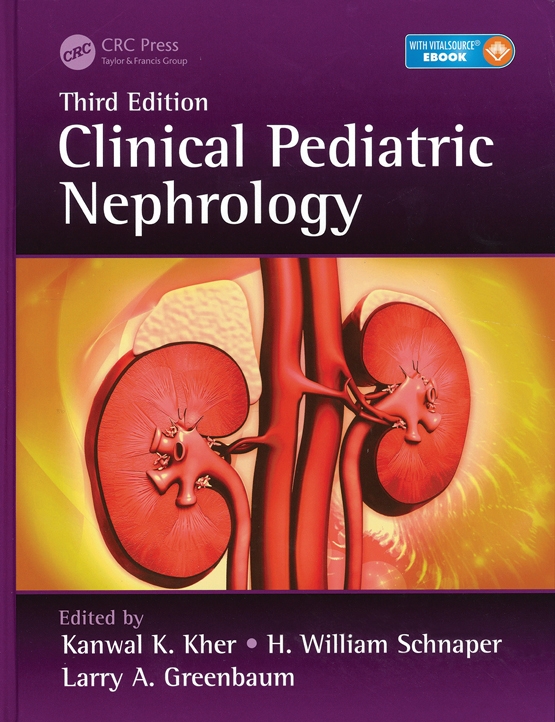
Clinical pediatric nephrology, 3rd edition. Kher KK, Schnaper HW, Greenbaum LA, editors. CRC Press, Taylor and Francis Group; 2016 ($402.00; 1093 pp). ISBN 9781482214628
In 2011, Peter Densen1 estimated that the doubling time of medical knowledge in 1950 was 50 years; in 1980, 7 years; and in 2010, 3.5 years. In 2020, it was projected to be 0.2 years — just 73 days. Almost out of necessity, continuously updated electronic databases, such as Up-To-Date (www.uptodate.com), have emerged to filter the mass of information and meet the need for readily available, continuously updated medical knowledge. Given the long lead time to publication, what then is the role of a textbook in the modern era of medical practice? In the preface to this book, the authors describe the main goal as a “primer of pediatric nephrology”. Last published in 2006, Clinical pediatric nephrology has been extensively updated, which has resulted in a much larger book (from almost 600 pages to over 1000) and may be considered by some beyond the realms of a “primer”. The information is targeted somewhere between the medical student and the experienced paediatric nephrologist, although both would find many of the chapters informative. The majority of authors are North American, which gives a slight bias, but overall the information is well balanced and regional differences in management are appropriately acknowledged. The book is well illustrated with colour diagrams and generous use of tables and figures — a particular strength given the target audience. The use of “key points” boxes highlight important learning elements and each chapter also has multiple choice review questions to test understanding. There is acknowledgement of the need for ready access via digital devices, with an e-book edition that can be used on multiple platforms and is much easier to search than the index of the print edition. Does this (or any) textbook still have relevance in our digital age? I think so, with some studies suggesting that people retain more of what they read in print. Although difficult to quantify, there also does seem to be more enjoyment in the experience of reading a book and Clinical pediatric nephrology will find a ready audience with trainees looking for an authoritative but easily read reference.
Competing interests
No relevant disclosures.
References
- Densen P. Challenges and opportunities facing medical education. Trans Am Clin Climatol Assoc 2011; 122: 48-58.
The first Australian evidence‐based guidelines on male infertility
Darren J Katz, Liza O’Donnell, Robert I McLachlan, Tim J Moss, Clare V Boothroyd, Veena Jayadev, Sarah R Catford
The epidemiology of haemodialysis catheter infections in Australia, 2016–20: a prospective cohort study
Benjamin Lazarus, Kevan R Polkinghorne, Martin P Gallagher, Jayson Catiwa, Nicholas A Gray, Sarah Coggan, Kathryn R Higgins, Girish Talaulikar, Stephen P McDonald AM, Sradha Kotwal
Am I on the list? Clinician‐reported factors for kidney transplantation non‐waitlisting among Aboriginal and Torres Strait Islander people with kidney failure: a cross‐sectional study
Stephen P McDonald AM, Katie Cundale, Christopher E Davies, Kelli Karrikarringka Owen (Kaurna, Nharangga, and Ngarrindjeri), Kerry Dole, Feruza Kholmurodova, Matilda D’Antoine (Paakantyi), Jaquelyne T Hughes (Wagadagam)
Hyperkalaemic cardiac arrest due to cream of tartar ingestion
Daniel Yee Lee Ng, Laksmi Govindasamy, Andrew Hughes, Hwee Min Lee
Dialysis care in Australia: a call for reform and innovation
Dharshana Sabanayagam, Angela Makris, Frederika Sciberras, Nicole J Scholes‐Robertson, Germaine Wong
Closing the gap in kidney disease: validating the reporting of Aboriginal and/or Torres Strait Islander identification in a clinical quality registry using linked data
Heather J Baldwin, Nicole De La Mata, Grant Sara, Faye McMillan, Brett Biles, Jianyun Wu, Paul Lawton, Stephen McDonald, Angela C Webster