




Volume 207 - Issue 7
Unravelling the evidence for prescribing medicinal cannabis
Author: David Allsop
Med J Aust 2017; 207 (7): 285. || doi: 10.5694/mja17.00063
Published online: 2 October 2017
Published online: 2 October 2017
Handbook of cannabis
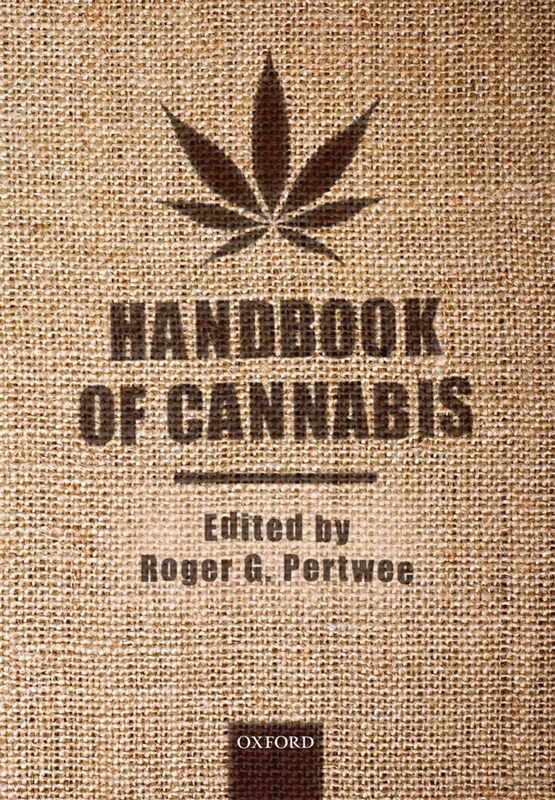
Handbook of cannabis. Roger G Pertwee, editor. Oxford University Press, 2016 (£40.00; 784 pp). ISBN 9780198792604
Australian doctors have been thrust to the forefront of the medical cannabis debate as the gatekeepers to accessing this contentious drug. Until registered cannabis medicines are available in Australia, doctors can use the Therapeutic Goods Administration Special Access Scheme for unregistered medicines. However, doctors are unprepared for this new burden, having received virtually no education about the endocannabinoid system and no experience prescribing pharmaceutical cannabis products.
Yet, help is at hand. The Handbook of Cannabis is an authoritative tome for clinicians and researchers. The book is dense (and at times a difficult read), heavy on pharmacology and technical terms, and covers a wide variety of topics. The book is divided into six parts comprising a total of 40 chapters. Part 1 covers the historical and cultural aspects of cannabis use. Part 2 deals with the pharmacology and metabolism of cannabis — the area of mastery of Roger Pertwee, who is professor of neuropharmacology at the Institute of Medical Sciences at the University of Aberdeen in the United Kingdom. In Part 3, there is an eclectic mix of chapters on self-medication, coffee shops and dispensaries; regulatory hurdles when developing cannabis-based medicines; an overview of available licensed medicines; and the use of cannabinoids in clinical practice in the UK.
Parts 4 and 5 of the book are the most useful sections for doctors navigating the treacherous evidence and justification section of a Special Access Scheme application. Chapters 23–26 deal with evidence for approved therapeutic targets (nausea and vomiting, cachexia, pain and multiple sclerosis). Chapters 27–35 chart the illnesses with less comprehensive evidence where there are still important signals from animal and early human trials (relevant to a special access justification). These therapeutic targets with less evidence include: non-multiple sclerosis neurodegenerative disorders; schizophrenia; sleep disorders; epilepsy; cardiovascular, metabolic, liver, kidney and inflammatory disorders; skin disorders; glaucoma; macular degeneration; diabetic retinopathy; uveoretinitis; bone-related disorders, such as osteoporosis; and cannabis’ ability to kill cancer cells.
The book is due for an update, as some key pieces of recent research are not included, such as some large scale clinical trials of cannabinoids in epilepsy. Nevertheless, for doctors wishing to understand the evidence and put themselves in the driving seat to deliver advice and prescriptions for medical cannabis, this book is an invaluable addition to the bookshelf.
Competing interests
No relevant disclosures.
Gabapentinoid Poisoning Presentations to Victorian Emergency Departments: A 15-Year Trend Analysis
Bishaal Tej Gurung, Amy McNeilage, Angus Skeen, Tina Lam, Joanna F. Dipnall, Jane Hayman, Suzanne Nielsen, Ting Xia
Hospital-Admitted Injection-Related Infections Among Incarcerated People Who Inject Drugs in Australia: A Retrospective Cohort Study
Andrew Palmer, Matthew Carter, Jeremy Yeo, Cecilia Shim, Jason Connor, Jeremy Hayllar, Gerald Holtmann, Naomi Moy, Elliott G. Playford, Naomi Runnegar, Paul J. Clark
The Management of Withdrawal From Alcohol and Other Drugs in Australian Custodial Settings: A Consensus Statement
Grace FitzGerald, Jocelyn Chan, Jon Cook, Mark Stoove, Michael Curtis, Suzanne Nielsen, Rebecca J. Winter, Thileepan Naren
Impact of Prescription Drug Monitoring Program Implementation on Rates and Characteristics of People Seeing Multiple Prescribers in Primary Care: A Controlled Interrupted Time-Series Analysis
Louisa Picco, Monica Jung, Grant Russell, Samanta Lalic, Mahbod A. Fini, Dan I. Lubman, Rachelle Buchbinder, Ting Xia, Suzanne Nielsen
Early Cessation of Acetylcysteine Treatment After Paracetamol Overdose (NACSTOP 2): A Non-Inferiority Randomised Controlled Trial
Anselm Wong, Richard McNulty, Sarah E. Hodgson, Naren Gunja, Andis Graudins
The risk of death after hospitalisation following intentional self‐poisoning: a retrospective observational study (PAVLOVA‐2)
Firouzeh Noghrehchi, Nicholas A Buckley, Rose Cairns