




Volume 206 - Issue 8
Clot retrieval and acute stroke care
Authors: Yun Tae Hwang and Yash Gawarikar
Med J Aust 2017; 206 (8): 333-334. || doi: 10.5694/mja16.01262
Published online: 1 May 2017
Published online: 1 May 2017
Resource distribution in stroke care must be rational and evidence-based, not driven by media coverage
Resource distribution in stroke care must be rational and evidence-based, not driven by media coverage
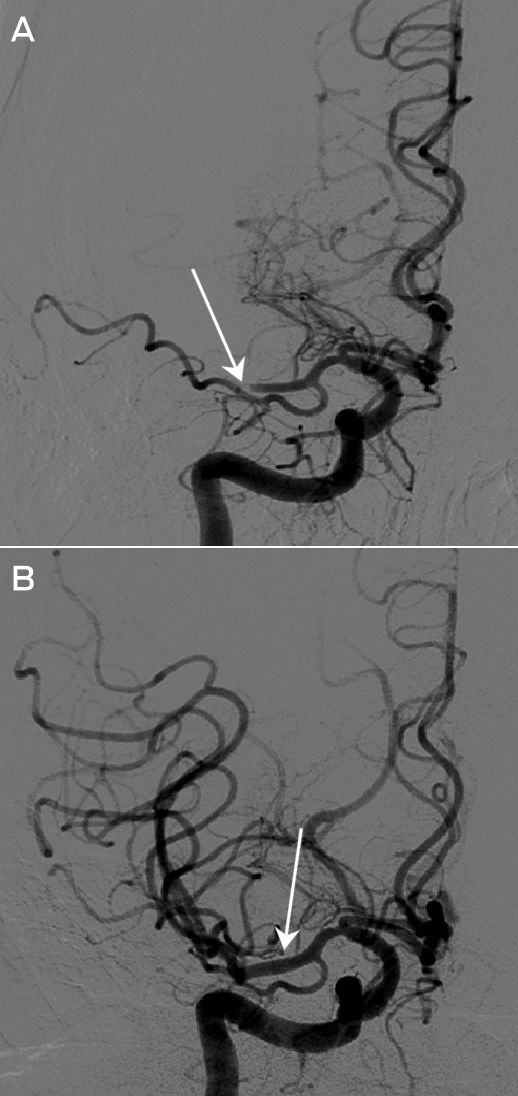
There has been a sudden upsurge of interest in the availability of endovascular clot retrieval (ECR) for stroke treatment (Box). Recent newspaper articles published in New South Wales1,2 highlight the potential benefits as well as the financial and logistical challenges of providing around the clock ECR services in a vast country like Australia.
Many well designed randomised trials have demonstrated the efficacy and safety of ECR,3 but the evidence of benefit, although dramatic in some cases, is confined to patients whose ECR procedure begins within 6 hours of symptom onset,4 with or without intravenous thrombolysis. However, before 24/7 ECR services can operate in Australia, individual health services need to examine the challenges of transporting eligible stroke patients from the emergency departments wherever they may be — remote, regional or urban — to a comprehensive stroke centre within the required time window. This potentially means covering vast distances — several hundreds of kilometres in some cases — in a matter of hours. A detailed analysis then needs to demonstrate that the benefits of a rapid ECR service justify funding over many other competing health care needs. Victoria, the third smallest Australian health jurisdiction (after the Australian Capital Territory and Tasmania) with the second highest population,5 has set an example by starting a statewide 24/7 ECR service. However, it is unclear at this stage whether a similar service would be feasible in larger states with lower population densities, given the similar challenges for ECR service provision in the United States and Canada.6 Currently, there are no 24/7 statewide ECR pathways in New South Wales. In the Australian Capital Territory, the health service is establishing a 24/7 ECR service in 2017, although many hurdles still remain.
However, even within stroke care, there are other, perhaps more immediate, needs. Currently, there are large gaps in our ability to deliver basics of stroke care, particularly in regional Australia. For example, a 2015 national audit of acute stroke services coordinated by the Stroke Foundation showed that only 67% of patients were admitted into a stroke unit,7 even though patients admitted to stroke units with any type of stroke, ischaemic and haemorrhagic, are more likely to be alive, living at home and independent 1 year after their stroke.8
Another area that could be improved is availability of advanced imaging — currently, as a result of lack of expertise and local department policy, too many stroke patients, even in urban centres, do not benefit from multimodal imaging such as computed tomography (CT) angiogram or CT perfusion scans. These scans can demonstrate the presence and location of a clot within the cerebral vasculature, as well as the size of the penumbra (the area of the brain at risk of infarction without urgent revascularisation), to identify patients who may benefit from aggressive and more invasive treatments such as ECR.9
Further, intravenous thrombolysis — a proven10 and more easily accessible therapy than ECR — is currently not an option for many stroke patients who would be eligible. The national thrombolysis rate is currently languishing at 7%, unchanged from 2011.7 Some work has already been done to improve this by establishing 24/7 acute stroke teams and forming regional acute stroke networks where a large hospital provides thrombolysis expertise and support for the regional and rural hospitals. Setting up a statewide ECR service without widely available capacity to optimally assess, image, treat and transport stroke patients risks squandering precious resources without clear benefits for the majority who do not live in the immediate vicinity of an ECR centre.
Delivering a world class stroke service is complex; the constantly advancing evidence base means that the entire service is always playing catch up. It is important to foster a provision and funding model for rational, holistic and flexible stroke services that puts patient outcomes first and covers all aspect of stroke care — not just the acute reperfusion therapies of intravenous thrombolysis and ECR but also stroke unit care and specialist neurorehabilitation. There is much work to be done, given that only one in 87 stroke units qualifies as a comprehensive stroke service,7 only 40% of stroke units routinely utilise established guidelines, care plans and protocols,7 and one in three patients is discharged from hospital without any preventive medications.7 Focusing the discussion about stroke care only on the availability of ECR — a necessary but complex and costly intervention which will benefit only a small proportion of stroke patients — diverts resources from wider and more fundamental needs in stroke care and does not serve the best interests of our patients.
Competing interests
No relevant disclosures.
References
- Alexander H. Stroke patients missing out on life-saving treatment after hours. Sydney Morning Herald 2016; 10 Oct. http://www.smh.com.au/national/health/stroke-patients-missing-out-on-lifesaving-treatment-after-hours-20161005-grw1qh.html (accessed Oct 2016).
- Brennan R. Stroke cases after hours in NSW ‘left to die’, specialist doctors not available. Daily Telegraph 2016; 29 Sep. http://www.dailytelegraph.com.au/news/nsw/stroke-cases-after-hours-in-nsw-left-to-die-specialist-doctors-not-available/news-story/bf9e93fa62421c33e3535d22e2067f47 (accessed Oct 2016).
- Saver JL, Goyal M, van der Lugt A, et al. Time to treatment with endovascular thrombectomy and outcomes from ischemic stroke: a meta-analysis. JAMA 2016; 316: 1279-1288.
- Powers WJ, Derdeyn CP, Biller J, et al. 2015 American Heart Association/American Stroke Association focused update of the 2013 guidelines for the early management of patients with acute ischemic stroke regarding endovascular treatment: a guideline for healthcare professionals from the American Heart Association/American Stroke Association. Stroke 2015; 46: 3020-3035.
- Australian Bureau of Statistics. Australian Demographic Statistics, Jun 2016 (ABS Cat. No. 3101.0). Canberra: ABS, 2016. http://www.abs.gov.au/ausstats/abs@.nsf/PrimaryMainFeatures/3101.0?OpenDocument (accessed Mar 2017).
- Smith EE, Schwamm LH. Endovascular clot retrieval therapy implications for the organization of stroke systems of care in North America. Stroke 2015; 46: 1462-1467.
- Stroke Foundation. National stroke audit: acute services report 2015. Melbourne: Stroke Foundation, 2015. https://informme.org.au/-/media/A3039E82D9FF4BC7803B5C67B42DBBB0.ashx?la=en (accessed Dec 2016).
- Stroke Unit Trialists’ Collaboration. Organised inpatient (stroke unit) care for stroke. Cochrane Database Syst Rev 2013; 9: CD000197.
- Morgan CD, Stephens M, Zuckerman S, et al. Physiologic imaging in acute stroke: patient selection. Interv Neuroradiol 2015; 21: 499-510.
- Wardlaw JM, Murray V, Berge E, del Zoppo GJ. Thrombolysis for acute ischaemic stroke. Cochrane Database Syst Rev 2014; 7: CD000213.
Linked content
-
Podcast with Dr Yash Gawarikar
Provenance: Not commissioned; externally peer reviewed.
Motor Neuron Disease Mortality Trends in Australia From 1986 to 2023: A Population-Based Study
Carol M. Y. Lee, Rupendra N. Shrestha, Julian Gold, Mark Stevenson, Kelly L. Williams, Lyndal Henden, Sandrine K. K. Chan Moi Fat, Zoe Zussa, Amanda Wright, Martin Jude, Mark A. S. Laidlaw, Willem J. R. Fokkink, Dominic B. Rowe
Mild traumatic brain injury and concussion and persisting post‐concussion symptoms: new guidelines to support evidence‐based assessment and management in Australia and Aotearoa New Zealand
Karen M Barlow, Jennie L Ponsford, Alice Theodom, Gill Cowen, Gavin A Davis, Vicki Anderson, Franz E Babl, David Cole, Jennifer Cullen, Stuart R Dalziel, Melinda Fitzgerald, Howard Flavell, Caroline Yates, Rebecca Kimble, John H Olver, Rhonda Orr, Mark Ralfe, Michael Rose, Nick Rushworth, Julia Treleaven, Gary Browne, Nathan Delang, Sarah Harris, Gary Mitchell, Sean Tweedy
The prevalence of and variation in indicators of the quality and safety of long term aged care in Australia, 2019: a cross‐sectional population‐based study
Tesfahun C Eshetie, Gillian E Caughey, Catherine Lang, Olivia Ryan, Renuka Visvanathan, Craig Whitehead, Keith Evans, Janet K Sluggett, Jyoti Khadka, Carolyn Dawkins, Helena Williams, Miranda Starke, Sara Blunt, Anne Liddell, Megan Corlis, Anna Sheppeard, Penelope Lello, Marilyn Thien, Steven L Wesselingh, Maria C Inacio
Health and economic benefits of improving pre‐hospital identification of stroke in Australian women: a modelling study
Thomas Gadsden, Lei Si, Emily R Atkins, Cheryl Carcel, Xia Wang, Stephen Jan, Mark Woodward, Laura E Downey
Symptom burden, quality of life, and diagnostic journey of people with postural orthostatic tachycardia syndrome, Australia, 2021–24: a descriptive patient registry data study
Marie‐Claire Seeley, Gemma Wilson, Eric Ong, Amy Langdon, Jonathan Chieng, Danielle Bailey, Kristina Comacchio, Amanda Page, Dennis H Lau, Celine Gallagher
The intersection of rurality and dementia prevalence in Australia for Aboriginal and Torres Strait Islander and non‐Indigenous peoples
Antonia J Clarke, Marwan Ahmed, Judith M Katzenellenbogen, John Towney (Wiradjuri), Anna H Balabanski, Adrienne Withall (Dharawal Yuin), Kylie Radford, Amy Brodtmann