




Volume 205 - Issue 2
Edgeworth David McIntyre, AM, MB BS, FRCSEd, FRCS, FRACS
Author: John C Morris
Med J Aust 2016; 205 (2): 62. || doi: 10.5694/mja16.00280
Published online: 18 July 2016
Published online: 18 July 2016
AM, MBBS, FRCSEd, FRCS, FRACS
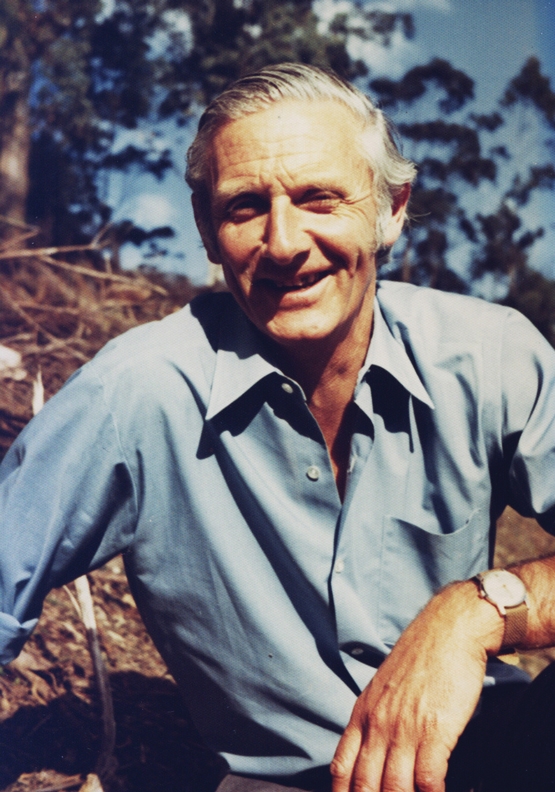
Edgeworth David McIntyre was born on 20 April 1925 in Launceston, Tasmania. His father, Dr WK McIntyre, developed the infant respirator, which was the forerunner of the humidicrib. His mother, Margaret Edgeworth McIntyre, was the first female member of the Tasmanian Parliament.
After graduating from Melbourne University in 1948, David was a resident medical officer at Launceston General Hospital (LGH) for 2 years; he then spent 3 years in England at Haymeads Hospital and at the Royal East Sussex Hospital. During this time, he was made Fellow of the Royal College of Surgeons Edinburgh in 1953, and Fellow of the Royal College of Surgeons in 1954. Subsequently, he was made Fellow of the Royal Australasian College of Surgeons in 1961.
He returned to LGH as registrar in general surgery and, from 1955 to 1956, he was surgeon superintendent at the Mersey Hospital in Latrobe, Tasmania. From 1956 until his retirement, David was a member of staff at LGH in various positions; first, as honorary orthopaedic and general surgeon and then, from 1960 to 1970, as orthopaedic surgeon. In 1971, David became head of the orthopaedic unit at LGH as senior sessional surgeon, a role he held until 1986. He continued working in private practice until he fully retired in 1990.
Throughout his career, David contributed ground-breaking orthopaedic procedures, especially in paediatric orthopaedics. He visited Sir John Charnley in England to learn Charnley’s pioneering hip replacement surgery techniques and, on his return, performed the first Charnley hip replacement in Launceston.
With Peter Williams in 1973, he helped establish the new nationally acclaimed Orthopaedic Training Program and became the first dedicated orthopaedic registrar in Tasmania.
David served as vice-president of the Australian Orthopaedic Association (AOA) from 1984 to 1985 and, in 1994, he was granted AOA life membership. In 2008, he was awarded the LO Betts Memorial Medal — the AOA’s highest award for outstanding contribution to the science and practice of orthopaedics in Australia. In 2013, David was appointed a Member of the Order of Australia for his significant service to orthopaedic medicine as a surgeon and an educator.
David was an avid bushwalker for much of his life, but fly-fishing was his foremost interest and he was a member of the prestigious Waterfall Farm Fishing Club. He died on 12 December 2015 after enjoying a bushwalk and is survived by Joyce, his wife of almost 40 years, daughters Louise and Libby and stepdaughter Joanna.
Prisoner of war pathology in Changi, 1942–1945
Kate Ariotti, Elizabeth Roberts‐Pedersen
Should medical eponyms continue to be used in everyday practice?
Leya Nedumannil, Diana Lewis
100 years on: the first use of insulin in Australia
Sophie Templer
Reflections on the life and career of Professor Dame Valerie Beral AC DBE FRS FRCOG FMedSci (1943–2022)
Karen Canfell, Bette Liu, Emily Banks
The Honourable Dr Donald James Grimes AO
Michael Kirby, Patti Warn
From wipeout to drill out: a history of exostosis management and Australian surfing
Alon Taylor, Hannah North, Narinder P Singh, Paul A Fagan