




Reflections
Book/media/app
Volume 204 - Issue 3
Assessing and treating functional disorders
Author: Catherine Yelland
Med J Aust 2016; 204 (3): 128. || doi: 10.5694/mja15.01233
Published online: 15 February 2016
Published online: 15 February 2016
Functional disorders and medically unexplained symptoms: assessment and treatment, Per Fink and Marianne Rosendal, editors
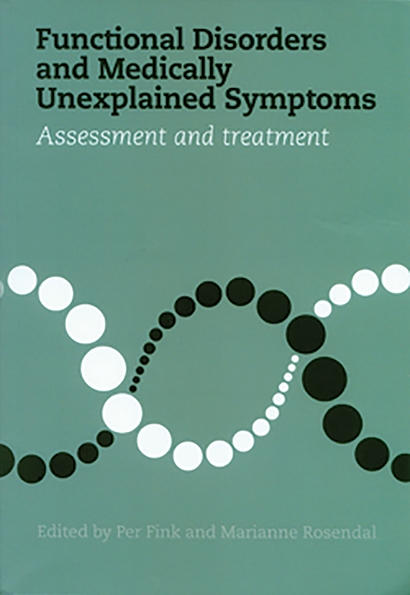
Functional disorders and medically unexplained symptoms: assessment and treatment. Per Fink and Marianne Rosendal, editors. Aarhus, Denmark: Aarhus University Press, 2015 (258 pages). ISBN 9788771248517.
The Research Clinic for Functional Disorders and Psychosomatics at Aarhus University Hospital in Denmark is the background for this book and its authors. This setting differs from the workplace of most Australian doctors, but many of the challenges are the same. Functional disorders are defined as “physical symptoms that cannot be attributed to any known, well defined, physical or psychiatric disorder”. “Medically unexplained symptoms, “bodily distress disorder or syndrome and health anxiety” are also useful descriptions for some patients.
The book covers the historical and cultural background, prevalence, diagnosis and classification of functional disorders. Some of this is rather Eurocentric. Theories of causation and contributing factors, including the doctor’s role, will be familiar to many readers. The chapter on patients’ symptom perception and illness belief is short but helpful.
Of most interest, but perhaps of less practical use, is the treatment plan used in this clinic. There is a general outline of familiar treatment options, including cognitive behavioural therapy and a supportive relationship with the general practitioner. The book describes the concept of stepped care, moving from the first step in primary care of normalisation and empowerment for mild symptoms, escalating to more specialised and multidisciplinary treatment for patients with severe, disabling symptoms. The second half of the book describes a primary assessment and treatment program, TERM, which includes understanding (taking a full history of symptoms and background), acknowledgement and feedback, negotiating a new or modified model of understanding, summarising, and planning follow-up.
If your practice has a significant number of patients who have medically unexplained symptoms, you will find this a useful guide to a more structured approach to helping them. Whether you have the time to carry through the suggestions in a busy general practice or a hospital setting may be more challenging.
Shifting focus to adolescent wellbeing and inclusive participation in the digital age
Allyson R Todd, Elena Wang, Stephanie R Partridge
The clinical presentation, investigation, and management of women diagnosed with endometriosis in Australian general practices, 2011–2021: an open cohort study
Danielle Mazza, Kailash Thapaliya, Sharinne B Crawford, Alissia Hui, Maryam Moradi, Luke E Grzeskowiak
The impact of the Breast Screen NSW transition from film to digital mammography, 2002–2016: a linked population health data analysis
Rachel Farber, Nehmat Houssami, Katy J L Bell
Non‐technical errors associated with deaths in surgical care, Australia, 2012–2019, by surgical specialty (Australian and New Zealand Audit of Surgical Mortality): a retrospective cohort study
Jesse Ey, Victoria Kollias, Octavia Lee, Kelly Hou, Matheesha Herath, John B North, Ellie Treloar, Suzanne Edwards, Martin Bruening, Adam J Wells, Guy J Maddern
The CURE Asthma roadmap
Gary P Anderson, Anthony Flynn, Phil G Bardin, John D Blakey, Shyamali C Dharmage, Paul Foster, Peter G Gibson, Adam Jaffe, Alan James, Christine R Jenkins, Sundram Sivamalai, Peter D Sly, Guy B Marks, Vanessa M McDonald, Judy Wetttenhall
Evidence from Australian cohort studies about asthma trajectories and transitions across the life course: a narrative review
Caroline Lodge, Xin Dai, Ingrid A. Laing, Michael P Menden, Anthony Flynn, Gary P Anderson, Sarath Ranganathan, Shyamali C Dharmage