




Reflections
Book review
Volume 204 - Issue 1
Instructive medical humour
Author: Charles S Guest
Med J Aust 2016; 204 (1): 39. || doi: 10.5694/mja15.01078
Published online: 18 January 2016
Published online: 18 January 2016
Barcoo Rot, sperm that untie a knot and other medical tales from the back o’ Bourke and beyond
MAX KAMIEN IS LARGER THAN LIFE. I met him recently, and told him what a decisive influence his earlier book, The dark people of Bourke (1976), had on my first research. In Bourke, exploring the concept of a doctor acting as an agent of social change, the young Dr Kamien would always leave a calling card, so that patients or family would know he had been there. If no one was home, at least the visit showed that the doctor could be relied on to come. What could be simpler for the development of trust?
Simplicity and trust abound in Kamien’s new title, a collection of columns from Australian Doctor and other publications. They were written for the amusement of anyone engaged in health care, including patients. You will certainly find a piece to your liking here.
There is humour frequently, but always instruction. Take the introduction to scurvy, which Kamien claims to have seen only four times in more than a half-century of practice. The latest diagnosis came to him in an inland mining town, where the combination of bruising, skin sores plus a diet deficient in fresh fruit and vegetables suggested the disease described in cattle drovers a long time ago. Moving cattle inland from the Queensland coast to the Barcoo River, living for months on damper, meat and tea, the drovers would often develop the “Barcoo Rot”. How many modern medics could diagnose scurvy, let alone describe the condition in the vernacular still recognised by the locals?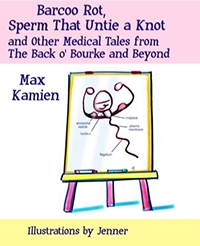
Kamien’s abiding curiosity and optimism is an inspiration. Few doctors could match his clinical experience. There are “Maxisms” that any doctor could take note of. His assertion that “everything can be improved” shows the positive mindset always ready for a clinical challenge, while this book also turns a critical eye to alternative medicine, patient behaviour, ethics, bureaucracy, education and academia. Recommended!
Prisoner of war pathology in Changi, 1942–1945
Kate Ariotti, Elizabeth Roberts‐Pedersen
Should medical eponyms continue to be used in everyday practice?
Leya Nedumannil, Diana Lewis
100 years on: the first use of insulin in Australia
Sophie Templer
Reflections on the life and career of Professor Dame Valerie Beral AC DBE FRS FRCOG FMedSci (1943–2022)
Karen Canfell, Bette Liu, Emily Banks
The Honourable Dr Donald James Grimes AO
Michael Kirby, Patti Warn
From wipeout to drill out: a history of exostosis management and Australian surfing
Alon Taylor, Hannah North, Narinder P Singh, Paul A Fagan