




Volume 197 - Issue 11
Creative destruction, Cancer Alley, and voting in voodoo season
Author: Charles S Guest
Med J Aust 2012; 197 (11): 656-657. || doi: 10.5694/mja12.11603
Published online: 10 December 2012
Published online: 10 December 2012
In a week when the presidential election was imminent, but Americans were more concerned with Hurricane Sandy and Halloween, an Australian visiting professor in New Orleans shares his observations of life and health in the United States and the ongoing recovery from Hurricane Katrina.
Charles Guest sends a postcard from New Orleans — a city still struggling to recover from Hurricane Katrina
While in the Deep South of the United States, I intended to study challenges for health and medicine in the Mississippi Delta; how Creole and Cajun histories would mix with the US at large. The immediate problem, however, was “Katrina fatigue” — the exhaustion in New Orleans that has accompanied the long recovery from one of the country’s deadliest and most damaging hurricanes.
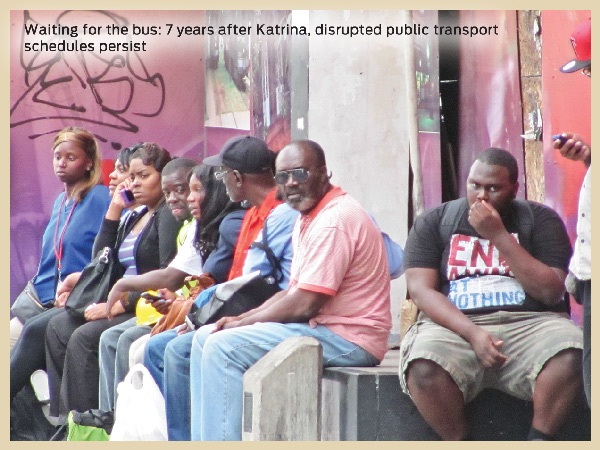
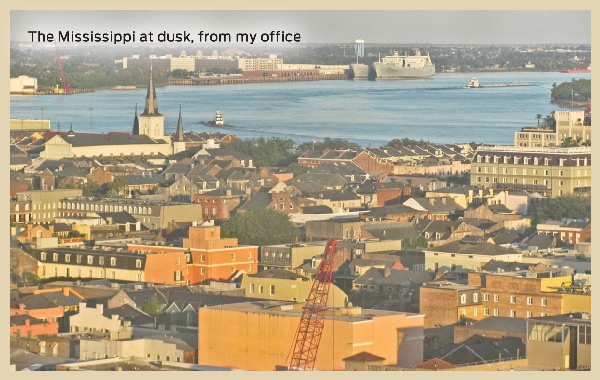
Seven years have passed since Hurricane Katrina submerged many of the newer parts of the city, resulting in some 1500 deaths. On the brighter side, much of the remarkable architectural heritage of New Orleans remains. The older parts of the city are on the highest ground; economic stagnation since the Civil War has helped to preserve them.
My colleagues here speak of “creative destruction” over the years of recovery: much was lost, while financial and other aid has poured in from around the world, allowing for rebuilding and rethinking of how life should be lived in the Delta. The recovery has required greater accountability in local government. Corrupt old Southern ways, I am told, are less tolerated now than before the storm.
The Tulane University School of Public Health and Tropical Medicine, on Canal Street, occupies the Tidewater Building, a skyscraper that looks and feels tired. A line on the wall of the ground floor marks the high-water level of flooding during Katrina, but the name Tidewater comes from an oil exploration company. As the petrochemical industry moved to grander quarters, the university’s medical campus inherited buildings that bear the names of earlier tenants. The energy industry is highly visible here, as the country redoubles its efforts to become independent of foreign sources, even as oil gets harder to find.
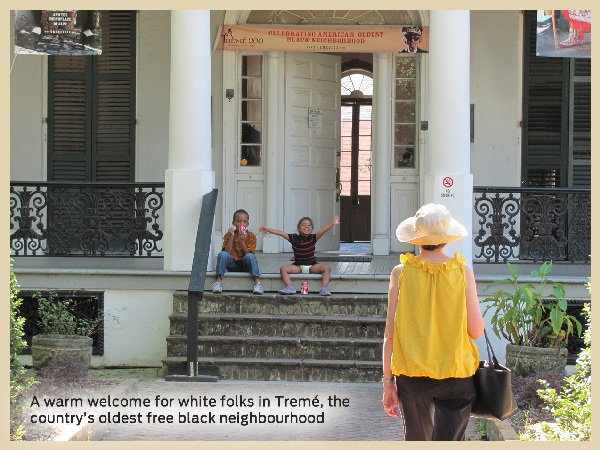
Canal Street was the neutral ground between blacks and whites in the 19th century. Tremé, the country’s oldest free black neighbourhood, is close by; my preparation for coming to New Orleans was to watch the first season of the TV series that shares its name. Treme covers the lives of the city’s inhabitants during the aftermath of the hurricane. I identified with the overweight college professor who suffers from writer’s block, making little progress with his novel. Late each night, thoroughly liquored up, this antihero seeks light relief by webcasting his thoughts on the slow recovery after Katrina. He emphasised the manmade nature of the disaster. Along with the water and wind of a hurricane, it was the building of levees that made life in the Mississippi Delta so precarious. Recovering from Katrina has been no less than getting over a war.

Water — and the mosquitoes that come with it — has also stimulated medical education in this region. Tulane University was founded in 1834 as the Medical College of Louisiana, to control the scourge of yellow fever. Currently, West Nile virus disease, also mosquito-borne, is prevalent.
Water pollution is a major problem too. Clean-up of the Deepwater Horizon oil spill continues in the Gulf of Mexico, while BP prepares for litigation, and the seafood industry suffers.1 With a perception that cancer is more common here than it should be because of petrochemical pollution, some workers call southern Louisiana “Cancer Alley”.2 Not far away, in Ecuador, a conclusion has recently been reached in the biggest environmental trial ever,3 which also concerned water pollution caused by oil companies.
Music is the lifeblood of New Orleans. The development of jazz was partly the result of an enlightened attitude toward prostitution. In 1897, in an attempt to control the lawlessness that was troubling the city, alderman Sidney Story sponsored a bill that legalised sex work within a red-light district known as “Storyville”. Entertainment at the district’s new bordellos included a new style of improvisational music. Jelly Roll Morton, who formed the band the Red Hot Peppers, claimed to have invented jazz here in 1902. The climate of the city allows musical parades to happen out of doors throughout much of the year, uninterrupted by banalities such as politics.
Colleagues tell me that the presidential election will primarily be a referendum on ObamaCare. The US Supreme Court has upheld the constitutionality of President Obama’s proposed law that is intended to promote universal health insurance. At the heart of the Patient Protection and Affordable Care Act is the requirement for all US citizens to have health insurance, or face a penalty. The Court’s decision in June to allow the Act has exercised academia and the commentariat, at a time when public approval of the Court has been in decline.4 Will the Court continue to prohibit all forms of gun control? Will it promote the reversal of the Roe v Wade decision, thus allowing states to ban abortion? Clearly, health care remains at the heart of political life here, as presidents come and go.
Whether or not the Act is implemented, both public and private sectors of the health care industry project images of reform. The cost of health care in the US is simply unsustainable for patients, for employers and, of course, for government programs such as Medicare and Medicaid. With an eye to the federal deficit, efficiency and outcomes are now centrestage, while fee-for-service, utilisation and cost-based reimbursement are losing favour.
We watched the presidential debates with Tulane political science students. Around the country, perhaps a quarter of the US population was also watching; but with the carefully rehearsed repartee of these contests, did anyone change their minds? I suspect that Democrat supporters believe that the President won, while Republicans hope that Mitt Romney gained an advantage.
As I write, the clean-up from Hurricane Sandy is underway in the eastern US. It seems unlikely that this “perfect storm” will reduce voter turnout in Ohio, the most critical state, according to the pundits, in the upcoming election. People are preoccupied with weather, while climate change remains largely ignored. However, the Governor of New York acknowledged the increased frequency of extreme weather events as an indicator of anthropogenic climate change, which the Republican candidate Romney still chooses to doubt.
Even with the US presidential election, Halloween mixed with voodoo has been the most recent topic of conversation in New Orleans. Voodoo enabled slaves to preserve their African culture and roots alongside Roman Catholicism. Music and religion still exert more power here than education or health policy, tax reform or the White House.
Competing interests
No relevant disclosures.
References
- Xia K, Hagood G, Childers C, et al. Polycyclic aromatic hydrocarbons (PAHs) in Mississippi seafood from areas affected by the Deepwater Horizon Oil Spill. Environ Sci Technol 2012; 46: 5310-5318.
- Misrach R, Orff K. Petrochemical America. New York: Aperture Foundation, 2012. 0_i1115617
- Guest C. Back to the source. Lancet 2012; 380: 640. 0_i1115620
- Toobin J. The oath: the Obama White House and the Supreme Court. New York: Doubleday, 2012. 0_i1115622
Provenance: Commissioned; not externally peer reviewed.
Prisoner of war pathology in Changi, 1942–1945
Kate Ariotti, Elizabeth Roberts‐Pedersen
Should medical eponyms continue to be used in everyday practice?
Leya Nedumannil, Diana Lewis
100 years on: the first use of insulin in Australia
Sophie Templer
Reflections on the life and career of Professor Dame Valerie Beral AC DBE FRS FRCOG FMedSci (1943–2022)
Karen Canfell, Bette Liu, Emily Banks
The Honourable Dr Donald James Grimes AO
Michael Kirby, Patti Warn
From wipeout to drill out: a history of exostosis management and Australian surfing
Alon Taylor, Hannah North, Narinder P Singh, Paul A Fagan