




Volume 181 - Issue 2
I want to work and have a life as well
Authors: Peter Joyner, Stephen Napoli and Kylie Booth
Med J Aust 2004; 181 (2): 96-97. || doi: 10.5694/j.1326-5377.2004.tb06184.x
Published online: 19 July 2004
Published online: 19 July 2004
When I (P J) explained to one of my younger colleagues that I was writing an article about recruitment and retention of doctors to the country, I finished by asking what made her come and stay here. “I want to work and still have a life” was her spontaneous answer — a response that encompasses most of what we have tried to achieve in this medical practice.
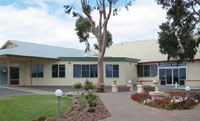
Mannum Medical Centre
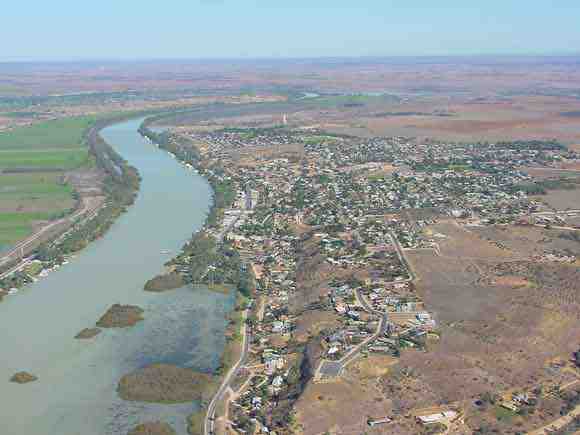
In 1976, after working as an urban general practitioner for 5 years, I moved to Mannum, a delightful small town of about 3000 people, situated on the Murray River some 80 km due east of Adelaide. I formed a partnership with Dr Owen Crompton, who was of a similar age and background, and we worked together until 2000, when he decided to move to (literally) greener pastures in Victoria. Mannum has an annual rainfall of 10–11 inches in a good year and goes through a drought every 4–6 years — Owen despaired of ever being able to raise horses or cattle in such an environment.
After some 3 years of unsuccessfully advertising for another doctor to join the practice, we realised that we would need to adopt a different approach if I was to be able to remain in practice in Mannum. The world had changed since I graduated from medicine in 1969. Medical graduates were no longer predominantly male, white and anglosaxon, with a wife and family willing to follow the doctor wherever life took him.
Making some changes
Over the next few years, we made some significant changes, and the practice now has six GPs, working various hours, up to two GP registrars at a time, and a thriving relationship with Flinders University.
To summarise the main changes:
We moved the surgery from a small house in the main street where it had been for 40 years to a converted area in the hospital. The operating theatre was no longer in use and could be converted into a more than adequate accident and emergency area. We then built on this to give us a total of five consulting rooms, two clinic nurse rooms, and new reception, office and waiting areas.
The extra space allowed registrar training for the first time, as a way of exposing the practice to new graduates. In 2000, our first Registrar, Stephen Napoli (Box 1), returned to Mannum after moving around the state to experience work in other areas.
We became (and remain) enthusiastically committed to being a high-quality training practice, encouraging both registrars and students to spend time with us. To that end, we were able to access a federal grant to have two residential units built close to the hospital grounds. We work enthusiastically with the Sturt–Fleurieu GP Education and Training and the Flinders University Medical School and have hosted a range of students to give them an insight into the pleasures of rural practice.
Doctors are able to join the practice as associates, and are thus free to come and go, not financially bound to the practice.
The practice offers maximum flexibility of working hours, which can be tailored to meet changing family and other commitments.
We have a philosophy of mutual respect, that in our practice we are all equally valuable (even though I am ancient compared with the younger doctors) and we are a practice of equals.
Our flexible workforce
As present, there are several qualified GPs here, besides Stephen and myself (Box 2). We are lucky to have three women in the practice. Kylie Booth was a registrar here, who left saying she would “come back if she had a room with a river view and if we could organise a youth clinic service for her”. Although Kylie is now married and her husband is committed to work in Adelaide, she works here 2 days a week, returning to a youth clinic in Adelaide on other days. Sonia Schutz trained as a registrar in a practice near here, went to work for further experience in Broken Hill with the Royal Flying Doctor Service, and moved back into the area to work with us. Besides working on their newly acquired farm, her husband, Terry, is employed here for 3 days a week as our office manager. The youngest doctor here is Rebecca George, who, after passing her FRACGP exams last year, has increased her working days from three to four. It was she who gave me the quote I have used to introduce this article.
Brian Moore, the only doctor here who is older than me, has had vast experience in Alice Springs and, more recently, in the Adelaide Hills area. He helps with the registrar teaching and works Thursday, Friday and Saturday mornings, being a valuable part of our ability to offer 6-day-a-week consulting and 24-hour, 7-day-a-week medical services.
We have had up to two registrars at times, plus doctors in their mentor time, which certainly increases the teaching load but is very enjoyable. At this stage, we have Ethan Tieu — another great registrar, enthusiastic, very competent and very keen to learn all he can of rural general practice
I contrast our current situation with the 20-odd years when I was the only doctor offering obstetric services here, and so was on call all the time and juggling holidays around the times when no “mids” were due. At that time we had a saying that “if you needed to be seen you would be seen at some time through the day”, even if it was at 10 o’clock at night at the end of a full day’s consulting. This is now neither practical nor sensible, and is certainly not desirable for either patients or doctors.
Why Mannum “works”
We have developed a firm policy of trying to encourage other doctors to work with us, either full-time or part-time, in ways that are mutually supportive. Working with younger doctors is one of the joys of life, as the combination of questions, answers, learning, teaching, and sharing their enthusiasm for a balanced life has helped me to totally enjoy the past few years here. The practice has changed when the notice in the toilet now reads “How to practise your pelvic floor exercises”!
I believe the future of rural practice depends on being totally involved at all levels of medical training (undergraduate students, postgraduate students, registrars, etc), advertising the good points of where you work and live, always looking for ways to change and improve, and being positive and flexible in supporting any doctor who comes your way.
Overall, if new doctors feel supported and valued in the practice and have access to a full life out of surgery and on-call hours, then they are more likely to stay and encourage other doctors to come. Younger doctors give us the great example of wanting both to practise high-quality, satisfying medicine, and to enjoy that part of their life that is outside of medicine.
1 Working and staying in the country as a GP depends on a healthy balance between work and personal life
Dr Stephen Napoli
In 1999, I had my first taste of working in Mannum in my mentor time as a rural GP registrar and locum. I was married with two young children and must admit did not really enjoy my “introduction” to the town. I replaced one of the then two doctors for 2 weeks, and found the hours long, arduous and not conducive to family life.
While working as a rural locum in various towns in South Australia, I quickly became aware of certain aspects of rural practice which reinforced my desire to work in the country. Establishing links with a community, developing relationships with patients, and the opportunity to maintain broad clinical skills was both rewarding and stimulating. But I also realised that in some practices it was difficult for a younger GP, with a young family and an approach to life that put family before work, to feel comfortable.
Returning to work in Mannum as one of three and a half doctors was a more positive experience. Mannum also offered the opportunity to fulfil my strong desire to practise obstetrics. I was able to reduce hours when needed to complete my GP registrar exams, following the births of our children (now four). In addition, my wife was able to further her career interest in family therapy and rural mental health.
Having a strong teaching and training focus involving both students and registrars has obviously brought vibrancy and a dynamic character to the practice, while keeping us up to date with current approaches to medicine. Good relationships with the reception staff and local hospital staff have aided in creating a harmonious and efficient working environment.
Staying in Mannum has been very much affected by my particular family needs, but has also been based on a strong working relationship with Peter. I have felt a strong sense of mutual respect, allowing for a flexible approach to our working relationship as associates, while maintaining an equitable approach to our business relationship.
Although we are happy in our current practice team, change is paramount in this modern era. Having a positive, proactive approach will, we hope, allow us to accommodate the changing needs of the future.
2 Why do some medical practices keep their registrars?
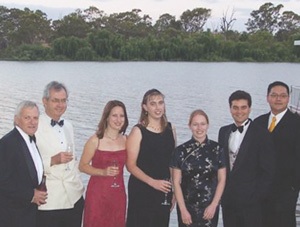
The Mannum team: Left to right; Dr Brian Moore, Dr Peter Joyner, Dr Rebecca George, Dr Sonia Schutz, Dr Kylie Booth, Dr Stephen Napoli, Dr Ethan Tieu (Registrar).
Dr Kylie Booth
As a medical student at Flinders University, I was a member of the “rural club”, and visited a variety of country practices. When I applied and was accepted into the RACGP training program to start as a basic registrar in January 2001, Mannum was my second choice as a placement. My first choice was a town that I had worked in as a sixth-year medical student, during my rural GP term. I think that practice familiarity is a very important thing for registrars — past students will often return. In 2001, the college gave most applicants their second choices, so I started my basic term as a GP registrar at Mannum.
For a registrar, Mannum has a few practical advantages. The town is only 1.5 hours’ drive from Adelaide, and is a popular tourist destination for water skiing. There is a strong community feel to the town. The community respects the medical practice, which, in turn, provides 24-hour emergency care in addition to daily general practice clinics.
The Mannum Medical Clinic initially provided me with appropriate orientation to the practice. The reception staff welcomed me and soon adapted my bookings to my growing abilities. I loved the fact that the practice principals had previously decided that “full time” is 4 days a week, as we all work one night and one weekend in three on call. I did not feel — as some registrars do — that I was a “process worker”, just there to bring money into the practice. I have always felt part of a team. The doctors, whether associates or registrars, all share the same vision and are highly supportive of each other. The supervision and support I have received is ultimately the reason I have stayed. The practice as a whole was particularly supportive during the FRACGP examination period. Peter’s diplomatic optimism, even in difficult situations, is a skill I wish all GP supervisors could develop. Rosters, contracts and salary are all important issues for registrars, and I believe that all of these were fair, and negotiated with the registrar’s interest in mind.
To all the staff at Mannum Medical Clinic, I say, “Thank you — and congratulations for being such a great place to work”.
They have found the right balance.
Shifting focus to adolescent wellbeing and inclusive participation in the digital age
Allyson R Todd, Elena Wang, Stephanie R Partridge
The clinical presentation, investigation, and management of women diagnosed with endometriosis in Australian general practices, 2011–2021: an open cohort study
Danielle Mazza, Kailash Thapaliya, Sharinne B Crawford, Alissia Hui, Maryam Moradi, Luke E Grzeskowiak
The impact of the Breast Screen NSW transition from film to digital mammography, 2002–2016: a linked population health data analysis
Rachel Farber, Nehmat Houssami, Katy J L Bell
Non‐technical errors associated with deaths in surgical care, Australia, 2012–2019, by surgical specialty (Australian and New Zealand Audit of Surgical Mortality): a retrospective cohort study
Jesse Ey, Victoria Kollias, Octavia Lee, Kelly Hou, Matheesha Herath, John B North, Ellie Treloar, Suzanne Edwards, Martin Bruening, Adam J Wells, Guy J Maddern
The CURE Asthma roadmap
Gary P Anderson, Anthony Flynn, Phil G Bardin, John D Blakey, Shyamali C Dharmage, Paul Foster, Peter G Gibson, Adam Jaffe, Alan James, Christine R Jenkins, Sundram Sivamalai, Peter D Sly, Guy B Marks, Vanessa M McDonald, Judy Wetttenhall
Evidence from Australian cohort studies about asthma trajectories and transitions across the life course: a narrative review
Caroline Lodge, Xin Dai, Ingrid A. Laing, Michael P Menden, Anthony Flynn, Gary P Anderson, Sarath Ranganathan, Shyamali C Dharmage