




Volume 223 - Issue 11
The early implementation phase of the Omega‐3 Test‐and‐Treat Program for reducing the risk of preterm birth, South Australia, 2021–22: an implementation evaluation study
Authors: Karen P Best, Celine Northcott, Lucy A Simmonds, Philippa Middleton, Lisa N Yelland, Vanessa Moffa, Khoa Lam, Penelope Coates, Cornelia Späth, Carol WK Siu, Karen Glover, Rhiannon Smith, Robert Gibson and Maria Makrides
Med J Aust 2025 || doi: 10.5694/mja2.70101
Published online: 16 November 2025
Published online: 16 November 2025
The program could be integrated into routine antenatal care to reduce the risk of preterm birth in Australia
Abstract
Objective: To assess the feasibility of embedding omega‐3 fatty acid testing and targeted supplementation (the Omega‐3 Test‐and‐Treat Program) into routine antenatal care to reduce the risk of preterm birth.
Study design: Prospective implementation evaluation study, using the Quality Enhancement Research Initiative (QUERI) framework.
Setting, participants: Women with singleton pregnancies undergoing routine antenatal screening during early pregnancy (before 20 weeks’ gestation) and their health care providers, South Australia, 19 April 2021 – 30 June 2022.
Intervention: Addition of omega‐3 fatty acid testing option to SA Pathology test referral forms for the South Australian Maternal Serum Antenatal Screening (SAMSAS) program, with the aim of identifying women with low omega‐3 fatty acid levels during early pregnancy and providing evidence‐based supplementation guidance for reducing the risk of preterm birth.
Main outcome measures: Program feasibility (uptake and fidelity); representativeness of women tested for omega‐3 fatty acid status; and omega‐3 fatty acid status, by proportion of total serum fatty acids (low, <3.7%; moderate, 3.7–4.3%; sufficient, > 4.3%).
Results: A total of 4801 requests for omega‐3 fatty acid tests (26.1% of 18362 SAMSAS referrals) were submitted to SA Pathology during the initial implementation phase of the Omega‐3 Test‐and‐Treat Program. The monthly number of test requests increased from 15 (2.4% of 627 SAMSAS referrals) in April 2021 to 340 (29.4% of 1156 SAMSAS referrals) in June 2022. The socio‐demographic and clinical characteristics of women referred for omega‐3 fatty acid testing were similar to those for women who were not. Serum samples were insufficient for omega‐3 fatty acid testing in 19 cases; of the 4782 tests performed, omega‐3 fatty acid levels were low in 702 (14.7%), moderate in 1638 (34.2%), and sufficient in 2442 tests (51.1%). Of 5057 samples received by the Omega‐3 Laboratory, 4935 (97.6%) were analysed within 72 hours. Thirty‐three of 4801 omega‐3 fatty acid test referrals (0.7%) were for women beyond 20 weeks of pregnancy; 58 referrals (1.2%) were for women with non‐singleton pregnancies.
Conclusion: The Omega‐3 Test‐and‐Treat Program is a feasible approach to reducing the risk of preterm birth with a targeted nutritional intervention that could be integrated into routine antenatal care in Australia.
The known: Preterm birth is associated with high infant morbidity and mortality. Omega‐3 fatty acid supplementation can reduce the risk of preterm birth for women with low omega‐3 fatty acid levels, but systematic identification of and treatment of low omega‐3 fatty acid status during pregnancy is not undertaken.
The new: The Omega‐3 Test and Treat Program is a feasible approach for identifying pregnant women who could benefit from omega‐3 fatty acid supplementation. The characteristics of the women who were tested were similar to those of women who were not, indicating the broad and equitable reach of the program.
The implications: The Omega‐3 Test and Treat Program could be conveniently integrated into routine antenatal care to reduce the risk of preterm birth in Australia.
Preterm birth (delivery before 37 weeks’ gestation) is the leading cause of death of children under five years of age;1,2,3 the associated mortality and morbidity are greatest for early preterm births (delivery before 34 weeks’ gestation).1,2,4 About two‐thirds of preterm births have no known biological causes,5 and effective prevention strategies are needed.6
Omega‐3 long chain polyunsaturated fatty acid supplementation7 has emerged as a promising intervention for preventing preterm birth in women with low omega‐3 fatty acid levels; it can significantly reduce the risk of preterm birth and improve infant outcomes.8,9,10,11,12,13,14 The 2021 Australian Pregnancy Care Guidelines (section 4.3.9) recommend omega‐3 fatty acid supplementation (800mg docosahexaenoic acid [DHA] and 100mg eicosapentaenoic acid [EPA] daily) for women with low levels to reduce the risk of preterm birth.15 Similar evidence‐based recommendations have since been adopted by international guidelines.16,17,18
Despite updates to clinical practice guidelines, identifying women with low omega‐3 levels remains difficult. Because dietary omega‐3 intake does not always reflect blood levels, blood testing is the gold standard for assessing omega‐3 status.19 However, a major problem in clinical practice is the lack of an established omega‐3 testing protocol, and expertise among health professionals is limited with regard to the role of omega‐3 fatty acids during pregnancy.
We therefore developed the Omega‐3 Test‐and‐Treat Program in South Australia, the first preventive health strategy to integrate omega‐3 fatty acid blood testing and targeted supplementation guidance into routine antenatal care. The program identifies women with low omega‐3 levels during the first 20 weeks of singleton pregnancies and provides tailored supplementation recommendations based on their test results. The effectiveness of the program for reducing the risk of preterm birth will be assessed by comparing de‐identified pregnancy outcomes before and after program implementation.
In this article, we report our assessment of the feasibility of embedding the Omega‐3 Test‐and‐Treat Program into routine antenatal care by examining uptake, fidelity to program criteria, and whether early participants were representative of all women undergoing early pregnancy screening. We outline pre‐implementation and early implementation activities, highlighting factors important for integrating the strategy into routine care.
Methods
Our prospective implementation study applied steps 1 to 4 of the Quality Enhancement Research Initiative (QUERI) framework20 to describe the pre‐implementation phase and assess the early implementation phase of the Omega‐3 Test‐and‐Treat Program during 19 April 2021 – 30 June 2022. We report our study according to the Standards for Reporting Implementation Studies (STaRI) guidelines.21
QUERI 1: Identify and prioritise gaps in care and clinical needs
Omega‐3 fatty acid supplementation could prevent a proportion of the 13.4 million preterm births that occur around the world each year.22 A 2018 Cochrane review (19927 women; mostly singleton pregnancies) found that routine omega‐3 fatty acid supplementation from mid‐pregnancy until birth reduced the risk of early preterm birth by 42% and that of preterm birth by 11%. Most included trials were conducted in upper middle or high income countries prior to the widespread use of prenatal supplements containing low dose (about 200mg/day) omega‐3 fatty acids (DHA, EPA).8 Subsequent large scale studies have confirmed the review findings,9,11,23 and have also indicated that supplementation is most effective in women with low omega‐3 fatty acid levels,9,11,12 which suggests that dietary intake or omega‐3 fatty acid status influences the risk of preterm birth.9,10,11,12
In our Omega‐3 to Reduce the Incidence of Preterm Birth randomised trial, 5517 pregnant women (5544 pregnancies) received 800mg DHA/100mg EPA or control supplements daily, beginning before 20 weeks of pregnancy and continuing until 34 weeks of pregnancy or delivery. Supplementation with omega–3 long‐chain polyunsaturated fatty acids did not reduce the overall incidence of early preterm birth (< 34 weeks).11 However, secondary analyses of outcomes for women with singleton pregnancies found that the risk of early preterm birth was higher for women with low baseline omega‐3 fatty acid levels and that they were more likely to benefit from supplementation; for women with sufficient levels, supplementation may have increased the risk of early preterm birth.12 These findings highlight the need to correctly identify which pregnant women should receive omega‐3 fatty acid supplements.
QUERI 2: Identify evidence‐based practices
Australian15 and international guidelines16,17,18 recommend supplementation for pregnant women with low omega‐3 fatty acid levels, but do not recommend how these women should be identified, hindering an effective supplementation strategy. Omega‐3 fatty acid testing was not routinely available in clinical practice in South Australia prior to the Omega‐3 Test‐and‐Treat Program. It is essential that women with low omega‐3 fatty acid levels be identified early in pregnancy and to provide targeted, evidence‐based supplementation advice based on individual omega‐3 fatty acid levels. These components are the foundation of the statewide Omega‐3 Test‐and‐Treat Program, developed to support the implementation of the Australian guidelines by applying a precision approach to identifying women who require supplementation. Omega‐3 fatty acid testing was funded by research grants and provided at no cost to the tested women or the referring clinicians.
QUERI 3: Identify barriers and facilitators
To reliably identify women with low omega‐3 fatty acid levels during early pregnancy, we selected a blood test based on the findings of the Omega‐3 to Reduce the Incidence of Preterm Birth trial.11,12 We did not consider dietary intake as a screening tool because of the strength of the trial data and the recognised low correlation of dietary intake with blood omega‐3 fatty acid levels.19
An implementation steering committee was formed to identify barriers to integrating the omega‐3 fatty acid blood testing into antenatal care in South Australia and to develop solutions. The committee comprised researchers, representatives from pathology services and local and regional health services, obstetricians, midwives, general practitioners, and community members. The committee concluded that adding omega‐3 fatty acid testing to an existing early pregnancy screening program could overcome difficulties in reaching health professionals and women. The South Australian Maternal Serum Antenatal Screening (SAMSAS) program (South Australia Pathology) provides about 80% of early pregnancy screens in the state. Integrating the Omega‐3 Test‐and‐Treat Program into established workflows enabled identification of women with low omega‐3 levels during routine first trimester screening, ensuring timely supplementation advice.
As published low omega‐3 fatty acid status definitions were based on whole blood assays,11,12 but the SAMSAS program assesses serum levels, we developed and validated equations for converting the proportion of total omega‐3 fatty acids (DHA, EPA, alpha‐linolenic acid, docosapentaenoic acid) from whole blood to serum levels.24 We then defined cut‐off points for serum omega‐3 fatty acid status by proportion of total serum fatty acids, consistent with SAMSAS processes and facilitating the integration of testing into screening workflows: low, <3.7%; moderate, 3.7–4.3%; sufficient, > 4.3%. We advised that testing be undertaken only for women with singleton pregnancies, as evidence for supplementation benefiting women with non‐singleton pregnancies is limited.
QUERI 4: Implement and test the intervention in practice
Embedding the omega‐3 fatty acid test into routine workflows
An “omega‐3 status” checkbox was added to SAMSAS referral forms so that health professionals could easily order the test. Maternal blood samples were processed at the SA Pathology laboratory and forwarded to the South Australian Health and Medical Research Institute (SAHMRI) omega‐3 laboratory for analysis. Serum fatty acid concentrations were measured using gas chromatography, as previously described,24 and the results were returned to SA Pathology for reporting to health professionals.
Quality measures included developing standardised protocols for inter‐laboratory processes covering sample receipt, omega‐3 fatty acid testing, and result validation and reporting. Staff from both SA Pathology and SAHMRI underwent training to support the secure transfer of samples, accurate reporting, and consistent auditing.
Developing tailored advice and educational materials
Health professional and community member reference groups were established to co‐design and endorse Omega‐3 Test‐and‐Treat Program educational materials. Feedback was gathered at meetings every two months, enabling iterative refinements to enhance information delivery. The health professional group included general practitioners, obstetricians, midwives, SA Pathology staff, communications and marketing personnel, and representatives from the SAHMRI Aboriginal Communities and Families Health Research Alliance. The community members included women with lived experience of preterm birth.
Health professionals noted the need for clear advice on test interpretation and supplementation, and requested alignment with other SAMSAS results to enable simultaneous delivery of advice to women. Pathologists emphasised the importance of categorising critically low and high omega‐3 fatty acid levels to distinguish extreme values associated with health risk. As there are no established reference ranges, the cut‐offs for critically low (<1%) and critically high (<10%) omega‐3 fatty acid levels were determined by expert opinion to reflect extreme physiological values. Critically low levels may indicate essential fatty acid deficiency; critically high levels could reflect very high supplementary intake beyond typical safe ranges, but no formal clinical or regulatory thresholds have been established.
Community members emphasised the need for clear supplementation guidance, including what to take, when to start, and how long to continue. They strongly preferred advice about micro‐algae omega‐3 fatty acid sources because of their sustainability and suitability for vegan or vegetarian women, who are particularly likely to have low omega‐3 fatty acid levels. Supplementation advice was based on individual omega‐3 fatty acid status. Women with low levels (less than 3.7% of total serum fatty acids) were advised to commence daily supplementation with 800mg DHA/100mg EPA until 37 weeks of pregnancy, in accordance with the Australian Pregnancy Care Guidelines. Specific brands were not endorsed, but examples were provided. Guidance for each omega‐3 fatty acid status category for health professionals was available in brochures (Supporting Information) and online,25 and was supported by program telephone and email advice.
Implementation strategies
We employed a multifaceted implementation strategy to engage women and their health care providers, ensuring the consistent integration of the Omega‐3 Test‐and‐Treat Program in diverse antenatal care settings. Educating health care providers was crucial but difficult because of the fragmented delivery of antenatal care by separate providers in different sectors and regions. Extensive early outreach — including engagement with key opinion leaders in obstetrics, midwifery, and pathology, and the dissemination of educational materials through state health departments, primary care networks, and professional bodies such as the Royal Australian and New Zealand College of Obstetricians and Gynaecologists and the Australian College of Midwives — was essential for ensuring widespread awareness and adoption. These implementation strategies used multiple channels to reach a diverse audience of health professionals and community members (Box 1).
Monitoring and evaluation of early implementation interventions
Regular steering committee meetings facilitated ongoing feedback and incremental improvement of program implementation. Project personnel maintained detailed logs of information dissemination and implementation activities. The proportion of SAMSAS referrals including omega‐3 fatty acid test requests, by referring clinician and location, was calculated from monthly SA Pathology reports. This information informed adjustments for improving coverage as program uptake increased. The clinical and demographic characteristics of women were obtained from the SAMSAS referral form by the referring clinician. For both referrals with and without omega‐3 fatty acid testing requests, we extracted data on maternal age, gestational age, weight, ethnic background (using fixed SAMSAS categories: Caucasian, non‐Caucasian), postcode‐based socio‐economic status (Index of Relative Socio‐economic Advantage and Disadvantage, IRSAD26), smoking status, in vitro fertilisation (IVF) use, and referral location.
Program fidelity was monitored using quality measures of timeliness, accuracy, and adherence to eligibility criteria, guided by the Consolidated Framework for Implementation Research.27 Outcome measures included the proportion of eligible women tested, test results reported within 72 hours, monthly audits of omega‐3 fatty acid status (low, moderate, sufficient), and the proportion of results within the expected population range (1–10% of total fatty acids). These measures supported the monitoring of integration of SAHMRI and SA Pathology laboratory processes, and adherence to program operational processes. Test uptake data were obtained from SA Pathology, which records all omega‐3 tests ordered in conjunction with SAMSAS referrals at the time of reporting results to health care professionals. Fidelity data were derived from the omega‐3 laboratory database, which records the timing of sample receipt. Minor differences between datasets are expected because they capture data at different points in the testing workflow.
Ethics approval
The program was approved by the Women’s and Children’s Health Network Human Research Ethics Committee (HREC/20/WCHN/138).
Results
A total of 4801 requests for omega‐3 fatty acid testing (26.1% of 18362 SAMSAS referrals) were submitted to SA Pathology during the initial implementation phase of the Omega‐3 Test‐and‐Treat Program (19 April 2021 – 30 June 2022). Uptake increased rapidly during the early months of implementation and remained consistent thereafter; the monthly number of test requests increased from 15 (2.4% of 627 SAMSAS referrals) in April 2021 to 340 tests (29.4% of 1156 SAMSAS referrals) in June 2022 (Box 2).
Characteristics of early Omega‐3 Test‐and‐Treat Program participants
The socio‐demographic and clinical characteristics of women referred for omega‐3 fatty acid testing were similar to those for women who were not. The mean age of the women for whom omega‐3 fatty acid level testing was requested in the 4801 referrals was 30.8 years (standard deviation [SD], 5.1 years) and the median gestational age was 12.1 weeks (interquartile range [IQR], 11.1–13.0 weeks). The proportion of referrals for women who lived in areas of greatest socio‐economic disadvantage (IRSAD quintile 1) was slightly smaller than for women who did not (25.6% v 33.7%), but the proportions living in areas in IRSAD quintiles 2 and 3 were similar for both groups (Box 3).
Omega‐3 fatty acid status of early Omega‐3 Test‐and‐Treat Program participants
Serum samples were insufficient for omega‐3 fatty acid testing for 19 of 4801 referrals. Of the 4782 completed tests, omega‐3 fatty acid levels were low in 702 (14.7%), moderate in 1638 (34.2%), and sufficient in 2442 tests (51.1%). The mean maternal age, median gestational age, median maternal weight, proportion who had used IVF, and distribution by referral location were similar for all three groups. The proportion of women classified as non‐Caucasian was larger for the low status group (26.4%) than for the moderate (13.8%) and sufficient groups (13.6%), as was the proportion who currently smoked (7.3%; moderate status: 4.6%; sufficient status: 1.9%) (Box 4). No women had critically low omega‐3 levels; eleven had high levels; all were less than 11.0% and within the 10% margin of analytical and procedural error.
Program fidelity
Of 5057 samples received by the omega‐3 laboratory, 4935 (97.6%) were analysed and the results reported within 72 hours. The difference in number from the 4801 test referrals recorded by SA Pathology reflects the timing of data capture: SA Pathology records test numbers at the point a result is reported, whereas the omega‐3 laboratory database records samples at receipt. These differences therefore reflect reporting processes rather than repeat testing for individual women. Thirty‐three of 4801 omega‐3 fatty acid test referrals (0.7%) were for women beyond 20 weeks of pregnancy; 58 referrals (1.2%) were for women with non‐singleton pregnancies.
Discussion
Our early stage evaluation of the Omega‐3 Test‐and‐Treat Program indicates that it is feasible and can be integrated into routine antenatal care, providing a strategy for reducing the risk of preterm birth with a targeted nutritional intervention. Central to the early success was the engagement of all participants, particularly the collaboration with SA Pathology, the statewide public pathology service. Embedding omega‐3 fatty acid testing into SAMSAS antenatal screening pathways streamlined Omega‐3 Test‐and‐Treat Program processes and increased its reach. During the initial implementation period, requests for omega‐3 testing increased to more than one‐quarter of SAMSAS referrals, reflecting its successful integration into routine screening protocols and strong engagement by both health professionals and pregnant women.
Further confirming the broad applicability of the program, the demographic and clinical characteristics of women whose omega‐3 levels were assessed were similar to those of all women in the SAMSAS screening pathway. This finding suggests that omega‐3 fatty acid testing was implemented without demographic bias, indicating broad and equitable access. In the early implementation phase of the program, 702 women (14.7%) had low omega‐3 fatty acid levels, consistent with our Omega‐3 to Reduce the Incidence of Prematurity trial findings.11 A substantial proportion of pregnant women could therefore benefit from targeted omega‐3 fatty acid supplementation for reducing the risk of early preterm birth.
There were no major differences in mean maternal age, median gestational age, median weight, IVF use, and referral location by omega‐3 fatty acid status. However, the proportion of women who smoked was larger in the low omega‐3 fatty acid status group, which could be related to the oxidative stress caused by smoking, which influences the metabolism of omega‐3 fatty acids.28 The proportion of women categorised as non‐Caucasian was larger in the low status group; other studies have also reported differences in omega‐3 fatty acid profile by ethnic background.29 As the risk of preterm birth is higher for certain groups, including Aboriginal women and women from socio‐economically disadvantaged areas,30,31 diverse input into program design and implementation is important.32,33 Co‐design and collaboration with health professional and community member reference groups, including the Aboriginal Communities and Families Health Research Alliance, helped the program meet the varied needs of its participants.
Program fidelity was supported by regular audits and feedback guided by the Consolidated Framework for Implementation Research.27 Most omega‐3 fatty acid tests were completed and reported in a timely fashion, and the results were consistent with expectations based on population values. While referrals of women at later than 20 weeks of pregnancy were infrequent, the proportion of referrals for women with non‐singleton pregnancies (1.2%) was similar to the overall proportion of non‐singleton pregnancies (1.5%) in Australia,34 which suggests that this eligibility criterion was not consistently applied. As the scope of the program expands, clarifying the eligibility criteria could improve the consistency of program implementation. Although women with non‐singleton pregnancies are often excluded from clinical trials, their omega‐3 requirements are likely to be greater, and supplementation is considered safe; further research could determine optimal recommendations for this group. Overall, our findings indicate the robustness of the protocols and the effectiveness of the collaboration between SA Pathology and SAHMRI in embedding omega‐3 fatty acid testing into routine antenatal care.
The early success of the program was facilitated by its multifaceted approach, guided by implementation science principles, that took critical factors into account, essential for integrating the preventive strategy into routine practice.35 Tailored education sessions, co‐created educational materials, and comprehensive promotion effectively raised awareness of and participation in the program.36 Educational resources and clinician support tools were designed to be accessible to and relevant for women and their medical practitioners, consistent with approaches described in other antenatal care implementation studies.37 Educational meetings further optimised health professional engagement and behavioural change. Collaboration with local key opinion leaders in obstetrics, midwifery, and pathology, including state perinatal networks and primary care clinical educators, further extended program reach through information dissemination and professional endorsements.
Limitations
Several factors influence the implementation of antenatal care guidelines in primary care, including variable practitioner adherence, resource limitations, and the need for continuing training and support.38 A key factor that would influence practitioner referral of women for omega‐3 fatty acid assessment was not explicitly investigated in our study: whether health professionals offered testing to pregnant women, as the women themselves could be considered active adopters of the intervention. Primary care providers often find the implementation of new guidelines difficult because of time constraints, restricted access to up‐to‐date resources, and the complexity of coordinating care at multiple health services.38 Overcoming such barriers requires sustained engagement, continuous monitoring, and iterative refinement of implementation strategies. We found that omega‐3 fatty acid testing was undertaken for a broad range of women, but the de‐identified data analysed precluded assessment of test ordering patterns for individual medical practitioners. Missing data for some clinician‐reported variables (eg, IVF use) may limit the reliability of some comparisons.
Conclusion
The Omega‐3 Test‐and‐Treat Program is a realistic approach to reducing the risk of preterm birth through omega‐3 fatty acid testing and targeted supplementation. Our evaluation of its early implementation found that the approach is feasible, with strong engagement from both women and medical practitioners, supporting the possibility of its system‐level adoption. Encouragingly, the omega‐3 fatty acid testing rate has continued to increase since the early implementation phase; the mean number of tests is now consistently more than 800 per month, and test requests are included in about 60% of all SAMSAS referrals. This indicates growing integration into routine care. Our findings provide valuable insights that could guide equitable adoption of our approach in other states and territories, inform future expansion strategies and sustainable funding models, and contribute to reducing the incidence of preterm birth in Australia.
Box 1 – Omega‐3 Test‐and‐Treat Program: implementation strategy description for health professionals and community members
|
Implementation strategy |
Description |
||||||||||||||
|
|
|||||||||||||||
|
For health professionals |
|
||||||||||||||
|
Direct communication |
|
||||||||||||||
|
Publications and newsletters |
|
||||||||||||||
|
Tailored education sessions |
|
||||||||||||||
|
Promotional events |
|
||||||||||||||
|
Conferences and webinars |
|
||||||||||||||
|
For health professionals and community members |
|
||||||||||||||
|
Educational materials |
|
||||||||||||||
|
Digital resources |
|
||||||||||||||
|
General promotion and advertising |
|
||||||||||||||
|
Informational videos |
|
||||||||||||||
|
|
|||||||||||||||
|
|
|||||||||||||||
Box 2 – South Australian Maternal Serum Antenatal Screening (SAMSAS) referrals and omega‐3 fatty acid test requests during early implementation of the Omega‐3 Test‐and‐Treat Program, South Australia, 19 April 2021 – 30 June 2022*
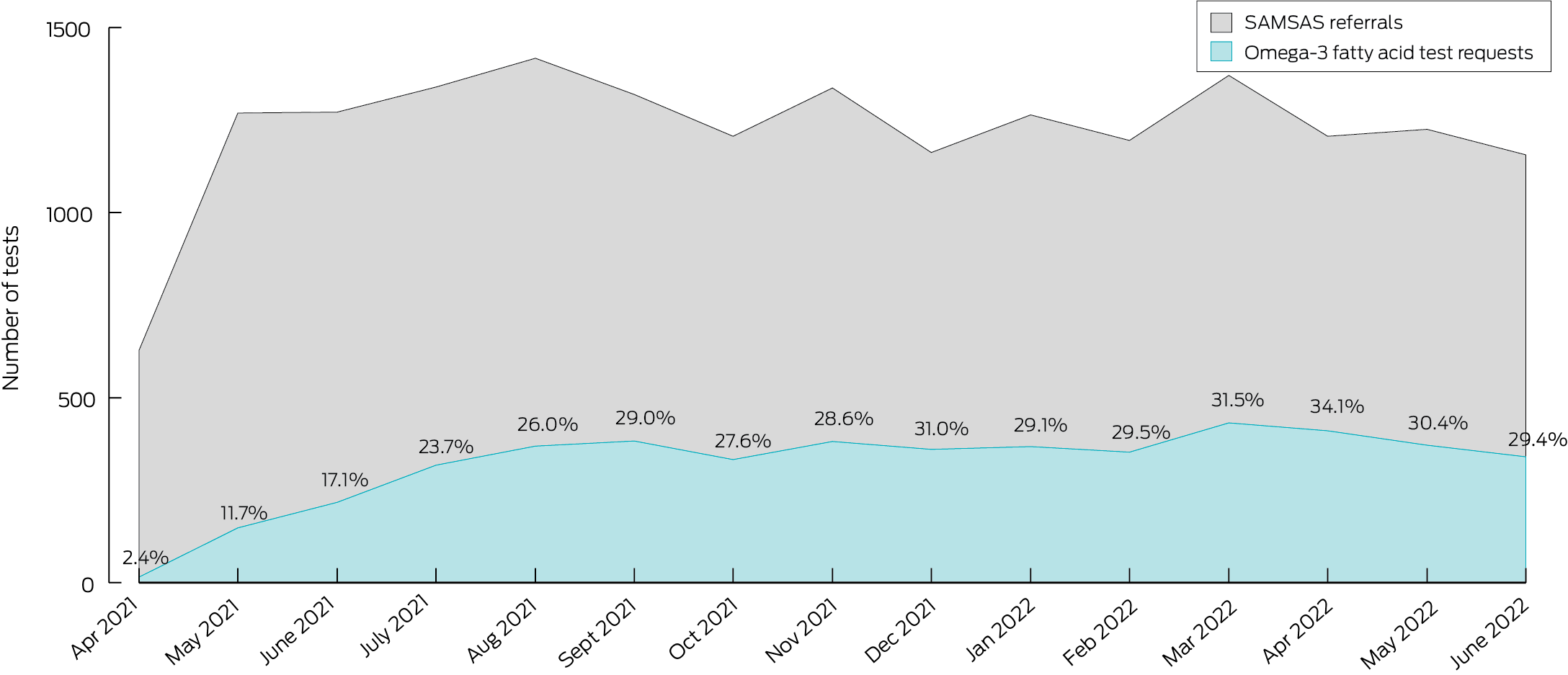
* Omega‐3 fatty acid test requests as proportions of all SAMSAS are reported as percentages.
Box 3 – Characteristics of women with South Australian Maternal Serum Antenatal Screening (SAMSAS) referrals during early implementation of the Omega‐3 Test‐and‐Treat Program, South Australia, 19 April 2021 – 30 June 2022, by whether the referral included an omega‐3 fatty acid test request
|
Characteristic |
Omega‐3 fatty acid tests ordered |
SAMSAS referrals without omega‐3 fatty acid testing |
All referrals |
||||||||||||
|
|
|||||||||||||||
|
Tests/referrals |
4801 [26.1%] |
13561 [73.9%] |
18362 |
||||||||||||
|
Maternal age (years), mean (SD) |
30.8 (5.1) |
30.7 (5.1) |
30.7 (5.1) |
||||||||||||
|
Gestational age (weeks), median (IQR) |
12.1 (11.1–13.0) |
12.4 (11.7–13.1) |
12.4 (11.6–13.1) |
||||||||||||
|
Maternal weight (kg), median (IQR) |
69.0 (60.0–82.3) |
70.0 (60.0–83.5) |
70.0 (60.0–83.0) |
||||||||||||
|
Ethnic background* |
|
|
|
||||||||||||
|
Caucasian |
2659 (55.4%) |
6187 (45.6%) |
8846 (48.2%) |
||||||||||||
|
Non‐Caucasian |
745 (15.5%) |
2460 (18.1%) |
3205 (17.5%) |
||||||||||||
|
Unknown |
1397 (29.1%) |
4914 (36.2%) |
6311 (34.4%) |
||||||||||||
|
Socio‐economic status (IRSAD), quintiles |
|
|
|
||||||||||||
|
1 (most disadvantaged) |
1231 (25.6%) |
4569 (33.7%) |
5800 (31.6%) |
||||||||||||
|
2 |
998 (20.8%) |
2667 (19.7%) |
3665 (20.0%) |
||||||||||||
|
3 |
1070 (22.3%) |
2753 (20.3%) |
3823 (20.8%) |
||||||||||||
|
4 |
834 (17.4%) |
1899 (14.0%) |
2733 (14.9%) |
||||||||||||
|
5 (most advantaged) |
604 (12.6%) |
1555 (11.5%) |
2159 (11.8%) |
||||||||||||
|
Unknown† |
64 (1.3%) |
118 (0.9%) |
182 (1.0%) |
||||||||||||
|
Smoker |
|
|
|
||||||||||||
|
Yes |
175 (3.6%) |
451 (3.3%) |
626 (3.4%) |
||||||||||||
|
No |
3573 (74.4%) |
6664 (49.1%) |
10237 (55.8%) |
||||||||||||
|
Unknown |
1053 (21.9%) |
6446 (47.5%) |
7499 (40.8%) |
||||||||||||
|
In vitro fertilisation |
|
|
|
||||||||||||
|
Yes |
255 (5.3%) |
533 (3.9%) |
788 (4.3%) |
||||||||||||
|
No |
2922 (60.9%) |
5019 (37.0%) |
7941 (43.2%) |
||||||||||||
|
Unknown |
1624 (33.8%) |
8009 (59.1%) |
9633 (52.5%) |
||||||||||||
|
Referral location |
|
|
|
||||||||||||
|
Metropolitan |
3134 (65.3%) |
9836 (72.5%) |
12970 (70.6%) |
||||||||||||
|
Regional |
1604 (33.4%) |
3614 (26.6%) |
5218 (28.4%) |
||||||||||||
|
Unknown† |
63 (1.3%) |
111 (0.8%) |
174 (0.9%) |
||||||||||||
|
|
|||||||||||||||
|
|
|||||||||||||||
Box 4 – Characteristics of women with South Australian Maternal Serum Antenatal Screening (SAMSAS) referrals that included omega‐3 fatty acid testing requests, South Australia, 19 April 2021 – 30 June 2022, by omega‐3 fatty acid status
|
|
Omega‐3 fatty acid status* |
|
|||||||||||||
|
Characteristic |
Low (<3.7%) |
Moderate (3.7–4.3%) |
Sufficient (<4.3%) |
Total† |
|||||||||||
|
|
|||||||||||||||
|
Number of tests |
702 (14.7%) |
1638 (34.2%) |
2442 (51.1%) |
4782 |
|||||||||||
|
Maternal age (years), mean (SD) |
30.3 (5.1) |
30.2 (5.1) |
31.4 (5.1) |
30.8 (5.1) |
|||||||||||
|
Gestational age (weeks), median (IQR) |
12.4 (11.3–13.1) |
12.3 (11.3–13.0) |
12.1 (11.0–12.9) |
12.1 (11.1–13.0) |
|||||||||||
|
Maternal weight (kg), median (IQR) |
67.0 (59.0–78.0) |
71.0 (61.0–85.0) |
69.0 (60.0–81.9) |
69.2 (60.0–82.3) |
|||||||||||
|
Ethnic background‡ |
|
|
|
|
|||||||||||
|
Caucasian |
319 (45.4%) |
979 (59.8%) |
1349 (55.2%) |
2647 (55.4%) |
|||||||||||
|
Non‐Caucasian |
185 (26.4%) |
226 (13.8%) |
332 (13.6%) |
743 (15.5%) |
|||||||||||
|
Unknown |
198 (28.2%) |
433 (26.4%) |
761 (31.2%) |
1392 (29.1%) |
|||||||||||
|
Socio‐economic status (IRSAD), quintiles |
|
|
|
|
|||||||||||
|
1 (most disadvantaged) |
206 (29.3%) |
451 (27.5%) |
564 (23.1%) |
1221 (25.5%) |
|||||||||||
|
2 |
162 (23.1%) |
344 (21.0%) |
490 (20.1%) |
996 (20.8%) |
|||||||||||
|
3 |
154 (21.9%) |
354 (21.6%) |
560 (22.9%) |
1068 (22.3%) |
|||||||||||
|
4 |
99 (14.1%) |
291 (17.8%) |
442 (18.1%) |
832 (17.4%) |
|||||||||||
|
5 (most advantaged) |
70 (10.0%) |
176 (10.7%) |
355 (14.5%) |
601 (12.6%) |
|||||||||||
|
Unknown§ |
11 (1.6%) |
22 (1.3%) |
31 (1.3%) |
64 (1.3%) |
|||||||||||
|
Smoker |
|
|
|
|
|||||||||||
|
Yes |
51 (7.3%) |
76 (4.6%) |
47 (1.9%) |
174 (3.6%) |
|||||||||||
|
No |
498 (70.9%) |
1185 (72.3%) |
1875 (76.8%) |
3558 (74.4%) |
|||||||||||
|
Unknown |
153 (21.8%) |
377 (23.0%) |
520 (21.3%) |
1050 (22.0%) |
|||||||||||
|
In vitro fertilisation |
|
|
|
|
|||||||||||
|
Yes |
26 (3.7%) |
75 (4.6%) |
152 (6.2%) |
253 (5.3%) |
|||||||||||
|
No |
433 (61.7%) |
997 (60.9%) |
1483 (60.7%) |
2913 (60.9%) |
|||||||||||
|
Unknown |
243 (34.6%) |
566 (34.6%) |
807 (33.0%) |
1616 (33.8%) |
|||||||||||
|
Referral location |
|
|
|
|
|||||||||||
|
Metropolitan |
463 (66.0%) |
1009 (61.6%) |
1649 (67.5%) |
3121 (65.3%) |
|||||||||||
|
Regional |
228 (32.5%) |
608 (37.1%) |
762 (31.2%) |
1598 (33.4%) |
|||||||||||
|
Unknown§ |
11 (1.6%) |
21 (1.3%) |
31 (1.3%) |
63 (1.3%) |
|||||||||||
|
|
|||||||||||||||
|
|
|||||||||||||||
Competing interests
Robert Gibson and Maria Makrides were awarded a Nestlé Institute of Health Sciences SA project grant paid to the South Australian Health and Medical Research Institute for work unrelated to this article. Lisa Yelland received funding from Société des Produits Nestlé for a separate analysis of data from the Omega‐3 to Reduce the Incidence of Prematurity trial, which examined the identification of women likely to benefit from omega‐3 supplementation, unrelated to the results reported in this article. Robert Gibson holds the patent “Stabilising and analysing fatty acids in a biological sample stored on solid media” (AU2013209278).
Authors’ contributions:
Karen P Best: conceptualisation, data curation, funding acquisition, methodology, project administration, supervision, writing (original draft). Celine Northcott: conceptualisation, data curation, methodology, project administration, writing (review and editing). Lucy A Simmonds: conceptualisation, funding acquisition, methodology, project administration, writing (review and editing). Philippa Middleton: Conceptualisation, Funding acquisition, Methodology, Supervision, writing (review and editing). Lisa N Yelland: conceptualisation, data curation, formal analysis, funding acquisition, methodology, writing (review and editing). Vanessa Moffa: project administration, methodology, writing (review and editing). Khoa Lam: methodology, project administration, resources, validation, writing (review and editing). Penelope Coates: conceptualisation, methodology, resources, supervision, validation, writing (review and editing). Cornelia Späth: project administration, methodology, writing (review and editing). Carol Wai‐Kwan Siu: project administration, methodology, resources, supervision, validation, writing (review and editing). Karen Glover: conceptualisation, methodology, writing (review and editing). Rhiannon Smith: conceptualisation, methodology, writing (review and editing). Robert Gibson: conceptualisation, data curation, funding acquisition, methodology, resources, validation, writing (review and editing). Maria Makrides: conceptualisation, funding acquisition, methodology, supervision, writing (review and editing).
Acknowledgements
This study was supported by a project grant from the Thyne Reid Foundation and the Hospital Research Foundation, a National Health and Medical Research Council (NHMRC) Centre of Research Excellence grant (APP1135155), and a Medical Research Future Fund grant (APP2022061). The funders had no role in the design, conduct, or analysis of this study. Maria Makrides (APP2016756) and Philippa Middleton (APP1172870) were supported by NHMRC Investigator grants. Karen P Best was supported by a Women’s and Children’s Hospital Foundation MS McLeod Postdoctoral Fellowship. Celine Northcott was supported by an Australian Government Research Training Program PhD Scholarship and a South Australian Health and Medical Research Institute (SAHMRI) PhD top‐up grant.
We express our gratitude to Andrew McPhee (SAHMRI, Adelaide), Monika Skubisz (SAHMRI, Adelaide), Hossein Afzali (Flinders University, Adelaide), Liu Ge (SAHMRI, Adelaide), Enzo Ranieri (SA Pathology, Adelaide), and Mike Atwell (SA Pathology, Adelaide) for their invaluable guidance and support during the early design and implementation of the Omega‐3 Test and Treat Program. We acknowledge the use of ChatGPT (OpenAI) to assist with word count reduction in some sections of the manuscript. All content was generated by the authors, and the final wording reviewed and approved by the corresponding author.
References
- D’Apremont I, Marshall G, Musalem C, et al. NEOCOSUR Neonatal Network. Trends in perinatal practices and neonatal outcomes of very low birth weight infants during a 16‐year period at NEOCOSUR centers. J Pediat 2020; 225: 44‐50.
- Ward RM, Beachy JC. Neonatal complications following preterm birth. BJOG 2003; 110 (Suppl 20): 8‐16.
- World Health Organization. Born too soon: decade of action on preterm birth. Geneva: WHO, 2023. https://www.who.int/publications/i/item/9789240073890 (viewed Nov 2023).
- Chawanpaiboon S, Vogel JP, Moller AB, et al. Global, regional, and national estimates of levels of preterm birth in 2014: a systematic review and modelling analysis. Lancet Glob Health 2019; 7: e37‐e46.
- Ferrero DM, Larson J, Jacobsson B, et al. Cross‐country individual participant analysis of 4.1 million singleton births in 5 countries with very high human development index confirms known associations but provides no biologic explanation for 2/3 of all preterm births. PLoS One 2016; 11: e0162506.
- Goodfellow L, Care A, Alfirevic Z. Controversies in the prevention of spontaneous preterm birth in asymptomatic women: an evidence summary and expert opinion. BJOG 2021; 128: 177‐194.
- Olsen SF, Sørensen JD, Secher NJ, et al. Randomised controlled trial of effect of fish‐oil supplementation on pregnancy duration. Lancet 1992; 339: 1003‐1007.
- Middleton P, Gomersall JC, Gould JF, et al. Omega‐3 fatty acid addition during pregnancy. Cochrane Database Syst Rev 2018; 11: CD003402.
- Carlson SE, Gajewski BJ, Valentine CJ, et al. Higher dose docosahexaenoic acid supplementation during pregnancy and early preterm birth: a randomised, double‐blind, adaptive‐design superiority trial. EClinicalMedicine 2021; 36: 100905.
- Olsen SF, Halldorsson TI, Thorne‐Lyman AL, et al. Plasma concentrations of long chain n‐3 fatty acids in early and mid‐pregnancy and risk of early preterm birth. EBioMedicine 2018; 35: 325‐333.
- Makrides M, Best K, Yelland L, et al. A randomized trial of prenatal n‐3 fatty acid supplementation and preterm delivery. N Engl J Med 2019; 381: 1035‐1045.
- Simmonds LA, Sullivan TR, Skubisz M, et al. Omega‐3 fatty acid supplementation in pregnancy‐baseline omega‐3 status and early preterm birth: exploratory analysis of a randomised controlled trial. BJOG 2020; 127: 975‐981.
- Klebanoff MA, Harper M, Lai Y, et al; Eunice Kennedy Shriver National Institute of Child Health and Human Development (NICHD) Maternal‐Fetal Medicine Units Network (MFMU). Fish consumption, erythrocyte fatty acids, and preterm birth. Obstet Gynecol 2011; 117: 1071‐1077.
- Harper M, Thom E, Klebanoff MA, et al; Eunice Kennedy Shriver National Institute of Child Health and Human Development Maternal‐Fetal Medicine Units Network. Omega‐3 fatty acid supplementation to prevent recurrent preterm birth: a randomized controlled trial. Obstet Gynecol 2010; 115: 234‐242.
- Living Evidence for Australian Pregnancy and Postnatal Care. Australian pregnancy care guidelines, version 8.3. 9 Oct 2025. https://app.magicapp.org/#/guideline/jm83RE/section/jWQoM1 (viewed Oct 2025).
- Best KP, Gibson RA, Makrides M. ISSFAL statement number 7. Omega‐3 fatty acids during pregnancy to reduce preterm birth. Prostaglandins Leukot Essent Fatty Acids 2022; 186: 102495.
- Cetin I, Carlson SE, Burden C, et al. Asia Pacific Health Association (Pediatric–Neonatology Branch); Stiftung Kindergesundheit; European Academy of Paediatrics; European Board and College of Obstetrics and Gynaecology; European Foundation for the Care of Newborn Infants; European Society for Paediatric Research; International Society for Developmental Origins of Health and Disease. Omega‐3 fatty acid supply in pregnancy for risk reduction of preterm and early preterm birth. Am J Obstet Gynecol MFM 2024; 6: 101251.
- Savona‐Ventura C, Mahmood T, Mukhopadhyay S, Louwen F. Omega‐3 fatty acid supply in pregnancy for risk reduction of preterm and early preterm birth: a position statement by the European Board and College of Obstetrics and Gynaecology (EBCOG). Eur J Obstet Gynecol Reprod Biol 2024; 295: 124‐125.
- de Groot RHM, Meyer BJ. ISSFAL official statement number 6. The importance of measuring blood omega‐3 long chain polyunsaturated fatty acid levels in research. Prostaglandins Leukot Essent Fatty Acids 2020; 157: 102029.
- Stetler CB, Mittman BS, Francis J. Overview of the VA quality enhancement research initiative (QUERI) and QUERI theme articles: QUERI series. Implement Sci 2008; 3: 8.
- Pinnock H, Barwick M, Carpenter CR, et al. StaRI Group. Standards for reporting implementation studies (StaRI) statement. BMJ 2017; 356: i6795.
- Ohuma E, Moller AB, Bradley E, et al. National, regional, and worldwide estimates of preterm birth in 2020, with trends from 2010: a systematic analysis. Lancet 2023; 402: 1261‐1271.
- Olsen SF, Halldorsson TI, Li M, et al. Examining the effect of fish oil supplementation in Chinese pregnant women on gestation duration and risk of preterm delivery. J Nutr 2019; 149: 1942‐1951.
- Simmonds LA, Yelland LN, Best KP, et al. Translating n‐3 polyunsaturated fatty acid status from whole blood to plasma and red blood cells during pregnancy: translating n‐3 status across blood fractions in pregnancy. Prostaglandins Leukot Essent Fatty Acids 2022; 176: 102367.
- South Australian Health and Medical Research Institute. Information for health professionals. Undated. https://sahmri.org.au/information‐for‐health‐professionals (viewed Oct 2025).
- Australian Bureau of Statistics. Index of Relative Socio‐economic Advantage and Disadvantage (IRSAD). In: Socio‐Economic Indexes for Areas (SEIFA), Australia, 2021. 27 Apr 2023. https://www.abs.gov.au/statistics/people/people‐and‐communities/socio‐economic‐indexes‐areas‐seifa‐australia/2021#index‐of‐relative‐socio‐economic‐advantage‐and‐disadvantage‐irsad‐ (viewed Sept 2025).
- Damschroder LJ, Aron DC, Keith RE, et al. Fostering implementation of health services research findings into practice: a consolidated framework for advancing implementation science. Implement Sci 2009; 4: 50.
- Simon JA, Fong J, Bemert JT, Browner WS. Relation of smoking and alcohol consumption to serum fatty acids. Am J Epidemiol 1996; 144: 325‐334.
- Reigada LC, Storch B, Alku D, et al. Assessment of polyunsaturated fatty acids: a self‐report and biomarker assessment with a racially and ethnically diverse sample of women. Prostaglandins Leukot Essent Fatty Acids 2021; 164: 102214.
- Wilson NA, Mantzioris E, Middleton PF, Muhlhausler BS. Influence of clinical characteristics on maternal DHA and other polyunsaturated fatty acid status in pregnancy: a systematic review. Prostaglandins Leukot Essent Fatty Acids 2020; 154: 102063.
- Kildea SV, Gao Y, Rolfe M, et al. Risk factors for preterm, low birthweight and small for gestational age births among Aboriginal women from remote communities in Northern Australia. Women Birth 2017; 30: 398‐405.
- Dietrich T, Trischler J, Schuster L, Rundle‐Thiele S. Co‐designing services with vulnerable consumers. J Serv Theory Pract 2017; 27: 663‐688.
- Doherty E, Kingsland M, Wiggers J, et al. The effectiveness of implementation strategies in improving preconception and antenatal preventive care: a systematic review. Implement Sci Commun 2022; 3: 121.
- Australian Institute of Health and Welfare. Australia’s mothers and babies: Mothers who have multiple births and their babies. Updated 31 July 2025. https://www.aihw.gov.au/reports/mothers‐babies/australias‐mothers‐babies/contents/focus‐population‐groups/mothers‐who‐have‐multiple‐births (viewed Oct 2025).
- Powell BJ, McMillen JC, Proctor EK, et al. A compilation of strategies for implementing clinical innovations in health and mental health. Med Care Res Rev 2012; 69: 123‐157.
- Proctor EK, Powell BJ, McMillen JC. Implementation strategies: recommendations for specifying and reporting. Implement Sci 2013; 8: 139.
- Kingsland M, Doherty E, Anderson AE, et al. A practice change intervention to improve antenatal care addressing alcohol consumption by women during pregnancy: research protocol for a randomised stepped‐wedge cluster trial. Implement Sci 2018; 13: 112.
- Wang T, Tan JYB, Liu XL, Zhao I. Barriers and enablers to implementing clinical practice guidelines in primary care: an overview of systematic reviews. BMJ Open. 2023; 13: e062158.
Forty Years in the Making: Reporting on the Co-Creation of a National Roadmap for Birthing on Country Services for the Best Start to Life
Res McCalman, Anneka J. Bowman, Roianne West, Kristie Watego, Jyai Allen, Claire Clack, Sue Kildea, Sue Kruske, Melanie Briggs, Cleone Wellington, Rebecca Coddington, Yu Gao, Isabella Garti, Sascha Kowalenko, Sarah Ireland, Catherine Austin, John D. Boffa, Marah Prior, Kelsie Kahl, Bettina Chaseling, Sarah Khaw, Emily Armstrong, Donna Hartz, Yvette Roe
Temporal Trends in Preterm Birth Associated With Hypertensive Disorders of Pregnancy in Victoria, Australia: A Population-Based Interrupted Time-Series Study
Melvin Marzan, Heng Jiang, Daniel Lorber Rolnik, Joanne M. Said, Lisa Hui
Linguistic Manoeuvres: Obstetric Violence Camouflages Harm and Loss of Consent From Birth
Liz Sutton, Harsha Ananthram, Rebecca Matthews
Linguistic Manoeuvres: Obstetric Violence Camouflages Harm and Loss of Consent From Birth
Bashi Kumar-Hazard, Andrew M. Bisits, Sharon L. Settecasse, Jenny Gamble, Hazel Keedle, Hannah G. Dahlen
Linguistic Manoeuvres: Obstetric Violence Camouflages Harm and Loss of Consent From Birth
Wendy Pollock, Alissa Fleming, Ensieh Fooladi, Joy Kloester, Anne Tremayne, Yasmin Zisin, Bethany Carr, Kym Davey, Suzanne Willey, Jenny Gamble
Getting on the Same Page: Why Australia Needs a National Maternity Early Warning System (MEWS) Chart
Briony A. Cutts, Lucy Bowyer, Nisha Khot, Sandra Lowe, Stefan C. Kane