




Volume 206 - Issue 11
Psychiatry training: survive and thrive
Author: Cherrie A Galletly
Med J Aust 2017; 206 (11): 485. || doi: 10.5694/mja16.01153
Published online: 19 June 2017
Published online: 19 June 2017
Psychiatry in practice: education, experience and expertise
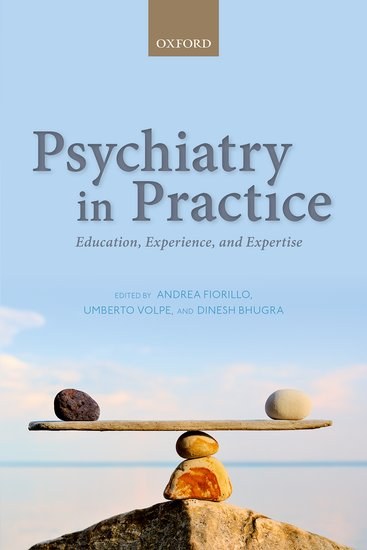
Psychiatry in practice: education, experience and expertise. Andrea Fiorillo, Umberto Volpe, Dinesh Bhugra, editors. Oxford University Press, 2016 (544 pp, £39.99). ISBN 9780198723646
Written by psychiatrists from Europe and the United Kingdom, Psychiatry in practice: education, experience and expertise is surprisingly easy to read in an Australian context. All three editors have written about the overloaded mental health services and growing unmet needs in their countries — not unlike Australia. Their book aims to help trainees and early career psychiatrists survive (and develop satisfying careers) working in these overstretched services. In Australia, there has been much concern about the welfare of junior staff working in psychiatry since a cluster of suicides in Victoria in 2015, and this book provides a useful resource for trainees, their supervisors and newly qualified psychiatrists.
Andrea Fiorillo, Associate Professor of Psychiatry at the University of Naples, and Umberto Volpe, Assistant Professor of Psychiatry at the University of Naples, have written previously about burnout in junior doctors and surviving psychiatric training. Dinesh Bhugra is Professor of Mental Health and Cultural Diversity at Kings College in London and has contributed to psychiatry training in the UK.
Each chapter is led by an early career psychiatrist collaborating with senior colleagues. Many chapters begin with a short case study: either a trainee or a junior psychiatrist facing a dilemma, or a patient vignette. The book resembles a magazine in that the topics seem to reflect individual interests, so some areas are covered extensively and others not at all. The first 14 chapters are mostly about personal and professional development, talking about topics such as developing leadership skills, managing difficult people in the workplace and self-care. The second half of the book includes some textbook-like chapters, including prescribing psychotropic drugs, psychotherapy and old age psychiatry. Other chapters are about building a career in subspecialties such as child psychiatry or liaison psychiatry. Throughout the book there are chapters reflecting the editors’ interest in mental health services; for example, pathways to care, fighting stigma and building community ties for patients. Australian trainees and early career psychiatrists may find this book interesting and at times intriguing. It is not a book to read in a hurry and would be better browsed, reading chapters when prompted by interest or necessity.
Reorienting Allied Health Into Community-Based Care for People Experiencing Trauma and Social Disadvantage
Simon Rosenbaum, Grace McKeon, Gulsah Kurt, Oscar Lederman, Kemi Wright, Sabuj Kanti Mistry, Jackie E. Curtis, Philip B. Ward, Zachary Steel, Hamish Fibbins, Rachel Morell, Melissa C. Eaton, Andrew Watkins, Ben Harris-Roxas, Brendan Goodger, Eleanor Beck, Megan Teychenne, Joseph Firth, Davy Vancampfort, David Burns, Russell Roberts, Tristan Favaloro, Danielle Weber, Rosanna Barbero, Vasili Maroulis, Melissa Holmes, Stefan Mackenzie, Chiara Mastrogiovanni, Afsana Anwar, Uzma Choudhry, Catherine Sherrington, Jane Currie, Thomas Gadsden, Scott Teasdale
Stigmatising Attitudes Towards People With Depression, Bipolar Disorder, Borderline Personality, ADHD and Early and Long-Term/Untreated Schizophrenia: Representative Survey of Australian Adults
Amy J. Morgan, Anna M. Ross, Gayle McNaught, Rachel Green, Nicola J. Reavley
Psychosocial Hazards for Healthcare Workers: Supporting the Second Victim Also Helps the Primary Victims
Sarah Michael
Supporting Population Mental Health in the Wake of Mass Tragedies
Susan J. Rees, Derrick M. Silove
In the Wake of the National Suicide Prevention Strategy 2025–2035: Suicide Prevention in Type 1 Diabetes
Rigel Paciente, Keely Bebbington, Alix Woolard, Helen Milroy