




Volume 196 - Issue 11
Skin lightening cream: an emerging medical challenge
Authors: Rebecca F Goldstein, Helena J Teede and Carolyn A Allan
Med J Aust 2012; 196 (11): 680. || doi: 10.5694/mja12.10215
Published online: 18 June 2012
Published online: 18 June 2012
To the Editor: A 24-year-old Sudanese woman presented to her general practitioner in 2011 with one month of fatigue, dizziness, abdominal distension and facial oedema. Hypocortisolaemia was present: morning cortisol, 13 nmol/L (reference interval [RI], 240-620 nmol/L), afternoon cortisol, 9 nmol/L (RI, 100-280 nmol/L).
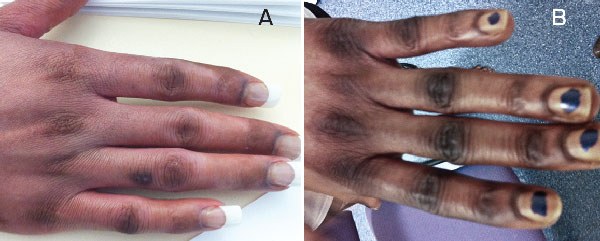
In contrast to this profile, she appeared cushingoid (moon facies, central obesity, skin fragility and striae) with skin depigmentation on her face, back and hands (Box, A). ...
To the Editor: A 24-year-old Sudanese woman presented to her general practitioner in 2011 with one month of fatigue, dizziness, abdominal distension and facial oedema. Hypocortisolaemia was present: morning cortisol, 13 nmol/L (reference interval [RI], 240–620 nmol/L), afternoon cortisol, 9 nmol/L (RI, 100–280 nmol/L).
In contrast to this profile, she appeared cushingoid (moon facies, central obesity, skin fragility and striae) with skin depigmentation on her face, back and hands (Box, A). Her blood pressure was 130/80 mmHg, fasting glucose level was 7.3 mmol/L (RI, 4–6 mmol/L) and glycated haemoglobin level was 7.0% (RI, < 6.0%). Adrenocorticotropic hormone (ACTH) was < 2 pmol/L (RI, 0–10 pmol/L), with inadequate cortisol response to ACTH (169 nmol/L at 60 minutes). She did not comply with a 24-hour urine collection. Screening for exogenous glucocorticoid exposure showed prolonged use of three skin-lightening creams containing hydroquinone, 0.05% clobetasol propionate and 0.05% betamethasone, respectively. The patient was advised to stop using the steroid creams, and weaning treatment with short-term glucocorticoid replacement and hypoglycaemic therapy was initiated. The patient’s hand 4 weeks after she stopped using the cream is shown in the Box (B).
The use of skin-lightening products in African women is common (up to 25%1). These products may contain potent corticosteroids such as clobetasol propionate and betamethasone dipropionate (super potent; class 1), and fluticasone propionate (potent; class 3).2 Glucocorticoids decrease propiocortin, the precursor for melanocyte stimulating hormone, and cause epidermal cytostasis; prolonged use may reduce epidermal turnover, with fewer and less pigmented melanocytes.3
The severity of complications from these products depends on the potency, quantity, duration and extent of application. Cutaneous complications include atrophy, telangiectasia, dermatitis, acne, striae, purpura, hypopigmentation and steroid addiction syndrome.2 Endocrine complications include those associated with an exogenous Cushing syndrome — diabetes mellitus, hypertension, oedema, menstrual irregularities and osteoporosis. Prolonged inhibition of the hypothalamic–pituitary–adrenal axis may result in hypoadrenal crisis if the product is withdrawn abruptly. Application of 50 g/week of clobetasol propionate (3.5 g applied twice daily; typical use) may cause secondary adrenal failure:4 this equates to 500 g/week of 1% hydrocortisone.5
Lightening creams are exported to, and also manufactured locally in, African countries (eg, Nigeria) where there are high rates of use.3 In Australia, prescription of highly potent topical steroids is limited to specialist prescribers. However, internet availability bypasses these regulations; ingredients may not be disclosed and counterfeit versions are available.
Our aim in this letter is to educate practitioners about the inclusion of potent corticosteroids in skin-bleaching products, and their potential adverse effects. The Therapeutic Goods Administration has been notified.
Competing interests
Carolyn Allan is a member of the Androgen Advisory Board and has received payment from Lilly. She has also received payment from Bayer Schering Novartis for delivering lectures.
References
- Mahé A, Blanc L, Halna JM, et al. An epidemiologic survey on the cosmetic use of bleaching agents by the women of Bamako (Mali). Ann Dermatol Venereol 1993; 120: 870-873. 0_CBBBGGCH
- Hengge UR, Ruzicka T, Schwartz RA, et al. Adverse effects of topical glucocorticosteroids. J Am Acad Dermatol 2006; 54: 1-15. 0_CBBDAGII
- Olumide YM, Akinkugbe AO, Altraide D, et al. Complications of chronic use of skin lightening cosmetics. Int J Dermatol 2008; 47: 344-353. 0_CBBJFGGC
- Allenby CF, Main RA, Marsden RA, et al. Effect on adrenal function of topically applied clobetasol propionate (Dermovate). Br Med J 1975; 4: 619-621. 0_i1142890
- New Zealand Dermatological Society Incorporated. DermNet NZ. http://www.dermnetnz.org/treatments/topical-steroids.html (accessed Apr 2012).
Diagnosing Acute Kava Dermopathy: A Case Report of a Characteristic Cutaneous Eruption
Ali Abid, Nicholas Allen, Abeer Hagelamin, Christopher Henderson, Artiene Tatian
Localised Herpes Simplex Following Midline Laparotomy
Jessica S. Bulluss, Paul Chee, Matthew J. Verheyden
No silver lining with health misinformation: argyria caused by intentional silver consumption
Luke Collins, Logesh Palanikumar, Stephen Bacchi
Lingual Raynaud phenomenon
Michael Taggart, Mina John
Melasma in the male: a less well recognised entity
Tim Aung, Rowland Noakes
Age group‐specific changes in keratinocyte cancer treatment rates in Australia, 2012–2021: a retrospective cohort study based on MBS claims data
Catherine M Olsen, Nirmala Pandeya, Rachel E Neale, David C Whiteman