




Volume 186 - Issue 1
Understanding female genital mutilation
Author: Gregory J Jenkins
Med J Aust 2007 || doi: 10.5694/j.1326-5377.2007.tb00772.x
Published online: 10 May 2006
Published online: 10 May 2006
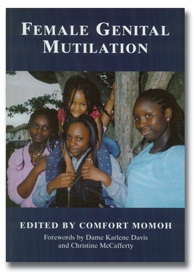
Female genital mutilation.
Comfort Momoh, editor. Oxford: Radcliffe Publishing, 2005 (iv + 172 pp). ISBN 1 85775 693 2.
We are seeing an increased prevalence of female genital mutilation (FGM) in Australia due to increased numbers of women migrating from countries where FGM is widely practised, presenting some unique and important health issues.
The issues surrounding FGM need to be dealt with in the context of a cultural background where this is normal practice (in Somalia and Sudan, more than 90% of women have undergone FGM), but also with reference to the fact that the practice of FGM is prohibited in Australia by specific legislation.
Most practitioners, when dealing with FGM for the first time, do not have a clear understanding of the relevant issues and can find the experience confronting. Momohs Female genital mutilation is one of the few texts to comprehensively address these issues.
Momoh has collected a group of authors with clinical experience and expertise in the area to create a text providing a very thorough analysis of FGM. Emphasis is, however, quite heavily weighted towards the sociological issues associated with FGM.
Overall the chapters are well written, interesting and informative. They are well illustrated with both line drawings and colour photographs. For the practising clinician, though, not all of the chapters are relevant. Much of the information is presented with a strong focus on the United Kingdom experience.
In particular, the overviews of the practice of FGM and discussions of its clinical management provide an excellent source of information for the practising clinician, covering all of the information necessary to assist in clinical management. For those seeking a broader discussion of the many issues surrounding FGM, these are also thoroughly covered (but, as noted, mostly from a UK perspective). At 172 pages, Female genital mutilation is eminently readable and affordable.
Gregory J JenkinsObstetrician and Gynaecologist, Sydney, NSW
Pharmaceutical Industry Payments to Patient Groups in Australia: A Longitudinal Analysis of a Decade of Disclosures
Ashleigh Hooimeyer, Annim Mohammad, Alice Fabbri, Lisa Parker, Kellia Chiu, Barbara Mintzes
Not Gone but Often Forgotten: Action Needed to Address Tuberculosis in Aboriginal and Torres Strait Islander Communities
Nikkita Joshua, Emma L. Smith, Eunice (Cheeky) Love, Christopher P. Lowbridge, Nicole Tukana, Amy Bowden, Megan A. Campbell, Dawn Casey, James Ward
Unshrouding Social Determinants: A Case for Standardised Data in Australia's Health Information Ecosystem
Christopher Ryan, Christine T. Shiner, Rebecca J. Harris, Carrie Lethborg, Vijaya Sundararajan
Inequity Is Our Biggest Killer: Looking Upstream to Tackle the Burden of Disease in Australia
Meggan J. Devery, Katie Brooker, Kitty-Rose Foley
Inequity Is Our Biggest Killer: Looking Upstream to Tackle the Burden of Disease in Australia
Lucio Naccarella, Katrina Plamondon, Alison Brown, Alexandra Kent, Sana Shahram, Donya Eghrari, Nicole M. Rankin, Stephanie Best, Marlena Klaic, Zoe Fehlberg, Michelle Lambert, Sue Crengle
Inequity Is Our Biggest Killer: Looking Upstream to Tackle the Burden of Disease in Australia
Saman Khalatbari-Soltani, Edward Jegasothy, Seye Abimbola, Anita van Zwieten