




Volume 183 - Issue 11
Fetal fortune-telling
Author: David A Ellwood
Med J Aust 2005 || doi: 10.5694/j.1326-5377.2005.tb00032.x
Published online: 29 November 2005
Published online: 29 November 2005
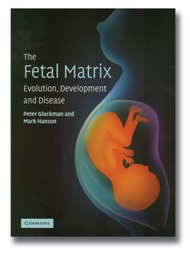
The fetal matrix. Evolution, development and disease.
Peter Gluckman, Mark Hanson. Cambridge: Cambridge University Press, 2005 (xiv + 257 pp). ISBN 0 521 54235 9.
In a sense, the intrauterine environment is taken to be a predictor of life outside the womb, which may well be very different from the fetal prediction. It is put forward that these interactions of gene and environment are ultimately responsible for many of the health problems of adulthood including obesity, hypertension, diabetes and the vascular consequences of atherosclerosis, stroke and myocardial infarction.
The story does not require an in-depth understanding of either genetics or fetal physiology. In fact, the authors gently introduce some of their concepts with basic information about reproduction and the influence of genes on embryonic development, before developing their ideas in greater detail. The narrative writing style is easy to follow and there is an extensive bibliography for anyone interested in further study in this field.
The book ends with a discussion of how a better understanding of these concepts might help to prevent adult disease, and the possibilities that may exist from manipulating both the prenatal and postnatal environments. While some of this is speculative, the authors develop a compelling argument for governments to fund research in the field of developmental biology. They argue strongly that there needs to be a big science approach, with the funding of long-term studies that begin long before pregnancy and continue into adulthood. If the authors are correct, this kind of investment may also pay dividends for other scourges of modern civilisation such as breast and prostate cancer, and Alzheimers disease.
This work has the potential to be recognised as a landmark publication that influences scientific thinking for decades. It should be of interest to anyone who is involved in any aspect of human medicine and biology, particularly those working in the field of perinatal medicine.
David A EllwoodProfessor of Obstetrics and Gynaecology The Canberra Hospital, ACT