




Volume 177 - Issue 2
Reflections on a year in the outback
Author: Susan M Wearne
Med J Aust 2002; 177 (2): 117-118. || doi: 10.5694/j.1326-5377.2002.tb04688.x
Published online: 15 July 2002
Published online: 15 July 2002
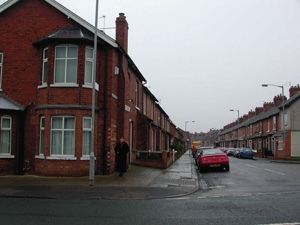
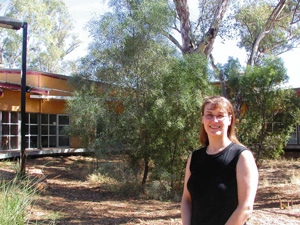
I needed a change and I got one — more than one, in fact. In July 2000, I resigned as a general practitioner in York, England, to become GP Educator at the Centre for Remote Health in Alice Springs. My remit includes training medical students and GP registrars, and providing professional development for GPs and other health professionals. I do a clinical session at the Aboriginal Medical Service and another in private practice. Squirrels and oak trees have been exchanged for parrots in the pawpaw tree outside my kitchen window.
What has it been like? What changes have I encountered, and what cultural adjustments were required? With more "foreigners" being enticed to the bush, my experience may be of interest to those who follow and to those who work with them.
The most obvious change is the interaction with Aboriginal culture. It was also a change I expected, as did colleagues, who helped me along, recommending books1 and arranging cultural awareness courses. But to this was added the cultural shift from city to remote area, from clinical service to academic medicine, from England to Australia, and from a National Health Service to private practice. Each change has had its own challenges and rewards.
Remote practice
The prospect of medical practice in a remote area was frightening. I observed the debate between the Royal Australian College of General Practitioners and the Australian College of Rural and Remote Medicine about the nature of rural and remote practice and wondered how I would cope. In reality, Alice is a regional centre, and I have better access to help than I did in urban York, where patients sometimes waited a year to see specialists. Relationships with patients and communication skills remain the cornerstone of practice. Where I have needed skills retraining has been in aspects of practice that, in England, are performed by practice nurses, such as Pap smears and ear syringing.
Although the principles of medicine are similar, some of the practice is inevitably different. Service delivery in private practice is less cohesive than in England, where the registered list system encourages continuity of care and work within multidisciplinary teams. Conversely, the absence of the responsibility brought by the list system means that "extra" patients at the end of the day are seen by choice rather than contractual obligation.
Indigenous health
The high morbidity and mortality among Indigenous Australians is well documented, but the suffering behind those statistics jolts into reality when patients younger than myself shuffle in with the after-effects of a stroke or are semi-incarcerated by renal dialysis. Because of the high incidence of rheumatic fever, practising evidence-based medicine requires that sore throats are treated with penicillin, not just analgesics.
Without a first language or health beliefs shared between patients and staff, achieving a common understanding of a problem and its appropriate management takes time. Teamwork between staff of different professions and cultures is essential to reduce "non-compliance" caused by misunderstandings and unallayed fear.2
Academic practice
I often wondered about a career in academic general practice. It would capitalise on my love of books and teaching, as well as my experience of different practices acquired during my husband's ophthalmology rotations. In addition, coursework on organisational change and medical sociology for a Master's degree in primary healthcare was invaluable preparation, revealing that values, behaviours and ideologies are culturally transmitted and relative.3
The good side of academic life is the flexibility and ability to work at home if children are ill; the downside is the halving of income. It took time to escape from the habit of 10-minute consultations and the expectation that colleagues "book with my receptionist". Just as the pressures of academic life are less visible, so are the rewards — the results of teaching may never be seen, while research projects take an age.
As a clinician, I believe a patient's story unless compelling contrary evidence forces me not to. The world of medical politics, into which academics are unwittingly propelled, requires a more circumspect approach. Grant applications, teaching schedules and research reports have replaced insurance forms and prescription requests as the bottomless pit of paperwork in my life.
Life in Alice
My neighbour on a flight to Sydney asked what it was like living in a remote place. Despite my previous concerns, I struggled to understand the question. I could think only of the privilege of working and living in a friendly community. It takes no more than five minutes to get anywhere, the tourism industry supports a wide range of facilities, and the weather is fantastic. In cities, I now find it stressful working out how to cross the road — it is much easier just to wander over when no "utes" or four-wheel-drives can be heard.
Bureaucracy
The hardest struggle has been to navigate the path to obtaining registration and visas. Is it a deliberate ploy to enlist human psychology — to inspire doctors to want what they cannot have? The declared need for doctors in rural and remote areas is not matched by Commonwealth action or policy towards overseas doctors. Our visas arrived three weeks before our departure — six months after the application was submitted. As "temporary residents", we had difficulty getting a mortgage, yet buying a house seemed a logical way of ensuring a commitment to the area.
While I appreciate the need to maintain standards, I have only just gained conditional registration to work as a GP in the Northern Territory. A letter from the medical board previously advised me either to pass the Australian Medical Council examination or to enter a recognised training program, despite my having an FRACGP. I replied that it was difficult to enter a training program that I had been appointed to assist in running!
Surviving and thriving
How have I survived? Flights, family, friends, faith, keeping fit and the phone, plus knowing my limits and previous experience of work in a cross-cultural environment. We miss friends and extended family, but this also happened in England, as the hours of work and commuting reduced life to a subsistence sandwich of work, shop, eat, sleep and more work. Email, videos and a family website of our latest camping exploits help us keep in touch. The community in Alice has been welcoming and supportive, and the fundamentals of my life have not altered. I am still married with two children and regularly attend church. The children have had their ups and downs but hope that we will be allowed to stay.
Knowing one's personal limits seems important for survival. My limit was a desk of my own, and when space became short I offered to bring my tent to work. In the end, it was not needed, but a place to work was an essential anchor. Others will have different needs, which may sound equally odd or difficult. Try to provide the luxury that will keep your colleagues sane.
So, if you need a change, it can be done, and life can be richer for it. If not, enjoy your situation, and ensure that you perceive that life is greener on your own side of the fence.
References
- Eckerman AK, Dowd LT, Martin M, et al. Binang goonj: bridging cultures in Aboriginal health. Armidale, NSW: University of New England Press, 1994. i1067315
- Trudgen R. Why warriors lie down and die. Adelaide: Openbook Publishers, 2000. i1067318
- Brookfield S. Understanding and facilitating adult learning. Milton Keynes: Open University Press, 1986: 2. i1067320
Shifting focus to adolescent wellbeing and inclusive participation in the digital age
Allyson R Todd, Elena Wang, Stephanie R Partridge
The clinical presentation, investigation, and management of women diagnosed with endometriosis in Australian general practices, 2011–2021: an open cohort study
Danielle Mazza, Kailash Thapaliya, Sharinne B Crawford, Alissia Hui, Maryam Moradi, Luke E Grzeskowiak
The impact of the Breast Screen NSW transition from film to digital mammography, 2002–2016: a linked population health data analysis
Rachel Farber, Nehmat Houssami, Katy J L Bell
Non‐technical errors associated with deaths in surgical care, Australia, 2012–2019, by surgical specialty (Australian and New Zealand Audit of Surgical Mortality): a retrospective cohort study
Jesse Ey, Victoria Kollias, Octavia Lee, Kelly Hou, Matheesha Herath, John B North, Ellie Treloar, Suzanne Edwards, Martin Bruening, Adam J Wells, Guy J Maddern
The CURE Asthma roadmap
Gary P Anderson, Anthony Flynn, Phil G Bardin, John D Blakey, Shyamali C Dharmage, Paul Foster, Peter G Gibson, Adam Jaffe, Alan James, Christine R Jenkins, Sundram Sivamalai, Peter D Sly, Guy B Marks, Vanessa M McDonald, Judy Wetttenhall
Evidence from Australian cohort studies about asthma trajectories and transitions across the life course: a narrative review
Caroline Lodge, Xin Dai, Ingrid A. Laing, Michael P Menden, Anthony Flynn, Gary P Anderson, Sarath Ranganathan, Shyamali C Dharmage