




Volume 171 - Issue 11
Dead in the water: how safe are our water sports?
Author: Robyn M Walker
Med J Aust 1999; 171 (11): 584-586.
Published online: 6 December 1999
Published online: 6 December 1999
|
Water Hazards Dead in the water: how safe are our water sports? We now have the Australian Water Safety Council and its National Water Safety Plan: the impact of these initiatives remains to be seen | 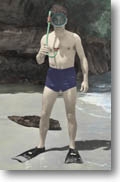 |
| MJA 1999; 171: 584-586 | |
References
- Australian Bureau of Statistics. Causes of death Australia,1996. Canberra: ABS, 1997. (Catalogue No. 3303.0.)
- Adams AI. The descriptive epidemiology of drowning accidents. Med J Aust 1966; 2: 1257-1261.
- Pearn J. Pathophysiology of drowning. Med J Aust 1985; 142: 586-588.
- Mackie IJ. Patterns of drowning in Australia, 1992-1997. Med J Aust 1999; 171: 586-589.
- Edmonds CE, Walker DG. Snorkelling deaths in Australia, 1987-1996. Med J Aust 1999; 171: 591-594.
- National Water Safety Plan. Sydney: Australian Water Safety Council, 1998.
- Edmonds C, Lowry C. Pennefather J, Walker R. Diving and subaquatic medicine. 4th ed. Oxford: Butterworth Heinemann. In press.
- Simpson G, Roomes D. Scuba diving medical examinations in practice: a postal survey. Med J Aust 1999; 171: 595-598.
- Occupational diving operations -- standard operational practice (AS/NZS 2299. 1-1999). Sydney: Standards Australia, 1999.
- Gorman DF. Fitness for diving: a review of the critical issues. SPUMS J 1994; 24: 2-4.
- Elliott D. Medical assessment of fitness to dive. Guildford: Biomedical Seminars, 1995.
Reorienting Allied Health Into Community-Based Care for People Experiencing Trauma and Social Disadvantage
Simon Rosenbaum, Grace McKeon, Gulsah Kurt, Oscar Lederman, Kemi Wright, Sabuj Kanti Mistry, Jackie E. Curtis, Philip B. Ward, Zachary Steel, Hamish Fibbins, Rachel Morell, Melissa C. Eaton, Andrew Watkins, Ben Harris-Roxas, Brendan Goodger, Eleanor Beck, Megan Teychenne, Joseph Firth, Davy Vancampfort, David Burns, Russell Roberts, Tristan Favaloro, Danielle Weber, Rosanna Barbero, Vasili Maroulis, Melissa Holmes, Stefan Mackenzie, Chiara Mastrogiovanni, Afsana Anwar, Uzma Choudhry, Catherine Sherrington, Jane Currie, Thomas Gadsden, Scott Teasdale
Psychosocial Hazards for Healthcare Workers: Supporting the Second Victim Also Helps the Primary Victims
Sarah Michael
Shifting focus to adolescent wellbeing and inclusive participation in the digital age
Allyson R Todd, Elena Wang, Stephanie R Partridge
Shifting focus to adolescent wellbeing and inclusive participation in the digital age
Jodie Bailie, Helen Dickinson, Briony Lipton, Marissa Shields
The CURE Asthma roadmap
Gary P Anderson, Anthony Flynn, Phil G Bardin, John D Blakey, Shyamali C Dharmage, Paul Foster, Peter G Gibson, Adam Jaffe, Alan James, Christine R Jenkins, Sundram Sivamalai, Peter D Sly, Guy B Marks, Vanessa M McDonald, Judy Wetttenhall