




Volume 218 - Issue 4
Cremation and the medical practitioner
Authors: Mark J Ferson, Reannon Johnson and Toni Cains
Med J Aust 2023; 218 (4): 190-191. || doi: 10.5694/mja2.51824
Published online: 6 March 2023
Published online: 6 March 2023
To the Editor: A recent survey found that 65% of Australians choose cremation over burial, and that, in the context of the coronavirus disease 2019 (COVID‐19) pandemic, cremations could be increased fourfold.1 It seems appropriate to look at the various roles of the medical practitioner in approving cremations.
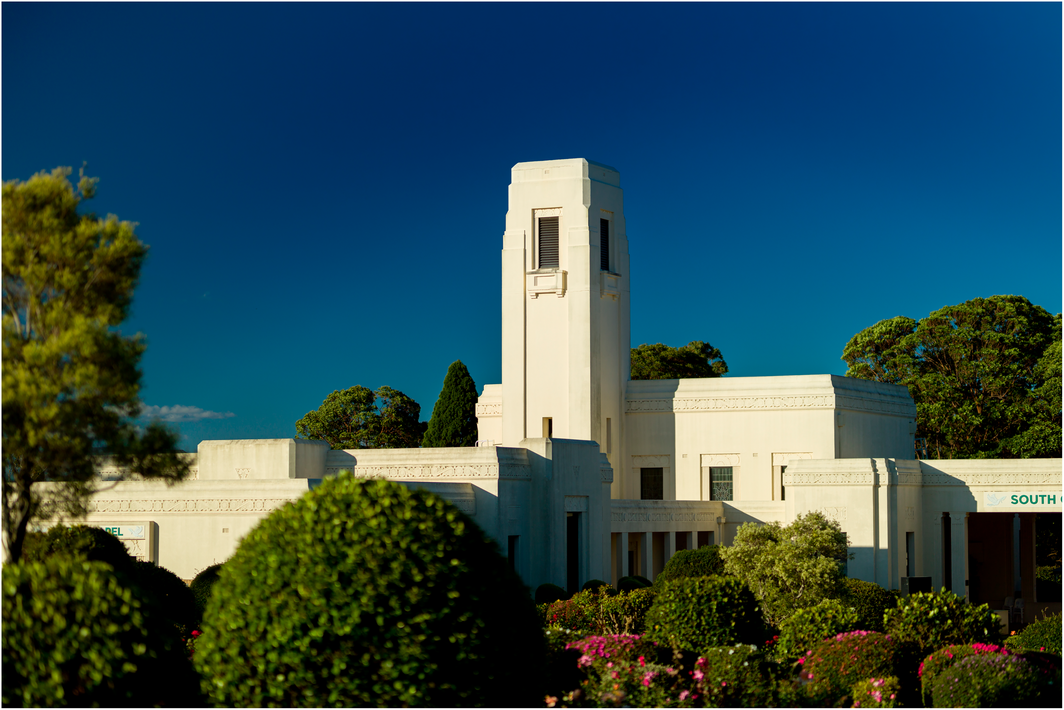
The first crematorium was built in England in 1878.2 Medical practitioners were at the forefront of the movement in Australia, and argued that cemeteries were already overcrowded and in disrepair, that a fear of being buried alive was common, and that cremation was a hygienic way to dispose of the dead when it was still believed that cemeteries were a source of disease in the living.2 The first Australian crematorium was established in Adelaide in 1903, after which progress halted due to ongoing debate;3 however, objections were overcome and many were constructed in the interwar years (Box 1).
The most cogent reason for rejecting cremation was that it could be employed to hide homicides. The contrary argument was that having a medical practitioner verify the cause of death would both prevent undetected crime and advance medical knowledge.4
To provide for this verification step, each Australian state and territory introduced legislation setting out a process for the approval of cremations. Where the cause of death is suspicious or unclear, permission is withheld and referral made to a coroner.
In Queensland, Tasmania and Victoria, any medical practitioner who did not complete the death certificate may issue a cremation permit (Box 2). In the Australian Capital Territory, New South Wales and Western Australia, only government‐appointed medical referees may issue a permit. Some states and territories also require assessment of cremation safety, verifying that there is no implanted battery‐operated device, which may explode and damage the cremator, and that the deceased has not received radioisotopes, which may create a public health risk during cremation.
At the Public Health Unit, we manage the appointment of medical referees for the NSW Ministry of Health. As part of the review of the effectiveness of our procedures, in 2020 we developed a short questionnaire to identify reasons why medical referees may refuse permission to cremate and to seek suggestions for improvement to this administrative process. We emailed it to a 10% random sample of NSW medical referees (n = 77) and received 46 responses (60%). Of these, 29 respondents (63%) had served in the role for more than 15 years, nine (20%) for five to 15 years, and five (11%) for less than five years. The number of permits issued in the previous 12 months ranged widely: 25 had signed zero to ten, and at the other extreme, two provided estimates of 780 and 1200 permits. This large variation is most likely related to varying demands on medical referees by local funeral directors. The reasons for rejecting applications included inconsistencies in the forms (ten), incorrect or unclear cause of death (seven), a reportable death (four), uncertain identity of the deceased (one), and a retained battery‐powered device (one). No suggestions for improvement were made, but three respondents suggested we provide some medical referee training — we have undertaken to develop an online education module.
Although roles differ between Australian jurisdictions, medical practitioners have an important responsibility for verifying that a body is suitable for cremation, a decision that they must make independently of the practitioner who certifies the cause of death.
Box 2 – Roles of medical practitioners in approval of cremation under current legislation for each Australian state and territory
|
State or territory |
Legislation |
Final approver of cremation |
Name of permit |
Comments |
Who assesses cremation risk |
||||||||||
|
|
|||||||||||||||
|
Australian Capital Territory |
Cemeteries and Crematoria Regulation 2003 |
Medical referee, a medical practitioner appointed by the Director‐General |
Certificate of medical referee |
The medical referee must view and be satisfied with the “Certificate of medical attendant” |
The “Certificate of medical referee” must state that there is no medical reason why the remains should not be cremated |
||||||||||
|
New South Wales |
Public Health Regulation 2022 |
Medical referee, a medical practitioner appointed by the Secretary |
Medical referee's cremation permit |
The medical referee must be independent of the applicant and of the medical practitioner who attended the deceased |
A medical practitioner must provide cremation risk advice concerning battery‐operated implanted devices and radioactive treatment |
||||||||||
|
Northern Territory |
Cemeteries Act 1952 |
Crematorium manager |
Cremation permit |
A permit can only be issued by the cremation manager if the certificate provided is signed by two medical practitioners stating that death was due to natural causes |
No reference to assessment of cremation risk |
||||||||||
|
Queensland |
Crematorium Act 2003 |
Independent doctor |
Permission to cremate (independent doctor) |
The independent doctor is a doctor who has not signed the cause of death certificate or the “Cremation risk certificate” |
Any other medical practitioner may complete the “Cremation risk certificate” |
||||||||||
|
South Australia |
Burial and Cremation Act 2013; Burial and Cremation Regulations 2014 |
Registrar of Births, Deaths and Marriages |
Cremation permit |
Registrar of Births, Deaths and Marriages must consider the “Death from natural causes certificate of second doctor” |
Second doctor certifies that there is no reason why the body of the deceased should not be cremated |
||||||||||
|
Tasmania |
Burial and Cremation Regulations 2015; Burial and Cremation Act 2019 |
Medical practitioner |
Cremation permit |
The medical practitioner who issues the permit must not be a partner, employee or relative of the medical practitioner who issued the medical certificate in respect of the deceased person |
The medical practitioner who signs the permit must be satisfied that any implanted medical device has been removed |
||||||||||
|
Victoria |
Cemeteries and Crematoria Act 2003; Cemeteries and Crematoria Regulation 2015 |
Registered medical practitioner |
Certificate of registered medical practitioner authorising cremation |
The registered medical practitioner is someone who is not the medical practitioner who completed the notice in respect to the death of the deceased |
The funeral director must take note of any battery‐operated implanted device mentioned on the “Medical certificate of cause of death” |
||||||||||
|
Western Australia |
Cremation Act 1929; Cremation Regulations 1954 |
Medical referee, appointed by the Governor |
Permit to cremate |
The medical referee must not issue the certificate of cause of death or be in partnership with the medical practitioner who does so |
The “Certificate of medical practitioner” covers battery‐operated implanted devices and radioactive treatments |
||||||||||
|
|
|||||||||||||||
|
|
|||||||||||||||
Competing interests
The NSW Ministry of Health provides annual funding of $28000 to the Public Health Unit, South Eastern Sydney Local Health District, to support the costs of administration of the appointment of medical referees in New South Wales on behalf of the Secretary of the NSW Ministry of Health.
References
- Australasian Cemeteries and Crematoria Association. National Cremation Capacity Survey 2020. Melbourne: ACCA, 2020. https://accaweb.com.au/images/easyblog_articles/45/CREMATION‐CAPACITY‐SURVEY‐2020_14Oct2020.pdf (viewed July 2022).
- Armstrong WG. Cremation. Med J Aust 1917; 2: 70‐72.
- Cooke S. Death, body and soul: the cremation debate in New South Wales, 1863–1925. Aust Hist Stud 1991; 24: 323‐339.
- Regulation of cremation. Sydney Morning Herald 1903, 3 Apr; p 5. https://trove.nla.gov.au/newspaper/article/14555378?searchTerm=Regulation%20of%20cremation (accessed November 2022)
Designing Housing to Reduce Overcrowding-Related Harms: Rheumatic Heart Disease as the Canary in the Coal Mine
Simon Quilty, Veronica Matthews, Angus Baumann, James Marangou, Bo Remenyi, Gavin Wheaton, Serena Morton Nabanunga, Norman Frank Jupurrurla, Simon Robinson, Steve Mintern, Cary Duffield, Joshua R. Francis, Paul C. Memmott
Australian Climate Leadership in 2026: COP-Out or Step-Up for Health?
Catherine G. A. Pendrey, Angie Bone, Aletha Ward, Francis Nona, Michelle Isles, Paul M. Kelly, Nicholas J. Talley
The impact of the Breast Screen NSW transition from film to digital mammography, 2002–2016: a linked population health data analysis
Rachel Farber, Nehmat Houssami, Katy J L Bell
Shifting focus to adolescent wellbeing and inclusive participation in the digital age
Allyson R Todd, Elena Wang, Stephanie R Partridge
The CURE Asthma roadmap
Gary P Anderson, Anthony Flynn, Phil G Bardin, John D Blakey, Shyamali C Dharmage, Paul Foster, Peter G Gibson, Adam Jaffe, Alan James, Christine R Jenkins, Sundram Sivamalai, Peter D Sly, Guy B Marks, Vanessa M McDonald, Judy Wetttenhall
Protecting public interest journalism as a public health good
Bronwyn Fredericks, Neha Lalchandani, Melissa A Sweet, Alex Cramb, Carmel Williams