




Medical education
Lessons from practice
Volume 216 - Issue 8
Plasma aldosterone to renin ratio for the detection of primary aldosteronism in patients with drug‐resistant hypertension
Authors: Kay W Choy, Renata Libianto, Ian Simpson and Jun Yang
Med J Aust 2022; 216 (8): 399-400. || doi: 10.5694/mja2.51487
Published online: 2 May 2022
Published online: 2 May 2022
A 55-year-old man was referred for management of resistant hypertension
Clinical record
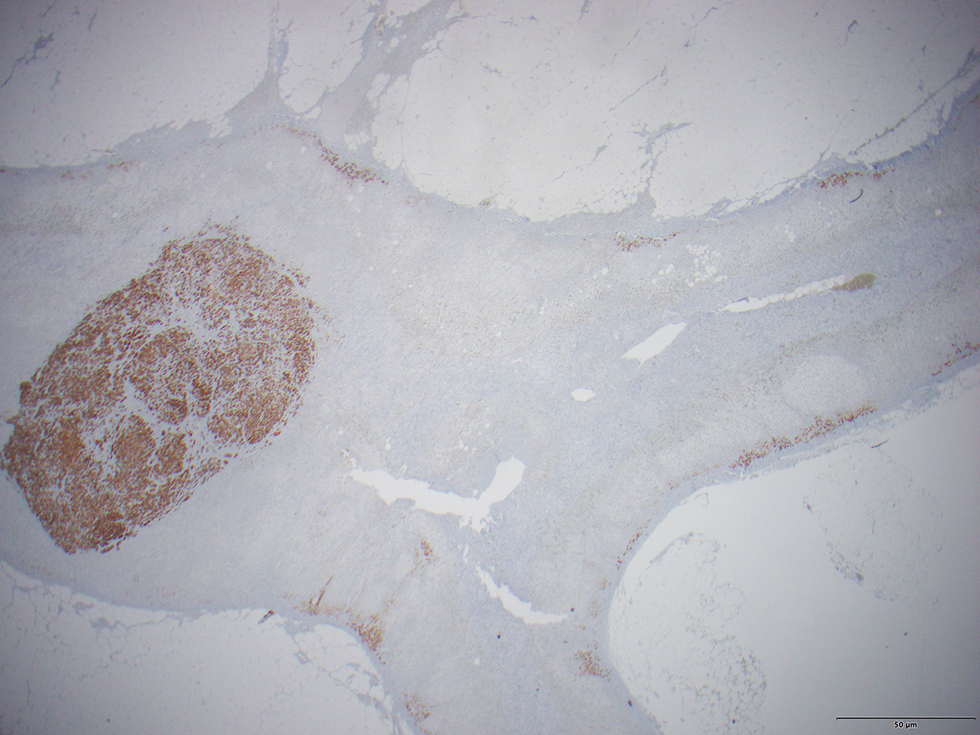
A 55‐year‐old man was referred for management of resistant hypertension. He was diagnosed with hypertension at age 17 years and also had type 2 diabetes, chronic kidney disease, dyslipidaemia and obstructive sleep apnoea. Current medications included metoprolol 50 mg twice a day, moxonidine 200 µg at night, amlodipine 10 mg daily, indapamide 2.4 mg daily, and irbesartan 300 mg daily. Despite taking five antihypertensives, 24‐hour blood pressure monitoring revealed a daytime average of 153/84 mmHg. Plasma aldosterone to renin ratio (ARR) was normal at 43 pmol/mU (reference interval [RI], < 70 pmol/mU; plasma aldosterone 536 pmol/L [RI, 70–1090 pmol/L]; renin 12.6 mU/L [RI, 4.4–46 mU/L]), with serum potassium 4.4 mmol/L (RI, 3.5–5.2 mmol/L) and estimated glomerular filtration rate (eGFR) 47 mL/min/1.73 m2. To facilitate further investigations, the medications were changed to verapamil sustained release 180 mg daily, prazosin 0.5 mg twice a day, and moxonidine 200 µg at night. Repeat plasma aldosterone was 861 pmol/L, renin 11.4 mU/L, ARR 76 pmol/mU (considered abnormal), and potassium 4.3 mmol/L. Primary aldosteronism was confirmed with a recumbent saline infusion test, where plasma aldosterone remained elevated at 672 pmol/L (cut‐off value, 140 pmol/L) following 2 L intravenous saline. Adrenal computed tomography did not demonstrate visible adrenal lesions, but adrenal venous sampling showed right‐sided aldosterone excess. The patient underwent right‐sided laparoscopic adrenalectomy. Histopathology demonstrated a 5 mm aldosterone‐producing micronodule with strong positive staining for aldosterone synthase (CYP11B2, cytochrome P450 family 11, subfamily B, member 2), a crucial enzyme in aldosterone synthesis (Box). Six months after surgery, he achieved biochemical cure (plasma aldosterone 289 pmol/L, renin 73 mU/L, ARR 4 pmol/mU, potassium 4.8 mmol/L). The eGFR level remained largely unchanged at 52 mL/min/1.73 m2. He now only required two antihypertensives (moxonidine and amlodipine) to control his blood pressure below 140/90 mmHg.
Discussion
In primary aldosteronism, aldosterone production is inappropriately high for sodium status and relatively autonomous of regulation.1 Aldosterone excess causes hypertension and increased cardiovascular risk.1 Compared with essential hypertension matched for age, sex, and blood pressure, individuals with primary aldosteronism have significantly higher rates of stroke and coronary artery disease.1 Reported prevalence of primary aldosteronism is about 5% in primary care (up to 30% in specialist centres).2 Plasma ARR is the recommended screening test, being superior to aldosterone, or renin, alone.3 Screening using ARR is cost‐effective in patients with resistant hypertension.4 False‐negative results might occur due to common antihypertensives, including angiotensin II receptor blockers and dihydropyridine calcium channel blockers.5 Interfering medications should be ceased and replaced with sustained release verapamil, prazosin, moxonidine and/or hydralazine for 4–6 weeks before screening for primary aldosteronism.5 These non‐interfering agents can be started on the same day that the other antihypertensives are ceased, with caution advised when changing from a β‐blocker to verapamil so as to include a period of weaning before switching medication.5
An elevated ARR is not diagnostic of primary aldosteronism, unless the patient has suppressed renin, plasma aldosterone > 550 pmol/L, and spontaneous hypokalaemia.2 The sensitivity and specificity of ARR vary at different thresholds.6 In one study, ARR > 57 pmol/mU was associated with sensitivity 92.0% and specificity 91.6%.6 The sensitivity and specificity were 88.0% and 94.0%, respectively, for ARR > 78 pmol/mU.6 Clinicians should rely on local ARR cut‐off values. Patients with positive ARR should be referred to a specialist unit for confirmatory testing, which assesses suppression of aldosterone production with oral salt, intravenous saline, fludrocortisone, or captopril.3 The failure of aldosterone concentration to decrease below a set threshold confirms primary aldosteronism.3
Lateralising the source of aldosterone excess is crucial in primary aldosteronism management.3 Imaging alone cannot reliably visualise micro‐adenomas or distinguish non‐functioning incidentalomas from aldosterone‐producing adenomas in most cases.3 Adrenal venous sampling is the most accurate investigation to differentiate unilateral from bilateral disease.3 Mineralocorticoid receptor antagonist is recommended for bilateral primary aldosteronism. Unilateral disease is potentially curable by adrenalectomy. Targeted treatment leads to reduction or complete cessation of non‐specific antihypertensives and improvement in end‐organ injury.3 Clinical cure (normal blood pressure) is more likely with earlier diagnosis and shorter duration of hypertension.1 Long‐standing primary aldosteronism adversely affects kidney function, which is often masked by aldosterone‐induced glomerular hyperfiltration.1
Our case highlights the importance of testing for primary aldosteronism in patients with resistant hypertension, although screening could have been considered at a much earlier age in our patient. The ideal time to screen may be before initiating antihypertensives to avoid their confounding effects on the ARR.5,7 Replacing commonly used medications with less interfering agents and ensuring normokalaemia result in fewer false positives/negatives.3,5 A positive ARR result should trigger a referral to an endocrine unit for further evaluation.2 When it is too difficult to optimise medications for the purpose of primary aldosteronism screening, advice should be sought from hypertension specialists.2
Lessons from practice
- • Patients with resistant hypertension should be screened for primary aldosteronism, even in the absence of hypokalaemia, using plasma aldosterone to renin ratio.
- • Commonly used antihypertensive drugs can cause false negative screening test results and should ideally be switched to non‐interfering agents for blood pressure control during the testing period.
- • Adrenal imaging alone is not sufficient to diagnose surgically curable disease. Adrenal venous sampling is crucial for accurate subtyping (unilateral or bilateral disease).
- • Surgery will usually lead to a biochemical cure of primary aldosteronism, but may leave residual hypertension that is less resistant to antihypertensive medications.

Competing interests
No relevant disclosures.
Acknowledgements
We acknowledge the care offered to the patient by the team of nurses (Elise Forbes and Peta Nuttall), endocrinologists (Peter Fuller and Jimmy Shen), radiologists (Winston Chong and Ken Lau), chemical pathologists (James Doery and Zhong Lu) and endocrine surgeons (Simon Grodski and James Lee) through the Endocrine Hypertension Service at Hudson Institute of Medical Research and Monash Health. We also thank William (Bill) Rainey (Department of Molecular and Integrative Physiology, University of Michigan, Ann Arbor, USA) for sharing his laboratory’s protocol for CYP11B2 adrenal staining, and thank Monash Pathology and Piero Nelva for establishing the protocol at Monash Health.
References
- Stowasser M, Gordon RD. Primary aldosteronism: changing definitions and new concepts of physiology and pathophysiology both inside and outside the kidney. Physiol Rev 2016; 96: 1327–1384.
- Libianto R, Fuller PJ, Young MJ, Yang J. Primary aldosteronism is a public health issue: challenges and opportunities. J Hum Hypertens 2020; 34: 478–486.
- Funder JW, Carey RM, Mantero F, et al. The management of primary aldosteronism: case detection, diagnosis, and treatment: an endocrine society clinical practice guideline. J Clin Endocrinol Metab 2016; 101: 1889–1916.
- Monticone S, D’Ascenzo F, Moretti C, et al. Cardiovascular events and target organ damage in primary aldosteronism compared with essential hypertension: a systematic review and meta‐analysis. Lancet Diabetes Endocrinol 2018; 6: 41–50.
- Gurgenci T, Geraghty S, Wolley M, Yang J. Screening for primary aldosteronism: how to adjust existing antihypertensive medications to avoid diagnostic errors. Aust J Gen Pract 2020; 49: 127–131.
- Maiolino G, Rossitto G, Bisogni V, et al. Quantitative value of aldosterone‐renin ratio for detection of aldosterone‐producing adenoma: the aldosterone‐renin ratio for primary aldosteronism (AQUARR) study. J Am Heart Assoc 2017; 6: e005574.
- Libianto R, Russell GM, Stowasser M, et al. Detecting primary aldosteronism in Australian primary care: a prospective study. Med J Aust 2022; https://doi.org/10.5694/mja2.51438 [Epub ahead of print].
Linked content
-
MJA Research: Detecting primary aldosteronism in Australian primary care: a prospective study
Provenance: Not commissioned; externally peer reviewed.
Fatty Liver Disease in Australia: A Narrative Review on the Epidemiology, Natural History, Prognostication and Management in People With Metabolic Dysfunction
Karl Vaz, Daniel Clayton-Chubb, William W. Kemp, Stuart K. Roberts, Ammar Majeed
Sex Differences in Management and Outcomes of People With ST-Elevation Myocardial Infarction, New South Wales, 2011–2020: A Retrospective Cohort Study
Adam C. Livori, Jedidiah I. Morton, Dianna J. Magliano, Jonathan E. Shaw
Rethinking Rheumatic Fever Diagnosis: Progress, Pitfalls and the Path Towards a Definitive Test
Anna P. Ralph, Rachel Webb, Tom Parks, Nicole J. Moreland, Asha C. Bowen, Benjamin Jones, Emma Ndagire, Andrea Z. Beaton
Sex Differences in Management and Outcomes of People With ST-Elevation Myocardial Infarction, New South Wales, 2011–2020: A Retrospective Cohort Study
Samia Kazi, Simone Marschner, Clara K. Chow
Distribution of Cardiovascular Disease Risk Based on the Updated 2023 Guideline-Recommended Australian Cardiovascular Disease Risk Algorithm and Comparison With the 2012 Algorithm: An Observational Study
Nina Lazarevic, Meghana Bhat, Grace Joshy, Danielle C. Butler, Mark Woodward, Anushka Patel, Rod T. Jackson, Garry Jennings, Rosemary Wyber, Ellie Paige, Emily Banks
They Brought the Hospital to Me
Hugh N. Burrill