




Volume 213 - Issue 7
Providing a fresh perspective on depression
Author: Gin S Malhi
Med J Aust 2020; 213 (7): 312-312. || doi: 10.5694/mja2.50572
Published online: 5 October 2020
Published online: 5 October 2020
Depression as a systemic illness
| Depression as a systemic illness Strain J, Blumenfield M. New York, NY: Oxford University Press, 2018 (US$63.00; 336 pp) ISBN 9780190603342 |
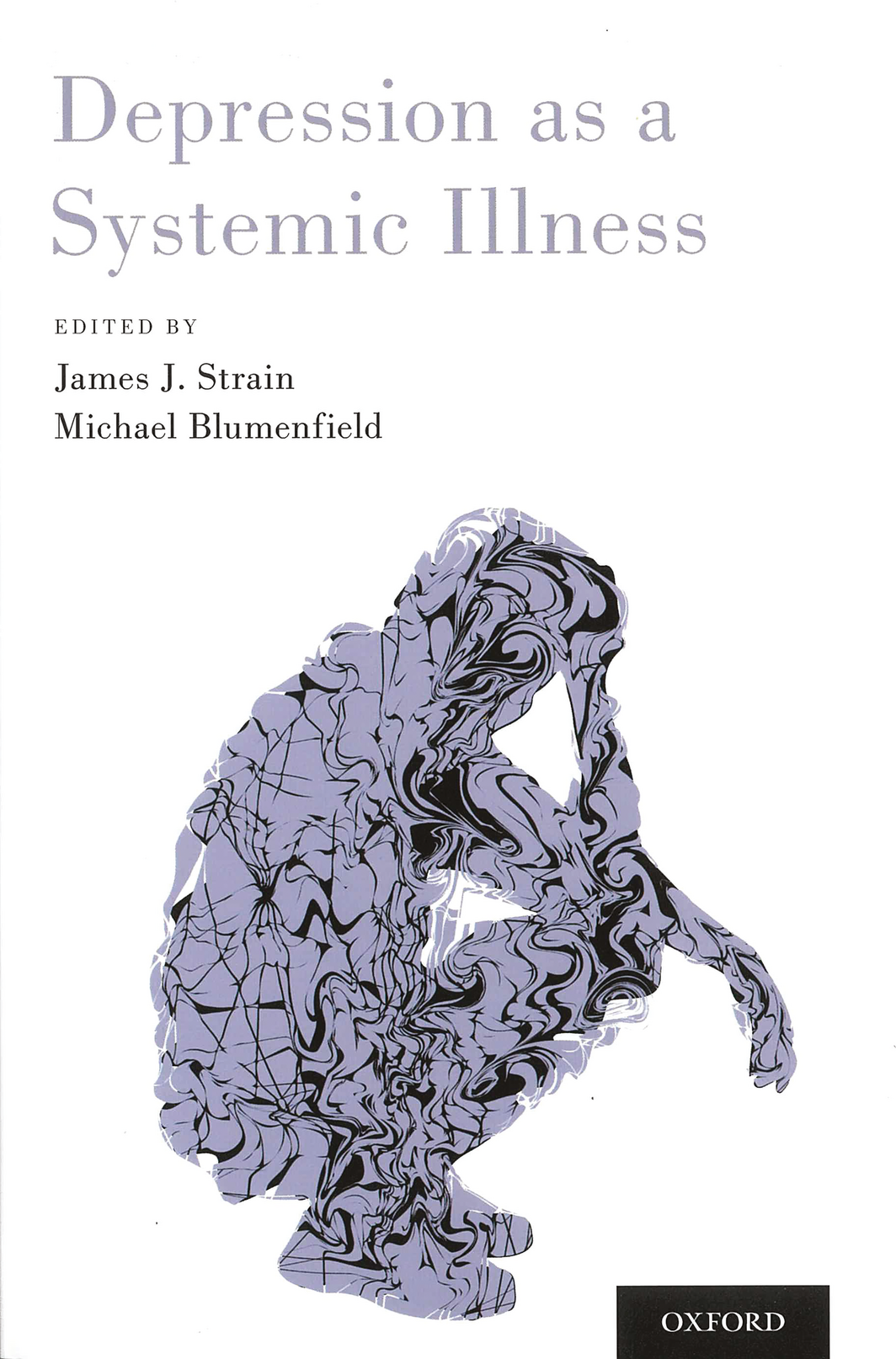 |
The exoteric features of Depression as a systemic illness, its glossy cover and silkysmooth pages reflect the quality of the text and the fact that the authors and the publishers have got it just right. The Goldilocks formula extends to the use of colour figures and the recruitment of international experts who have collaboratively collated a wealth of information. The contributors span the world and are leaders in their respective fields. However, in this book, they lend their expertise to areas outside their usual repertoire.
The chapter on diagnostic dilemmas puts into context the fundamental premise of the book, namely that depression is a systemic illness. This is not a novel perspective, but perhaps the extent to which the authors feel that depression can be better understood by examining bodily systems is somewhat ambitious. Nevertheless, the book draws on extensive up‐to‐date literature concerning depression and provides in‐depth knowledge. It delves skilfully into biological underpinnings and examines the role of inflammation, vascular disease, cancer, neurological disorders and diabetes. The stand‐out chapter on the psychopharmacology of depression as a systemic illness is a fifth of the book (60 pages in length) and provides a historical and contemporary account. However, the book is firmly future‐focused, as exemplified by its discussion of how to document depression in the digital age.
Depression as a systemic illness should be a reference book for all those specialising in mood disorders but will be of interest to all clinicians. The book will also be of interest to researchers and those setting up services at the intersection of mental health and physical illnesses (eg, hospital general managers). As a multi‐authored text, each chapter can be read on its own, but its readability ensures that, if so inclined, it can be read from cover to cover.
The authors of this book show that depression is an illness of the whole organism rather than one organ. There is little to criticise and the editors should be commended for being ambitious, for providing a fresh perspective on depression, and for addressing a critical gap in our understanding and knowledge.
Competing interests
No relevant disclosures.
Co-Designed Best Practice Principles for the Care of Fathers and Non-Birthing Parents Exposed to Perinatal Trauma: A Participatory Action Research Study
Alka Kothari, Dale Trevor, Glen Quinn, Jane Geltch, Joel Dulhunty, Helen Skouteris, Leonie K. Callaway
Reorienting Allied Health Into Community-Based Care for People Experiencing Trauma and Social Disadvantage
Simon Rosenbaum, Grace McKeon, Gulsah Kurt, Oscar Lederman, Kemi Wright, Sabuj Kanti Mistry, Jackie E. Curtis, Philip B. Ward, Zachary Steel, Hamish Fibbins, Rachel Morell, Melissa C. Eaton, Andrew Watkins, Ben Harris-Roxas, Brendan Goodger, Eleanor Beck, Megan Teychenne, Joseph Firth, Davy Vancampfort, David Burns, Russell Roberts, Tristan Favaloro, Danielle Weber, Rosanna Barbero, Vasili Maroulis, Melissa Holmes, Stefan Mackenzie, Chiara Mastrogiovanni, Afsana Anwar, Uzma Choudhry, Catherine Sherrington, Jane Currie, Thomas Gadsden, Scott Teasdale
Stigmatising Attitudes Towards People With Depression, Bipolar Disorder, Borderline Personality, ADHD and Early and Long-Term/Untreated Schizophrenia: Representative Survey of Australian Adults
Amy J. Morgan, Anna M. Ross, Gayle McNaught, Rachel Green, Nicola J. Reavley
Psychosocial Hazards for Healthcare Workers: Supporting the Second Victim Also Helps the Primary Victims
Sarah Michael
Supporting Population Mental Health in the Wake of Mass Tragedies
Susan J. Rees, Derrick M. Silove