




Volume 211 - Issue 6
First reported case of extensively drug‐resistant typhoid in Australia
Authors: Annaleise Howard‐Jones, Alison M Kesson, Alexander C Outhred and Philip N Britton
Med J Aust 2019; 211 (6): 286-286.e1. || doi: 10.5694/mja2.50316
Published online: 16 September 2019
Published online: 16 September 2019
To the Editor: The period from January to March marks the peak season for travellers returning to Australia, and typhoid is a key illness of concern. Since 2016, an extensively drug‐resistant (XDR) typhoid clade has emerged in Pakistan, showing resistance to all first‐line agents.1,2 Over the past 2 years, seven cases have been reported in returned travellers — mostly children — from Pakistan to England, Germany and the United States.1,3,4
We report here the first case of XDR typhoid identified in Australia. A 20‐month‐old Australian‐born girl presented to the Children's Hospital at Westmead with features of enteric fever 14 days after her return from a 3‐month trip to Karachi. Diarrhoea began in Pakistan 6 weeks before her return, and continued despite the use of oral antibiotics prescribed locally in Pakistan. Ten days of high fevers, irritability, vomiting and reduced oral intake prompted admission to our hospital. She was a previously well child and had received routine vaccines. No additional pre‐travel vaccinations had been recommended.
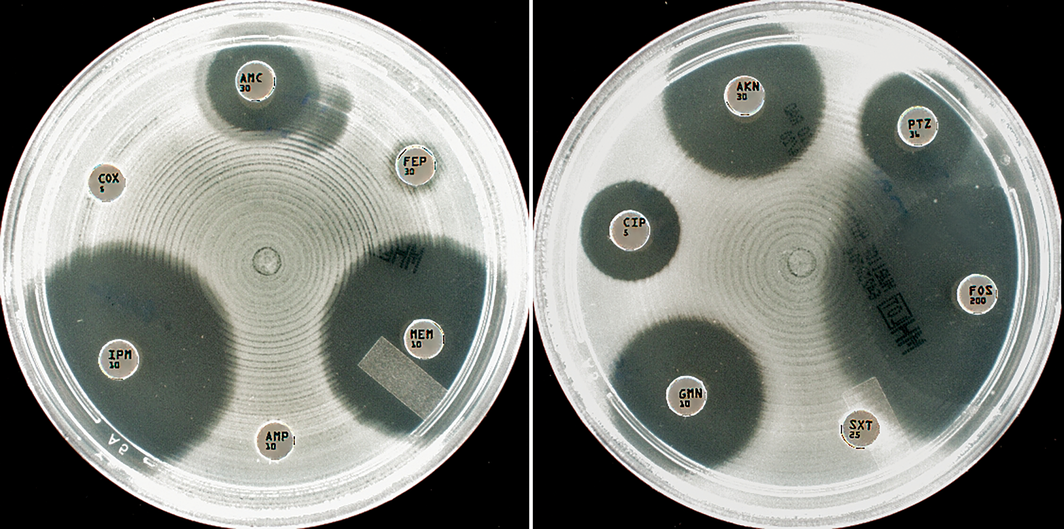
Blood and stool cultures grew extended spectrum β‐lactamase‐producing Salmonella enterica serovar Typhi. The isolate showed microbiological features typical for the XDR clade, with resistance to chloramphenicol, ampicillin, trimethoprim–sulfamethoxazole, fluoroquinolones and third‐generation cephalosporins (Box). The isolate was susceptible to meropenem and had an azithromycin minimum inhibitory concentration of 12 mg/L. The child responded to intravenous meropenem and oral azithromycin and was discharged after an uncomplicated 8‐day admission to complete a further week of azithromycin. Notification to the local public health unit facilitated contact tracing. This case was one of 12 travel‐associated, culture‐positive enteric fever cases managed at our hospital in the first 3 months of 2019. This continues a trend toward a higher incidence of enteric fever, as previously reported at our hospital from 2003 to 2015.5
This case highlights the emerging threat of XDR typhoid and the broader global issue of escalating antimicrobial resistance, to which Australia is not immune, especially given increasing travel connectivity. Typhoid must be considered as a diagnosis for febrile returned travellers from endemic regions, including South and South‐East Asia. Typhoid vaccination is recommended from 2 years of age if travel is planned to these regions. The important role of general practitioners in providing travel‐related vaccine advice and care to returning travellers must not be underestimated.
Box – European Committee on Antimicrobial Susceptibility Testing (EUCAST) disc diffusion demonstrating zones of inhibition to cefotaxime (COX), amoxicillin–clavulanate (AMC), cefepime (FEP), meropenem (MEM), ampicillin (AMP), imipenem (IMP), ciprofloxacin (CIP), amikacin (AKN), piperacillin–tazobactam (PTZ), fosfomycin (FOS); trimethoprim–sulfamethoxazole (SXT) and gentamicin (GMN)
Competing interests
No relevant disclosures.
References
- Klemm EJ, Shakoor S, Page AJ, et al. Emergence of an extensively drug‐resistant Salmonella enterica serovar Typhi clone harboring a promiscuous plasmid encoding resistance to fluoroquinolones and third‐generation cephalosporins. MBio 2018; 9: pii e00105‐18.
- World Health Organization. Disease outbreaks in Eastern Mediterranean Region (EMR), January to December 2018. WHO EMRO Weekly Epidemiology Monitor 2018; 11: 1. http://applications.emro.who.int/docs/epi/2018/Epi_Monitor_2018_11_52.pdf?ua=1 (viewed July 2019).
- Chatham‐Stephens K, Medalla F, Hughes M, et al. Emergence of extensively drug‐resistant Salmonella Typhi infections among travelers to or from Pakistan — United States, 2016–2018. MMWR Morb Mortal Wkly Rep 2019; 68: 11–13.
- Kleine CE, Schlabe S, Hischebeth GTR, Molitor E, Pfeifer Y, Wasmuth JC, et al. Successful therapy of a multidrug‐resistant extended‐spectrum β‐lactamase‐producing and fluoroquinolone‐resistant Salmonella enterica Subspecies enterica serovar Typhi infection using combination therapy of meropenem and fosfomycin. Clin Infect Dis 2017; 65: 1754–1756.
- Khatami A, Khan F, Macartney KK. Enteric fever in children in Western Sydney, Australia, 2003–2015. Pediatr Infect Dis J 2017; 36: 1124–1128.
Linked content
-
InSight+: First case of XDR typhoid: a red flag for GPs
Intranasal Adrenaline Use for the Management of Insect Venom-Induced Anaphylaxis
Thomas J. Young, Wilhelmina R. F. Johnson, Braydon L. Pennington, Troy Wanandy, Wun Y. Lau, Thanh-Thao A. Le
Gabapentinoid Poisoning Presentations to Victorian Emergency Departments: A 15-Year Trend Analysis
Bishaal Tej Gurung, Amy McNeilage, Angus Skeen, Tina Lam, Joanna F. Dipnall, Jane Hayman, Suzanne Nielsen, Ting Xia
Still Treating Yesterday's Risk? Reconsidering Antiviral Use for Mild-to-Moderate COVID-19 Cases in a Broadly Immune Population
Hadar Mudrik-Zohar, Tim Cutfield, Susan Morpeth, Thomas Hills, Eamon Duffy, Laura J. Edwards, Allen C. Cheng, Steven Y. C. Tong
Birth prevalence, clinical sequelae, and management of congenital cytomegalovirus infections in Australia, 1999–2023: a national prospective study
Ece Egilmezer, Suzy M Teutsch, Carlos Nunez, Stuart T Hamilton, Adam W Bartlett, Pamela Palasanthiran, Elizabeth J Elliott, William D Rawlinson
Concurrent use of hormonal long‐acting reversible contraception by women of reproductive age dispensed teratogenic medications, Australia, 2013–2021
Aaron E Boyce, Tony Caccetta, Jo‐Ann See, Rosemary L Nixon AM
Concurrent use of hormonal long‐acting reversible contraception by women of reproductive age dispensed teratogenic medications, Australia, 2013–2021
Michelle KY Chen, Adrian Lim, Deshan F Sebaratnam