




Volume 211 - Issue 6
Preventing RhD haemolytic disease of the fetus and newborn: where to next?
Authors: James P Isbister and Amanda Thomson
Med J Aust 2019; 211 (6): 258-259. || doi: 10.5694/mja2.50325
Published online: 16 September 2019
Published online: 16 September 2019
Non-invasive fetal RhD genotyping will enable ethical and cost-effective targeting of prophylaxis
Non‐invasive fetal RhD genotyping will enable ethical and cost‐effective targeting of prophylaxis
There are many unique and inspiring aspects to the story of haemolytic disease of the fetus and newborn. This once common, mysterious, and potentially devastating disease has been known for centuries. It may have been the reason for the shocking obstetric history of Katherine of Aragon, the first wife of Henry VIII; the course of British history might have been very different had anti‐RhD been available in Tudor England.1
In the course of 30 years (1932–1962), haemolytic disease of the fetus and newborn was clinically defined, its pathophysiology clarified and causation elucidated, treatment developed, and prevention initiated. This story shows the importance of Evidence‐based medicine, the Ethics of human beings altruistically helping each other, and the Economic drivers of cost‐effectiveness in health care, illustrating how society responds to the challenges of establishing and stabilising this triangle without jeopardising any of its three essential components.
Hydrops fetalis and kernicterus were recognised in 1932 by Louis Diamond (1902–1999) and his associates as being different aspects of the same disease (Box).2 Six years later, pathologist Ruth Darrow (1895–1956), whose baby had died of kernicterus, proposed that the disease had its origin in the materno‐fetal passage of maternal alloantibodies produced in response to the feto‐maternal passage of red blood cells.3 Fetal haemoglobin was initially suspected to be the offending antigen, but, after Karl Landsteiner and Alexander Wiener discovered the Rh blood group system, Philip Levine (1900–1987) identified RhD as the causative antigen.4 As the suppression of alloimmune responses had been understood since the early 1900s, it is surprising that anti‐D prophylaxis was not subsequently developed until two decades after the pathophysiology and cause of the disease had been established.
Randomised controlled trials of post‐delivery anti‐D prophylaxis confirmed its efficacy and safety, reducing the alloimmunisation rate from 15% to 1%.5 Evidence for the benefit of antenatal prophylaxis is drawn from large observational studies which found that single and two‐dose regimens further reduced the alloimmunisation rate to 0.2%.6,7
Transfusion medicine has humans at each end of the demand and supply chain. Altruistic blood donors volunteer to provide a unique component of their blood, in most cases after being actively stimulated to produce the anti‐D that has almost totally eliminated RhD alloimmunisation when administered during pregnancy. Attempts to develop therapeutic monoclonal or recombinant anti‐D have not yet borne fruit, and for the foreseeable future prophylaxis will depend upon Australian blood donors if importation of commercial product is to be avoided.
In this issue of the MJA, White and his colleagues8 report a trial of routine antenatal anti‐D prophylaxis (RAADP) that compared the outcomes of single and two‐dose regimens. The primary outcome was the detection of circulating anti‐D in the mother at delivery, a surrogate marker of prophylaxis efficacy that has not been validated. A better but logistically more difficult and expensive approach would have been to use flow cytometry to assess clearance of fetal RhD cells from maternal circulation. The mechanism by which anti‐D prophylaxis suppresses immunisation is not entirely clear, but the correlation between red blood cell clearance and the prevention of the antibody response is strong.9
Can the trial reported by White and colleagues8 inform decision making regarding advice in clinical practice guidelines about the relative benefits of single and two‐dose RAADP regimens? The authors reported better compliance with single dose treatment (although the difference was not not statistically different), and this might be more important than measurable anti‐D levels at delivery. Single‐dose RAADP has been employed in some countries for more than 20 years without evidence of higher rates of alloimmunisation. The case for the Australian guidelines continuing to recommend the two‐dose schedule should perhaps be re‐assessed in light of experience overseas.
It is important to note that the evidence for the benefits and risks of anti‐D prophylaxis is soundly based on studies of the combination of antenatal and post‐delivery prophylaxis. Level I evidence for the superiority of the two‐dose schedule in averting anti‐D formation will be elusive, not only because enormous numbers of participants would be needed for an adequately powered randomised controlled trial, but also because of the ethical problems of such a study. The most practical alternative may be to analyse post‐marketing observational data from multiple centres.
Where to next? The ultimate challenge for clinical practice guidelines after the highest level of achievable Evidence has been reached is prioritising Ethics and Economics when updating the guidelines, as well as ensuring that they are implemented. The main areas of focus should be self‐sufficiency and stewardship of the product. To reduce unnecessary use of anti‐D immunoglobulin, non‐invasive fetal RhD genotyping should be adopted to allow antenatal prophylaxis to be restricted to RhD‐negative women carrying RhD‐positive fetuses.10 But cost‐effectiveness, historically not a major driver in transfusion medicine, remains a particularly complex challenge because of the ethics of deliberately stimulating blood donors to produce anti‐D.
Box – Erythroblastosis fetalis or hemolytic anemia of the newborn; severe form
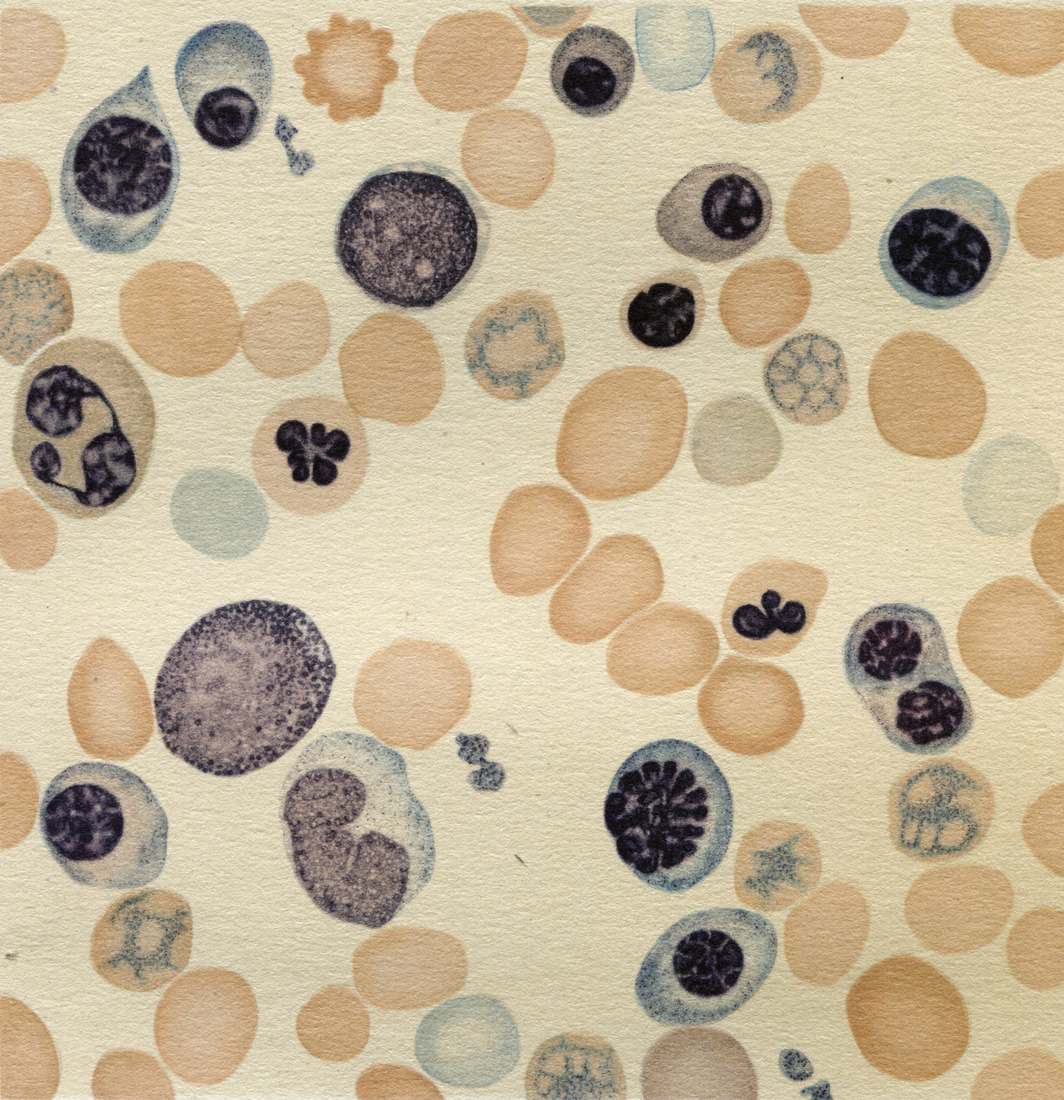
Image reproduced by kind permission of The Commonwealth Fund, New York. Source: Kenneth D. Blackfan, Louis K. Diamond, C. Merrill Leister. Atlas of the blood in children. New York: The Commonwealth Fund, 1944; plate 14. ◆
Competing interests
James Isbister is a member of the Independent Advisory Committee of the Australian Red Cross Blood Service and Chair of the National Blood Authority Patient Blood Management Implementation Steering Committee. Amanda Thompson is a member of the National Blood Authority expert reference group for development of a clinical practice guideline on the use of RhD immunoglobulin in maternity care.
References
- Maclennan H. A gynaecologist looks at the Tudors. Med Hist 1967; 11: 66–74.
- Diamond L, Blackfan K, Baty J. Erythroblastosis fetalis and its association with universal edema of the fetus, icterus gravis neonatorum and anemia of the newborn. J Pediatr 1932; 1: 269–309.
- Darrow RR. Icterus gravis (erythroblastosis) neonatorum. An examination of etiologic considerations. Arch Pathol 1938; 25: 378–417.
- Levine P, Burnham L, Katzin EM, Vogel P. The role of iso‐immunization in the pathogenesis of erythroblastosis fetalis. Am J Obstet Gynecol 1941; 42: 925–937.
- Bowman J. Thirty‐five years of Rh prophylaxis. Transfusion 2003; 43: 1661–1666.
- McBain RD, Crowther CA, Middleton P. Anti‐D administration in pregnancy for preventing Rhesus alloimmunisation. Cochrane Database Syst Rev 2015; CD000020.
- Thyer J, Wong J, Thomson A, et al. Fifty years of RhD immunoglobulin (anti‐D) therapy in Australia: celebrating a public health success story. Med J Aust 2018; 209: 336–339.
- White SW, Cheng JC, Penova‐Veselinovic B, et al. Single dose v two‐dose antenatal anti‐D prophylaxis: a randomised controlled trial. Med J Aust 2019; 2011: 261–265.
- Brinc D, Lazarus AH. Mechanisms of anti‐D action in the prevention of hemolytic disease of the fetus and newborn. Hematology Am Soc Hematol Educ Program 2009; 185–191.
- Breveglieri G, D'Aversa E, Finotti A, et al. Non‐invasive prenatal testing using fetal DNA. Mol Diagn Ther 2019; 23: 291–299.
Provenance: Commissioned; externally peer reviewed.
Barriers and Facilitators to Timely Detection and Optimal Management of Chronic Wet Cough in Aboriginal Children Across Australia From the Perspectives of Carers of Aboriginal Children: A Qualitative Study
Gloria T. Y. Lau, Pam Laird, Robyn Aitken, Melanie Barwick, Liam Bedford, Emily R. Bowden, Jamie Everingham, Angela Fuery, Reece Griffin, Neha Jain, Mina Kinghorn, Renae Knapp, Gabrielle B. McCallum, Peter Morris, Richard Norman, Peter C. Richmond, Aarti Saiganesh, Slade Sibosado, Cameron Taylor, Maree Toombs, Roz Walker, Joan Wilson, Anne B. Chang, André Schultz
Barriers and Facilitators to Timely Detection and Optimal Management of Chronic Wet Cough in Aboriginal Children Across Australia From the Perspective of Health Care Providers: A Qualitative Study
Gloria T. Y. Lau, Pamela Laird, Robyn Aitken, Melanie Barwick, Liam Bedford, Emily R. Bowden, Corey Dalton, Jamie Everingham, Angela Fuery, Reece Griffin, Neha Jain, Mina Kinghorn, Renae Knapp, Gabrielle B. McCallum, Peter Morris, Richard Norman, Peter C. Richmond, Aarti Saiganesh, Slade Sibosado, Maree Toombs, Roz Walker, Joan Wilson, Anne B. Chang, André Schultz
Short-Term Safety of Concomitant Meningococcal B and National Immunisation Program Vaccines in Infants Aged < 15 Months: A Survey-Based Surveillance Study
Thuy Nguyen, Evelyn C. S. Tay, Michael Dymock, Thomas L. Snelling, Lucy Dawes, Julie Marsh, Yue Wu, Alan Leeb, Nicholas Wood, Lucy Deng
The GenV Biobank: Enabling Biological Research in a Large Longitudinal Population-Representative Cohort of Australian Newborns and Their Parents
Katherine Lange, Kim L. Powell, Yeukai Mangwiro, Tony Frugier, Donna T. Geddes, Melissa Wake, Richard Saffery
Watchful Waiting Compared With Immediate Antibiotics for Urban Aboriginal and Torres Strait Islander Children With Uncomplicated Acute Otitis Media (WATCH): A Non-Inferiority Randomised Controlled Trial
Jennifer S. Reath, Hasantha Gunasekera, Sanja Lujic, Amanda J. Leach, Letitia Campbell, Robyn Walsh, Tim Usherwood, Geoffrey K. Spurling, Claudette A. Tyson, Deborah A. Askew, Kelvin Kong, Chelsea J. Watego, Peter Morris, Wendy Hu, Penelope A. Abbott
A Rare Case of Storage Mite Anaphylaxis in Infancy
Eliza Kluckow, Katie Frith