




Volume 208 - Issue 11
A holistic approach to the different pathologies of the vulva
Author: Rupert G Sherwood
Med J Aust 2018; 208 (11): 481. || doi: 10.5694/mja17.00875
Published online: 18 June 2018
Published online: 18 June 2018
The vulva: a practical handbook for clinicians, 2nd edition
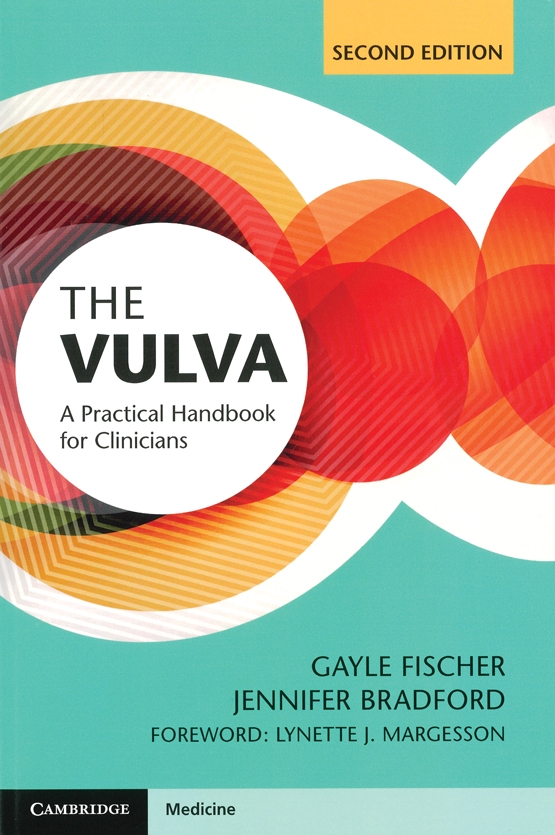
The vulva: a practical handbook for clinicians, 2nd edition.Fischer G, Bradford J. Cambridge University Press, 2016 (£44.99; 176 pp). ISBN 9781316508954
To all clinicians who manage disorders of the vulva, Gayle Fischer, who is an associate professor of dermatology at the University of Sydney, and Jennifer Bradford, clinical gynaecologist and conjoint senior lecturer at Western Sydney University, are synonymous with a holistic multidisciplinary approach to this often challenging part of general and specialist practice. The second edition of The vulva: a practical handbook for clinicians is welcome on several fronts, not the least of which is that the book lives up to its title, providing an easily accessible resource for the various types of pathologies of the vulva, classified by presenting complaint and symptoms.
Appropriate space is devoted to conditions that are both common and often difficult to manage, such as lichen sclerosus, dermatitis and persistent vaginitis. The section covering steroid use on the vulva is particularly helpful and acknowledges the challenges of helping patients with incurable but manageable dermatoses persist with their treatment. Practical tips such as linking control of lichen sclerosus with cancer prevention will aid both generalists and specialists in counselling these women.
The chapter on vulval disease in children is comprehensive and again practical in its advice and approach. The complexities of ascertaining a history of sexual abuse in children presenting with vulval dermatitis or infection should be read and retained by all health practitioners who may encounter this problem. The final chapter, “Myths and pearls”, would be my pick if only permitted one section to read and access later. As a general practitioner who subsequently specialised in gynaecology, these vignettes ring true and are worth re-reading.
The possible gap that might be easily addressed in the next edition would be female genital mutilation, including a classification, the appropriate management (particularly around pregnancy and birth) and the psychosocial challenges of preventing (illegal) re-infibulation in women in Australia.
Compact, concise, with good photographs and excellent indexing, The vulva: a practical handbook for clinicians should find a place on not only the shelves of the GP and specialist gynaecologist, but it would also be a valuable addition to every gynaecology outpatient clinic.
Competing interests
No relevant disclosures.
Forty Years in the Making: Reporting on the Co-Creation of a National Roadmap for Birthing on Country Services for the Best Start to Life
Res McCalman, Anneka J. Bowman, Roianne West, Kristie Watego, Jyai Allen, Claire Clack, Sue Kildea, Sue Kruske, Melanie Briggs, Cleone Wellington, Rebecca Coddington, Yu Gao, Isabella Garti, Sascha Kowalenko, Sarah Ireland, Catherine Austin, John D. Boffa, Marah Prior, Kelsie Kahl, Bettina Chaseling, Sarah Khaw, Emily Armstrong, Donna Hartz, Yvette Roe
Temporal Trends in Preterm Birth Associated With Hypertensive Disorders of Pregnancy in Victoria, Australia: A Population-Based Interrupted Time-Series Study
Melvin Marzan, Heng Jiang, Daniel Lorber Rolnik, Joanne M. Said, Lisa Hui
Linguistic Manoeuvres: Obstetric Violence Camouflages Harm and Loss of Consent From Birth
Liz Sutton, Harsha Ananthram, Rebecca Matthews
Linguistic Manoeuvres: Obstetric Violence Camouflages Harm and Loss of Consent From Birth
Bashi Kumar-Hazard, Andrew M. Bisits, Sharon L. Settecasse, Jenny Gamble, Hazel Keedle, Hannah G. Dahlen
Linguistic Manoeuvres: Obstetric Violence Camouflages Harm and Loss of Consent From Birth
Wendy Pollock, Alissa Fleming, Ensieh Fooladi, Joy Kloester, Anne Tremayne, Yasmin Zisin, Bethany Carr, Kym Davey, Suzanne Willey, Jenny Gamble
Getting on the Same Page: Why Australia Needs a National Maternity Early Warning System (MEWS) Chart
Briony A. Cutts, Lucy Bowyer, Nisha Khot, Sandra Lowe, Stefan C. Kane