




Reflections
Book/Media/App review
Volume 204 - Issue 4
Rethinking autism
Author: Louise K Newman
Med J Aust 2016; 204 (4): 164. || doi: 10.5694/mja15.01303
Published online: 7 March 2016
Published online: 7 March 2016
Neurotribes: the legacy of autism and how to think smarter about people who think differently
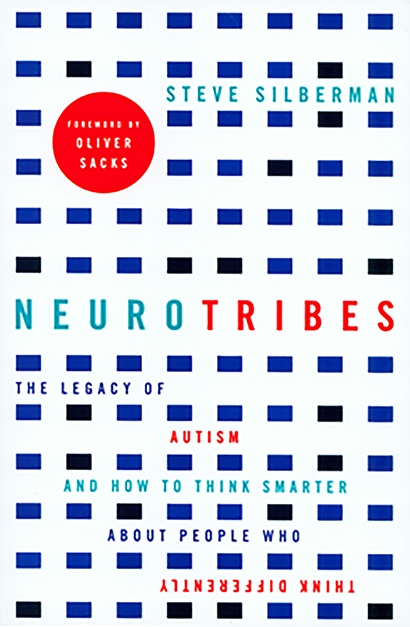
Neurotribes: the legacy of autism and how to think smarter about people who think differently. Steve Silberman. Sydney: Allen & Unwin, 2015 (544 pages, $35). ISBN 9781760113629.
Silberman is a popular award-winning investigative journalist with writings in the New Yorker, Time, Nature, Wired and Salon. He is an engaging author who tends to tackle the big picture issues with a focus on the social construction of illness models. In Neurotribes, with a foreword by Oliver Sacks, he presents a social history of autism with a call for rethinking the condition and tolerance for what he calls “neurodiversity”. This is a plea for conditions such as autism and attention deficit hyperactivity disorder to be rethought as naturally occurring cognitive variations with distinct strengths, as opposed to seeing them as diseases or deficits. Silberman argues that autistic conditions have long contributed to history and to the development of culture, making the point that in contemporary high-tech societies, the strengths of focused individuals with the brain capacities to understand and develop computer technologies are actually an asset. He observes that this has been a misunderstood condition with an array of different theoretical models for understanding it. Currently, the aetiology of autism is of great relevance as we are witnessing ongoing debates about its origin, with theories as diverse as parenting deficits to routine vaccination reactions. Neurotribes certainly manages to provide a well researched overview of the thinking about autism. Silberman is particularly critical of theories relating to pathogenic parenting and the so-called “refrigerator mother” as a cause of autistic spectrum disorder, and his discussion of the political issues surrounding the condition makes for a very interesting social account. This is a valid argument but one that needs to be balanced with an acknowledgement of the real social and interpersonal deficits that people with the condition can experience. As for most complex conditions, there is more than one reading of its history, but Silberman’s analysis is certainly of great relevance as we struggle with contemporary challenges, diagnosis and treatment.
Barriers and Facilitators to Timely Detection and Optimal Management of Chronic Wet Cough in Aboriginal Children Across Australia From the Perspectives of Carers of Aboriginal Children: A Qualitative Study
Gloria T. Y. Lau, Pam Laird, Robyn Aitken, Melanie Barwick, Liam Bedford, Emily R. Bowden, Jamie Everingham, Angela Fuery, Reece Griffin, Neha Jain, Mina Kinghorn, Renae Knapp, Gabrielle B. McCallum, Peter Morris, Richard Norman, Peter C. Richmond, Aarti Saiganesh, Slade Sibosado, Cameron Taylor, Maree Toombs, Roz Walker, Joan Wilson, Anne B. Chang, André Schultz
Barriers and Facilitators to Timely Detection and Optimal Management of Chronic Wet Cough in Aboriginal Children Across Australia From the Perspective of Health Care Providers: A Qualitative Study
Gloria T. Y. Lau, Pamela Laird, Robyn Aitken, Melanie Barwick, Liam Bedford, Emily R. Bowden, Corey Dalton, Jamie Everingham, Angela Fuery, Reece Griffin, Neha Jain, Mina Kinghorn, Renae Knapp, Gabrielle B. McCallum, Peter Morris, Richard Norman, Peter C. Richmond, Aarti Saiganesh, Slade Sibosado, Maree Toombs, Roz Walker, Joan Wilson, Anne B. Chang, André Schultz
Short-Term Safety of Concomitant Meningococcal B and National Immunisation Program Vaccines in Infants Aged < 15 Months: A Survey-Based Surveillance Study
Thuy Nguyen, Evelyn C. S. Tay, Michael Dymock, Thomas L. Snelling, Lucy Dawes, Julie Marsh, Yue Wu, Alan Leeb, Nicholas Wood, Lucy Deng
The GenV Biobank: Enabling Biological Research in a Large Longitudinal Population-Representative Cohort of Australian Newborns and Their Parents
Katherine Lange, Kim L. Powell, Yeukai Mangwiro, Tony Frugier, Donna T. Geddes, Melissa Wake, Richard Saffery
Watchful Waiting Compared With Immediate Antibiotics for Urban Aboriginal and Torres Strait Islander Children With Uncomplicated Acute Otitis Media (WATCH): A Non-Inferiority Randomised Controlled Trial
Jennifer S. Reath, Hasantha Gunasekera, Sanja Lujic, Amanda J. Leach, Letitia Campbell, Robyn Walsh, Tim Usherwood, Geoffrey K. Spurling, Claudette A. Tyson, Deborah A. Askew, Kelvin Kong, Chelsea J. Watego, Peter Morris, Wendy Hu, Penelope A. Abbott
A Rare Case of Storage Mite Anaphylaxis in Infancy
Eliza Kluckow, Katie Frith