




Volume 202 - Issue 7
The old African queen lending a hand to improve health in Malawi
Author: Donald A Howarth
Med J Aust 2015; 202 (7): 387-388. || doi: 10.5694/mja14.00009
Published online: 20 April 2015
Published online: 20 April 2015
A doctor who founded a nation’s medical system and the many lives of his ship
A doctor who founded a nation's medical system, and the many lives of his ship
Not long after the explorer, medical missionary and anti-slavery campaigner, Dr David Livingstone, explored Lake Nyasa, now Lake Malawi, a wave of evangelising zeal saw the establishment of religious communities along the lake shore. One of those who went forth was an Anglican priest, Chauncy Maples. After 19 years, he was recalled to England to be appointed the Bishop of Nyasaland. It was on his return journey that the small vessel carrying him across the lake sank, and he drowned, weighed down by his bishop's cassock.
Subsequently, as the plans for a large steamer were being drawn up to service the mission communities, the name Chauncy Maples was chosen for this vessel.
The building and rebuilding of the Chauncy Maples
The original plans for a 108-foot-long vessel were drawn in Africa, then repeatedly modified in Scotland by Henry Brunel, until the final version, a 127-foot-long design, was settled on.1
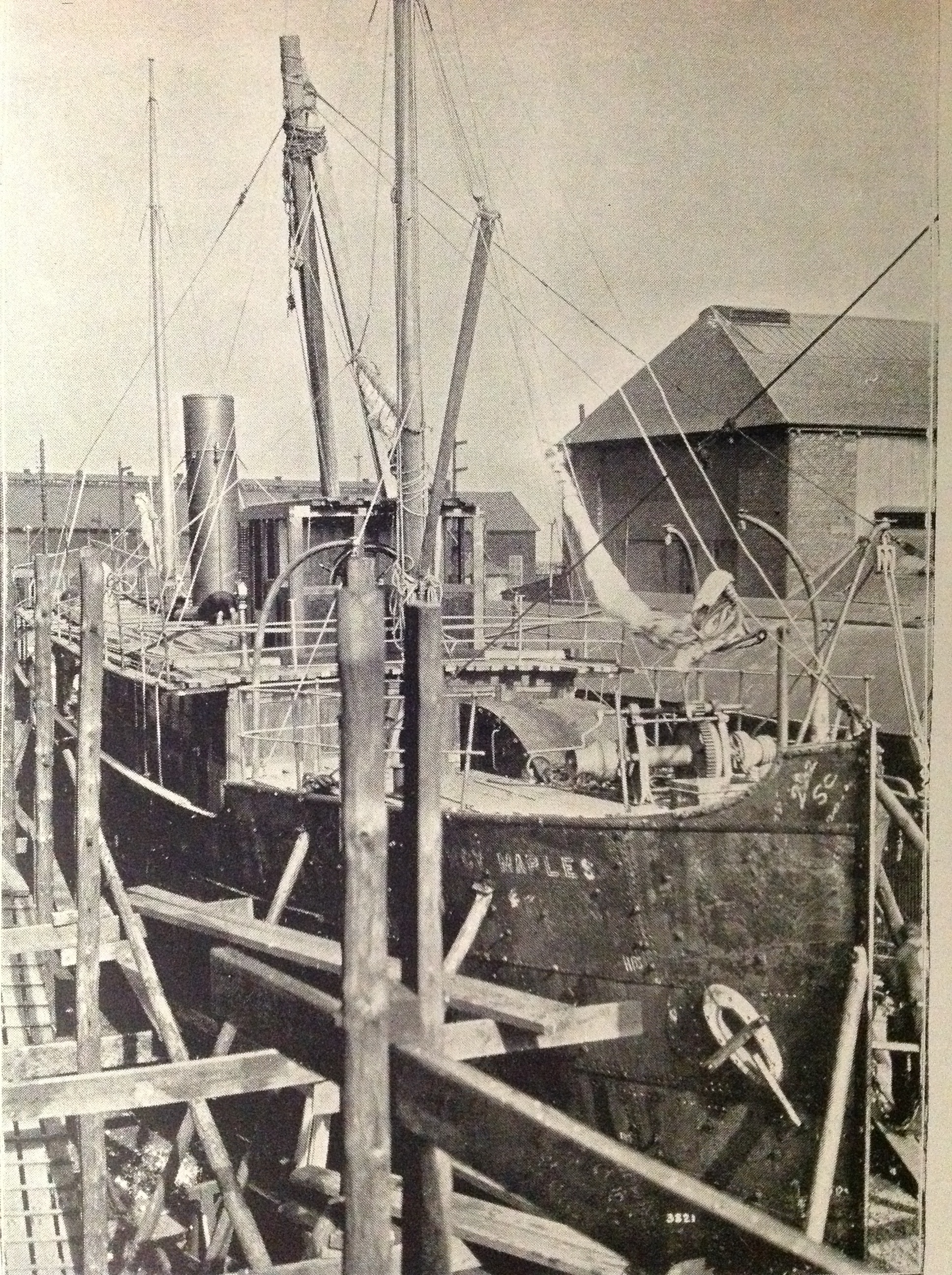
The ship was initially built in the inland shipyard of Alley and McLellan in 1899. This was a Glasgow company that supplied vessels in kit form to be exported to the colonies. During construction, the plates were bolted together rather than riveted, and once complete the entire ship was dismantled, the parts were galvanised, sorted into 3481 lots and then dispatched to the delta of the Zambezi River (Box 1).1
A workshop and slipway were created near where the Shire River leaves Lake Malawi, and there the ship was rebuilt and launched in 1901. The Chauncy Maples then began its first life as a missionary ship servicing the spiritual, educational and medical needs of mission communities along the shore of this 580-kilometre long lake. The routine was to drop off supplies at the missions and to then allow the treatment of patients over several days while the ship waited at anchor.
The pre-colonial health needs of Malawi and the development of a health service
One of the regular passengers on the Chauncy Maples was Dr Robert Howard, the first full-time doctor in Malawi. He recorded the illnesses afflicting the local populations and the missionaries, while establishing a string of lakeside medical clinics. His efforts directed toward disease prevention through good public health and hygiene probably prevented the collapse of the missionary settlements. Before his arrival, the annual death rate among the mission workers had been 10%, with a further 20% a year having to return to England due to illness.2
The local health needs were massive, with local infections as well as introduced ones that rapidly spread along trading and slaving routes. Dysentery, malaria, schistosomiasis and hookworm infestation accounted for much of the local disease burden. Diseases introduced from Europe and Asia included influenza, measles, smallpox and, later, tuberculosis. The sand flea, the cause of jiggers, a pruritic or painful skin infestation, rapidly followed trade routes to involve most of sub-Saharan Africa. Debilitating tropical ulcers were common, as were wounds from encounters with wild animals.2-5 Dr Howard was working in Malawi at the time when the transmission of malaria was first understood, and he introduced measures to control transmission.6,7
Dr Howard introduced measures to prevent malaria that we are all familiar with today. He pioneered a system of mosquito nets of a particular design (the Nyasa pattern), which the nursing staff were responsible for maintaining and replacing. Two pairs of socks were to be worn at night to protect the ankles from bites, and all old tins were to be buried before the wet season. He also introduced the practice of sprinkling pyrethrum powder on hot coals to fumigate mosquitoes in houses.3
Dr Howard and the Chauncy Maples both played pivotal roles in developing the health services of Malawi. Without their steamers, of which the Chauncy Maples was the largest and most important, the Universities' Mission to Central Africa would never have been able to supply their hospitals. The ship also acted as a mobile hospital and means of patient transport. Ill patients were moved from their villages to hospitals such as the one on Likoma Island and could have their treatment initiated while travelling across the lake, somewhat akin to a modern air ambulance.2
The Chauncy Maples also made possible Dr Howard's visits to villages to establish public health measures, including his antimalarial initiatives and the boiling of all drinking water, and to support the local “dressers” (the paramedics of their day), who, with a scattering of nurses, provided the hospital services along the shores of the lake.
After a decade of remarkable service, Dr Howard was made to leave his post because he married one of the nurses he worked with. Then, as now, bureaucracy was often unable to see past rigid rules to ensure the efficient delivery of service. It took 18 months to replace him. Dr Howard and his wife subsequently worked in the fledgling health system in Tanganyika.
The Chauncy Maples finds new roles
During World War I, the Chauncy Maples briefly saw service as a British armed patrol vessel before returning to her previous duties as a mission ship.
After 52 years of servicing the lakeside missions, the ship was withdrawn from service. A few years later she was purchased by a fishing company, fitted with refrigeration, and used as the mother ship of a fishing fleet on Lake Malawi.2 Then in 1965, she became a commercial passenger vessel that also functioned as a freighter. The old steam engine was removed and a diesel engine fitted. Her superstructure was modernised to accommodate more passengers, making her somewhat top-heavy.8 Finally, in 1990, after 89 years of service, the ship was laid up at Monkey Bay, on the shore of the lake, as something of an historic curiosity.
The Chauncy Maples returns to medical work
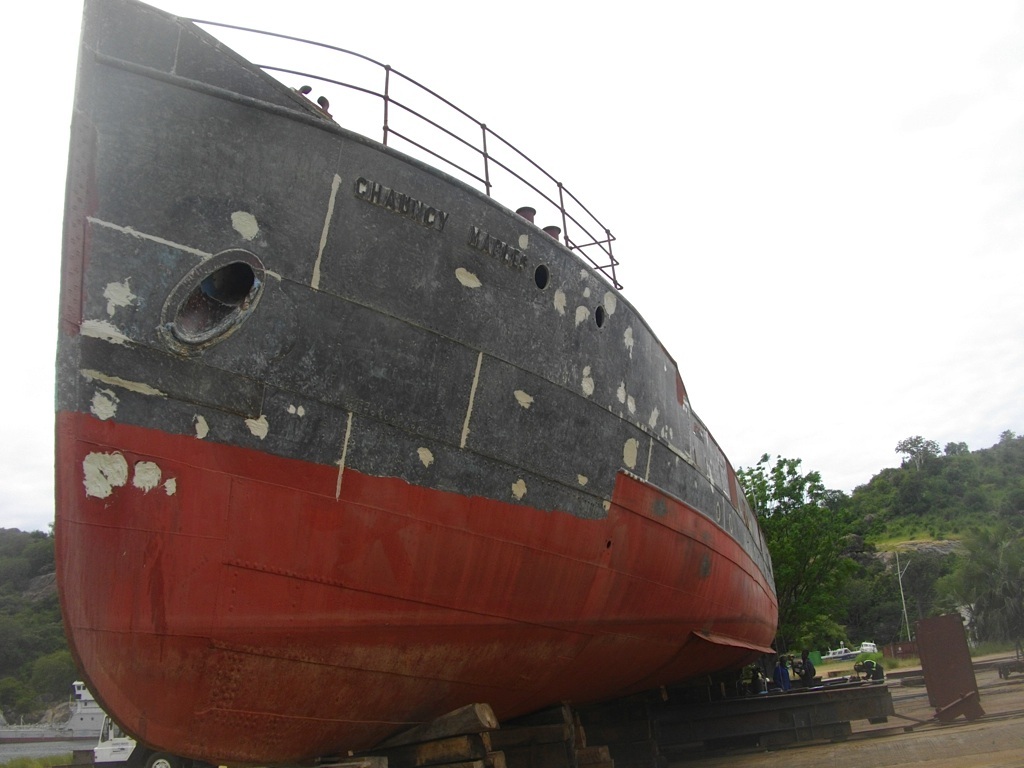
After such a long career, graceful retirement or the breaking yard would have seemed the obvious fates available to the ship. However, when resurveyed in 2009, the Chauncy Maples was felt to have at least 30 years of hull life left and, in 2012, she was hauled ashore to be refitted as a floating clinic ship (Box 2). Her modified superstructure has been removed, with the purpose of restoring the original elegant design. A new engine has arrived and a new propeller has been cast.
The refitting has been funded by the Chauncy Maples Malawi Trust, a charity registered in the United Kingdom.9 The engineering work is being carried out by the Portuguese company Mota-Engil, which has offered to fund the running costs for the completed vessel for its first 10 years back in the water. Other partners in the project are insurance and investment firm Thomas Miller and the Malawi government.
Various significant obstacles have had to be overcome, including having to procure a mobile crane in South Africa and drive it to the site. Currently, work is suspended while disagreements about ownership are resolved.
Hopefully, in the next couple of years, this 115-year-old ship will again be serving some of the medical needs of Malawi, a country with one of the shortest life expectancies and one of the highest rates of HIV infection. One in 200 pregnancies end in the death of the mother, one in 14 children do not reach the age of 5 years. Malawi has one of the highest ratios of population to doctors.10 As the road network is poorly developed, using the lake to transport clinical manpower and equipment will hopefully prove to be an efficient solution to some of this country's medical needs.
1 The Chauncy Maples nearing completion in Alley and McLellan's inland shipyard in Scotland in 1899, before its dismantling and transport to Africa1
Competing interests
No relevant disclosures.
Acknowledgements
I thank Dean Smith for the recent photograph of the Chauncy Maples on the hard.
References
- Anderson-Morshead AEM. The building of the “Chauncy Maples”. London: Universities' Mission to Central Africa, 1903. 1
- Good CM. The steamer parish: the rise and fall of missionary medicine on an African frontier. Chicago: University of Chicago Press, 2004: chapters 5-7. 2
- Howard R. Five years' medical work on Lake Nyasa. London: Butler and Tanner, 1904. 3
- Howard R. Some notes on surgery of injuries from wild beasts. J Trop Med Hyg 1909; 12: 334-336. 4
- Howard R. General description of the diseases encountered during ten years' medical work on the shores of Lake Nyasa. J Trop Med Hyg 1910; 13: 66-71. 5
- Howard R. Malaria prophylaxis in communities in British Central Africa. J Trop Med Hyg 1908; 11: 1-16. 6
- Cox FE. History of the discovery of the malaria parasites and their vectors. Parasit Vectors 2010; 3: 5. http://www.parasitesandvectors.com/content/3/1/5 (accessed Oct 2014).
- Cole-King PA. Lake Malawi steamers. Zomba: Malawi Government, 1971. 8
- Chauncy Maples Malawi Trust. Chauncy Maples Lake Malawi's clinic. http://www.chauncymaples.org (accessed Sep 2014).
- World Health Organization. Country cooperation strategy at a glance: Malawi. 2014. (WHO/CCU/14.03/Malawi) http://www.who.int/countryfocus/cooperation_strategy/ccsbrief_mwi_en.pdf (accessed Oct 2014).
Provenance: Not commissioned; not externally peer reviewed.
Capturing the Benefits of Clinical Quality Registries
Taryn Bessen, Stephen McDonald
Medical Colleges Have an Obligation to Ensure Full Participation in Clinical Quality Registries
Thomas J. Hugh
Getting on the Same Page: Why Australia Needs a National Maternity Early Warning System (MEWS) Chart
Briony A. Cutts, Lucy Bowyer, Nisha Khot, Sandra Lowe, Stefan C. Kane
Data for Equity: Can Linked Administrative Data Inform Pathways to More Equitable Child Health?
Sarah Gray, Shuaijun Guo, Meredith O'Connor, Elodie O'Connor, Katrina Williams, Hannah Badland, Susan Woolfenden, Josie Dickerson, Gerry Redmond, Marnie Downes, Sharon R. Goldfeld
Specialty College Selection: Why Change is Critical to Support a Future Rural Workforce
Matthew R. McGrail, Jenny May AM, Katherine Logan
Differentiated and simplified oral HIV pre‐exposure prophylaxis (PrEP) models hold the key to virtually eliminating HIV transmission in Australia by 2030
Tyson Arapali, Sarah Warzywoda, Anthony K J Smith, Curtis Chan, Timothy R Broady, Erin Sullivan, Catherine MacPhail, Mohamed A Hammoud, Alexander Dowell‐Day, Benjamin R Bavinton