




Volume 200 - Issue 3
Acute myopericarditis following intravenous zoledronic acid for the treatment of Paget’s disease
Authors: Monique R Watts, Andris H Ellims and David S Eccleston
Med J Aust 2014; 200 (3): 150. || doi: 10.5694/mja13.11524
Published online: 17 February 2014
Published online: 17 February 2014
Bisphosphonates aren’t known to cause myocardial injury, but zoledronic acid may be an exception
To the Editor: Use of bisphosphonates for fracture prevention is increasing. These agents have potential adverse effects,1 but are not known to cause myocardial injury. We present a case of myopericarditis following administration of intravenous zoledronic acid.
A 79-year-old man with a history of coronary artery bypass graft surgery presented to our hospital with fevers, rigors and prolonged chest pain suggestive of pericarditis. He had been given the first intravenous dose of zoledronic acid for Paget’s disease 24 hours earlier. He was febrile (temperature, 39.1°C), had non-specific electrocardiography changes and had elevated levels of inflammatory markers — a serum C-reactive protein level of 154 mg/L (reference interval [RI], < 5 mg/L) and an erythrocyte sedimentation rate of 75 mm/h (RI, 2–14 mm/h). Over the next 6 hours, the serum troponin I level rose to 40.3 μg/L (RI, < 0.04 μg/L) and the serum creatine kinase level rose to 445 IU/L (RI, < 175 IU/L). Transthoracic echocardiography showed normal biventricular function and no pericardial effusion. Coronary angiography demonstrated patent grafts with no new native vessel disease. Despite blood cultures, urinalysis, and serological tests for autoimmune diseases and viral pathogens (adenovirus, coxsackievirus, parvovirus, cytomegalovirus, human herpesvirus, Epstein–Barr virus), no infective or autoimmune cause was identified.
Cardiac magnetic resonance (CMR) imaging was performed to confirm the clinical impression of myopericarditis. A global myocardial signal intensity (SI) increase in T2-weighted imaging was observed (SI ratio of myocardial over skeletal muscle of ≥ 2.0), consistent with myocardial oedema. Myocardial hyperaemia was identified by an increased global myocardial early gadolinium enhancement ratio between myocardium and skeletal muscle in T1-weighted imaging (global SI enhancement ratio of myocardium to skeletal muscle of ≥ 4.0) (Box).
A small subendocardial region of late gadolinium enhancement was noted, consistent with previous myocardial infarction. The CMR findings satisfied Lake Louise criteria for the diagnosis of acute myocarditis.2
Our patient recovered completely, but safety concerns prevented a rechallenge. We considered undertaking endomyocardial biopsy for analysis, but it was thought this would be unlikely to alter management. The event was reported to the Therapeutic Goods Administration.
To our knowledge, this is the first reported case of acute myopericarditis following intravenous bisphosphonate administration. Physicians should be aware of this possible adverse effect and avoid further zoledronic acid infusions in patients with suspected myopericarditis.
Cardiac magnetic resonance images before (A) and after (B) gadolinium contrast in a patient who developed myopericarditis 24 hours after intravenous zoledronic acid
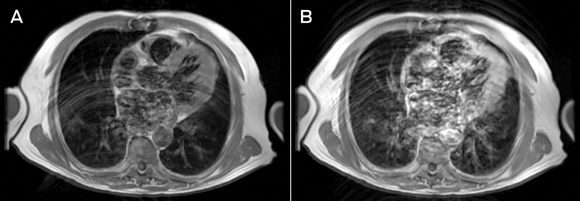
A relative increase in contrast uptake by myocardium compared with thoracic skeletal muscle is consistent with hyperaemia, a feature of myocarditis.
Competing interests
No relevant disclosures.
References
- Kennel KA, Drake MT. Adverse effects of bisphosphonates: implications for osteoporosis management. Mayo Clin Proc 2009; 84: 632-638. CHDCEEGA
- Friedrich MG, Sechtem U, Schultz-Menger J, et al. Cardiovascular magnetic resonance in myocarditis: a JACC White Paper. J Am Coll Cardiol 2009; 53: 1475-1487. i1142871
Fatty Liver Disease in Australia: A Narrative Review on the Epidemiology, Natural History, Prognostication and Management in People With Metabolic Dysfunction
Karl Vaz, Daniel Clayton-Chubb, William W. Kemp, Stuart K. Roberts, Ammar Majeed
Sex Differences in Management and Outcomes of People With ST-Elevation Myocardial Infarction, New South Wales, 2011–2020: A Retrospective Cohort Study
Adam C. Livori, Jedidiah I. Morton, Dianna J. Magliano, Jonathan E. Shaw
Rethinking Rheumatic Fever Diagnosis: Progress, Pitfalls and the Path Towards a Definitive Test
Anna P. Ralph, Rachel Webb, Tom Parks, Nicole J. Moreland, Asha C. Bowen, Benjamin Jones, Emma Ndagire, Andrea Z. Beaton
Sex Differences in Management and Outcomes of People With ST-Elevation Myocardial Infarction, New South Wales, 2011–2020: A Retrospective Cohort Study
Samia Kazi, Simone Marschner, Clara K. Chow
Distribution of Cardiovascular Disease Risk Based on the Updated 2023 Guideline-Recommended Australian Cardiovascular Disease Risk Algorithm and Comparison With the 2012 Algorithm: An Observational Study
Nina Lazarevic, Meghana Bhat, Grace Joshy, Danielle C. Butler, Mark Woodward, Anushka Patel, Rod T. Jackson, Garry Jennings, Rosemary Wyber, Ellie Paige, Emily Banks
They Brought the Hospital to Me
Hugh N. Burrill