




Volume 199 - Issue 3
The progress of molecular genetics
Author: Peter C Doherty
Med J Aust 2013; 199 (3): 215. || doi: 10.5694/mja13.10511
Published online: 5 August 2013
Published online: 5 August 2013
GREAT SCIENCE is characterised by discovery and by finding solutions to real problems. Unlike physics, where a prediction based in theory leads to a search for supporting evidence, progress in biology depends more on systematic experimentation and observation than on any grand hypothesis. This is because biological systems have sequentially and adaptively evolved via mutations in the designer code of our genes. Without an overarching ...
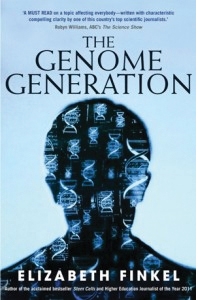
The genome generation
Elizabeth Finkel. Melbourne: University Press, 2012 (256 pp, $32.95). ISBN: 9780522856477.
GREAT SCIENCE is characterised by discovery and by finding solutions to real problems. Unlike physics, where a prediction based in theory leads to a search for supporting evidence, progress in biology depends more on systematic experimentation and observation than on any grand hypothesis. This is because biological systems have sequentially and adaptively evolved via mutations in the designer code of our genes. Without an overarching theory, researchers are required to tease out the molecular details of how life works.
Crick and Watson’s seminal model for DNA structure has led to the new field of molecular genetics. Still in its infancy, the discipline has been moving from the research laboratories to applications that inform medical practice.
Those of us active in clinical practice, though familiar with the basic pathway from DNA to protein, are likely to have a limited understanding of molecular genetics, depending on our graduation vintage and our ability to keep up with the field. That is why it is worth spending a little time and money on award-winning science journalist Elizabeth Finkel’s new book.
It is intended for a lay audience; however, though still active in immunological research, I had many knowledge gaps filled by its easy style and personalised accounts.
What is your understanding of terms like genomics, histones, epigenetics, RNA interference? Is much of the genome still assumed to be comprised of useless “junk”? Not so, it seems, and Finkel tells us why. How useful is investigating the genetic basis of various cancers, and what progress has been made with the substantial research funding involved? We all know about BRCA1 and BRCA2 genes in breast cancer and test for them in practice, but what about genes possibly implicated in colon cancer? How has the idea of a genomically based “personalised” medicine evolved? Finkel tells us that there is a way to go, but the field is moving forwards.
The book covers a little of the early history and then moves on to explaining disease processes with an obvious basis in molecular genetics. Discussion is then broadened to how the DNA revolution might contribute to sustaining a probable 9 billion people on an increasingly environmentally challenged planet. Anyone who talks regularly with the public can benefit from this discussion, where there is an increasing focus on the supposed dangers of genetically modified foods. The book ends by inviting you to “Meet your ancestor”, retracing the long story of evolution of ourselves and other extant life forms.
The genome generation is thus a clear and accessible overview as well as a ready reference. From the era of great men and grand theories, biological science has moved on to a time when the latest experiment or datasets lead astute minds to consider every possibility. Finkel’s book gives a good understanding of how we are “instructed by nature” in the world of molecular genetics.
Newborn Screening: Equity for Aboriginal and Torres Strait Islander Families in the Context of Emerging Genomics
Gail Garvey, Sarah Norris, Joanne Scarfe, Louise Lyons
When ‘Liver Enzymes’ Are Not Hepatic: Late-Onset Pompe Disease
Shauna Madigan, Georgina England, Wayne Rankin
Genomic Newborn Screening: Verdict From an Australian Citizens’ Jury
Emma Frost, Zornitza L. Stark, Kristen Nowak, Louise Healy, Sarah Norris, Stacy M. Carter
Genomic Testing Access for Hearing Loss Must Catch Up to the Evidence
Emma McGonigal, Andrew V. White, Valerie Sung, Karen Liddle, Lilian Downie, Emily Shepard
Population-Based Melanoma Screening Using Integrated Risk Scores in Australia: A Narrative Review to Determine Readiness
Courtney K. Wallingford, Chloe Mighton, Tamara Dawson, Anne Cust, H. Peter Soyer, Yvonne Bombard, Tatiane Yanes, Aideen McInerney-Leo
Genomic Newborn Screening: Commodity or Public Good?
Christopher Gyngell, Sebastian Lunke, Danya Vears, Zornitza L. Stark