




Volume 199 - Issue 11
Students as teachers
Author: Peter C Arnold
Med J Aust 2013; 199 (11): 800. || doi: 10.5694/mja13.11048
Published online: 16 December 2013
Published online: 16 December 2013
Medical students have been teaching their colleagues for generationsIn 2013, Silbert and colleagues have taken a “modern” look at students teaching their colleagues.1
Eighty-nine years ago, my father failed anatomy. During his repeat year, the students at his dissection table asked him, their more “experienced” colleague, for help. That year, he passed anatomy with a distinction.
After gaining his Fellowship of the Royal College of Surgeons (FRCS) ...
Medical students have been teaching their colleagues for generations
In 2013, Silbert and colleagues have taken a “modern” look at students teaching their colleagues.1
Eighty-nine years ago, my father failed anatomy. During his repeat year, the students at his dissection table asked him, their more “experienced” colleague, for help. That year, he passed anatomy with a distinction.
After gaining his Fellowship of the Royal College of Surgeons (FRCS) (Edinburgh), he served as a surgeon in the North African and Italian campaigns. Returning to South Africa in 1946, he asked the Foundation Professor of the Department of Anatomy at the University of the Witwatersrand in Johannesburg — the well known Australian, Raymond Arthur Dart — if he could teach anatomy. Dart said that he had no money to pay him, but that he could teach part-time if he wished.
After a year of unpaid teaching, Dart explained that he had been testing him, and that he could have an appointment as a lecturer (later senior lecturer and then reader) at a full-time salary for part-time work. Dart wanted him to keep up his surgery so that he could teach practical and surgical anatomy.
In 1960, my father left South Africa in protest at the government’s apartheid policy.
Many generations of students in South Africa,2 Australia, the United States3 and Israel learnt their anatomy from him. Here he taught anatomy to students at the University of Queensland, the University of Sydney4 and the University of New South Wales.
Doubtless many readers of this little piece would have been taught by him. There was nothing like being asked by him to have pen and paper ready and to write down the answer to his anatomical question — then to watch him study the class roll, call out your name — ask who was sitting next to you, and then tell you to look at what he or she had written and to tell it to the class!
He claimed that his best teacher was a London surgeon who arrived to lecture to primary FRCS candidates. “Today, gentlemen [there were no ladies doing surgery in the 1930s], we will discuss the surgical anatomy of the stomach. Are there any questions?”
“No? In that case, tomorrow we will discuss the surgical anatomy of the breast. Good day!” and he walked out.
My father learnt, the next day, through an avalanche of questions to the lecturer, more about the surgical anatomy of the breast than he had ever been taught. And so it continued throughout that course, influencing his later teaching methods.
“Students as teachers” — it’s been going on, to my personal knowledge, for almost a century.
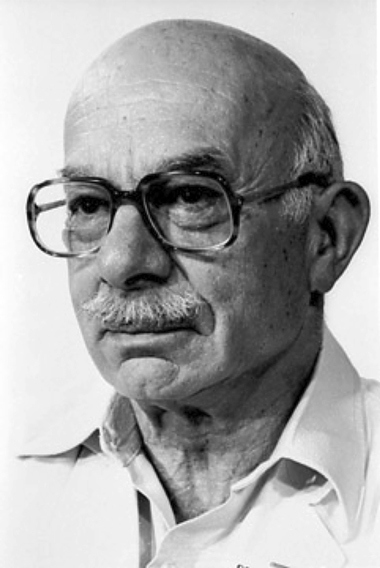
In memoriam, Maurice (Toby) Arnold.
Competing interests
No relevant disclosures.
References
- Silbert BI, Lam SJP, Henderson RD, Lake FR. Students as teachers. Med J Aust 2013; 199: 164-165. CBBHHCGB
- Tobias PV, Arnold M. Man’s anatomy: a study in dissection. Johannesburg: Witwatersrand University Press, 1967. i1115610
- Arnold MA. Reconstructive anatomy: method for the study of human structure. Philadelphia: Saunders, 1968. i1115612
- Arnold MA. Arnold’s glossary of anatomy. http://www.anatomy.usyd.edu.au/glossary/index.cgi (accessed Nov 2013).
Provenance: Not commissioned; not externally peer reviewed.