




Volume 196 - Issue 2
Understanding whiplash
Author: David G Vivian
Med J Aust 2012; 196 (2): 143. || doi: 10.5694/mja11.11132
Published online: 6 February 2012
Published online: 6 February 2012
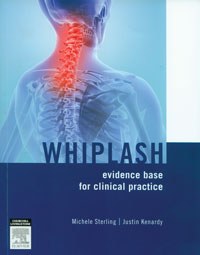
Whiplash: evidence base for clinical practice.
Michele Sterling, Justin Kenardy. Sydney: Elsevier 2011 (xv + 197 pp, $77.25). ISBN 9780729639463.
WHIPLASH is a controversial, but widely accepted, “diagnostic” term that describes a putative causal mechanism for a constellation of symptoms that are generally not underpinned by recognisable pathology. This reference book has the stated aim: “to bring together current knowledge of the whiplash condition that will allow all stakeholders involved in the management of patients with whiplash, from clinicians to policy makers, to gain greater understanding of this condition”.
Whiplash research is important, as up to 50% of people with this condition do not recover fully and up to 30% remain moderately to severely disabled.
The editors of this book, Michele Sterling (associate professor of physiotherapy) and Justin Kenardy (professor of psychology), are both from the University of Queensland, and have both made significant contributions to the university’s Centre of Clinical Research Excellence in Spinal Pain, Injury and Health. They are well positioned, therefore, to comment on contemporary work in their fields, particularly as considerable research concerning whiplash arises from their institution. They have also attracted contributors from a spectrum of disciplines including neurosurgery, psychology, physiotherapy, rehabilitation, epidemiology, engineering, economics and law.
The book comprehensively elucidates contemporary research, particularly in the fields of physiotherapy and psychology. However, as it observes, there is little or no evidence to guide the clinician who is managing the whiplash patient. There is virtually no evidence that confirms a link between symptoms and pathology, and there is also very little established evidence-based management.
The chapters on law, compensation and insurance are worthwhile reading for medical practitioners involved in the medicolegal aspects of whiplash. A series of case studies is also included.
The book is recommended for scientists involved in physical and psychological rehabilitation research into whiplash. It confirms the paucity of evidence related to the whiplash construct. However, it does not assist the clinician who is interested in providing evidence-based whiplash management.
Motor Neuron Disease Mortality Trends in Australia From 1986 to 2023: A Population-Based Study
Carol M. Y. Lee, Rupendra N. Shrestha, Julian Gold, Mark Stevenson, Kelly L. Williams, Lyndal Henden, Sandrine K. K. Chan Moi Fat, Zoe Zussa, Amanda Wright, Martin Jude, Mark A. S. Laidlaw, Willem J. R. Fokkink, Dominic B. Rowe
Mild traumatic brain injury and concussion and persisting post‐concussion symptoms: new guidelines to support evidence‐based assessment and management in Australia and Aotearoa New Zealand
Karen M Barlow, Jennie L Ponsford, Alice Theodom, Gill Cowen, Gavin A Davis, Vicki Anderson, Franz E Babl, David Cole, Jennifer Cullen, Stuart R Dalziel, Melinda Fitzgerald, Howard Flavell, Caroline Yates, Rebecca Kimble, John H Olver, Rhonda Orr, Mark Ralfe, Michael Rose, Nick Rushworth, Julia Treleaven, Gary Browne, Nathan Delang, Sarah Harris, Gary Mitchell, Sean Tweedy
The prevalence of and variation in indicators of the quality and safety of long term aged care in Australia, 2019: a cross‐sectional population‐based study
Tesfahun C Eshetie, Gillian E Caughey, Catherine Lang, Olivia Ryan, Renuka Visvanathan, Craig Whitehead, Keith Evans, Janet K Sluggett, Jyoti Khadka, Carolyn Dawkins, Helena Williams, Miranda Starke, Sara Blunt, Anne Liddell, Megan Corlis, Anna Sheppeard, Penelope Lello, Marilyn Thien, Steven L Wesselingh, Maria C Inacio
Health and economic benefits of improving pre‐hospital identification of stroke in Australian women: a modelling study
Thomas Gadsden, Lei Si, Emily R Atkins, Cheryl Carcel, Xia Wang, Stephen Jan, Mark Woodward, Laura E Downey
Symptom burden, quality of life, and diagnostic journey of people with postural orthostatic tachycardia syndrome, Australia, 2021–24: a descriptive patient registry data study
Marie‐Claire Seeley, Gemma Wilson, Eric Ong, Amy Langdon, Jonathan Chieng, Danielle Bailey, Kristina Comacchio, Amanda Page, Dennis H Lau, Celine Gallagher
The intersection of rurality and dementia prevalence in Australia for Aboriginal and Torres Strait Islander and non‐Indigenous peoples
Antonia J Clarke, Marwan Ahmed, Judith M Katzenellenbogen, John Towney (Wiradjuri), Anna H Balabanski, Adrienne Withall (Dharawal Yuin), Kylie Radford, Amy Brodtmann