




Volume 188 - Issue 2
Consultation and communication
Author: Nigel P Stocks
Med J Aust 2008; 188 (2): 116. || doi: 10.5694/j.1326-5377.2008.tb01536.x
Published online: 21 January 2008
Published online: 21 January 2008
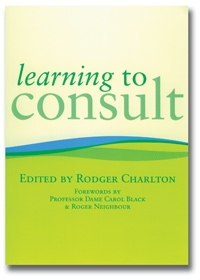
Learning to consult.
Rodger Charlton, editor. Oxford: Radcliffe Publishing, 2007 (xiii + 282 pp). ISBN 978 1 85775 852 8.
Consulting is something that every doctor does. For most, it is performed without reflection and for many with only the patient (or a relative) observing. This is a pity because consulting has a rich theoretical framework, and every skill should be practised and refined to ensure it achieves the best outcomes for patients. It should also be an activity, when done well, which provides us with some intrinsic satisfaction.
This book is edited and written by general practitioners but it is aimed at all students, trainees and medical educators, both undergraduate and postgraduate. The authors have extensive clinical and teaching experience, and while all are from the United Kingdom the lessons are universal.
While the book does focus on consulting skills, particularly communication, it also touches upon the themes of partnership and understanding that are central to a modern comprehension of the consultation process. The summaries and practical points throughout the book are well written and useful. The chapter on consultation models, incorporating biomedical and psychosocial approaches, was particularly helpful and enabled me to better understand my own evolution and interrelationships.
The book also incorporates chapters on the physical examination, aids to learning, and prescribing for common conditions. This is a little ambitious as there are many more comprehensive textbooks available covering these areas, yet it doesn’t detract from the overall aim of the book to provide the reader with tools to develop or improve their consultation style. Finally, the referencing, although not extensive, was more than adequate for an educational text.
Overall, this textbook provides a good starting point for medical students to learn about consulting skills and could be used as a text or revision aid for postgraduate trainees, particularly in general practice. It also offers experienced doctors a chance to consider their own consulting style and perhaps incrementally improve a fundamental part of their clinical practice.
Shifting focus to adolescent wellbeing and inclusive participation in the digital age
Allyson R Todd, Elena Wang, Stephanie R Partridge
The clinical presentation, investigation, and management of women diagnosed with endometriosis in Australian general practices, 2011–2021: an open cohort study
Danielle Mazza, Kailash Thapaliya, Sharinne B Crawford, Alissia Hui, Maryam Moradi, Luke E Grzeskowiak
The impact of the Breast Screen NSW transition from film to digital mammography, 2002–2016: a linked population health data analysis
Rachel Farber, Nehmat Houssami, Katy J L Bell
Non‐technical errors associated with deaths in surgical care, Australia, 2012–2019, by surgical specialty (Australian and New Zealand Audit of Surgical Mortality): a retrospective cohort study
Jesse Ey, Victoria Kollias, Octavia Lee, Kelly Hou, Matheesha Herath, John B North, Ellie Treloar, Suzanne Edwards, Martin Bruening, Adam J Wells, Guy J Maddern
The CURE Asthma roadmap
Gary P Anderson, Anthony Flynn, Phil G Bardin, John D Blakey, Shyamali C Dharmage, Paul Foster, Peter G Gibson, Adam Jaffe, Alan James, Christine R Jenkins, Sundram Sivamalai, Peter D Sly, Guy B Marks, Vanessa M McDonald, Judy Wetttenhall
Evidence from Australian cohort studies about asthma trajectories and transitions across the life course: a narrative review
Caroline Lodge, Xin Dai, Ingrid A. Laing, Michael P Menden, Anthony Flynn, Gary P Anderson, Sarath Ranganathan, Shyamali C Dharmage