




Volume 182 - Issue 3
Helping children to survive sick parents
Author: Nicholas A Keks
Med J Aust 2005 || doi: 10.5694/j.1326-5377.2005.tb06601.x
Published online: 28 April 2004
Published online: 28 April 2004
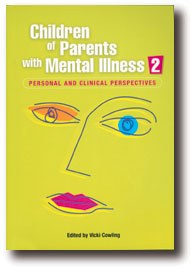
Children of parents with mental illness. Personal and clinical perspectives.
Vicki Cowling (editor). Melbourne: ACER Press, 2004 (xix + 242 pp). ISBN 0 86431 473 6.
On the other hand, people who are or who will become parents may suffer from mental illness. The children of these parents may be affected through genetic inheritance, quality of parenting, family relationships, and psychosocial adversity. The editor, a social worker and psychologist, has estimated that, in 1995, 27 000 Australian children were affected by maternal psychosis alone. Many ill parents parent well, and not all children are affected, but up to two-thirds probably experience negative consequences. Amazingly, the needs of these children have been largely ignored.
Cowling has brought together 20 contributors from various disciplines to produce a highly instructive book addressing coalface issues for children of mentally ill parents. Four of the contributors had experienced parents suffering from schizophrenia, depression, bipolar disorder and Huntingtons disease. These personal accounts are extraordinarily revealing and I regret that there were not more of them included.
The first part of the book provides some vital background information on the genetics, behavioural and psychosocial effects of major psychiatric illnesses. An excellent chapter outlines the possible impact of different illnesses and their symptoms on infants and children of different ages. Different treatments for disorders, as well as preventive interventions, are also outlined. The role of the partner of the mentally ill parent and wider family ramifications are also considered. There is a chapter with advice on how to talk to children and another that examines the impact on adolescents. In a welcome departure from the political correctness of cognitive behaviour therapy, a chapter relates anecdotes from the psychoanalysis of an 11-year-old boy who had been adopted away from his mentally ill mother at the age of 2½. There are other chapters on placing children in out-of-home care and adoption.
A highlight of the book is its description of peer-support activities various ways of organising group therapy for children of parents with mental illness. Group peer support combats isolation, shame and despondency and the benefits of group therapy can be enormous, but are frequently underestimated.
In summary, this is a book that provides irreplaceable insights about children whose parents have mental illness. I found most of the book easy to read, highly instructive and often deeply moving. Medical students and doctors should set aside some reading time for this wonderful book.
Nicholas A KeksPsychiatrist Box Hill, VIC
Barriers and Facilitators to Timely Detection and Optimal Management of Chronic Wet Cough in Aboriginal Children Across Australia From the Perspectives of Carers of Aboriginal Children: A Qualitative Study
Gloria T. Y. Lau, Pam Laird, Robyn Aitken, Melanie Barwick, Liam Bedford, Emily R. Bowden, Jamie Everingham, Angela Fuery, Reece Griffin, Neha Jain, Mina Kinghorn, Renae Knapp, Gabrielle B. McCallum, Peter Morris, Richard Norman, Peter C. Richmond, Aarti Saiganesh, Slade Sibosado, Cameron Taylor, Maree Toombs, Roz Walker, Joan Wilson, Anne B. Chang, André Schultz
Barriers and Facilitators to Timely Detection and Optimal Management of Chronic Wet Cough in Aboriginal Children Across Australia From the Perspective of Health Care Providers: A Qualitative Study
Gloria T. Y. Lau, Pamela Laird, Robyn Aitken, Melanie Barwick, Liam Bedford, Emily R. Bowden, Corey Dalton, Jamie Everingham, Angela Fuery, Reece Griffin, Neha Jain, Mina Kinghorn, Renae Knapp, Gabrielle B. McCallum, Peter Morris, Richard Norman, Peter C. Richmond, Aarti Saiganesh, Slade Sibosado, Maree Toombs, Roz Walker, Joan Wilson, Anne B. Chang, André Schultz
Short-Term Safety of Concomitant Meningococcal B and National Immunisation Program Vaccines in Infants Aged < 15 Months: A Survey-Based Surveillance Study
Thuy Nguyen, Evelyn C. S. Tay, Michael Dymock, Thomas L. Snelling, Lucy Dawes, Julie Marsh, Yue Wu, Alan Leeb, Nicholas Wood, Lucy Deng
The GenV Biobank: Enabling Biological Research in a Large Longitudinal Population-Representative Cohort of Australian Newborns and Their Parents
Katherine Lange, Kim L. Powell, Yeukai Mangwiro, Tony Frugier, Donna T. Geddes, Melissa Wake, Richard Saffery
Watchful Waiting Compared With Immediate Antibiotics for Urban Aboriginal and Torres Strait Islander Children With Uncomplicated Acute Otitis Media (WATCH): A Non-Inferiority Randomised Controlled Trial
Jennifer S. Reath, Hasantha Gunasekera, Sanja Lujic, Amanda J. Leach, Letitia Campbell, Robyn Walsh, Tim Usherwood, Geoffrey K. Spurling, Claudette A. Tyson, Deborah A. Askew, Kelvin Kong, Chelsea J. Watego, Peter Morris, Wendy Hu, Penelope A. Abbott
A Rare Case of Storage Mite Anaphylaxis in Infancy
Eliza Kluckow, Katie Frith