





Volume 181 - Issue 10
Magic in the willow bark
Author: M Laurence Mashford
Med J Aust 2004 || doi: 10.5694/j.1326-5377.2004.tb06429.x
Published online: 28 April 2004
Published online: 28 April 2004
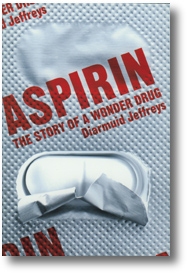
Aspirin: the story of a wonder drug.
Diarmuid Jeffreys. London: Bloomsbury, 2004 (x + 335 pp). ISBN 0 7475 7443 X.
The pharmaceutical industry of the 20th century began with the successful synthesis and exploitation of aspirin, and the drugs path illustrates the factors that will probably still determine developments in the 21st century. The virtue of willow bark was established by experience, but the synthesis of pure aspirin captured that virtue without much of its vice. Here was a synthetic drug that worked and a new alchemy was established which transmuted pharmacology into gold. For the first three-quarters of the 20th century the proportion of scientific fact to marketing fiction heavily favoured the latter, and the drugs protean actions were a source of amazement. The explanation that these properties were due to cyclooxygenase inhibition opened a new chapter for aspirin. It also exemplified how new drugs now come as the dividend of resources put into fundamental research.
The journalistic style, factual approximations and the many examples of spell-check autonomy do not prevent this from being a good read, worth the money.
M Laurence MashfordPharmacologist, Parkville, VIC