




Volume 180 - Issue 9
In Other Journals
Med J Aust 2004 || doi: 10.5694/j.1326-5377.2004.tb06013.x
Published online: 3 May 2004
Published online: 3 May 2004
Breast cancer and abortion
Women who have had a pregnancy end in either a spontaneous or an induced abortion do not have an increased risk of developing breast cancer, according to an international study. The Collaborative Group on Hormonal Factors in Breast Cancer reanalysed 53 epidemiological studies which included data from 83 000 women with breast cancer in 16 countries, including Australia. Their finding differed from those of earlier case-control studies which they say may have been misleading because such studies had recorded induced abortion retrospectively (ie, after the breast cancer diagnosis had been made). Women with breast cancer may be more likely than other women to disclose previous induced abortions.
Lancet 2004; 363: 1007-1016
Hypochondriasis: care v cure
US researchers offer advice for doctors struggling to manage patients with hypochondriasis. Their randomised trial of 187 people with this disorder compared 6 sessions of scripted, individual cognitive behavioural therapy (CBT) administered by experts with usual care. At follow-up, six and 12 months down the track, CBT patients had fewer thoughts of disease, less health-related anxiety and improved health beliefs and attitudes. However, their somatic symptoms did not improve, indicating that CBT helps patients cope rather than cures them outright. Most study participants were women, middle-aged, with a mean 11-year history of hypochondriasis.
JAMA 2004; 291: 1464-1470
Who’s looking out for you?
Some hospital doctors end up neglecting their own basic needs while at work, according to a small prospective study of 11 critical care fellows (advanced trainees) at The Hospital for Sick Children in Toronto, Canada.1 The doctors were studied for a total of 35 shifts, with their post-shift urine specific gravity and ketone levels suggesting dehydration or altered metabolism. Of further concern, in a subset of six doctors studied with continuous Holter monitoring, not only did heart rate variability show general dominance of the sympathetic nervous system while working, but also a couple of arrhythmias.
These doctors were working within the “new and improved” limits on hospital working hours in North America, which, as a linked commentary pointed out, are still outside the limits imposed by other hazardous industries.2
1. CMAJ 2004; 170: 965-970 2. CMAJ 2004; 170: 975-976
Big black spider bites
Funnel-web spider bites are not easy to distinguish from bites by other “big black spiders”, say Australian researchers. In a prospective cohort study of definite spider bites with expert spider identification, Isbister and Gray collected 49 cases of these bites. The bites were inflicted by a range of spiders, including mouse spiders (13) and trapdoor spiders (20), as well as funnel-webs (16), but all occurred in similar circumstances — on distal parts of limbs and when gardening — and all resulted in similar early clinical effects: local severe pain, puncture marks and/or bleeding.
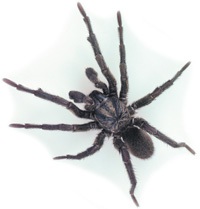 Isbister and Gray say all such bites should be managed in the same way — with observation in hospital for 4 hours to exclude severe envenoming, unless the spider has been positively identified; two of the 16 funnel-web bites in this series led to severe envenoming requiring antivenom.
Male Sydney brown trapdoor spider. Photo courtesy Mike Gray, Australian Museum.
Toxicon 2004; 43: 133-140
Needling headaches
Acupuncture leads to persisting, clinically relevant benefits in patients with chronic headache, in particular migraine, according to a randomised controlled trial in the UK.1 Compared with controls, the patients who received up to 12 acupuncture treatments over three months experienced 22 fewer days of headache per year, used less medication, made fewer visits to GPs and took fewer sick days.
An accompanying cost-effectiveness analysis of the trial2 found that, although acupuncture increased the overall health care costs, gains in health-related quality of life made acupuncture for chronic headache relatively cost-effective.
1. BMJ 2004; 328: 744-747 2. BMJ 2004; 328: 747-749
It’s all in the timing
The Carotid Endarterectomy Trialists Collaboration want the rule book re-written when it comes to the timing of surgery for carotid endoterectomy. They pooled data from 5893 patients in the European Carotid Surgery Trial and North American Symptomatic Carotid Endarterectomy Trial, with 33 000 patient-years of follow-up, and found that, for greatest benefit in appropriate patients, this procedure should be done within 2 weeks of the last symptoms.
Lancet 2004; 363: 915-924
— Dr Ann Gregory