




Volume 179 - Issue 2
The complexities of ADHD
Author: John H T Ellard
Med J Aust 2003
Published online: 12 May 2003
Published online: 12 May 2003
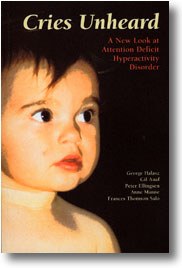
Cries unheard. A new look at attention deficit hyperactivity disorder.
George Halasz, Gil Anaf, Peter Ellingsen, Anne Manne, Frances T Salo. Alton, VIC: Common Ground, 2002 (x+91pp). ISBN 1 86335 497 2.
This book argues that there are many pressures in modern society urging us to find a quick fix, ranging from the activities of the pharmaceutical companies, to the DSM-IV-driven push to confine human distress within categorical boundaries. This is true, however one must examine the total situation, and this is where the authors bias shows.
Being psychodynamically oriented, they see it as likely that wisdom is to be found in that direction. So it may be, but it is not many years since their antecedents proclaimed that schizophrenia was due to the activities of schizophrenic mothers, autism to cold-hearted parents, and the psychosomatic disorders to psychodynamic mechanisms. For example, Alexander regarded ulcerative colitis as a regression to the anal stage of psychosexual development, while Szasz and Cushing emphasised the orality of the disease. There were descriptions of the typical conflict situation associated with peptic ulcer and asthma. No theoretical position has a mortgage on wisdom.
There are some facts about ADHD which will not go away. They emerge most clearly when one deals with adults who are able to give a good account of themselves. It has a firm correlation with dyslexia and anomalies of motor dominance, such as being left-handed and right-footed. Recent work suggests that chromosome 6p may be involved. There are well-established neuroimaging anomalies and there is the paradox that the hyperactivity calms with stimulants instead of being exacerbated.
By all means let us look carefully, but let us look in all possible directions.
John H T EllardPsychiatrist Balmoral Beach, NSW
Co-Designed Best Practice Principles for the Care of Fathers and Non-Birthing Parents Exposed to Perinatal Trauma: A Participatory Action Research Study
Alka Kothari, Dale Trevor, Glen Quinn, Jane Geltch, Joel Dulhunty, Helen Skouteris, Leonie K. Callaway
Reorienting Allied Health Into Community-Based Care for People Experiencing Trauma and Social Disadvantage
Simon Rosenbaum, Grace McKeon, Gulsah Kurt, Oscar Lederman, Kemi Wright, Sabuj Kanti Mistry, Jackie E. Curtis, Philip B. Ward, Zachary Steel, Hamish Fibbins, Rachel Morell, Melissa C. Eaton, Andrew Watkins, Ben Harris-Roxas, Brendan Goodger, Eleanor Beck, Megan Teychenne, Joseph Firth, Davy Vancampfort, David Burns, Russell Roberts, Tristan Favaloro, Danielle Weber, Rosanna Barbero, Vasili Maroulis, Melissa Holmes, Stefan Mackenzie, Chiara Mastrogiovanni, Afsana Anwar, Uzma Choudhry, Catherine Sherrington, Jane Currie, Thomas Gadsden, Scott Teasdale
Stigmatising Attitudes Towards People With Depression, Bipolar Disorder, Borderline Personality, ADHD and Early and Long-Term/Untreated Schizophrenia: Representative Survey of Australian Adults
Amy J. Morgan, Anna M. Ross, Gayle McNaught, Rachel Green, Nicola J. Reavley
Psychosocial Hazards for Healthcare Workers: Supporting the Second Victim Also Helps the Primary Victims
Sarah Michael
Supporting Population Mental Health in the Wake of Mass Tragedies
Susan J. Rees, Derrick M. Silove