




Volume 178 - Issue 6
eMJA: In other journals - 17 March 2003
Med J Aust 2003; 178 (6): 297. || doi: 10.5694/j.1326-5377.2003.tb05200.x
Published online: 17 March 2003
Published online: 17 March 2003
Under pressure
The Second Australian National Blood Pressure study has reported that initiating antihypertensive treatment with an ACE inhibitor in older patients, especially men, may lead to better health outcomes than initial treatment with diuretic agents, despite achieving similar reductions in blood pressure.1
The study involved 6083 subjects aged 65–84 years of age being cared for at 1594 family practices. After a median 4.1 years of follow up, male subjects, in particular, were less likely to have died or experienced a cardiovascular event if they had been randomised to start treatment with an ACE inhibitor rather than a diuretic.
A linked editorial2 addressed the clinical conundrum raised by studies that report contradictory results such as this one and the major ALLHAT trial. Such trials only describe population averages to assist in the development of guidelines. They cannot replace the doctor’s need to independently assess the best agent for each individual patient, based on his or her unique combination of problems and clinical responses.
1. N Engl J Med 2003; 348: 583-592
2. N Engl J Med 2003; 348: 639-641
Exploring aspirin resistance
UK research has lent support to the hypothesis that ibuprofen may interfere with the cardioprotective effects of aspirin in patients with established cardiovascular disease.
MacDonald and Wei studied 7107 patients who had been discharged on low-dose aspirin after a first admission for cardiovascular disease. All had survived for at least one month and were followed up for a median of 3.3 years. Compared with the 6285 patients who used aspirin alone, the 187 patients taking aspirin plus ibuprofen had an increased risk of both all-cause and cardiovascular mortality (adjusted hazard ratios of 1.93 and 1.73, respectively). The researchers found no such increased risk in users of aspirin plus other NSAIDs.
Lancet 2003; 361: 573-574
Predicting death by lung clot
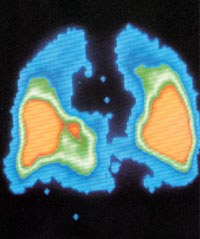
A cardiac troponin T level may be a useful predictor of the severity of pulmonary embolism and the likelihood of death, according to results from a small cohort study published by Austrian authors.
They reported that troponin levels were assayed within 12 hours of admission in 106 patients with pulmonary embolism confirmed by computed tomography or scintigraphy. The troponin levels increased with increasing severity of pulmonary embolism; the median level in patients with ECG signs of right ventricular strain was 0.03 ng/mL, compared with < 0.01 ng/mL in patients without ventricular strain.
Further, troponin levels were higher in the five patients who died than in survivors (0.18 ng/mL v 0.01 ng/mL). A cut-off value for troponin of 0.09 ng/mL was considered a suitable predictor for death in hospital. The authors say these results need to be confirmed in larger, prospective studies.
BMJ 2003; 326: 312-313
When the abused abuse
The risk of victims of childhood sexual abuse becoming abusers themselves is lower than previously thought, according to a UK study of 224 male former victims. The victims had a mean age of 11 years when initially referred to a specialist sexual abuse clinic between 1980 and 1992, and had reached a median age of 22.3 years when the study was conducted.
Only 26 (12%) had subsequently been reported to have committed sexual offences. Childhood risk factors found to be associated with later offending included material neglect, lack of supervision and abuse by a female person. Further, victim-abusers were more likely to have been exposed to intrafamilial violence.
Findings did not support the belief that those who had been more severely abused or who had learning difficulties are more likely to become abusers.
Lancet 2003; 361: 471-476
Hush little baby
Not only can we identify which babies are more likely to fail to sleep through the night — a simple behavioural program can help to prevent this problem, say London researchers.
In a community sample of newborn infants, they found that the infants at-risk were those who at one week of age had more than 11 feeds in 24 hours (about 25% of the sample). These infants were 2.7 times more likely than others to fail to sleep through the night at 12 weeks of age.
A three-step behavioural program — maximising the difference between day- and night-time environments, settling a sleepy baby without feeding or cuddling, and delaying feeding when baby wakes at night — increased the likelihood that at-risk babies would sleep through the night at 12 weeks of age. The results were similar in breast- and bottle-fed infants.
Arch Dis Child 2003; 88: 108-111