




Volume 177 - Issue 11
Mission in Afghanistan
Author: Robert A Simpson
Med J Aust 2002; 177 (11): 633-637. || doi: 10.5694/j.1326-5377.2002.tb04992.x
Published online: 9 December 2002
Published online: 9 December 2002
The first, and only, time I questioned my decision to spend seven months working with Médecins Sans Frontières (MSF) in Afghanistan was when I crossed the tarmac of Hobart Airport to board my flight there on 17 February, 1999.
My decision to go had been driven partly by a growing frustration with the increasing bureaucratic constraints of general practice and partly by a desire to re-explore the challenges of Third World medicine.
My first encounter, many years ago, had been in Bangladesh, where cases seemed to walk straight out of the pages of Bailey and Love's venerable Short practice of surgery. Now, I was headed for a very different country, which, as we all know, has been subject to 20 years of continuous and continuing warfare. About a million Afghans have been killed during this time and at least 700 000 people displaced within the country itself, as well as two to three million refugees to neighbouring Pakistan and elsewhere.
Key health indicators place Afghanistan among the most unfortunate countries in the world (Box 1). Life expectancy — at just 45 years of age — and childhood and maternal mortality figures are nearly the worst in the world.
The mission where I was to be stationed for the next seven months — in the village of Baharak in the very impoverished northeastern province of Badahkshan (Box 2) — had just reopened; it had been shut down in 1990 after the murder of a French MSF logistician.
As I boarded my flight and the plane took to the air, I dismissed any misgivings about my decision and pondered what lay ahead.
Based in Baharak
All MSF personnel are given detailed clinical, cultural and security briefings before deployment. These were to prove invaluable.
Baharak is in one of the least developed areas of Afghanistan. The village and its environs are devoid of infrastructure — there is neither power nor reticulated water, no communications systems or drivable roads; all this lack is compounded by the further lack of any local governmental administrative structure and the fact that the area is prone to frequent local conflict.
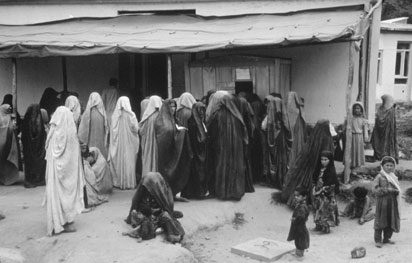
Our clinic consisted of a simple wood-and-mud-rendered structure divided into two parts (male and female, Box 3). Given its location, in addition to no power or running water it also operated without any pathology or x-ray service to speak of. So, clinical management was pragmatic — basic, old-fashioned case definition; and treatment in accordance with MSF/World Health Organization (WHO) protocols, facilitated by modern generic drugs and IV fluids held in our pharmacy (Box 4).
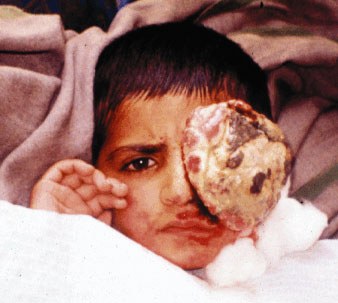
The problems we dealt with were varied — each day would provide about 300 patients: one or two trauma cases and obstetric emergencies on a background of ever-present infectious disease and malnutrition. On occasion, we would be further challenged with rarer but equally life-threatening presentations of a more exotic nature, such as anthrax, haemorrhagic fever and retinoblastoma (Box 5).
Types of trauma
Guns and mines
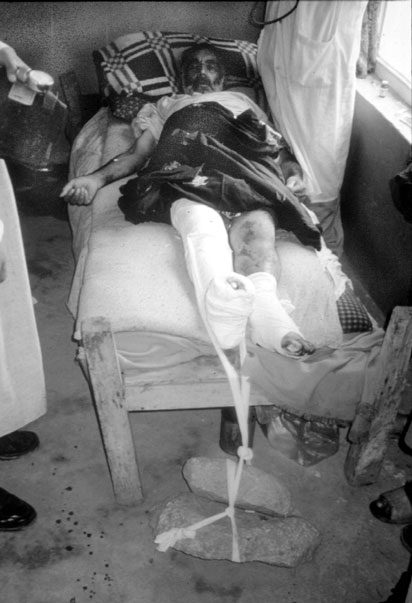
Gunshot wounds, the result of frequent, ongoing clashes between rival Northern Alliance commanders, and mine injuries, a legacy of the past Soviet occupation (1979–1989), were a daily occurrence (Box 6).
Afghanistan is the most heavily mined country in the world, with an estimated 10 million mines sown. As the front lines have shifted over time, so has control of the minefields, and complete confusion now reigns about the size, content and disposition of these fields, which kill or wound seven to 10 people in Afghanistan every day.
Baharak was a Soviet garrison during the occupation, and had been particularly heavily mined in an effort to deter mujahidin attacks. Now, these mines accounted for many injuries and deaths we saw, particularly among children attending their animals in the surrounding fields.
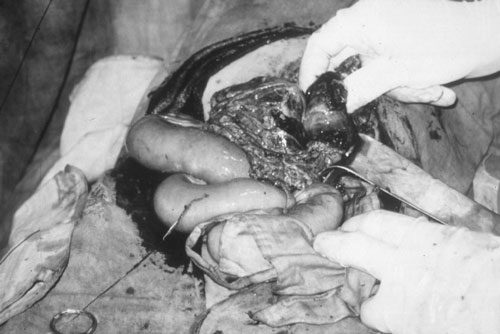
We generally provided first aid, with wound surgery conducted in the provincial city, Faizabad, three hours away by road. However, when the road to Faizabad was cut for security reasons, we needed to conduct surgery as best as we could manage at Baharak. With no formal surgical training, no x-ray machine, no blood, and only ketamine for anaesthesia, management was restricted to debridement or amputation and was very much a case of "flying by the seat of one's pants".
Stonings
I had known to expect injuries from land mines, but on only my second day in the clinic I also met with the unexpected. A man was brought to the clinic in extremis. He had been subjected to public stoning for adultery. His condition was incompatible with survival and a solemn reminder of the country's profound cultural standards. There were two other stonings (also for adultery and also fatal) during my time in Baharak.
Women and mothers
Cultural factors, poor maternal nutrition and a lack of trained midwives in Afghanistan contribute to the country's high maternal mortality rate. It is the world's second worst, after Sierra Leone.
A mother with anaemia and sepsis related to a five-day-old retained placenta typified the sorts of presentations to be dealt with on a daily basis. We were fortunate to have an English midwife with 20 years' experience in the Third World working with us.
Cultural constraints did not allow me to examine female patients; at all times, they were required to be fully covered in their shalwar kameez. As necessary, the midwife would conduct the patient examination, relaying her findings to me from behind a screen.
Infectious diseases
The common
The leading cause of child mortality was diarrhoeal illness and dysentery, which related to the absence of safe water and poor sanitation. In summer, the incidence of both dysentery and typhoid escalated dramatically; sporadic cases of cholera were also seen (Box 7A). The simple use of oral rehydration salts was lifesaving for many. Malaria accounted for about 35% of all the summer admissions.
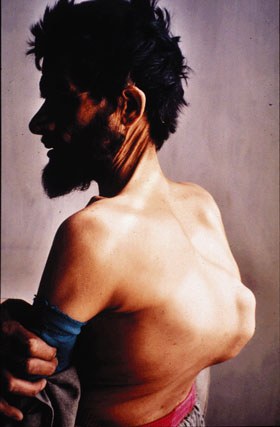
On our arrival, the tuberculosis program was almost non-existent. Poor compliance and the inappropriate use of drugs of poor quality, that had made their way from Pakistan to the local bazaar, also contributed to the problem. The disproportionate number of extrapulmonary cases confirmed our fears that the more infective active pulmonary cases were either not presenting or being missed (Box 7B).
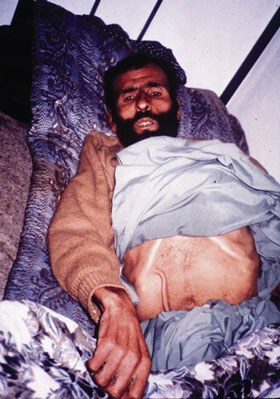
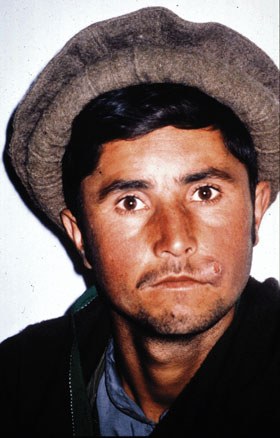
Leishmaniasis is endemic in Afghanistan, but invariably in the cutaneous, self-limiting "oriental sore" form (Box 7C). A few cases of the more serious visceral leishmaniasis, kala-azar, had been documented in the past, and we saw many patients with remittent fever and grossly enlarged spleens who often did not fit the patterns of chronic malaria, brucellosis or myeloproliferative disorders. More than likely, several of these patients were dying of treatable visceral leishmaniasis. The absence of any antimonials usually used to treat kala-azar related to the lack of information on the prevalence of this condition; the absence of any firm epidemiological work on this and other infectious diseases significantly hampers the development of an effective health strategy in Afghanistan.
The rare
On occasions, I was confronted by rare but life-threatening conditions.
Anthrax, a significant part of the germ warfare repertoire, is endemic in Afghanistan, and usually seen as the relatively benign cutaneous form. The systemic form is anything but benign. One unfortunate patient, who had handled a dead sheep a few days earlier, presented to our mission with the typical black eschar and oedematous swelling over one eye. He developed frighteningly progressive respiratory distress and died some hours later, despite aggressive doses of intravenous antibiotics. For me, pneumonic anthrax is now a case of "once seen, never forgotten".
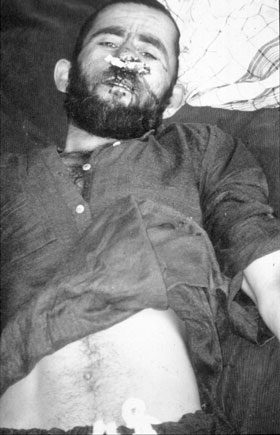
Then, one afternoon, I was asked to review a patient with uncontrollable epistaxis. The two health workers who were attempting to stem the bleeding were heavily contaminated with blood. Of greater concern to me was the fever, haematuria and petechial rash over the patient's body, including his soft palate.
An infectious diseases colleague had warned me of the existence of Congo-Crimean haemorrhagic fever (CCHF) in Badahkshan and the serious risk of nosocomial transmission. Everyone was disinfected and the patient barrier-nursed as best we could manage. As always, treatment was fairly pragmatic. If the patient did have CCHF, there was little we could offer.
The only treatable cause of such a presentation I could think of was a coagulopathy due to fulminating malaria and typhoid, so the patient was commenced on quinine and chloramphenicol. He survived, but developed paraplegia, presumably from a secondary spinal bleed.
On completion of my mission in Afghanistan, I took a sample of the patient's serum back to Geneva (despite some misgivings about the ethical and legal implications of carrying such potentially biosensitive material about the world); immunofluorescence confirmed the presence of IgG antibodies to CCHF.
Safe and secure?
Security is an important concern for any MSF deployment. Strict SOPs (standard operating procedures) were adhered to, with regular HF (high frequency) radio skids to our head of mission in Tajikistan, the neighbouring country to the north. They had a rear link to Geneva by satellite phone. More often than not, deteriorations in the regional security situation were relayed by these means rather than by locals.
Taliban offensive
During the July offensive, Taliban forces advanced rapidly on two axes nearby, one towards Faizabad and the other along the Panjshir Valley. At the same time, reports were received of a large group of Taliban gathering at Shah Salim Pass, on the border with Pakistan to the south. All United Nations flights to Faizabad were cancelled, so any rearward evacuation of our missions to Tajikistan was potentially threatened.
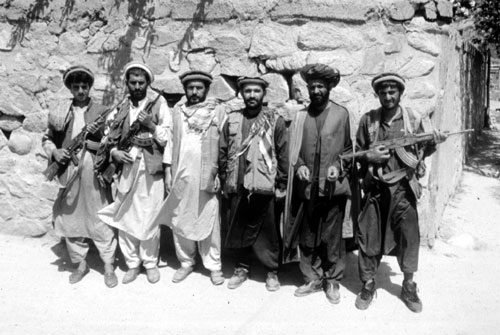
In our MSF vests, my Swiss physician friend, Philippe, and I felt secure. We both thought we were about to witness a defining moment in Afghan history, but a brilliantly executed counterattack by the Northern Alliance commander Ahmed Shah Massoud thwarted the Taliban advance (Box 8).
Northern Alliance
We shared a meal with commander Najmaddin Khan, at that time the second most important commander in the Northern Alliance after Massoud. I remember that he had a nervous tic and that the meal was interrupted frequently by calls on his satellite phone to other alliance commanders.
On one occasion Massoud arrived by helicopter to visit Najmaddin; two hours later a Taliban MiG fighter plane bombed Baharak. Taliban intelligence was excellent; fortunately, their aim was not so good.
Najmaddin was ambushed and killed in Baharak a month after I left Afghanistan. Massoud was assassinated by suicide bombers (posing as journalists) on 9 September last year — two days before the terrorist attacks in the US.
Away from Baharak
Wakhan Corridor
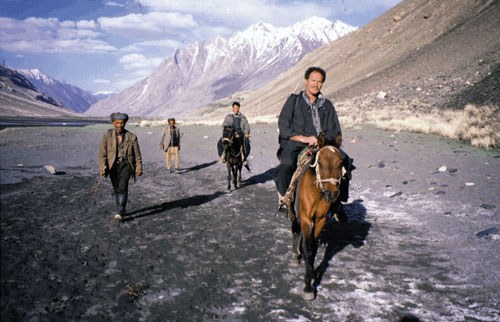
One of the highlights of my time in Afghanistan was an exploratory mission into Wakhan, the poorest and most remote district of the country, located in the far northeast bordering Tajikistan (to the north), China (to the east) and Pakistan (to the south). If, in shape, the map of Afghanistan is thought of as resembling an irregular leaf hanging from a stem, then the stem would be the Wakhan Corridor.
The district has an average altitude of 3000 metres and is subject to harsh climatic conditions. It is also devoid of any infrastructure, and the medical facility at Ishkashem is up to 10 days' travel by donkey from the more remote areas of the district.
The first stop of our trip was to pay respects to the local Shah, who seemed a very reasonable man with the best interests of his people at heart. From there we travelled with his opium-addicted uncle, who facilitated our entrez to the villages (Box 9).
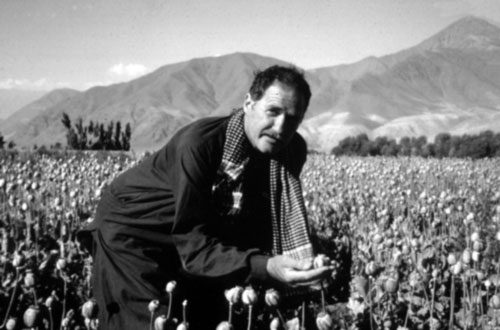
Afghanistan is currently the world's leading supplier of illicit opium, providing a significant source of revenue for arms for military commanders, or, as one farmer put it, "the West sends us weapons, we send the West our white powder with respect" (Box 10).
It soon became apparent that opium addiction was common in Wakhan, primarily as a substitute for non-existent health care. Its analgesic, antitussive and constipating effects provided a panacea for many of the area's endemic diseases.
Lathyrism
Our predeployment briefing had mentioned a suspected case of lathyrism near the village of Khandud.
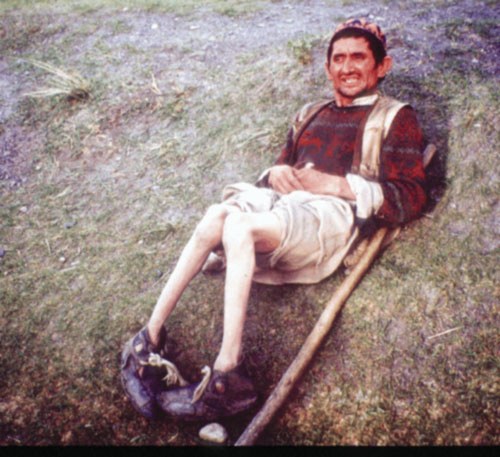
Lathyrism is a neurological disorder, known since the time of Hippocrates. It is associated with the consumption of Lathyrus sativus — known locally as patak (and also known as chickling pea, grass pea and kesan dahl). Although very nutritious and cheap, this legume contains a potent neurotoxin, which eventually causes irreversible spastic paralysis, hyperaesthesia and paraesthesiae (Box 11).
As we conducted primary health checks in various villages, we found that many locals complained of muscle stiffness, with examination revealing very obvious lower-limb clonus, consistent with lathyrism. Obviously, the condition was endemic. Most of the locals knew of the association between patak and lathyrism but continued to eat it out of economic necessity.
Outbreak
As we progressed further into Wakhan, we had to abandon the vehicle and travel by horse. Many villages hadn't seen a foreigner for more than 20 years, including the village of Daghullaman. There, we investigated a report of an outbreak responsible for many deaths.
At one stage, barely enough of the 300 villagers were strong enough to secure adequate water for the others. Active cases had a virulent flu-like illness, many with complicating pneumonia. We treated them empirically with the last of our dwindling supplies of ciprofloxacin, forearmed with the knowledge of a large but similar outbreak that had occurred a few months earlier along the Tajik border, and which WHO tests had implicated as klebsiella infection.
Health survey
We conducted a mid upper arm circumference survey, studying 365 children between 6 months and 5 years of age, confirming that about half of them were nutritionally at risk.
Immunisation was non-existent, and measles accounted for a disproportionate number of deaths in childhood — 12 children in one house alone. A measles vaccination program was subsequently implemented in Wakhan by MSF.
A spot of sports
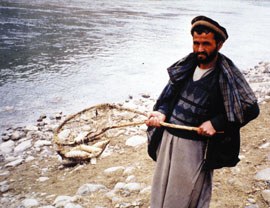
On the return journey from Wakhan, we made the most of an opportunity to take part in some fishing and hunting activities. The fishing was very productive and we followed the usual Afghan tradition of using rapidly expanding bait (Box 12). An ibex hunt was also conducted along traditional Afghan lines — using Kalashnikovs. The meat provided a welcome change from Wakhan bread and yoghurt.
Faizabad
The final phase of my time in Afghanistan was spent assisting with the newly established mission in Faizabad (Box 13), aimed at developing the inpatient capability of Faizabad Hospital.
This hospital was the only formal surgical facility in a district of 700 000 people, with a grand total of one operating theatre and two trained Afghan surgeons. The challenge of working there was made all the greater by the lack of blood cross-matching reagents, and the amazing situation whereby the more experienced of the two surgeons was only permitted to operate on the most difficult cases. Between times, he was kept in jail for the murder of his brother!
What now?
What does the future hold for Afghanistan, for MSF and for me?
Afghanistan's long and continuous history of conflict is a tribal phenomenon fed by foreign interference, from the time of Soviet occupation to the current flow of arms from neighbouring countries to often rival military commanders throughout the land. I think that, in the current political and diplomatic milieu, the likelihood of a peaceful and united Afghanistan unfortunately seems unlikely. Further, a drought is now in its fourth year and about half of the country remains inaccessible to aid organisations.
MSF, from its noble but humble beginnings in 1971, has grown to become the world's largest non-government medical organisation. Its stance of absolute neutrality enables it to meet its charter of providing independent humanitarian medical aid to populations in crisis and, in addition, advocacy; MSF was awarded the 1999 Nobel Prize for Peace.
MSF continues to work in Afghanistan, although operations have been classified as a result of the antiterrorist measures taken after September 11, 2001.
For me, the common threads of experiencing the Third World as a doctor have been not only the fascination of the medicine, but also the marvellous humility and dignity of the patients and the privilege of working alongside some very special people.
1: Afghanistan: key health indicators1,2
Population: 20.9 million
Mortality (under 5 years): 26%
Maternal mortality: 1.7%
Life expectancy: 45 years
Access to safe water (rural): 5%
Access to adequate sanitation (rural): 1%
Malnutrition (under 5 years): 35%
Malaria: 3 million cases annually
References
- UNICEF. The state of the world's children 1998. Statistical Tables. Available at: www.unicef.org/sowc98/ (accessed Oct 2002).
- WHO. Afghanistan crisis. Health update. 6 December 2001. Available at: www.who.int/disasters/repo/7462.doc (accessed Oct 2002).
Dousing the burning inequity of global warming for people experiencing homelessness
Timothy English, Alejandro Vásquez Hernández, Glenn Miller, Nuala Fogarty, Charles Cosgrove, Paul Rosenthal, Matthew Larkin, Jon Swain, Danielle Austin, Jo River
The contribution of evidence‐based practice and the practice‐based evidence approaches to contemporary Australian psychology: implications for culturally safe practice
Paul Gray (Wiradjuri), Dawn Darlaston‐Jones, Pat Dudgeon AM (Bardi), Kate Derry, Joanna Alexi, William Smith (Wiradjuri and Wemba Wemba), Tanja Hirvonen (Jaru and Bunuba), David Badcock, Shraddha Kashyap, Belle Selkirk (Noongar)
Explaining risk in chronic conditions: the Yolŋu science of signs
Emma Haynes, Alison Mitchell, Minitja Marawili (Yolŋu), Dawn C Bessarab (Bardi)
Is it time to retire the label “CALD” in public health research and practice?
Sabine Allida, Della Maneze
What do Aboriginal people in the Northern Territory value during the operation journey? A qualitative study
Edith B Waugh, Marita Hefler, Sophie Pascoe, Mark Mayo, Matthew JL Hare, David A Story, Neil Wilkshire, Peter Henwood, David Croker, Jampijinpa Ross
Fulfilling First Nations health, cultural safety and equity accreditation standards in primary medical education: reflections from a First Nations desktop review team
Paul Saunders, Nicole Mercer, Maria Mackay, Ian Lee, Madelyne Hudson‐Buhagiar, Miriam Cavanagh, Emma Milliss, Melody Muscat, Kathleen Martin, Adam Shipp, Melissa Johnson, Belinda Gibb