




Volume 208 - Issue 9
Neuroscience from a functional perspective
Author: David Mor
Med J Aust 2018; 208 (9): 387. || doi: 10.5694/mja18.00139
Published online: 21 May 2018
Published online: 21 May 2018
Medical neurobiology, 2nd edition
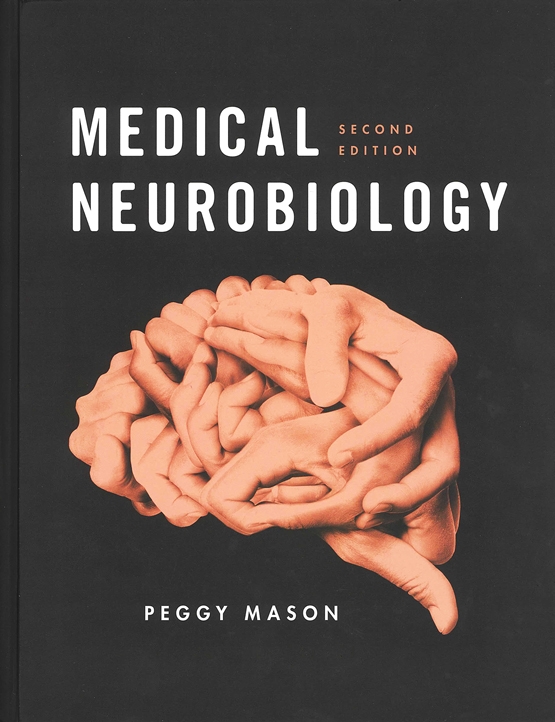
Medical neurobiology, 2nd edition. Mason P. Oxford University Press (£68.00; 504 pp). ISBN 9780190237493
Medical neurobiology by Peggy Mason, who is Professor of Neurobiology at the University of Chicago in the United States, aims to teach medical students neuroscience from a functional perspective. The book reverses the traditional textbook order, in which neuroanatomy is learned first, with the functional circuits superimposed afterwards. Instead, Medical neurobiology starts each topic with a compressed description of the functions that specific regions or systems serve, and only then supplies the anatomical details that are relevant to achieve these functions. By doing so, the author reduces the level of anatomical details to the ones required for understanding how functions are achieved, resulting in a more manageable volume of information for students to process.
This approach is successful in several topics that students typically find difficult, such as the internal structures of the brainstem and the cranial nerves. The connections between lesions in different locations within the spinal cord and their clinical manifestations are explained systematically, with direct links between structures and functions. Large sections on the sensory and motor systems begin by outlining principles common to all components within that system, with clear explanations of the connection between the anatomical hierarchy and the hierarchy of functions produced by the different segments in the system. By first establishing students’ understanding of where each segment fits within the larger system and the principles directing how the systems function, Mason makes it easier for them to learn the details of each component of the system in the following chapters.
The book focuses on lower order regions of the nervous systems and includes less information on higher order functions, such as cognition and the emotions. One limitation of the book is the lack of a comprehensive explanation of the autonomic nervous system, which is a major neural component influencing the functions and medical conditions of many systems in the body.
Medical neurobiology would be useful for early stage medical students as they are developing their understanding of how the body’s systems work together. The focus on neural control of voluntary and postural movements means the book could also be useful for students in other courses focusing on movement disorders, such as physiotherapy or occupational therapy.
Competing interests
No relevant disclosures.
Driving Implementation-Focused Change for Gender Equity in Medical Leadership: A Consensus-Based Priority-Setting Approach
Belinda Garth, Jenny Proimos, Thuy Vy Nguyen, Sally Cross, Sarah Whitelaw, Helena J. Teede
Advancing Gender Equality in Australian Healthcare Leadership: Why National Targets Matter and What It Means for Healthcare Employers
Belinda Garth, Nicole Pope, Jenny Proimos, Helena J. Teede
Centring Aboriginal and Torres Strait Islander Voices: A Framework for Culturally Safe and Racism-Free Healthcare
Elissa Elvidge, Roianne West, Karen Nicholls, Kiara Harvey, Yeena Thompson, Geraint B. Rogers, Yin Paradies
Medical Colleges Have an Obligation to Ensure Full Participation in Clinical Quality Registries
Robert J. Aitken, Julian A. Smith, Guy J. Maddern