




Volume 205 - Issue 9
Management of adverse events related to new cancer immunotherapy (immune checkpoint inhibitors)
Authors: Jack M Bourke, Michael O'Sullivan and Muhammad A Khattak
Med J Aust 2016; 205 (9): 418-424. || doi: 10.5694/mja16.00586
Published online: 7 November 2016
Published online: 7 November 2016
New immunotherapies are helping in the fight against advanced cancers but also present new adverse event management challenges
Summary
- New immunotherapies have significantly improved survival in certain advanced cancers in recent years, particularly metastatic melanoma and lung cancer. The most effective of these therapies are the immune checkpoint inhibitors (ICIs) such as ipilimumab, nivolumab and pembrolizumab. The use of ICIs will continue to increase in the coming years as evidence of their benefit in a range of other cancers builds.
- ICIs are associated with novel immune-related adverse events (irAEs), which can involve a wide range of organs. The most common irAEs involve the skin (rash, pruritus), gastrointestinal tract (diarrhoea, colitis) and endocrine system (thyroid, pituitary).
- While severity is generally mild, life-threatening complications can occur if not recognised and treated promptly. Due to the diverse manifestations of irAEs, patients may present to doctors who are not familiar with these drugs, which creates the potential for delays in management.
- Management of irAEs depends on severity and the organ affected. Systemic steroids are often required and ICI therapy may be withheld or discontinued. Additional immunosuppressive medications may be necessary in steroid-refractory cases.
- This review provides an overview of the potential toxicities and their management for general clinicians. Broader awareness of these issues among medical professionals will hopefully reduce unnecessary delays in diagnosis and treatment.
- Patient and carer education regarding irAEs is extremely important; patients and carers should be advised to seek urgent medical attention if required.
Important therapeutic advances have been made in the field of cancer immunotherapy in recent years. In particular, immune checkpoint inhibitors (ICIs) have revolutionised the treatment landscape of advanced cancer over the past 5 years, with 15–20% of patients achieving long term disease control beyond 5 years.1 ICIs are monoclonal antibodies which block cell surface molecules involved in the regulation of T cell activation, including cytotoxic T lymphocyte antigen 4 (CTLA-4), programmed cell death protein 1 (PD-1) and its ligand (PD-L1). In normal homoeostasis, these inhibitory molecules are involved in preventing excessive inflammation and autoimmunity.2 However, in the tumour microenvironment, these molecules are overexpressed and promote immune tolerance rather than tumour destruction.3 Blockade of these molecules can restore the appropriate anti-tumour response and potentially improve patient survival (Box 1). Other inhibitory and activating molecules are also involved in balancing T cell regulation, some of which are undergoing further research as therapeutic targets.2-4
ICIs with Pharmaceutical Benefits Scheme funding for use in Australia currently include ipilimumab (an anti-CTLA-4 antibody), nivolumab and pembrolizumab (anti-PD-1 antibodies) for advanced malignant melanoma. Besides these, a number of other ICIs are undergoing evaluation in clinical trials across Australia and globally. These include durvalumab, atezolizumab and avelumab (anti-PD-L1 antibodies) and tremelimumab (an anti-CTLA-4 antibody). ICIs have been most utilised in the management of advanced melanoma, non-small cell lung cancer and metastatic renal cell carcinoma. However, they have shown some benefit in a range of other malignancies including Hodgkin lymphoma, gastric cancer and prostate cancer.5 Therefore, the number of patients receiving ICIs is likely to increase in the coming years.
Immune-related adverse events (irAEs) are a direct consequence of impaired self-tolerance from loss of T cell inhibition and altered immune regulation. They encompass a distinctive range of autoimmune toxicities, which differ significantly from the side effects of cytotoxic chemotherapy. Any organ can potentially be involved, with dermatologic, gastrointestinal, hepatic or endocrine toxicity occurring most frequently.5,6 The incidence of the most common irAEs is presented in Box 2.7-14
While prescription of ICIs may be limited to oncology specialists, knowledge of ICIs and their toxicities is relevant to a wide range of health care professionals who may encounter patients experiencing such complications.
This article describes the most common and clinically important irAEs that occur with ICIs and summarises the available evidence on management.
Literature search
A PubMed search was performed for articles published until 30 April 2016 using key terms “immune checkpoint inhibitor”, “CTLA-4”, “PD-1”, “PD-L1”, “ipilimumab”, “pembrolizumab” and “nivolumab”, and “immune-related adverse event”, “toxicity” and “side effects”. Product information for ipilimumab, pembrolizumab and nivolumab was accessed online through the manufacturers’ websites.
General management of irAEs
Most irAEs are generally manageable if identified and treated promptly. However, some patients can experience life-threatening toxicity leading to morbidity and mortality. The importance of patient education in the management of irAEs cannot be overemphasised. Detailed education and written information should be provided to all patients along with a medical alert card highlighting the name of the drug and who to contact in case of emergency. Patients should be advised to promptly report any potential toxicity as delay in the initiation of treatment of irAEs can lead to serious consequences. Patients should be managed at, or in close consultation with, centres familiar with the use of ICIs and treatment of irAEs with clearly defined management algorithms, especially to support junior medical staff who might not be familiar with these drugs. Specialist oncology nurses should be involved in patient education and maintain regular contact to monitor for side effects. Safety checklists should also be followed during routine medical oncology clinic reviews, bearing in mind the toxicity profile of these agents.
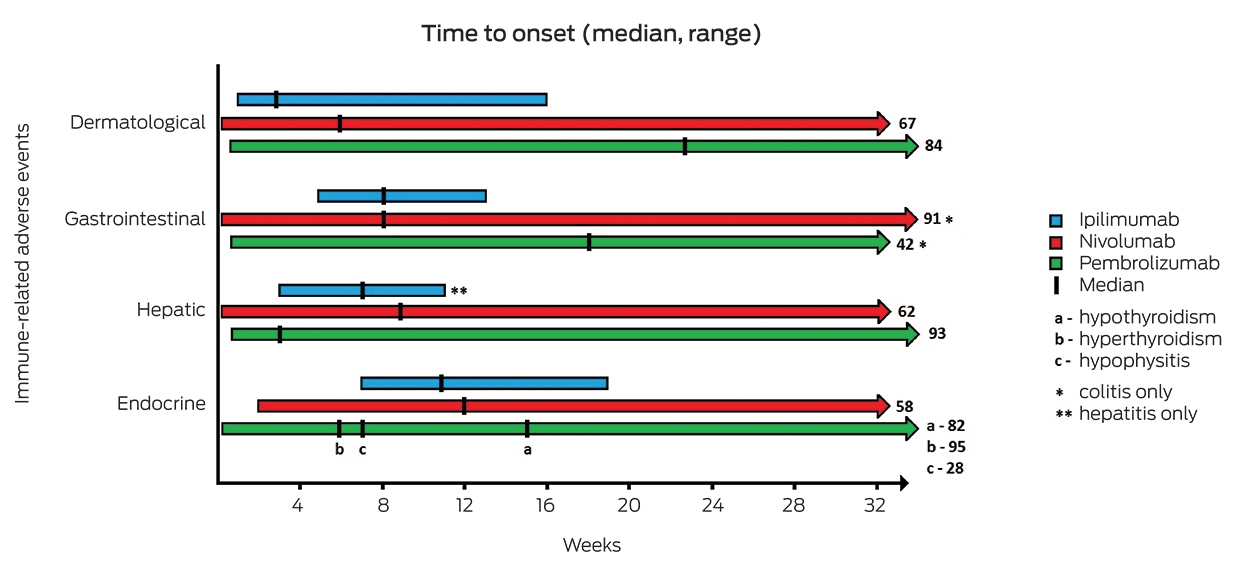
The time to onset of irAEs varies depending on the ICI and the organ affected (Box 3). With ipilimumab, most irAEs occur during the initial induction phase, although toxicity can develop even after treatment has been completed.5 Dermatological irAEs typically emerge first, followed by gastrointestinal, hepatic and then endocrine side effects.6,15,16 The median time to onset tends to be later with anti-PD-1 agents, and the range of time over which irAEs occur is much longer than for ipilimumab.17,18
Algorithms to guide management of common irAEs related to ipilimumab were developed by the manufacturer. These algorithms can be accessed online.19 They have been widely adopted and similar algorithms have been applied to other ICIs;17,20 however, no prospective trials have been performed to determine optimal management regimens. Some institutions, including the Fiona Stanley Hospital in Perth (Immune-related adverse events associated with use of ICIs: clinical guideline, unpublished internal document), have developed their own multidisciplinary guidelines to ensure a standardised approach to treatment of irAEs.21
Treatment depends on irAE type and severity, with the grading system outlined in Common Terminology Criteria for Adverse Events version 4.022 used to accurately and objectively gauge severity (Box 4).
Oral or intravenous (IV) corticosteroids are frequently used in the management of irAEs, depending upon the grade of toxicity. Most of the irAEs can be managed with early detection and prompt initiation of high dose steroids. Steroid tapering should be gradual over 2–4 weeks once patient symptoms are improving. Before resuming ICIs, irAE severity should return to grade 1 or have resolved entirely. Other immunosuppressive or immunomodulatory therapies may be indicated for severe or steroid-refractory cases. Prophylactic antibiotics to prevent opportunistic infections should be considered during immunosuppression, including prolonged systemic steroid therapy.5,21
ICIs are usually withheld while irAEs are treated, and permanently discontinued in severe cases. For mild or moderate irAEs, the decision to reintroduce ICIs requires careful consideration of the risks and benefits. The ongoing need for additional immunosuppression has been considered a contraindication to reintroducing ICIs.15,17,21 However, the actual risk of developing recurrence of irAEs in this situation is not known. It may be reasonable to consider further cautious use of ICIs if irAEs are controlled with low dose immunosuppression, depending on the balance of risks and benefits for individual patients.
Dermatological toxicity
Skin irAEs generally develop within a few weeks of commencing treatment, although delayed onset of rash has also been reported.23 Pruritus and rash are commonly reported with all ICIs (Box 2).24,25 The typical rash is maculopapular and mild, although severe cutaneous reactions such as Stevens–Johnson syndrome or toxic epidermal necrolysis, drug rash with eosinophilia and systemic symptoms, and pyoderma gangrenosum-like ulceration have been reported with ipilimumab.24,26 The management of rash is outlined in Box 5.
Vitiligo has been reported in patients treated for melanoma but not in other cancers.24,25 Vitiligo is considered to be potentially predictive of durable response to ICIs.27
Mild, localised pruritus usually responds to the combination of oral antihistamines and topical corticosteroids. Intense or widespread pruritus may require systemic corticosteroids (prednisolone 0.5–1 mg/kg/day). Mirtazapine or γ-aminobutyric acid agonists, such as gabapentin or pregabalin, have been suggested for intractable pruritus.24
Gastrointestinal toxicity
Diarrhoea occurs frequently with ICIs, with the highest incidence reported with combination therapy with ipilimumab and nivolumab (Box 2).8 Diarrhoea may occur with colitis, with signs and symptoms including blood or mucous in the stool and abdominal pain.5 Cases of small bowel perforation, ischaemic gastritis and pancreatitis have also been reported.26
Stool microscopy and culture should be performed to exclude infectious causes of diarrhoea.28 Computed tomography (CT) scans can detect features of colitis,29 and lower gastrointestinal endoscopy with colonic biopsy may help confirm or exclude colitis.30 Severe colitis is uncommon but can be complicated by large-bowel obstruction or perforation. Therefore, urgent and thorough assessment of diarrhoea is required for patients receiving ICIs.
Suggested management of diarrhoea and colitis is described in Box 5. Infliximab (5 mg/kg IV) can be effective in steroid-refractory cases and additional doses may be given at 2 weeks and 6 weeks if symptoms persist or recur.28,30 Tacrolimus or mycophenolate mofetil have also been suggested for refractory disease.5,30 Surgical intervention might be required in selected cases.
Hepatotoxicity
Immune-mediated hepatitis causing abnormal liver function tests occurs quite frequently with ICIs, particularly with combination therapy (Box 2). Fulminant hepatitis causing liver failure is rare.30 Raised levels of alanine aminotransferase or aspartate aminotransferase, with or without raised bilirubin levels, may be detected in asymptomatic patients. Therefore, routine liver function testing should precede each ICI dose. Other causes of liver dysfunction should be considered, particularly viral hepatitis, hepatotoxic drugs, alcohol or liver metastases. The reported radiological features by magnetic resonance imaging, CT scan or ultrasonography are varied, but imaging can be helpful to exclude other pathology.31 Liver biopsy may also be necessary to exclude alternative diagnoses.30
Management of hepatitis is outlined in Box 5. Severe, steroid-refractory hepatitis may respond to additional immunosuppressive therapy (eg, mycophenolate mofetil 500–1000 mg twice daily).30 Successful use of anti-thymocyte globulin has been reported in at least two cases.32,33 Infliximab is not recommended owing to potential hepatotoxicity.6
Endocrinopathies
The most frequent endocrinopathies related to ICIs are thyroid dysfunction and hypophysitis (Box 2). Rare cases of primary adrenal insufficiency and type 1 diabetes mellitus have also been reported. In contrast to other irAEs, endocrinopathies are usually irreversible and require long term hormone replacement.
Transient, asymptomatic elevation of thyroid-stimulating hormone occurs in some patients and may progress to hypothyroidism. Hypothyroidism is more commonly associated with anti-PD-1 therapy compared with ipilimumab.7,9 Hyperthyroidism is less common and may be due to transient thyroiditis preceding hypothyroidism. Thyroid dysfunction management is summarised in Box 5.
While sporadic autoimmune hypophysitis is very rare, hypophysitis with hypopituitarism is an important endocrine complication of ICI use, particularly ipilimumab.34 Magnetic resonance imaging scans demonstrate typical changes of diffuse pituitary enlargement, and hormone assessment may reveal hypoadrenalism, hypothyroidism and hypogonadism.35 Asymptomatic hypophysitis requires hormone replacement as directed by an endocrinologist. However, if symptoms such as headache or visual disturbance are present, high dose steroid treatment is recommended (prednisolone 1–2 mg/kg/day or IV equivalent) tapered over 2–4 weeks once improving, with continuation of long term hormone replacement required in most cases.35
Primary or secondary adrenal insufficiency can present as an adrenal crisis.6 This is an emergency and requires immediate treatment with IV corticosteroids (eg, hydrocortisone or methylprednisolone), along with IV fluids and supportive measures.6,19 Short term high dose steroids are continued until stable, and then weaned down to a physiological replacement dose.
Pulmonary toxicity
Pneumonitis is generally not common with ICIs (Box 2). Interestingly, the incidence is higher with anti-PD-1 therapy for lung cancer (3–5%) than for melanoma (1–2%).5 Symptoms include dry cough and dyspnoea. CT imaging shows ground glass or nodular lung infiltrates, and pulmonary function tests can be useful.36 Exclusion of infection is necessary, which may require bronchoscopy with bronchoalveolar lavage. Pneumonitis management is described in Box 5.
Rheumatological toxicity
Arthralgia and myalgia are relatively frequent with all ICIs, but are predominantly mild or moderately severe (Box 2). Cases of polyarticular inflammatory arthritis, myositis and vasculitis have been reported, but these are rare.5,26 Mild arthralgia or myalgia can be managed with simple analgesia (paracetamol or non-steroidal anti-inflammatory drugs), while moderate symptoms may require medium dose steroids (prednisolone 10–20 mg/day).5 Severe symptoms need high dose steroids (prednisolone 1 mg/kg/day) with rheumatology consultation to consider additional immunosuppressive therapy.
Neurological toxicity
Neurological irAEs are uncommon (Box 2), although high grade events have been reported rarely, including myasthenia gravis, chronic inflammatory demyelinating polyneuropathy, transverse myelitis and Guillain-Barré syndrome.26,37,38 ICIs should be withheld and neurological consultation obtained in such cases. Corticosteroids have been used effectively for ICI-related myasthenia gravis and Guillain-Barré syndrome, although intravenous immunoglobulin or plasmapheresis may be necessary in steroid-refractory cases.5,37
Peripheral neuropathies have been reported, which may be sensory, motor or mixed.6,19 These are often transient and usually mild. Management of peripheral neuropathy is described in Box 5.
Cases of aseptic meningitis, cranial nerve palsy and posterior reversible encephalopathy syndrome have also been described.36
Nephrotoxicity
Acute kidney injury (AKI) with elevated serum creatinine level is uncommon with ICIs (Box 2). Cases of interstitial nephritis, granulomatous nephritis and lupus-like glomerulonephritis have been reported.36,39 ICIs can be continued with weekly creatinine monitoring for grade 1 AKI (creatinine levels 1.5 to 2 times baseline). For grade 2 AKI (creatinine 2 to 3 times baseline), ICI therapy should be withheld and steroids commenced (prednisolone 0.5–1 mg/kg/day). Grade 3 (creatinine levels > 3 times baseline) or grade 4 (life-threatening consequences or dialysis indicated) AKI requires high dose steroids (prednisolone 1–2 mg/kg/day or IV equivalent) and discontinuation of ICI therapy. Nephrology consultation and renal biopsy may be necessary to guide treatment.
Discussion
ICIs have improved the prognosis of patients with advanced cancer, with unprecedented survival rates seen in certain cancers such as advanced melanoma. However, their associated burden of toxicity is not insignificant. The incidence and spectrum of irAEs seen with expanded use appears to be similar to those recorded in the initial clinical trials.40-42 Some older studies suggested that the development of irAEs may be associated with better clinical response.43 However, this has not been a consistent finding, with immune-related toxicity and positive clinical response able to occur independently.3,5
Additional costs to the health care system are incurred from treatment-related toxicity and unplanned hospital admissions. Data on hospital admission rates related to irAEs are still limited; however, recent data from patients receiving combination anti-CTLA-4 and anti-PD-1 therapy showed that almost half required hospital admission for management of irAEs.44 Hospital admissions may be prolonged in some cases, although data are not available on the median duration of such admissions.
It may be possible to reduce these additional costs through early recognition and treatment of irAEs. Biomarkers to stratify irAE risk before treatment, or to predict irAEs before clinical disease emerges on treatment, would be valuable but are currently lacking. In the absence of such biomarkers, careful monitoring of clinical and laboratory signs of emerging irAEs is needed.
While algorithms similar to those outlined in this article are widely used, evidence from prospective studies would be valuable to optimise management. Further research is also required into the use of ICIs in patients with existing autoimmune disorders, as such patients have traditionally been excluded from clinical trials. Evidence from case reports and case series suggests that while some patients do tolerate ICIs, others experience flares of their underlying disease.5,45,46
The decision to resume ICI therapy or not following an irAE can be complicated, considering possible further serious toxicity with potential for sustained remission. Most patients have a poor prognosis if untreated and are often more willing to accept the risk of adverse events related to therapy.47 It is known that a high proportion of patients are unable to complete therapy due to irAEs, particularly with combination CTLA-4 and PD-1 inhibitor therapy.44 However, there is evidence that the overall survival of patients who discontinue ICIs because of irAEs is not reduced compared with patients who complete therapy.48
Use of anti-PD-1 therapy has been reported in patients with previous severe irAEs related to ipilimumab.46,49 Recurrence of the previous irAE appears to be rare in this situation; however, new irAEs may still occur.
A trial of planned sequential use of anti-CTLA-4 therapy followed by anti-PD-1 therapy, or the reverse, has also been reported.50 Nivolumab followed by ipilimumab showed better response but increased toxicity compared with the reverse sequence. In this trial, toxicity with one ICI did not predict risk of toxicity with a subsequent ICI. The frequency and kinetics of irAEs with sequential ICI therapy may be different to single-agent therapy.51
Early symptoms of toxicity can be non-specific; therefore, patients may initially present to general practitioners or to local hospitals that have less familiarity with ICIs and irAEs. Even within tertiary care hospitals, doctors practising outside of medical oncology often lack awareness of these drugs and their potential toxicities. However, owing to the diverse manifestations of irAEs, many different specialties will encounter patients with such problems. Strategies that prompt health care providers to consider the possibility of irAEs, such as medical alert cards or electronic alerts, should be part of routine management, along with education of patients and their carers to recognise signs of toxicity.21
Individual institutions should consider developing modified guidelines that incorporate local practices and expertise. Improving general awareness of ICI toxicities and establishing a standardised, multidisciplinary approach to the treatment of irAEs may reduce the associated morbidity and mortality. Anticipating and preparing for rare but potentially serious complications is important. For example, access to high cost drugs for off-label indications may be difficult in some settings; therefore, forward planning with the hospital’s drug and therapeutics committee can expedite access to such drugs for urgent treatment of irAEs.
The development of ICIs has certainly strengthened the arsenal available to medical oncologists in the fight against several advanced cancers. Optimising management of irAEs will limit the collateral damage and hopefully further improve disease outcomes and quality of life for patients.
Box 1 – Mechanism of action of immune checkpoint inhibitors
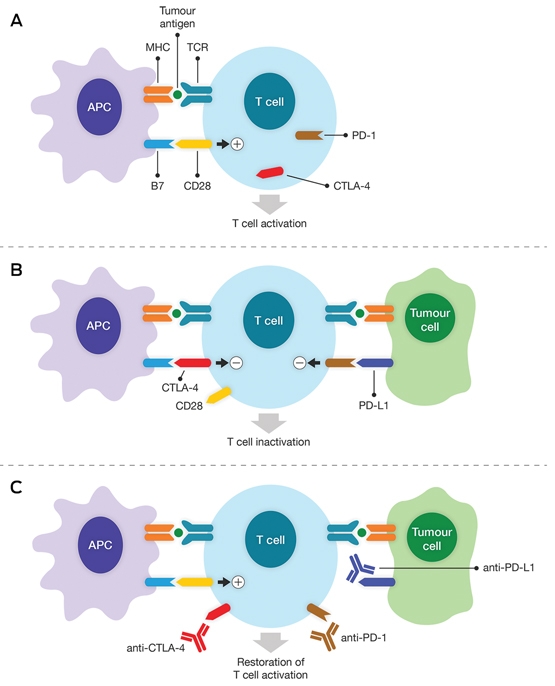
A. Activation of tumour-specific cytotoxic T cells first requires interaction with the appropriate antigen. The tumour antigen is displayed by the major histocompatibility complex (MHC) on the surface of antigen-presenting cells (APC), which can then bind to the T cell receptor (TCR). Full T cell activation also requires a co-stimulatory signal, which is provided by B7 molecules on the APC and binding to CD28 molecules on the T cell. B. Following T cell activation, inhibitory receptors such as cytotoxic T lymphocyte antigen 4 (CTLA-4) and programmed cell death protein 1 (PD-1) are expressed on the T cell surface to regulate the immune response. CTLA-4 binds to B7 molecules with higher affinity than CD28 molecules and transmits an inhibitory signal to the T cell, leading to inactivation. PD-1 binds to its ligand PD-L1, which may be expressed by tumour cells. An inhibitory signal is also transmitted via PD-1, which causes T cell inactivation and prevents the immune response against the tumour. C. These inhibitory signals can be blocked using therapeutic monoclonal antibodies (known as immune checkpoint inhibitors). Anti-CTLA-4 antibodies prevent B7–CTLA-4 binding, and allow the co-stimulatory signal via B7–CD28 binding to be restored. Anti-PD-1 and anti-PD-L1 antibodies disrupt the inhibitory signal to the T cell via PD-1. The result in all cases is restoration of T cell activation and the tumour-specific immune response.
Box 2 – Incidence of immune-related adverse events associated with immune checkpoint inhibitors7-14
Immune-related adverse event |
|
|
|
|
|||||||||||
All grades |
Grade 3 or 4 |
All grades |
Grade 3 or 4 |
All grades |
Grade 3 or 4 |
All grades |
Grade 3 or 4 |
||||||||
Dermatological |
|||||||||||||||
Rash |
15–33% |
0–2% |
28–41% |
3–5% |
4–26% |
0–1% |
10–15% |
< 1% |
|||||||
Pruritus |
25–35% |
0–2% |
33–35% |
1–2% |
6–19% |
0–1% |
11–14% |
0 |
|||||||
Vitiligo |
2–9% |
0 |
7–11% |
0 |
7–11% |
0 |
9–11% |
0 |
|||||||
Gastrointestinal |
|||||||||||||||
Diarrhoea |
23–37% |
3–11% |
44–45% |
9–11% |
8–19% |
0–3% |
8–17% |
1–3% |
|||||||
Colitis |
8–13% |
7–9% |
12–23% |
7–8% |
1% |
< 1% |
1–4% |
1–3% |
|||||||
Hepatitis |
1–4% |
0–2% |
22–30% |
11–19% |
1–6% |
0–3% |
1–3% |
0–2% |
|||||||
Endocrine |
|||||||||||||||
Hypothyroidism |
2–15% |
0 |
15–16% |
< 1% |
4–9% |
0 |
8–10% |
< 1% |
|||||||
Hyperthyroidism |
1–2% |
< 1% |
10% |
1% |
2–4% |
< 1% |
2–4% |
0 |
|||||||
Hypophysitis |
2–7% |
2–4% |
8–12% |
2% |
< 1% |
< 1% |
< 1% |
< 1% |
|||||||
Pneumonitis |
0–4% |
0–2% |
6–11% |
1–2% |
1–5% |
0–3% |
0–5% |
0–2% |
|||||||
Rheumatological |
|||||||||||||||
Myalgia |
2–13% |
< 1% |
10% |
0 |
2–6% |
0–1% |
2–7% |
< 1% |
|||||||
Arthralgia |
5–9% |
< 1% |
11% |
< 1% |
5–8% |
0 |
9–12% |
< 1% |
|||||||
Arthritis |
0 |
0 |
nr |
nr |
nr |
nr |
0–2% |
0 |
|||||||
Neurological |
|||||||||||||||
Headache |
2–8% |
< 1% |
3–10% |
0–1% |
4–7% |
0 |
2–3% |
0 |
|||||||
Paraesthesia |
1% |
< 1% |
nr |
nr |
2% |
0 |
< 1% |
0 |
|||||||
Renal |
0–3% |
< 1% |
3–6% |
1–2% |
1–2% |
< 1% |
< 1% |
0 |
|||||||
Haematological |
|||||||||||||||
Anaemia |
< 1% |
< 1% |
nr |
nr |
2–4% |
1% |
1–3% |
0–1% |
|||||||
nr = not recorded. | |||||||||||||||
Box 4 – Common Terminology Criteria for Adverse Events version 4.0 (CTCAE)*23
Grade |
Definition |
||||||||||||||
1 |
Mild; or |
||||||||||||||
2 |
Moderate; or |
||||||||||||||
3 |
Severe or medically significant but not immediately life threatening; or |
||||||||||||||
4 |
Life-threatening consequences; or |
||||||||||||||
5 |
Death related to adverse event |
||||||||||||||
* CTCAE displays grades 1 through 5 with unique clinical descriptions of severity for each individual adverse event based on this general guideline. † Instrumental activities of daily living refer to preparing meals, shopping for groceries or clothes, using the telephone, managing money, etc. ‡ Self-care activities of daily living refer to bathing, dressing and undressing, feeding self, using the toilet, taking medications, and not bedridden. | |||||||||||||||
Box 5 – Management of the most common immune-related adverse events (irAEs)
irAE |
Grade 1 (G1, mild) |
Grade 2 (G2, moderate) |
Grade 3 (G3, severe) |
Grade 4 (G4, life threatening) |
|||||||||||
Rash |
< 10% BSA:
|
10–30% BSA:
|
> 30% BSA:
|
Life-threatening consequences; urgent intervention indicated:
|
|||||||||||
Diarrhoea or colitis |
< 4 bowel actions/day over baseline:
|
4-6 bowel actions/day over baseline; abdominal pain, mucous or blood in stool:
|
≥ 7 bowel actions/day over baseline; severe abdominal pain, peritoneal signs:
|
Life-threatening consequences; urgent intervention indicated:
|
|||||||||||
Hepatitis |
AST/ALT up to 3 times ULN and/or total BILI up to 1.5 times ULN:
|
AST/ALT 3–5 times ULN and/or total BILI 1.5–3 times ULN:
|
AST/ALT 5–20 times ULN and/or total BILI 3–10 times ULN:
|
AST/ALT > 20 times ULN and/or total BILI > 10 times ULN:
|
|||||||||||
Thyroid dysfunction |
Asymptomatic, intervention not indicated:
|
Symptomatic; therapy indicated:
|
Severe symptoms; hospitalisation indicated:
|
Life-threatening consequences; urgent intervention indicated:
|
|||||||||||
Pneumonitis |
Asymptomatic; intervention not indicated:
|
Symptomatic; intervention indicated:
|
Severe symptoms; oxygen indicated:
|
Life-threatening respiratory compromise; urgent intervention indicated:
|
|||||||||||
Neurological |
Asymptomatic or mild symptoms:
|
Moderate symptoms:
|
Severe symptoms:
|
Life-threatening symptoms:
|
|||||||||||
ALT = alanine aminotransferase. AST = aspartate aminotransferase. BILI = bilirubin. BSA = body surface area. C/I = contraindicated. CYC = cyclophosphamide. ICI = immune checkpoint inhibitor. ID = infectious diseases. IV = intravenous. IVIG = intravenous immunoglobulin. LFTs = liver function tests. MMF = mycophenolate mofetil. TFTs = thyroid function tests. ULN = upper limit of normal. | |||||||||||||||
Competing interests
No relevant disclosures.
References
- Schadendorf D, Hodi FS, Robert C, et al. Pooled analysis of long-term survival data from phase II and phase III trials of ipilimumab in unresectable or metastatic melanoma. J Clin Oncol 2015; 33: 1889-1894.
- Ryan JM, Wasser JS, Adler AJ, Vella AT. Enhancing the safety of antibody-based immunomodulatory cancer therapy without compromising therapeutic benefit: Can we have our cake and eat it too? Expert Opin Biol Ther 2016; 16: 655-674.
- Mellman I, Coukos G, Dranoff G. Cancer immunotherapy comes of age. Nature 2011; 480: 480-489.
- Marquez-Rodas I, Cerezuela P, Soria A, et al. Immune checkpoint inhibitors: therapeutic advances in melanoma. Ann Transl Med 2015; 3: 267.
- Spain L, Diem S, Larkin J. Management of toxicities of immune checkpoint inhibitors. Cancer Treat Rev 2016; 44: 51-60.
- Weber JS, Kahler KC, Hauschild A. Management of immune-related adverse events and kinetics of response with ipilimumab. J Clin Oncol 2012; 30: 2691-2697.
- Robert C, Schachter J, Long GV, et al. Pembrolizumab versus ipilimumab in advanced melanoma. N Engl J Med 2015; 372: 2521-2532.
- Postow MA, Chesney J, Pavlick AC, et al. Nivolumab and ipilimumab versus ipilimumab in untreated melanoma. N Engl J Med 2015; 372: 2006-2017.
- Larkin J, Chiarion-Sileni V, Gonzalez R, et al. Combined nivolumab and ipilimumab or monotherapy in untreated melanoma. N Engl J Med 2015; 373: 23-34.
- Robert C, Long GV, Brady B, et al. Nivolumab in previously untreated melanoma without BRAF mutation. N Engl J Med 2015; 372: 320-330.
- Rizvi NA, Mazieres J, Planchard D, et al. Activity and safety of nivolumab, an anti-PD-1 immune checkpoint inhibitor, for patients with advanced, refractory squamous non-small-cell lung cancer (CheckMate 063): a phase 2, single-arm trial. Lancet Oncol 2015; 16: 257-265.
- Brahmer J, Reckamp KL, Baas P, et al. Nivolumab versus docetaxel in advanced squamous-cell non-small-cell lung cancer. N Engl J Med 2015; 373: 123-135.
- Herbst RS, Baas P, Kim DW, et al. Pembrolizumab versus docetaxel for previously treated, PD-L1-positive, advanced non-small-cell lung cancer (KEYNOTE-010): a randomised controlled trial. Lancet 2016; 387: 1540-1550.
- Garon EB, Rizvi NA, Hui R, et al. Pembrolizumab for the treatment of non-small-cell lung cancer. N Engl J Med 2015; 372: 2018-2028.
- Bristol-Meyers Squibb. Key products (Australia). Yervoy (ipilimumab) product information. http://www.bmsa.com.au/products/pages/Home.aspx (accessed Apr 2016).
- European Medicines Agency. Yervoy. Assessment report – variation. EMA/603930/2013. http://www.ema.europa.eu/docs/en_GB/document_library/EPAR_-_Assessment_Report_-_Variation/human/002213/WC500157027.pdf (accessed Sept 2016).
- Bristol-Myers Squibb. Key products (Australia). Opdivo (nivolumab) product information. http://www.bmsa.com.au/products/pages/Home.aspx (accessed Apr 2016).
- European Medicines Agency. Keytruda. Assessment report. EMA/444458/2015. http://www.ema.europa.eu/docs/en_GB/document_library/EPAR_-_Public_assessment_report/human/003820/WC500190992.pdf (accessed Sept 2016).
- US Food and Drug Administration. Yervoy (ipilimumab) Risk Evaluation and Mitigation Strategy (REMS). http://www.fda.gov/downloads/Drugs/DrugSafety/PostMarketDrugsafetyInformationforPatientsandProviders/UCM249435.pdf (accessed Sept 2016).
- MSD. Products. List of all MSD medicines. Keytruda (pembrolizumab) product information. http://www.msd-australia.com.au/products/pages/LOAMMedicines.aspx (accessed Apr 2016).
- Champiat S, Lambotte O, Barreau E, et al. Management of immune checkpoint blockade dysimmune toxicities: a collaborative position paper. Ann Oncol 2016; 27: 559-574.
- US Department of Health and Human Services. Common Terminology Criteria for Adverse Events (CTCAE) version 4.0. http://evs.nci.nih.gov/ftp1/CTCAE/CTCAE_4.03_2010-06-14_QuickReference_8.5x11.pdf (accessed Apr 2016).
- Ludlow SP, Kay N. Delayed dermatologic hypersensitivity reaction secondary to ipilimumab. J Immunother 2015; 38: 165-166.
- Lacouture ME, Wolchok JD, Yosipovitch G, et al. Ipilimumab in patients with cancer and the management of dermatologic adverse events. J Am Acad Dermatol 2014; 71: 161-169.
- Belum VR, Benhuri B, Postow MA, et al. Characterisation and management of dermatologic adverse events to agents targeting the PD-1 receptor. Eur J Cancer 2016; 60: 12-25.
- Voskens CJ, Goldinger SM, Loquai C, et al. The price of tumor control: an analysis of rare side effects of anti-CTLA-4 therapy in metastatic melanoma from the ipilimumab network. PLoS One 2013; 8: e53745.
- Hua C, Boussemart L, Mateus C, et al. Association of vitiligo with tumor response in patients with metastatic melanoma treated with pembrolizumab. JAMA Dermatol 2016; 152: 45-51.
- De Felice KM, Gupta A, Rakshit S, et al. Ipilimumab-induced colitis in patients with metastatic melanoma. Melanoma Res 2015; 25: 321-327.
- Kim KW, Ramaiya NH, Krajewski KM, et al. Ipilimumab-associated colitis: CT findings. AJR Am J Roentgenol 2013; 200: W468-W474.
- Cheng R, Cooper A, Kench J, et al. Ipilimumab-induced toxicities and the gastroenterologist. J Gatsroenterol Hepatol 2015; 30: 657-666.
- Kim KW, Ramaiya NH, Krajewski KM, et al. Ipilimumab associated hepatitis: imaging and clinicopathologic findings. Invest New Drugs 2013; 31: 1071-1077.
- Chmiel KD, Suan D, Liddle C, et al. Resolution of severe ipilimumab-induced hepatitis after antithymocyte globulin therapy. J Clin Oncol 2011; 29: e237-e240.
- Ahmed T, Pandey R, Shah B, Black J. Resolution of ipilimumab induced severe hepatotoxicity with triple immunosuppressants therapy. BMJ Case Rep 2015.
- Corsello SM, Barnabei A, Marchetti P, et al. Endocrine side effects induced by immune checkpoint inhibitors. J Clin Endocrinol Metab 2013; 98: 1361-1375.
- Araujo PB, Coelho MCA, Arruda M, et al. Ipilimumab-induced hypophysitis: review of the literature. J Endocrinol Invest 2015; 38: 1159-1166.
- Michot JM, Bigenwald C, Champiat S, et al. Immune-related adverse events with immune checkpoint blockade: a comprehensive review. Eur J Cancer 2016; 54: 139-148.
- Liao B, Shroff S, Kamiya-Matsuoko C, Tummala S. Atypical neurological complications of ipilimumab therapy in patients with metastatic melanoma. Neuro Oncol 2014; 16: 589-593.
- Bot I, Blank CU, Boogerd W, Brandsma D. Neurological immune-related adverse events of ipilimumab. Pract Neurol 2013; 13: 278-280.
- Izzedine H, Gueutin V, Gharbi C, et al. Kidney injuries related to ipilimumab. Invest New Drugs 2014; 32: 769-773.
- Chapman PB, Sznol M, Lao C, et al. Safety data from an expanded access program of nivolumab in combination with ipilimumab in patients with advanced melanoma. American Society Clinical Oncology (ASCO); J Clin Oncol 2016; 34 (15 suppl): abstract 9525.
- Shaw AC, Trinh V, Bassett RL, et al. Retrospective analysis of safety and efficacy of ipilimumab in elderly patients with advanced melanoma. American Society Clinical Oncology (ASCO); J Clin Oncol 2016; 34 (15 suppl): abstract 9540.
- Jansen Y, Schreuer M, Neyns B. Single-center “real life experience” with pembrolizumab in pretreated advanced melanoma patients. American Society Clinical Oncology (ASCO); J Clin Oncol 2016; 34 (15 suppl): abstract e21049.
- Downey SG, Klapper JA, Smith FO, et al. Prognostic factors related to clinical response in patients with metastatic melanoma treated by CTL-associated antigen-4 blockade. Clin Cancer Res 2007; 13: 6681-6688.
- Friedman CF, Navid-Azarbaijani P, Shoushtari AN, et al. Toxicity associated with ipilimumab and nivolumab combination therapy in melanoma patients treated at a single-institution under an expanded-access program. American Society Clinical Oncology (ASCO); J Clin Oncol 2016; 34 (15 suppl): abstract 9519.
- Johnson DB, Sullivan RJ, Ott PA, et al. Ipilimumab therapy in patients with advanced melanoma and preexisting autoimmune disorders. JAMA Oncol 2016; 2: 234-240.
- Menzies AM, Johnson DB, Ramanujam S, et al. Anti-PD-1 therapy in patients with advanced melanoma and preexisting autoimmune disorders or major toxicity with ipilimumab. American Society Clinical Oncology (ASCO); J Clin Oncol 2016; 34 (15 suppl): abstract 9515.
- Krammer R, Heinzerling L. Therapy preferences in melanoma treatment–willingness to pay and preference of quality versus length of life of patients, physicians and healthy controls. PLoS One 2014; 9: e111237.
- Hodi FS, Postow MA, Chesney JA, et al. Overall survival in patients with advanced melanoma who discontinued treatment with nivolumab plus ipilimumab due to toxicity in a phase II trial (CheckMate 069). American Society Clinical Oncology (ASCO); J Clin Oncol 2016; 34 (15 suppl): abstract 9518.
- Brunot A, Jeudy G, Tas M, et al. Anti-PD-1 tolerance after severe toxicity with ipilimumab therapy in metastatic melanoma patients. American Society Clinical Oncology (ASCO); J Clin Oncol 2016; 34 (15 suppl): abstract 9551.
- Weber JS, Gibney G, Sullivan RJ, et al. Sequential administration of nivolumab and ipilimumab with a planned switch in patients with advanced melanoma (CheckMate 064): an open-label, randomised, phase 2 trial. Lancet Oncol 2016; 17: 943-955.
- Bowyer S, Prithviraj P, Lorigan P, et al. Efficacy and toxicity of treatment with the anti-CTLA-4 antibody ipilimumab in patients with metastatic melanoma after prior anti-PD-1 therapy. Br J Cancer 2016; 114: 1084-1089.
Provenance: Not commissioned; externally peer reviewed.
Rhabdomyolysis After COVID-19
Navya Kataria, Abel Devadass, Lana Sundac, Laura De Souza, Nabeel Sheikh, Samantha Ng, Scott Campbell, Yishen Wang, Ross S. Francis
Technological advances in the search for a CURE for asthma
Sara Quon, Timothy M Johanson, Ridhima Wadhwa, Alen Faiz, Anthony Flynn, Gary P Anderson, Amanda J Cox, Nicholas P West, Michael P Menden, Rhys S Allan
The CURE Asthma roadmap
Gary P Anderson, Anthony Flynn, Phil G Bardin, John D Blakey, Shyamali C Dharmage, Paul Foster, Peter G Gibson, Adam Jaffe, Alan James, Christine R Jenkins, Sundram Sivamalai, Peter D Sly, Guy B Marks, Vanessa M McDonald, Judy Wetttenhall
The first live term birth following uterus transplantation in Australia
Rebecca Deans, Brigitte Gerstl, Antonia W Shand, Sarah Lyons, Aaron Budden, Helen L Barrett, Grant Luxton, Mangalee Fernando, Kenneth Yong, Karen Keung, Kaushalya Arulpragasam, Henry Pleass, King Man Wan, Eva Kehag, Jana‐Emily Pittman, Mianna Lotz, Maria Fenn, Erin Nesbitt‐Hawes, Lily Byun, Katrina Tang, Mats Brannstrom, Jason Abbott
The public health impacts of mining in Australia
Javier Cortes‐Ramirez, Ruby N Michael, Leisa‐Maree Toms, Melissa Haswell
Lingual Raynaud phenomenon
Michael Taggart, Mina John