




Reflections
Women in medicine
Volume 204 - Issue 1
Priscilla Kincaid-Smith
Author: Judith Whitworth
Med J Aust 2016; 204 (1): 37-38. || doi: 10.5694/mja15.01186
Published online: 18 January 2016
Published online: 18 January 2016
Priscilla Kincaid-Smith (1926-2015) was a towering figure in Australian and international medicine
Priscilla Kincaid-Smith (1926–2015) was a towering figure in Australian and international medicine
Priscilla Sheath Kincaid-Smith was born and raised in South Africa. At school, she was more interested in sport than study and proved to be an outstanding athlete. She was national 100 yards freestyle swimming champion and toured Europe with the South African women’s national hockey team. Only World War II prevented her from being an Olympian. At the University of the Witwatersrand, Johannesburg, Priscilla discovered a lifelong love of medicine and medical science. Being a brilliant student and athlete, she tried for a Rhodes Scholarship, only to be told that as a woman she was not eligible.
In 1953, she followed the path of many ambitious young medical graduates from the dominions and moved to London, where she worked at the Royal Postgraduate Medical School at Hammersmith Hospital with Sir John McMichael, whom she later described as her most influential teacher. It was here, while studying the renal lesions of malignant hypertension, that she developed her lifelong fascination with the kidney and its pathology. She spent long hours in the postmortem room, and it was in this rather unlikely setting for romance that she met a young Australian doctor, Ken Fairley. After a brief courtship, they married and set off for Australia.
The sunburnt country was something of a shock to Priscilla. She loved the bush, but the prevailing social attitudes were another matter. She had not experienced the rampant sexism of Melbourne in the 1950s in either Johannesburg or London. Married women at that time were barred from employment in the public service, which meant that most hospitals and universities had never had a female professor. On one occasion, she was asked to be keynote speaker at a meeting of a special society at a Melbourne club. She arrived at the venue to be told that, as a woman, she could not use the front door but must enter via the tradesmen’s entrance.
After arriving in Melbourne, Priscilla worked part-time as a research fellow at the Baker Heart Research Institute, with links to pathology at the Alfred Hospital. Subsequently, she joined the department of medicine at the University of Melbourne as a senior associate at Royal Melbourne Hospital. Here, she founded the renal unit in a surgical ward flower room and developed it to become globally renowned. She became the University of Melbourne’s first female professor in 1975 and, after her very reluctant retirement in 1991, she moved her practice to Epworth Hospital, where she was Director of Nephrology for over a decade.
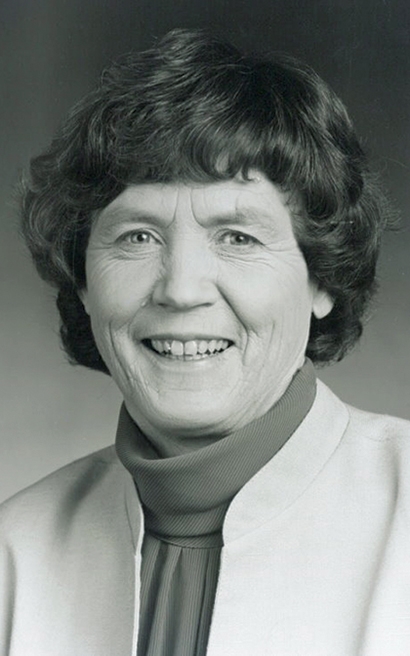
Priscilla’s initial studies in Australia related to vessel lesions in the kidney, particularly in hypertension. Subsequently, she played a key role in the establishment of both nephrology and hypertension as distinct specialities, as a founding member and later president of the Australian and New Zealand Society of Nephrology and as a founding member of the High Blood Pressure Research Council of Australia.
Her two great passions were first, her family — Ken, children Jacqui, Stephen and Kit, and numerous dogs, horses and cows — and second, her work, most particularly her patients.
Priscilla had great personal charm, but in a professional context, she could appear reserved, even forbidding. At the same time, she was enormously loyal to her staff and above all to her patients. She worked extremely hard, but weekends for family and farm were sacrosanct. With Ken, Priscilla was very hospitable to junior staff, although some of the less robust regarded a weekend on the farm at Apollo Bay as a mixed blessing — straining fences, chopping wood and herding cows not being to everyone’s taste. Distinguished foreign visitors often suffered the same fate.
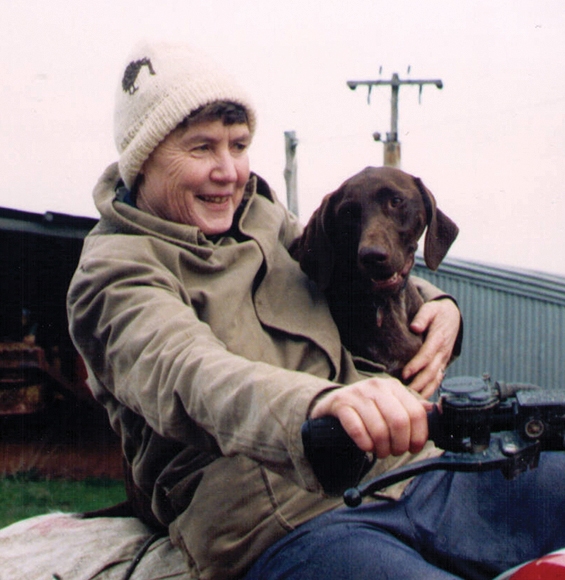
An abiding characteristic was her determination. If she thought something was important, she would go for it relentlessly and never take no for an answer. More often than not, she succeeded. A journalist once remarked that she was a great media performer because “she looks good, she sounds good, and she has a mind like a steel trap”. Priscilla was very competitive and she loved to win.
Despite her renown as a pathologist, Priscilla was first and foremost a clinician. She was astute, with wonderful powers of observation, and her research and advocacy were always patient focused.
Shortly after her arrival in Australia in 1958, Priscilla observed at autopsy, kidneys with profound tubulointerstitial disease and papillary damage that she had not previously seen, and she was able to identify as necrotic papillae material passed in the urine by some of Ken’s patients. With colleagues, she described the pathological, clinical and epidemiological features of this new condition. In Europe, it was labelled phenacetin nephropathy, but Priscilla and her co-workers showed experimentally that all the minor analgesics were toxic, most particularly in combination. Following the failure of education campaigns and the removal of phenacetin to modify what was the most common cause of renal failure in parts of Australia, she used her formidable advocacy skills to lead the charge for legislation and regulation to remove compound analgesics from corner shops and supermarkets, and put them behind the counter in pharmacies. A disease that was the scourge of thousands and a major cause of end-stage renal disease is now history.
Priscilla made key contributions in virtually all areas of nephrology. She was one of the first to recognise the importance of integration of end-stage renal failure management in an era when dialysis and transplant units often functioned independently, and she had an aggressive approach to management which led to her unit having success rates for cadaveric transplants well above the norm. She was a world leader in the pathology and clinical classification of glomerulonephritis, in pre-eclampsia and renal disease of pregnancy, and in reflux nephropathy.
Over her working life and beyond, Priscilla received numerous honours and awards, including Companion of the Order of Australia and Commander of the Order of the British Empire. She served as president of the Royal Australasian College of Physicians, the World Medical Association and the International Society of Nephrology, chair of the Federal Council of the Australian Medical Association, and founding president of the Asian Pacific Society of Nephrology. She was awarded honorary fellowships and degrees from all around the world, and had numerous prizes, orations and awards named for her.
People trained by her populate senior positions in nephrology and academic medicine worldwide, most particularly in Australia and South-East Asia. Her influence has been, and continues to be, immense. Not only was she instrumental in training future leaders in nephrology, she was an outstanding role model for women, showing not only that they could get to the very top but that they could do it in the context of a happy and successful family life.
Priscilla leaves an extraordinary legacy — in our better understanding of kidney disease, in the training and mentoring of physicians worldwide, as a role model for women and, most importantly, in the patients she helped and the lives she saved.
Competing interests
No relevant disclosures.
Provenance: Commissioned; not externally peer reviewed.
Medical Colleges Have an Obligation to Ensure Full Participation in Clinical Quality Registries
Thomas J. Hugh
Getting on the Same Page: Why Australia Needs a National Maternity Early Warning System (MEWS) Chart
Briony A. Cutts, Lucy Bowyer, Nisha Khot, Sandra Lowe, Stefan C. Kane
Data for Equity: Can Linked Administrative Data Inform Pathways to More Equitable Child Health?
Sarah Gray, Shuaijun Guo, Meredith O'Connor, Elodie O'Connor, Katrina Williams, Hannah Badland, Susan Woolfenden, Josie Dickerson, Gerry Redmond, Marnie Downes, Sharon R. Goldfeld
Specialty College Selection: Why Change is Critical to Support a Future Rural Workforce
Matthew R. McGrail, Jenny May AM, Katherine Logan
Differentiated and simplified oral HIV pre‐exposure prophylaxis (PrEP) models hold the key to virtually eliminating HIV transmission in Australia by 2030
Tyson Arapali, Sarah Warzywoda, Anthony K J Smith, Curtis Chan, Timothy R Broady, Erin Sullivan, Catherine MacPhail, Mohamed A Hammoud, Alexander Dowell‐Day, Benjamin R Bavinton
The number of cancer‐related deaths that could be attributable to spatial disparities in survival in Australia, 2010–2019: a retrospective population‐based cohort study
Charlotte K Bainomugisa, Jessica Cameron, Paramita Dasgupta, Peter Baade