




Volume 198 - Issue 1
Alexander MacKenzie (Sandy) Rankin: Australian physician who left his mark on Africa
Author: Krishna Somers
Med J Aust 2013; 198 (1): 55. || doi: 10.5694/mja12.11435
Published online: 21 January 2013
Published online: 21 January 2013
A Fellow of the Royal Australasian College of Physicians commemorated in TanzaniaAlexander MacKenzie (Sandy) Rankin left an indelible legacy in Tanzania. Born in Perth in 1929, he graduated from the University of Adelaide in 1952, and developed a lifelong interest in medicine in the developing world early in his career. In the main, his commitment was in Africa. Starting in 1959 as a registrar at University ...
A Fellow of the Royal Australasian College of Physicians commemorated in Tanzania
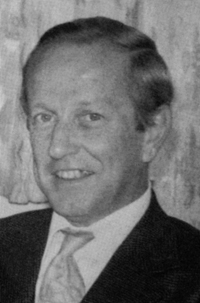
Alexander MacKenzie (Sandy) Rankin left an indelible legacy in Tanzania. Born in Perth in 1929, he graduated from the University of Adelaide in 1952, and developed a lifelong interest in medicine in the developing world early in his career. In the main, his commitment was in Africa. Starting in 1959 as a registrar at University College, Ibadan, Nigeria, he moved to East Africa in 1960 to take up a position as a Lecturer in Medicine at Makerere University in Kampala, Uganda, for 2 years. Shortly after his arrival in Uganda, he was sent by the Ministry of Health of Uganda to investigate a “laughing epidemic” in a residential school in the south west of the country, an event that became international news. He later described the epidemic as “a mass hysteria”.1
President Julius Nyerere of the newly independent Republic of Tanganyika (which later united with Zanzibar to form the United Republic of Tanzania), was keen to establish a medical school within the University of Dar es Salaam. The School of Medicine was ultimately sponsored by the Rockefeller Foundation and the World Health Organization. Sandy Rankin was appointed Director of Training and later Project Leader for planning and executing a 6-year curriculum directed at meeting the health care needs of Tanzania. Thirty high-school graduates were hand-picked for entry into the integrated curriculum, which included a 3-month exchange with the University of Cambridge, United Kingdom. Students from Dar es Salaam studied non-tropical disease at Cambridge, while students from Cambridge came to Dar es Salaam to train in tropical medicine.
Almost single-handedly, Sandy Rankin taught introductory medicine, clinical methods and bedside medicine. He and his wife Geraldine lived in a beachside house at Oysterbay, a short distance from Muhimbili National Hospital (formerly Princess Margaret Hospital), the teaching hospital of the University of Dar es Salaam. The pair kept their home open at all times for Sandy’s students.
After completing a Master of Public Health at Harvard University in 1968, Sandy Rankin became Project Team Leader in the newly established bilingual (French and English) medical school in Yaounde, Cameroon, in West Africa. His later career included World Health Organization appointments in the Regional Office for the Western Pacific in Manila, followed by appointments in Saigon (later Ho Chi Minh City), Vietnam, where he stayed on duty as WHO representative until the city fell to North Vietnamese forces in 1975. His last appointment was as WHO representative in Seoul, South Korea, from 1976. He died there from a massive coronary occlusion while recovering from an appendicectomy, at a young 51 years. His untimely death in 1980 robbed international medicine of an activist devoted to the needs of developing countries.
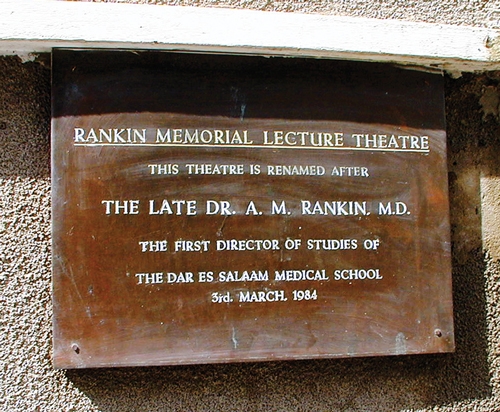
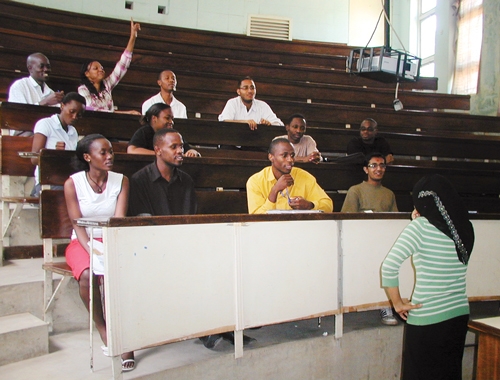
During the development of the Dar es Salaam School of Medicine, a lecture theatre was erected in the campus of Muhimbili National Hospital. Initially known as the Main Lecture Theatre of the medical school, it was renamed the Rankin Memorial Lecture Theatre in his honour on 3 March 1984.
Competing interests
No relevant disclosures.
References
- Rankin AM, Philip PJ. An epidemic of laughing in the Bukoba district of Tanganyika. Cent Afr J Med 1963; 9: 167-170. 0_GHADAJIC