




Volume 193 - Issue 11
Making little progress to Millennium Development Goals 4 and 5 for maternal and child health: a personal perspective from Uganda
Author: Katie M Moynihan
Med J Aust 2010; 193 (11): 721-723. || doi: 10.5694/j.1326-5377.2010.tb04121.x
Published online: 6 December 2010
Published online: 6 December 2010
“Child deaths are falling, but not quickly enough to reach the target.”
“Most maternal deaths could be avoided.”
The Millennium Development Goals Report, 20101
“Where we are now in terms of health service delivery should be measured against where we have come from and not where we ideally should be. A lot of progress has been made.”
Mary L Nannono, Permanent Secretary at Uganda’s Ministry of Health, 20082
The Millennium Development Goals (MDGs) report published in June 20101 shows that the targets to reduce maternal and child deaths will not be met, particularly in sub-Saharan Africa. Uganda is an east African country committed to achieving MDG 4 (the goal to improve child survival) and MDG 5 (the goal to improve maternal health). In recent years, there has been much work to improve Ugandan antenatal and neonatal care, scaling up emergency obstetric care services and child health policies. However, progress remains slow and, at current standards, Uganda is unlikely to attain the MDG 4 and 5 objectives (Box).3 Why has there been insufficient progress? What happens when mothers and children come to hospital?
I am an Australian doctor training in paediatrics under the Royal Australasian College of Physicians. I also intend to train in anaesthesia. I decided to take a year-long break from the training scheme to do humanitarian aid work in a developing country, and I am now coming to the end of a 6-month sabbatical in Uganda. This personal perspective on paediatric and obstetric care provision in Uganda aims to illustrate some of the stumbling blocks in practice that are limiting progress towards the MDGs in maternal and child health.
My time in Uganda was divided between the obstetric operating theatre of the National Referral Hospital in Kampala, and responsibility for a paediatric ward in rural Uganda at a not-for-profit mission hospital, run jointly by the local Catholic diocese and an international non-government organisation. Every morning on arrival at the obstetric theatre I was greeted by women waiting, lining up in the entrance hall or lying on plastic sheets on the floor of the ward, contracting in pain. All needed emergency caesarean sections. However, each woman waited in turn for her operation or spontaneous delivery, whichever came first. When her turn came, the patient would walk into theatre and struggle onto the operating table with minimal assistance, pausing only for a grunt or grimace during a contraction.
My first day at the Kampala hospital theatre was particularly disappointing — six emergency caesarean sections resulted in two fresh stillbirths, one macerated stillbirth and two admissions to the special-care baby unit. We hand-ventilated one baby for an hour because there was no mechanical ventilator. Later that afternoon, the baby stabilised on continuous positive airway pressure, but died overnight. My colleagues and I decided to undertake a 1-month audit to review maternal and neonatal outcomes: were there avoidable delays for emergency caesarean sections, and could anything be done about them? The maternal mortality rate in my sample of 435 was 1%, the stillbirth rate was close to 7% (equivalent to the hospital’s 1968 rates14) and mothers waited on average for 5 hours for the emergency procedure. Reasons for delays included staff unavailability, a lack of running water, a non-functional autoclave (and hence no sterile drapes and gowns), and no spinal needles or drugs for spinal anaesthesia. As a result of the audit, the hospital expedited the building of two new obstetric and gynaecological operating theatres and undertook to ensure that highly qualified and experienced staff ran them.
Mothers are advised to bring a delivery pack when they come to hospital — not a dressing gown, slippers and baby clothes, but their own cannulae, sterile swabs, suture materials and 10 packets of sterile gloves, in case the hospital supply runs out. During my second week, a woman in her seventh pregnancy joined the section queue. Her indication for surgery was obstructed labour at 38 weeks gestation, with a “poor obstetric history” that translated as six previous stillbirths. She waited patiently in line but when it was her turn there were no gloves in stock and she had brought only one packet. She waited while women with gloves had their procedures. Her blank emotionless expression when the surgeons told her over the drapes that her baby was stillborn will remain with me forever. How can this hospital function as a comprehensive emergency obstetric care provider when caesarean section priority relates to the number of gloves the patient can supply rather than the underlying urgency of surgery?
My responsibility for a 23-bed children’s ward (often with two to three patients per bed) in rural Uganda also brought me many challenges. At this hospital, one difficult day started with a mother in obstructed labour who delivered her baby with shoulder dystocia. During our attempt to resuscitate the baby, there was a power failure and, as there was no fuel for the back-up generator, the oxygen concentrator did not work. The oxygen cylinders were empty, so there was no oxygen in the hospital. Sadly, we were unable to save the baby. The same day, a 4-day-old twin died of jaundice because our phototherapy machine was broken and the parents could not afford to travel to another hospital. Then the mother decided to discharge herself from hospital with her surviving twin, also jaundiced and on intravenous antibiotics, and consult a traditional healer.
I remember a 3-year-old patient referred from a larger regional centre to our rural hospital for a blood transfusion because there was “no blood available”. The child’s haemoglobin level was 2 g/dL and she was in severe respiratory distress. I was confused by the cross-match form and unit number noted in her case notes, yet the clearly documented reason for transfer was “no blood available”. The mother reported that, while she and her daughter were at the regional centre, another child, as sick as her own, had arrived whose need for the blood, already crossed-matched for our patient, was decided to be the more urgent because his or her mother could contribute money.
As health care practitioners, we make decisions that are generally evidence based and (hopefully) in the patient’s best interests. A premature neonate, with a gestational age of 27 weeks, had been labelled a “fighter” after surviving 3 days on only a whiff of oxygen. This was going to be a success story for Africa — the survival of a premature baby. One night, a 6-month-old boy presented in severe respiratory distress when the oxygen concentrator was away being repaired and the only oxygen cylinder that wasn’t empty (it was one-quarter full) was with the fighter, who hadn’t tolerated a trial on room air. Reluctant to take oxygen away from her, I told the mother of the boy that I had done all I could. He died 3 hours later and I could hear the mother wailing from my room. The next day, the condition of the fighter on oxygen therapy suddenly deteriorated and I was unable to revive her. Had I made the wrong decision? Hindsight is a torment for one’s conscience. However, the oxygen dilemma prompted us to adapt the oxygen tubing so that two children could receive low-flow oxygen at the same time.
When I received my first Ugandan arrest call, I ran to the bedside. Almost 5 minutes after I arrived, the suction and some monitoring equipment appeared. Oxygen was not available until later and we also had to wait for resuscitation drugs. The outcome was poor, both for the patient and my confidence. After my third resuscitation call, I didn’t run any more. I walked “mpola mpola” (slowly, slowly) with the rest of the team — arrests are difficult to manage without basic equipment, and usually fatal because of delayed treatment.
So far I have painted a somewhat bleak picture, but there were good days and successes. A 6-week-old girl was brought in severely malnourished, weighing 2 kg with sepsis and malaria. The good Samaritan who had picked her up as a newborn from the roadside after the mother abandoned her was feeding her cow’s milk. After antibiotics, antimalarials and commencing our formula feeding program, the child gained weight and even started to smile. Also heartening, and something that has constantly amazed me, is the resilience and good humour of the staff, who do their best with what is available. However, when I read in the local newspaper that the World Health Organization’s Making Pregnancy Safer program is to be extended, and more mothers will be encouraged to give birth in hospital, I remember all the critical events that I have witnessed. Surely this advice will not lead to improved outcomes while there is such a disparity between demand and supply, between concept and reality. Reliable running water and electricity; hospital supplies like basic disposables, oxygen, and blood for transfusion; and adequate staffing and staff training are essential requirements for emergency obstetric and paediatric care. My story highlights that if basic hospital facilities were improved and some systemic delivery deficiencies overcome, more progress towards the MDGs 4 and 5 in Uganda and all of sub-Saharan Africa would be made. Ensuring that 90 per cent of African mothers and newborns have access to the essential interventions already written into policy would cost a very affordable US$1.39 per capita.15
What are the Millennium Development Goals for maternal and child health and where does Uganda stand in achieving them?
Millennium Development Goal (MDG) 4 aspires to a global target of a two-third reduction by 2015 in the mortality rate of children aged under 5 years. For Uganda, this means a decrease to below 56 deaths per 1000 live births; however, the rate only declined from 186 to 135 deaths per 1000 live births during the period 1990 to 2008.4 Globally, neonatal mortality accounts for 38 per cent of deaths in children aged under 5 years; hence, a substantial reduction in neonatal deaths is necessary if this goal is to be attained.5 A 2006 Ugandan survey reported a perinatal mortality rate (comprising the stillbirth rate and early neonatal mortality rate) of 36.3 per 1000 pregnancies.6 This amounts to 44 500 newborns dying and 45 100 stillborn babies each year.7
Childbirth is the time of greatest lifetime risk of mortality for a mother and her baby. Intrapartum complications account for an estimated 42% of the world’s 358 000 annual maternal mortality rate (MMR). Sub-Saharan Africa contributes 57% to the world’s annual MMR.8 The first target of MDG 5 is to reduce the MMR by three-quarters before 2015, equivalent to a reduction to 131 deaths per 100 000 live births in Uganda — the estimated MMR is currently 435 deaths per 100 000 live births.9 A 2005 study estimated the MMR at 645 deaths per 100 000 live births at the National Referral Hospital, my workplace.10
Many obstetric and newborn complications can be prevented or successfully managed with prompt interventions. The Lancet Newborn Survival Series demonstrated that skilled clinical care could effect a reduction in neonatal mortality rates of up to 72 per cent.11 Timely identification and management of childbirth complications is paramount, and while more mothers and newborns die during this period than at any other, coverage and quality of care often remains inadequate in resource-limited settings.12 It is also important to note that with gross under-reporting (deaths at home or en route to hospital are often not recorded), the true figures are undoubtedly substantially higher.
However, Uganda’s slow progress towards MDGs 4 and 5 has put the spotlight firmly on maternal and child health delivery. The government has responded by developing a national roadmap to accelerate the reduction of maternal and child mortality and morbidity. It has been placed high on the political agenda and, with the country’s upcoming elections in February 2011, all major political parties in the country are promising to make maternal and child health a priority. In addition, the World Bank in May 2010 released a new 5-year action plan to help poor countries reduce their maternal and child deaths. Uganda is one of the sub-Saharan African countries targeted. There is hope that, with time, Uganda will achieve the aim of the United Nations 2009 global consensus on maternal, newborn and child health: to have “every pregnancy wanted, every birth safe and every newborn and child healthy”.13
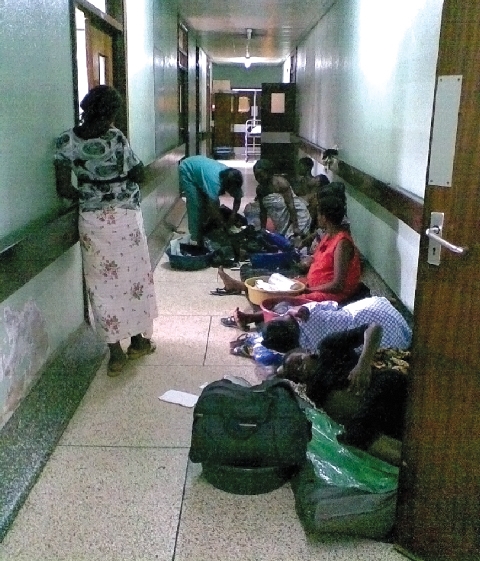 All needed an emergency caesarean section. However, each woman waited in turn for her operation or spontaneous delivery, whichever came first. |
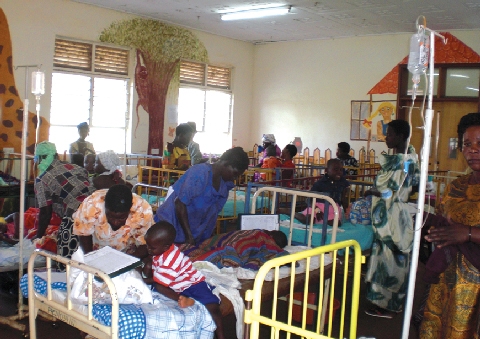 My responsibility for a 23-bed childrens ward (often with two to three patients per bed) in rural Uganda also brought me many challenges. |
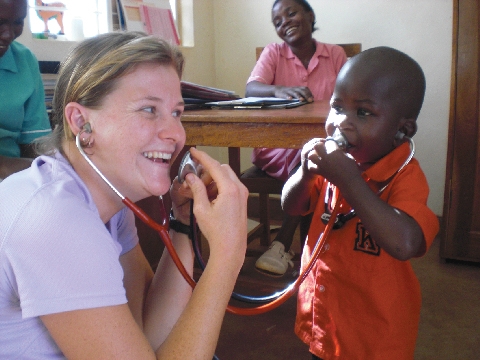 Communication, Ugandan style! |
Competing interests
None identified.
References
- United Nations. Millennium Development Goals Report. New York: UN, 2010. http://www.un.org/millenniumgoals/pdf/MDG%20Report %202010%20En%20r15%20-low%20res%2020100615%20-.pdf (accessed Nov 2010).
- Mary L Nannono, Permanent Secretary at Uganda’s Ministry of Health. Uganda health ministry response. Panaroma, BBC One, 21 Nov 2008 [Ugandan Ministry of Health statement in response the BBC Panorama program Addicted to aid]. http://news.bbc.co.uk/2/hi/programmes/panorama/7742558.stm (accessed Nov 2010).
- United Nations Development Programme. MDG Monitor. Tracking the Millennium Development Goals: Uganda. http://www.mdgmonitor.org/country_progress.cfm?c=UGA&cd=800 (accessed Nov 2010).
- United Nations Statistics Division. Millennium Development Goals Indicators. Children under five mortality rate per 1000 live births. http://mdgs.un.org/unsd/mdg/SeriesDetail.aspx?srid=561 (accessed Nov 2010).
- Lawn JE, Cousens S, Zupan J. 4 million neonatal deaths: When? Where? Why? Lancet 2005; 365: 891-900. 0_i1095884
- Uganda Bureau of Statistics. Macro International Inc. Uganda Demographic and Health Survey 2006. Calverton, Md: UBOS and Macro International Inc, 2007. http://www.measuredhs.com/pubs/pdf/FR194/FR194.pdf (accessed Nov 2010).
- Information for action [section 5]. Partnership for Maternal, Newborn and Child Health. In: Lawn J, Kerber K, editors. Opportunities for Africa’s newborns: practical data, policy and programmatic support for newborn care in Africa. Cape Town: PMNCH, World Health Organization, 2006: 173-231. http://www.who.int/pmnch/media/publications/oansectionv.pdf (accessed Nov 2010).
- UNICEF. Childinfo: monitoring the situation of children and women. Estimates of maternal mortality 2008 (WHO/UNICEF/UNFPA/The World Bank). http://www.childinfo.org/maternal_mortality_countrydata.php (accessed Nov 2010).
- United Nations Development Programme Uganda. MDGs in Uganda. http://www.undp.or.ug/mdgs/25 (accessed Nov 2010).
- Mirembe F. Active surveillance for maternal mortality in Mulago hospital — Uganda. In: Mulago National Referral Hospital Report: 2. Kampala: Makerere University, 2006: 30-34. 0_i1095894
- World Health Organization. The executive summary of the Lancet neonatal survival series. http://www.who.int/child_adolescent_health/documents/pdfs/lancet_neonatal_survival_exec_sum.pdf (accessed Nov 2010).
- de Bernis L, Sherratt DR, AbouZahr C, Van Lerberghe W. Skilled attendants for pregnancy, childbirth and postnatal care. Br Med Bull 2003; 67: 39-57. 0_pgfId-1098266
- Partnership for Maternal, Newborn and Child Health. Global consensus on maternal, newborn and child health. In: The World Bank’s reproductive health action plan April 2010. Annex C. http://siteresources.worldbank.org/INTPRH/Resources/376374-1261312056980/RHAction PlanFinalMay112010.pdf (accessed Nov 2010).
- Simpkiss MJ. Birth weight, maternal age, and parity among the African population of Uganda. Br J Prev Soc Med 1968; 22: 234-237. http://www.ncbi.nlm.nih.gov/pmc/articles/PMC1059151/pdf/brjpre vsmed00092-0052.pdf (accessed Nov 2010).
- De Graft-Johnston J, Kerber K, Tinker A, et al. The maternal, newborn, and child health continuum of care. In: Partnership for Maternal, Newborn and Child Health. Lawn J, Kerber K, editors. Opportunities for Africa's newborns: practical data, policy and programmatic support for newborn care in Africa. Cape Town: PMNCH, World Health Organization, 2006: 23-36. http://www.who.int/pmnch/media/publications/aonsectionII.pdf (accessed Nov 2010).
Forty Years in the Making: Reporting on the Co-Creation of a National Roadmap for Birthing on Country Services for the Best Start to Life
Res McCalman, Anneka J. Bowman, Roianne West, Kristie Watego, Jyai Allen, Claire Clack, Sue Kildea, Sue Kruske, Melanie Briggs, Cleone Wellington, Rebecca Coddington, Yu Gao, Isabella Garti, Sascha Kowalenko, Sarah Ireland, Catherine Austin, John D. Boffa, Marah Prior, Kelsie Kahl, Bettina Chaseling, Sarah Khaw, Emily Armstrong, Donna Hartz, Yvette Roe
Temporal Trends in Preterm Birth Associated With Hypertensive Disorders of Pregnancy in Victoria, Australia: A Population-Based Interrupted Time-Series Study
Melvin Marzan, Heng Jiang, Daniel Lorber Rolnik, Joanne M. Said, Lisa Hui
Linguistic Manoeuvres: Obstetric Violence Camouflages Harm and Loss of Consent From Birth
Liz Sutton, Harsha Ananthram, Rebecca Matthews
Linguistic Manoeuvres: Obstetric Violence Camouflages Harm and Loss of Consent From Birth
Bashi Kumar-Hazard, Andrew M. Bisits, Sharon L. Settecasse, Jenny Gamble, Hazel Keedle, Hannah G. Dahlen
Linguistic Manoeuvres: Obstetric Violence Camouflages Harm and Loss of Consent From Birth
Wendy Pollock, Alissa Fleming, Ensieh Fooladi, Joy Kloester, Anne Tremayne, Yasmin Zisin, Bethany Carr, Kym Davey, Suzanne Willey, Jenny Gamble
Getting on the Same Page: Why Australia Needs a National Maternity Early Warning System (MEWS) Chart
Briony A. Cutts, Lucy Bowyer, Nisha Khot, Sandra Lowe, Stefan C. Kane